Elizabeth Cromwell’s prayer book
Wolf HallElizabeth Cromwell’s prayer book is both a devotional book and a material link to the family Thomas Cromwell has lost. When he holds it during the crisis surrounding Thomas Wolsey’s fall, its illustrations recall his daughter Grace and his wife Liz, turning private grief into a visible interruption of political calculation. The book’s prayers and images offer no simple consolation; instead, its pages make memory tangible while Cromwell faces the possibility that his service to Wolsey may bring down his own career.
The book and its images
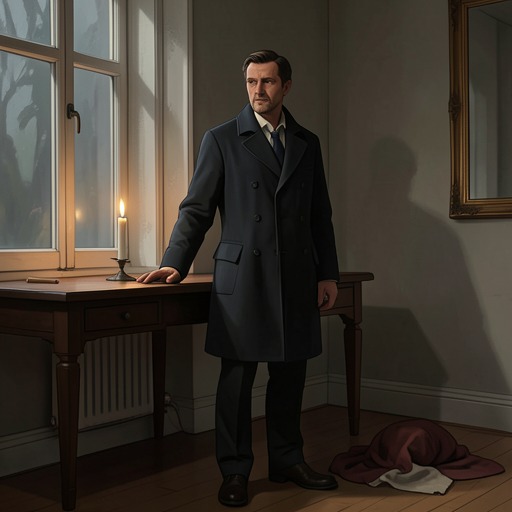
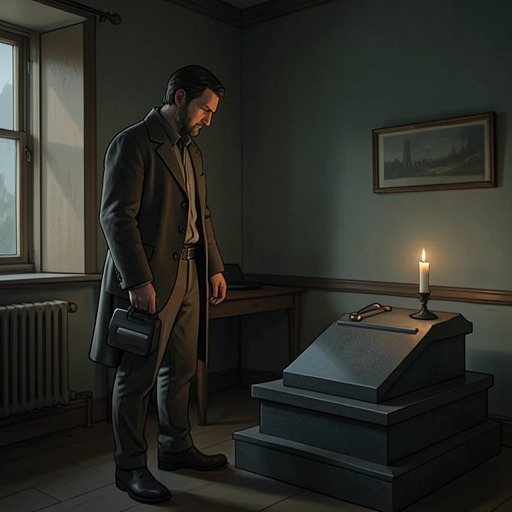
On All Hallows’ Day, Cromwell stands at a window with the prayer book in his hand. He remembers that Grace liked to look at it, and feels the impression of her small fingers beneath his own. The book contains prayers for the canonical hours, with illuminated scenes that give the day a sequence of sacred images: the Annunciation at Matins, the Visitation at Lauds, and the Nativity at Prime.
As he turns the pages, the illustrations continue through the Magi, Joseph carrying doves to the temple, and the massacre ordered by Herod. The final image fixes his attention on three drops of blood, each shaped like a tear and painted vermilion. The page is a devotional representation, but in the moment it also becomes an image through which Cromwell’s bereavement presses upon him. He looks up from it with the pictured tears still swimming before his eyes.
A family memorial in a political crisis
The book gathers more than one loss into a single object. Grace’s remembered touch and Liz’s remembered hands accompany Cromwell as he holds it; the narrative presents the prayer book as a point of contact with both his daughter and his wife. Its personal significance contrasts with the political crisis around him at Esher, where he serves Wolsey and fears that their shared fortunes are collapsing.
Cromwell has kept vigil alone on All Hallows’ Eve, a time when he and Liz had formerly prayed with their parish for dead relatives and other family members. On the following day, the prayer book carries that remembrance into the scene. The ritual and the object do not erase his loneliness: he does not believe that the dead return, yet he feels their presence as he grieves. The book therefore holds together a devotional practice and a loss that belief cannot simply resolve.
Cavendish’s encounter with the book
George Cavendish finds Cromwell crying and notices the prayer book. He interprets the scene as prayer, but cannot see the memories Cromwell attaches to the pages: Grace’s fingers and Liz’s hands. The same object is therefore legible in two ways. To Cavendish, it is evidence of devotion; to Cromwell, it is also a family keepsake and the focus of grief.
Cromwell tells Cavendish that he fears losing everything because he stood by Wolsey. He imagines the wealth and country house he might have gained had he stayed with his city work, then turns to the practical question of how to help Wolsey’s household. The book remains in his arms as Cavendish redirects him toward an accountancy problem. Its presence marks the brief passage from grief back into action: Cromwell proposes that Wolsey’s priests help pay the servants’ wages, and resolves to seek a place in Parliament so that he can speak for his former master.
Devotional reading and reform
Elsewhere, Cromwell’s engagement with religious books extends beyond private devotion. He keeps an illicit English Testament in a chest, an Antwerp edition on cheap paper bearing the printed words “PRINTED IN UTOPIA.” He follows the circulation of William Tyndale’s writings and considers arranging for a German text to be translated into Latin for discreet distribution. These episodes place the prayer book beside a different kind of textual object: one associated with family remembrance and the hours of prayer, the other with contested access to scripture and the risks of religious reform.
The contrast does not make the prayer book a statement of Cromwell’s settled theology. Rather, the book’s importance in the grief scene lies in its intimate, particular use: it is held, turned, and remembered. Against the public pressures of imprisonment, censorship, and political survival, its images preserve the presence of a family that political work cannot restore.