Ghosts
Wolf HallGhosts are the novel’s unseen dead: figures of England’s buried past who hover among the living and, in Cromwell’s imagination, continue to shape the country’s present and future. They are not merely a supernatural presence; they embody the histories, loyalties, and losses that political law cannot fully command.
The Unseen Country
As Cromwell considers the oath he has written to secure loyalty to Henry and the child Anne Boleyn carries, his thoughts move beyond the officials who will administer it. Commissioners can travel across England to swear people in villages and towns, but he wonders who could make the oath reach the hobs and boggarts in hedges and hollow trees, the spirits at holy wells, and the miscarried infants buried in unconsecrated ground. These beings belong to a landscape beneath the visible realm: a country of the uncounted dead, beyond the reach of royal administration.
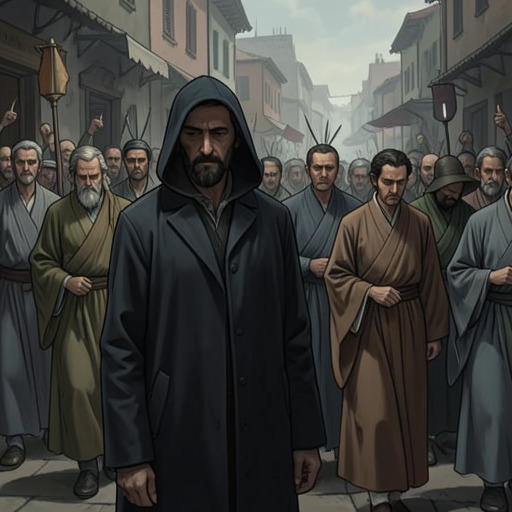
The ghosts gather across distinctions of rank and calling. Cromwell imagines lords and commoners, nuns and sex workers, priests and friars among them, all feeding upon living England and diminishing what can be passed to the future. The image makes the dead part of the realm’s inheritance: an unseen population that survives within the living, even as the government seeks to define political allegiance through a public oath.
Law and Historical Memory
The passage sets the practical work of legislation against what cannot be brought into its jurisdiction. An oath can be carried from burgh and village to landowners and widows with inheritances; its reach depends on people recognizing and believing in the authority behind its words. Yet Cromwell’s image of a buried empire suggests that England is larger than its official map. Folk spirits, saints, and the uncounted dead do not appear as subjects who can be summoned to swear, but they remain part of the country he is trying to govern.
This tension also recalls the limits of memory. Cromwell remembers handling old coins whose worn features offered little certainty about which king they represented. The dead and the past persist, but not always in forms that can be clearly identified or mastered. Ghosts thus stand for a historical inheritance that outlives individual rulers and resists the simplifying force of political language.
The Dead in Cromwell’s Present
After Thomas More’s death, the narrative gives this persistence a more personal form. Cromwell returns to his letters while More stands before him in memory, more substantial in death than he had seemed in life. His recollection fixes on More’s lively voice and his final argument in court, where he opposed the authority of the statute with the authority of his conscience and the wider Christian community. The dead man remains present not as a literal apparition, but as an unresolved intellectual and political challenge.
Together, these appearances make the ghosts of the novel more than a catalogue of supernatural beings. They express the persistence of the past within the living realm: as inherited belief beyond the law’s reach, as the dead whose remembered words continue to trouble the present, and as a history no oath can entirely command.