Greyhounds
Wolf HallGregory Cromwell’s black greyhounds are both conspicuous companions and a small test of status: mocked at Cambridge for their color, they are taken in by Thomas Cromwell and later become part of the noisy domestic life he is loath to interrupt.
Appearance and Reputation
The dogs are a matched pair, with muscular, curved necks and delicate feet. They keep their eyes lowered, seeming mild and demure until prey appears. At Cambridge, however, their striking black coats prompt ridicule. Gregory reports that people ask why anyone would keep dogs invisible at night, associate them with felons, and accuse him of illegal hunting in the forests and badger-hunting like a churl. The dogs’ appearance thus exposes how quickly a possession can be turned into a judgment about its owner.
Thomas Cromwell Takes the Dogs
When Gregory asks what he should do, Thomas offers to replace the black pair with white dogs or spotted ones. Gregory says either would be acceptable, and Thomas replies that he will take the black dogs himself. He has little time to hunt, but expects Richard Williams or Rafe Sadler to use them. Johane reassures Gregory that, because Thomas is his father, no one will dare laugh at him. The exchange turns the dogs from an embarrassment into a quiet demonstration of family protection and Thomas’s practical care.
A Household Presence
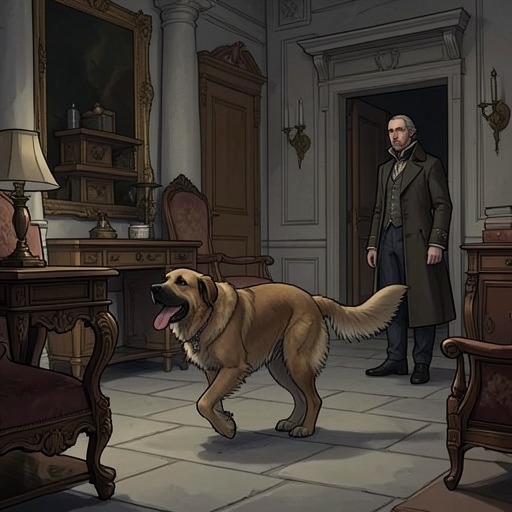
The dogs recur in a scene with Thomas Cranmer, when Alice explains that the household is running Gregory’s greyhounds up and down the hall, making enough noise to wake the dead. Thomas admits that the children’s exuberance makes it hard to break off the conversation. Against the pressures of court and the uncertain fate of Thomas Wolsey, the hounds belong to a crowded domestic world of children, relatives, and companions. Their movement through the hall gives that household a tangible liveliness, while their association with Gregory preserves the dogs’ connection to his youth and to his father’s care.