Lambeth Palace
Wolf HallLambeth Palace is both a place of precarious childhood refuge and an early school in the workings of a great household. Thomas Cromwell runs there from Putney for food, learns by watching its kitchens and corridors, and later returns to the palace in memory as he serves Cardinal Wolsey and navigates the politics of the king’s marriage and the English Church.
Childhood refuge and first lessons
As a boy, Thomas escapes his father’s household for Lambeth Palace, where his uncle John works as a cook. The palace offers a better chance of being fed. He lingers near the entrance by the river, watching people come and go and learning to identify them by the colors, animals, and objects on their shields. The watching is practical as well as imaginative: those who tell him to make himself useful are placing him in a world whose signals he is already trying to read.
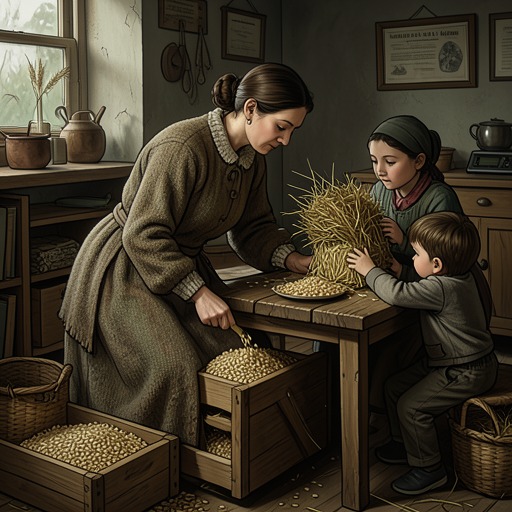
In the kitchens and passages, service follows a precise order. Children fetch and carry; household officers process with tablecloths and the Principal Salt; Uncle John measures the loaves, setting aside those that fail his standard. Thomas stands beside him and counts the loaves that pass. At the archbishop’s table, meat, cheeses, sugared fruit, and spiced wafers give way to an equally ordered distribution of leftovers, first to the kitchen staff, then to the almshouse and hospital, the beggars at the gate, and finally the children and pigs. The household makes hierarchy visible in what is served, and in who receives what remains.
A school in service and observation
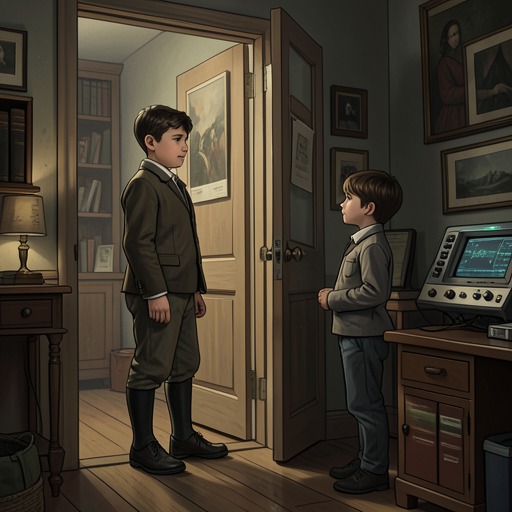
Thomas earns his keep by carrying bread and beer up the back stairs to the young gentlemen who serve as pages. The pages, born to good families, wait at table and hear the conversation of powerful men; when they are not serving, they study from large books with music and other masters. Their education and proximity to influence contrast with the boy’s errands, but the errands bring him into the same corridors and kitchens. The palace teaches him through access as well as exclusion.
One of those pages is the young Thomas More, whom the archbishop considers learned and witty. When Cromwell lingers after delivering a loaf and asks what is in More’s great book, More answers, “Words, words, just words.” The exchange joins the boy’s practical education to a first encounter with scholarship and language. Elsewhere in the household, Isabella makes marzipan figures for the archbishop and his friends to use in plays after supper; she gives Thomas a lion, though he would rather keep the fragile figure than eat it. The palace’s books, food, service, and amusements all become part of his education in how a household works.
From remembered palace to political stage
Lambeth Palace remains associated with Cardinal Wolsey’s household and ambitions. When Pope Clement VII’s illness raises the prospect of a vacancy in Rome, Wolsey imagines bringing the Holy See to England. He considers Lambeth as a possible site for a papal court if he were Archbishop of Canterbury, while acknowledging that the elderly Archbishop Warham remains in office. The boy’s former place of refuge thus reappears in a speculative design to relocate the center of religious authority.
The palace also stands at the edge of the political contest over Henry VIII’s marriage. In the account of the royal couple’s uncertain history of pregnancy, Wolsey recalls seeing Katherine at court with loosened bodices and a private smile before she withdrew for confinement; she later emerged without a child. The recollection connects the household and its courtly world to the dynastic question that drives the king’s case, without resolving what happened to the pregnancy.
Significance
The palace’s recurring importance lies in the continuity between household service and political understanding. As a child, Thomas learns to count, observe rank, and notice how food and access move through an institution. As an adult, he works within Wolsey’s political world and takes part in struggles over royal authority and succession. Lambeth is not merely a backdrop to that ascent: it is the first setting in which he encounters the practical routines, social distinctions, and human traffic of power.