Margarete
Wolf HallMargarete, the German wife of Thomas Cranmer, is a pregnant woman living in secrecy in England at a moment when her marriage and religious identity could expose her husband to danger. Her brief appearance joins the political risks of Cranmer’s reforming position to the immediate needs of a woman far from home, and draws Thomas Cromwell into a quiet act of protection.
Identity and Circumstances
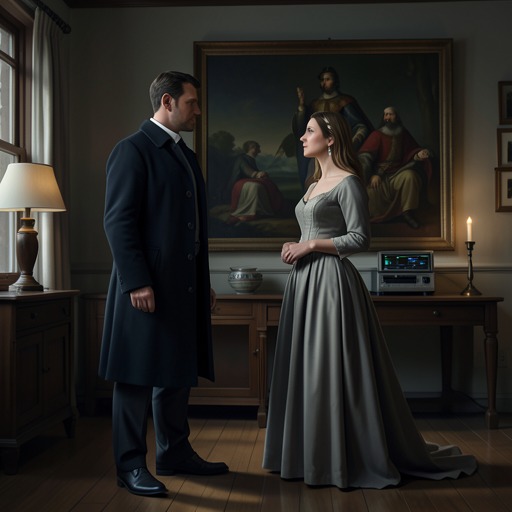
Margarete is introduced in Cranmer’s lodging, seated alone with a book. She speaks German and asks for a candle; the book is a tract by Martin Luther. Cranmer identifies her as his wife, explaining that she is from Germany and that her uncle was the Nuremberg theologian Andreas Osiander. She is pregnant, and Cranmer hopes for a daughter. Her presence is politically sensitive: Cromwell immediately recognizes that the king could punish Cranmer for having a wife, and that Margarete’s religious connections make concealment important.
A Secret Entrusted to Cromwell
Cranmer tells Cromwell that he had kept Margarete in the country but could not refuse her wish to see the celebrations. She had been out in the city, where her anonymity among the crowds helped keep her safe. Cranmer calls Cromwell his chief friend in the world and asks for his help. Though alarmed by the risk, Cromwell agrees to keep Margarete’s identity secret. Her situation changes the practical terms of that promise: she is not only Cranmer’s concealed wife but a woman approaching childbirth who needs support.
Helen Barre’s Assistance
Cromwell arranges for Helen Barre to leave Austin Friars and go to Margarete. He does not tell Helen how long she will be away, but promises that her children will be cared for. At midnight, he takes her to the lodging and explains that the woman needs her compassion, does not speak English, and need not be asked her name. Margarete is resting in a small cot. When Helen reaches out to her, Margarete responds by stroking her hand; the brief gesture establishes a connection where language is unavailable. Margarete says that Cranmer is praying, and Helen hopes he is praying for her.
Narrative Significance
Margarete’s part in the story is brief, but her concealed life makes private loyalty consequential. Cranmer’s marriage places his personal life in tension with the expectations of the king and the religious establishment; Cromwell’s response is not a political speech but the arrangement of discreet care. The scene also makes pregnancy an immediate circumstance rather than an abstraction: Margarete needs a companion, and Cromwell recruits Helen to provide one. The narrative leaves Margarete’s later fate and the child’s outcome unstated.