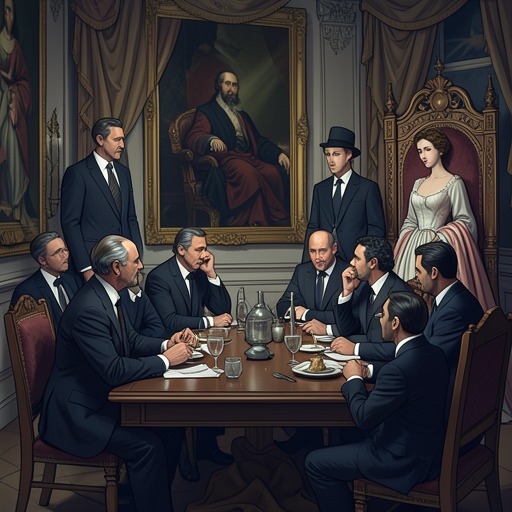
Mary Howard
Wolf HallMary Howard, daughter of Thomas Howard, Duke of Norfolk, is proposed as a wife for Henry Fitzroy, Henry VIII’s acknowledged son. Though she appears only briefly, her proposed marriage reveals how young women’s futures are arranged through guardianship and dynastic politics, while the conversation about her tests whether a prospective bride will be judged by appearance or by character.
Identity and Court Position
Mary is the daughter of the Duke of Norfolk, one of the realm’s most powerful nobles. After the death of Thomas Wolsey, Norfolk becomes Henry Fitzroy’s guardian, placing Mary close to the prince through her father’s authority. Her marriage to Fitzroy is presented not as a private choice but as an arrangement made within the court’s political order.
The Proposed Marriage
Aboard ship on the journey to France, the thirteen-year-old Fitzroy tells Thomas Cromwell that he does not want to marry Mary. His objection is expressed in immature, narrowly physical terms: he has seen her and dismisses her for not yet having developed as an adult woman. The exchange makes clear that the match is already being contemplated, although the evidence does not establish that the marriage takes place.
Cromwell answers by urging Fitzroy to consider Mary’s wit and qualities, and to allow that her appearance may change before the two are expected to live together. He invokes Castiglione’s account of women’s capacities, insisting that Mary may possess the qualities of a cultivated gentlewoman. His response turns the proposed match into a small lesson in judgment: Fitzroy’s first impression is neither a settled account of Mary nor a sufficient measure of her future.
Narrative Significance
Mary has no direct speech in the episode, and the reader encounters her through the expectations of men discussing her marriage. Yet Cromwell’s defense of her gives the absent young woman more than a dynastic function: he asks Fitzroy to recognize wit and understanding as qualities that may matter as much as appearance. The scene also echoes the novel’s wider concern with arranged matches and the political consequences of marriage, without resolving Mary’s own fate.