Rafe Sadler
Wolf HallRafe Sadler is Thomas Cromwell’s protégé, trusted household companion, and political agent: a slight, sharp-eyed young man raised under Cromwell’s roof from the age of seven. His place in the story rests on a double bond. He is both an effective instrument in court politics and a surrogate son whose loyalty Cromwell values as family, even while Rafe must learn to navigate the dangers and rivalries created by that service.
Identity and Background
Rafe has lived within Cromwell’s household since he was seven, first at Fenchurch Street and later at Austin Friars. At twenty-one, he has grown up beneath Cromwell’s protection, with the security to worry about ordinary hazards such as thieves, loose dogs, and holes in the road. The contrast between that orderly childhood and the dangerous political world he enters helps define his position: he belongs to Cromwell’s circle by upbringing and trust, not by blood.
His physical appearance marks him as distinct from the family. He is slight, with pale blue eyes and sandy-brown hair, and could not be mistaken for a Cromwell. Yet the narrator presents him as his guardian’s tribute in character: dogged, sardonic, and quick on the uptake. The boys’ joke of pretending not to see him, then asking where he has gone, captures the affectionate familiarity of the household around him.
Service and Political Intelligence
Cromwell relies on Rafe to carry out work that requires both discretion and judgment. In the winter of 1529–spring 1530, he sends Rafe to London to secure a seat in the new Parliament and to discover the intentions of Thomas Howard, Duke of Norfolk. The task is not simple errand-running: Commons seats are largely controlled by powerful patrons, and the uncertain political ground requires Rafe to assess what lies behind Norfolk’s guarded manner. Rafe succeeds in obtaining Taunton, a seat in Wolsey’s territory, with the assent of both the king and Norfolk.
The information he returns with is consequential. Norfolk believes Thomas Wolsey has buried treasure and suspects Cromwell knows where it is; he is also prepared to offer Cromwell a place in his own service. Rafe reports both the suspicion and the approach, allowing Cromwell to understand Norfolk’s interest without mistaking it for disinterested friendship. His work combines access with restraint: he gathers the intelligence, then leaves Cromwell to judge the offer and its political meaning.
Rafe is not simply a scout sent out and recalled. He stands close enough to Cromwell to ask about his journey to Yorkshire and to receive guarded explanations about what may not be spoken of. When he returns from that journey, he asks who has been looking for him, then helps Cromwell sort through the household’s news. Their exchanges are easy in tone, but the ease is grounded in long acquaintance and the confidence Cromwell places in him.
Family, Grief, and Trust
Cromwell’s bond with Rafe is most explicitly measured against fatherhood. When he considers making a will, he reflects that he would like to spare his son Gregory from the dangers and hard experiences he himself has endured. In the same private reckoning, he thinks of his nephews Richard Williams and Christopher, and of Rafe, whom he trusts as he would trust his own son. He recognizes that he has not founded a conventional dynasty, but that the people he has gathered and protected may still constitute a beginning.
That chosen-family bond becomes especially visible after Liz Wykys dies. Cromwell had been away from home, meeting men at the Steelyard, when he returned at dusk to find the household’s distressed faces. The family had sent Rafe to find him; when the gatekeepers at Gray’s Inn said Cromwell was not there, Rafe promised to search the whole city. He found no sign of him. Cromwell’s grief fixes on the fact that he was absent, but the episode also reveals Rafe’s urgency and his place among those who try to bring the household together in a crisis.
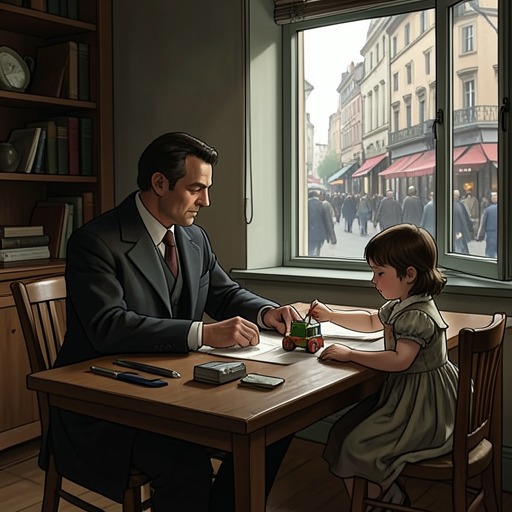
In the weeks afterward, Rafe remains close. Whenever Cromwell looks up from his reading, Rafe is there. The two of them study an old illustrated chess book and spend long stretches considering their positions without moving. Rafe blames himself for failing to find Cromwell the night Liz died, wondering whether he should have known where to look; Cromwell answers that he could not have known, and turns their attention back to the board. The game’s stalemate and their joking about being too well matched give grief a quiet form: neither can undo what happened, but they can sit together through its aftermath.
Loyalty Under Pressure
Rafe’s loyalty is tested when Stephen Gardiner returns and threatens to ruin Call-Me-Risley, who has been serving as secretary. Cromwell explains that the secretary serves whoever holds the office, and offers Risley the prospect of the Signet if Cromwell is confirmed in his post. He then urges him to apologize to Gardiner and seek a better offer, rather than attach himself recklessly to one side. In this episode Rafe is not the target of the threat, but the scene clarifies the political environment in which Cromwell’s household operates: service, office, and personal allegiance can be pulled apart by competing patrons.
Rafe’s own role is shaped by the trust Cromwell gives him in precisely this unstable world. He acts as an intermediary without being invited into every dangerous circle: Cromwell has previously refused to draw household members into risky meetings. His closeness is therefore not a license to know everything. It is a disciplined confidence, made more durable by the fact that Rafe can report what he learns and understand what must remain unspoken.
Narrative Role
Rafe provides a human measure of Cromwell’s power. At court, political intelligence can open the way to a parliamentary seat or reveal a rival’s suspicions; inside the house, the same trusted relationship appears in questions about a journey, a search through the city, or a silent game of chess. The contrast keeps political service from becoming merely procedural. Rafe’s work matters because Cromwell’s decisions are made amid bonds of gratitude and loyalty that cannot be reduced to office or patronage.
He also embodies the difference between inherited lineage and chosen continuity. Cromwell thinks of his own son, his nephews, and Rafe in the same reflection on what may outlast him, though he distinguishes their ties and does not pretend they form a conventional dynasty. Rafe’s place in that imagined future comes from years under Cromwell’s roof and from the trust earned through service. The book offers no separate final resolution for him in these scenes; instead, it establishes a continuing partnership in which devotion is practical, tested, and intimate.