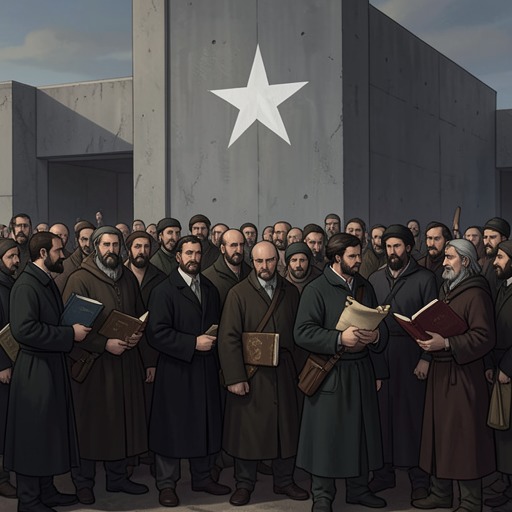
Sack of Rome (1527)
Wolf HallThe Sack of Rome (1527) is the invasion and plunder of the city by the unpaid Spanish and German troops of Charles V. In the novel, it is both a catastrophe in its own right and a turning point in Henry VIII’s marital cause: Pope Clement VII’s capture makes a favourable decision on the king’s appeal unlikely, while Thomas Wolsey sees a possible way to act in the Pope’s absence. The event’s consequences reach from Rome to the English court, where its causes and reported horrors become subjects of political argument.
Causes and Course
The news arrives while the English court of inquiry into the king’s marriage is about to adjourn. The imperial troops, who have gone unpaid for months, turn to plunder in Rome. They loot treasuries and artworks, and the account describes the city’s inhabitants, religious houses, monuments, and tombs caught up in the destruction. One soldier takes the head of the lance said to have pierced Christ’s side and fixes it to his own weapon. The image makes the violence not only an act of military pillage but an assault on objects of Christian memory.
The consequences of the invasion are captured in the report that Pope Clement has been taken prisoner. Charles V is nominally in charge of the troops, and the Pope is now in the Emperor’s hands. The account does not present Rome’s devastation as a detached foreign crisis: the capture of the head of the Church puts the authority needed to decide Henry’s marriage under the control of the ruler whose aunt, Katherine, is the king’s wife.
The English Marriage Cause
Before the sack, Wolsey has been considering how to advance Henry’s case. The Pope’s captivity changes the practical prospects. Since Clement is unlikely to look favourably on appeals passed up from England while imprisoned by Charles, the king’s matrimonial cause is delayed by events in Italy. The political link is direct: Katherine’s nephew is the Emperor, and the Pope cannot act freely while held by imperial forces.
Wolsey responds by imagining an alternative form of church government. He proposes crossing to Calais, travelling to France, and then going to Avignon, where he would convene cardinals and establish a council to keep the Church’s business moving during Clement’s captivity. If the king’s private matter came before that council, Wolsey argues, it might be possible to rule on it without waiting for military events to be resolved. He further imagines that Clement, once restored to liberty, would accept the order maintained in his absence and confirm the council’s actions. The proposal turns the emergency into a possibility for English policy, although it remains Wolsey’s plan rather than an accomplished settlement.
Disputed Accounts and Political Use
The sack also becomes material for argument about responsibility. Thomas More repeats a lurid claim that imperial soldiers roasted babies for amusement. Thomas Cromwell rejects the story, reasoning that soldiers intent on plunder would be occupied with carrying off goods they could turn into money. His response does not diminish the catastrophe; instead, it distinguishes the extensive robbery described in the news from an allegation he considers implausible.
Later, Cromwell uses the sack to challenge the Emperor’s ambassador, Eustache Chapuys. At a supper, he asks Chapuys to account for the troops’ conduct, recalling competing accusations that blamed secret Muslims, Lutherans, Germans, or wandering Jews. The questions expose the political convenience of shifting blame, while Chapuys’s guarded response offers no clear resolution. More then condemns Cromwell’s position as a friend to a corrupt priest, making the argument over the sack part of a wider dispute about Cromwell’s loyalties and Wolsey’s standing.
Consequences and Significance
The event’s immediate consequence for the English king is delay: with Clement a prisoner and Charles V in a position to influence him, Henry cannot expect an independent papal decision on his marriage. The crisis also reveals the limits of Wolsey’s influence. He can devise a council and imagine preserving church government, but the Pope’s captivity and the Emperor’s power constrain what such a scheme could accomplish.
In the novel, the sack connects military finance, political authority, and religious jurisdiction. The soldiers’ unpaid service leads to plunder; the plunder places the Pope in imperial custody; that custody obstructs Henry’s appeal and opens Wolsey’s speculative route around the obstacle. The same event is then reinterpreted in conversation at court, where contested reports serve arguments about blame, allegiance, and power. Its significance lies not only in Rome’s devastation but in the way the crisis rearranges the possibilities of rule far beyond the city.