The dead and historical memory
Wolf HallThe dead and historical memory form a persistent pressure beneath the political present in Wolf Hall. The past survives not only as recollection but as a contested inheritance: names and stories can be preserved, revised, or suppressed, while the uncounted dead remain bound to the country and its living people. Thomas Cromwell’s trained memory gives him a practical way to arrange what has happened; his encounters with official histories, religious persecution, and Thomas More’s death reveal the moral limits of treating the past as something that can simply be ordered or mastered.
Memory as a way of ordering the past
Cromwell’s recollection is linked to the art of memory: information is fixed to imagined places and images, so that it can be retrieved and arranged. The novel associates this technique with Simonides, who survived the collapse of a banquet hall and identified the disfigured dead by remembering where each guest had sat. The story makes memory an act of recognition: it restores names to people whom catastrophe has rendered difficult to identify. Its pattern also suggests the fragility of such recovery. Simonides can connect each dead person to a remembered place, but the connection depends on what he saw and retained.
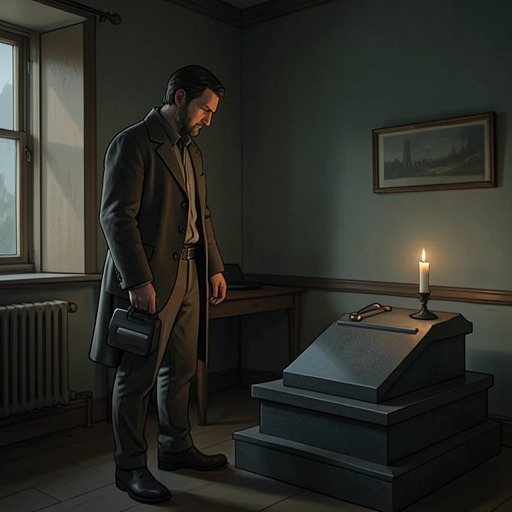
Cromwell carries this spatial practice into his working life. At Westminster, when he stays in lodgings away from Austin Friars, he mentally walks through his rooms and retrieves memory-images from windowsills, beneath stools, and among the flowers in a tapestry. Such images are not merely a private mnemonic device. They show how the past is held in particular places and objects, and how memory makes absent spaces mentally accessible. The same habit that helps Cromwell work with information also leaves his mind open to involuntary returns: recollection can be summoned, but it can also intrude.
The dead beneath the realm
When Cromwell considers the oath intended to secure the succession, political authority appears to reach across the kingdom through commissioners, laws, and pledges. Yet his imagination carries the territory beyond the reach of that administrative design. Beneath England, Wales, and the Scottish borderlands lies another landscape inhabited in his thought by spirits, hobs, boggarts, saints, and the miscarried dead buried outside consecrated ground. These figures belong to a submerged country that official maps and oaths cannot fully encompass.
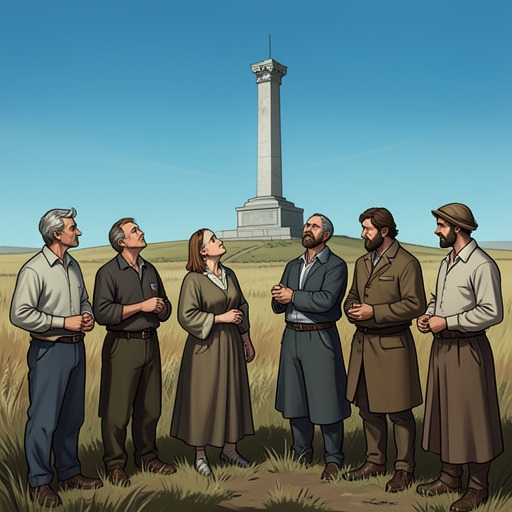
This buried population is not confined to the supernatural. Cromwell imagines the dead of every rank and vocation—lords and commoners, nuns and sex workers, priests and friars—as generations that continue to breathe through the living and draw substance from England’s future. The image makes historical memory a political problem: the realm is not only the territory governed by its living ruler, but also the accumulated lives and claims of those who have gone before. A new oath may bind the living to a new succession, but it cannot make the past disappear or ensure that all its inhabitants have been accounted for.
Rewriting lives and deaths
Cromwell’s reflections on Thomas More sharpen the difference between remembering the dead and controlling their memory. He thinks of childhood work around dead bodies and recalls the belief that the dead had to be secured lest they return to pursue the living. He now sees the relation in reverse: it is the living who pursue the dead. Their bones and skulls are displaced, while words are put into their mouths; writings are edited and lives rewritten. The power to narrate the past can therefore continue a conflict beyond death.
The example that follows is Thomas More’s account of Thomas Bilney. More had spread a report that Bilney recanted as the fire was being set. For Cromwell, this was not merely a disputed detail about an execution: it took away Bilney’s death as well as his life, recasting the meaning of his final moments. The episode makes historical memory an arena in which religious authority and political argument can reach the dead. A claim about what a condemned person said may preserve a particular account of the past, but it may also deprive the dead of the meaning others attach to their death.
Silence, testimony, and the public record
After More’s execution, Cromwell considers the apparent silence that preceded it and concludes that silence may be full of language. More’s pauses and qualifications had, in Cromwell’s view, carried fear of plain speech and resistance to the meanings Cromwell’s side assigned to words. The comparison extends beyond the courtroom: music remains in the body of an instrument, scent in a dried petal, and the absent inhabitants of an empty house in the ghosts that seem to fill it. What is no longer spoken or present may still structure the meaning of the present.
Cromwell then remembers More at trial: the prisoner rose to stop sentence being passed before he had been allowed to speak, and argued that his conscience held with the majority of Christendom. More’s words were audible in the court, but their interpretation remained contested. The legal judgment could label him a traitor; his own argument placed that verdict against a wider religious community. The scene shows that a public record does not settle historical meaning simply by recording a verdict. The words and the silences around them continue to be interpreted after the speaker is gone.
Witnessing and the persistence of the past
Cromwell’s memory of More’s final day connects political history to ordinary, material acts. He recalls More’s rough grey cape, the drizzle, the movement of his lips in prayer, and the sound of the axe; as a witness, Cromwell kneels with the others and makes the sign of the cross. The scene does not present witnessing as mastery. More seems more solid to Cromwell in death than he had in life, and the past shifts within him even as he returns to current business. The dead remain present not because memory can restore them unchanged, but because their actions and arguments continue to press upon those who survive them.
The novel’s treatment of historical memory thus turns on a double power. Remembering can restore names, preserve an encounter, and resist the erasure of a person’s chosen meaning; it can also become a tool for political administration or for rewriting another person’s death. Cromwell’s mnemonic skill helps him retain and arrange the past, but it cannot make the past obedient. The dead persist in disputed testimony, inherited stories, remembered rooms, and the unseen population beneath the official map of the realm.