The lean-to
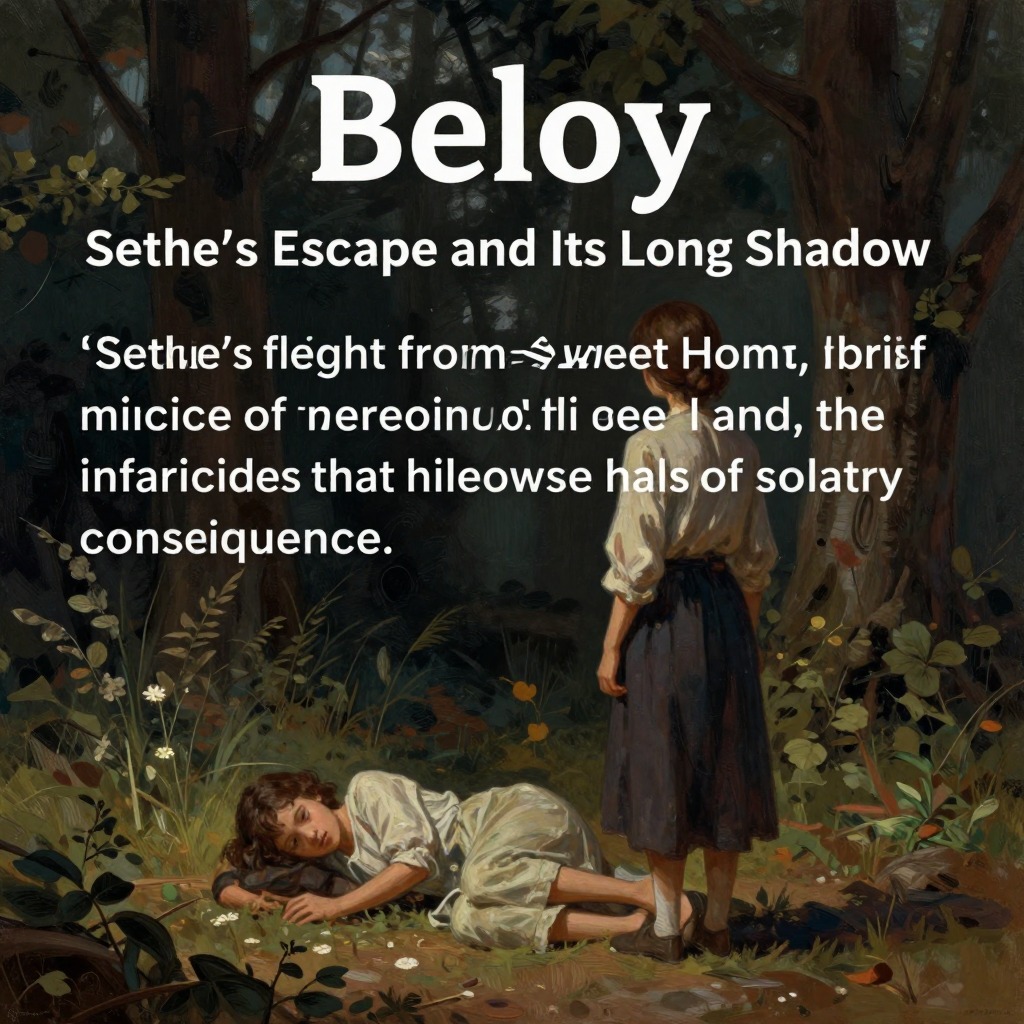
The lean-to is a rough, abandoned shelter on the Kentucky side of the Ohio River, a structure that exists at the threshold between the slave territory Sethe is fleeing and the free state she is desperate to reach. It is not a regular house with people in it, but a lean-to, a kind of makeshift hut that Amy Denver spots while searching for huckleberries. For Sethe, crawling through the woods after her milk has been stolen and her back has been pulped by schoolteacher's nephews, the lean-to becomes the only possible resting place in a landscape that offers no safety. It is here that the most intimate and unexpected act of care in her entire escape unfolds.
Amy Denver's Care and the Chokecherry Tree
Inside the lean-to, Amy pushes leaves into a pile for Sethe to lie on, then gathers rocks, covers them with more leaves, and makes Sethe put her feet on them, saying she knows a woman whose feet were cut off they were so swollen. She massages Sethe's feet and legs until Sethe cries salt tears, and when Sethe groans from the pain of returning circulation, Amy tells her, "It's gonna hurt, now. Anything dead coming back to life hurts." It is in this shelter that Amy unfastens the back of Sethe's dress and sees the scar tissue from the cowhide whipping. Struck silent for a change, Amy finally speaks in her dreamwalker's voice and names what she sees: "It's a tree, Lu. A chokecherry tree. See, here's the trunk—it's red and split wide open, full of sap, and this here's the parting for the branches. You got a mighty lot of branches. Leaves, too, look like, and dern if these ain't blossoms. Tiny little cherry blossoms, just as white. Your back got a whole tree on it. In bloom." Amy then gathers spiderwebs, cleans them of prey, and drapes them on Sethe's back, saying it is like stringing a tree for Christmas.
The Lullaby and the Departure
After her repair work, Amy weaves about the lean-to, her slow-moving eyes pale in the sun that lights her hair, and sings her mother's song, "Lady Button Eyes," a lullaby about a weary little one and a fairy who comes to soothe the eyelids down. When she finishes, she sits quietly, then repeats the last line before standing and walking off a little ways to lean against a young ash. When she comes back, the sun is in the valley below and they are way above it in blue Kentucky light. She tells Sethe she will make it through the night, and after one more massage of the swollen feet, she moves to the other side of the lean-to, braids her hair, and warns Sethe not to die on her. In the morning, Amy prods Sethe awake, checks her back, and declares, "Looks like the devil. But you made it through." She then helps Sethe to her feet, and together they leave the lean-to, heading down the hill toward the river.
Narrative Significance: A Space of Exposure and Temporary Refuge
The lean-to is the only place in Sethe's flight where she is not hunted, where her body is seen and tended rather than violated. It is a space of exposure—Sethe's back is uncovered, her feet are handled, her wounds are named—but also of temporary refuge, where the cross-racial encounter between a fugitive slave and a white indentured girl produces the novel's most famous metaphor for the scar of slavery: the chokecherry tree. The lean-to is also the site where Amy's lullaby is sung, a song that will later be recognized by Beloved, linking this shelter to the novel's larger pattern of memory and return. After Amy leaves, Sethe continues alone to the river, but the lean-to remains in the narrative as the place where, for one night, the "dead" was brought back to life through pain and care.