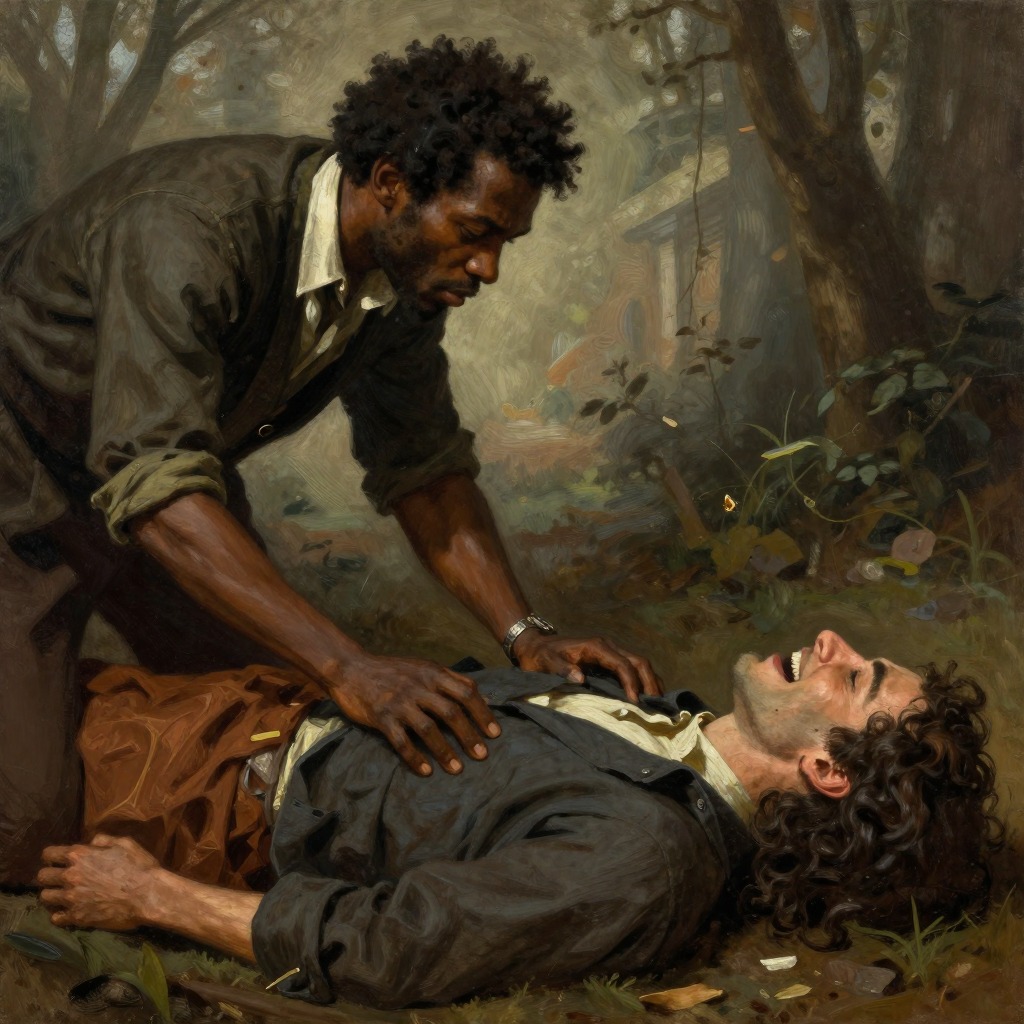
The tree called Brother
The tree called Brother is a sycamore on the Sweet Home farm in Kentucky, named by Paul D, who chose it as his special place to sit under during the midday meal. It serves as a gathering spot for the Sweet Home men—Paul D, Halle, the other Pauls, and Sixo—where they share meals, laughter, and camaraderie. The tree symbolizes the fleeting manhood and community that Mr. Garner's policy allowed the enslaved men, contrasting sharply with the degradation they suffer under schoolteacher. Its memory haunts Paul D, representing a lost innocence and the freedom to be oneself, which he contrasts with his own broken identity after his experiences in Alfred, Georgia.
Identity and Setting
The tree called Brother is a sycamore on the Sweet Home farm in Kentucky, a place Paul D chose as his own. He describes it as "old, wide and beckoning," a tree he could trust and be near, and even talk to if he wanted. It was his special spot for the midday meal, a place he selected carefully because Sweet Home had more pretty trees than any farm around. The tree was not just a location but a companion, a silent friend that offered Paul D a sense of peace and belonging in the midst of slavery.
Gathering Place for the Sweet Home Men
Under the tree called Brother, the Sweet Home men—Paul D, Halle, Paul A, Paul F, and Sixo—would gather during their breaks. They sat together, sharing meals and conversation, often joined by Sixo, who was gentle then and still speaking English. Sixo experimented with night-cooked potatoes, trying to perfect the timing of placing smoking-hot rocks in a hole, potatoes on top, and covering the whole thing with twigs so that by the time they broke for the meal, the potatoes would be at the peak of perfection. Though he never got it right, they ate those undercooked, overcooked, dried-out, or raw potatoes anyway, laughing, spitting, and giving him advice. The tree was a witness to their camaraderie, a space where they could be themselves, away from the watchful eyes of their masters.
Symbol of Manhood and Freedom
The tree called Brother symbolized the manhood that Mr. Garner's policy allowed the enslaved men. Under Garner, they were "men every one," encouraged to correct him, even defy him, and to invent ways of doing things. The tree was a place where they could exercise this manhood, sitting together as equals, sharing their thoughts and laughter. It was a stark contrast to the degradation they suffered under schoolteacher, who broke into children what Garner had raised into men. The tree represented a fleeting freedom, a moment of being human in a world that denied their humanity.
Contrast with Paul D's Later Life
For Paul D, the memory of the tree called Brother became a painful contrast to his later life. After his escape from Sweet Home, he endured the horrors of Alfred, Georgia, where he was chained and forced to break rocks. He compared the tree to the aspen he watched in Alfred, a young shoot no taller than his waist, which confirmed his despair. The tree called Brother was "old, wide and beckoning," a symbol of the life he had lost, while the aspen was a reminder of his brokenness. Paul D's memory of the tree haunted him, representing a lost innocence and the freedom to be oneself, which he contrasted with his own shattered identity.
Narrative Significance
The tree called Brother serves as a powerful symbol in the novel, representing the community and manhood that the Sweet Home men once shared. It is a place of memory, where Paul D's thoughts return when he reflects on his past. The tree is also a contrast to the degradation and dehumanization of slavery, highlighting the difference between Garner's relatively humane treatment and schoolteacher's cruelty. Through the tree, Morrison explores themes of identity, freedom, and the loss of self, making it a poignant reminder of what was taken from the enslaved men.