1698
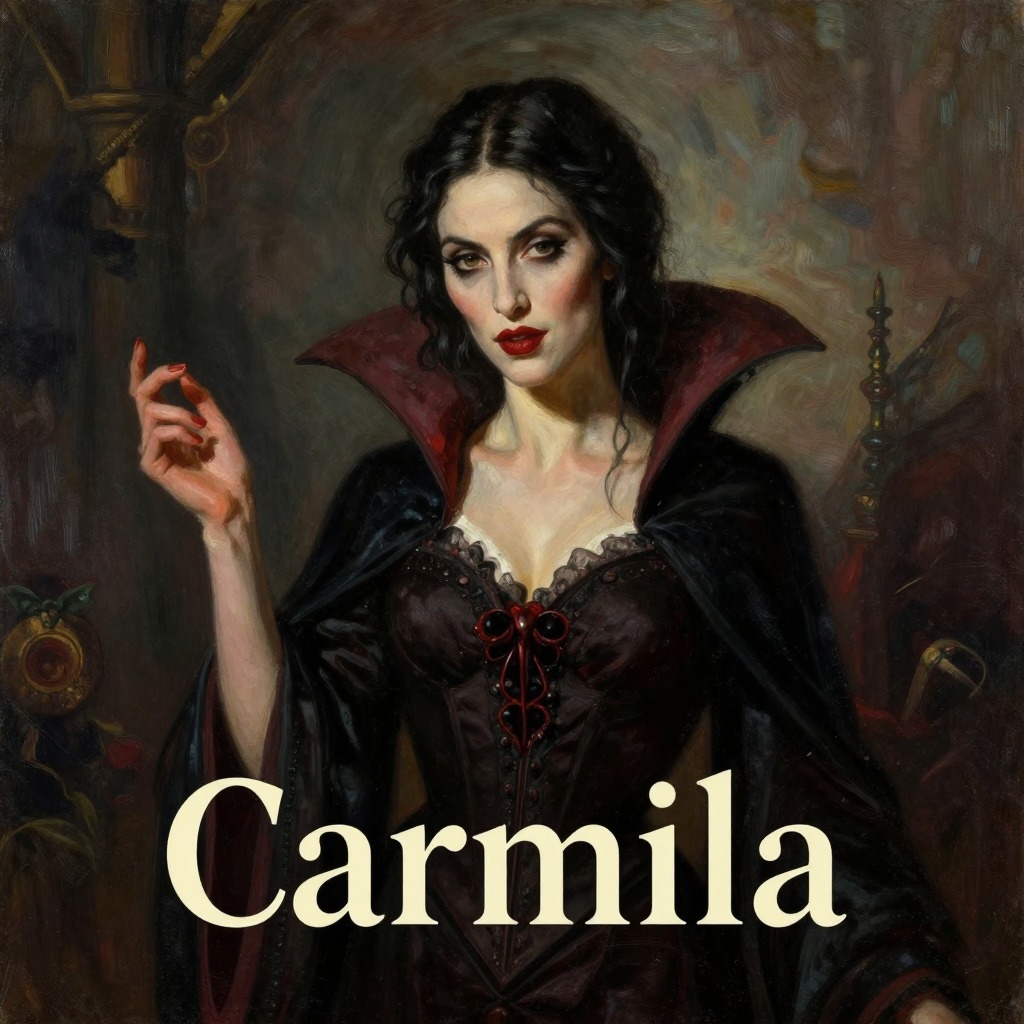
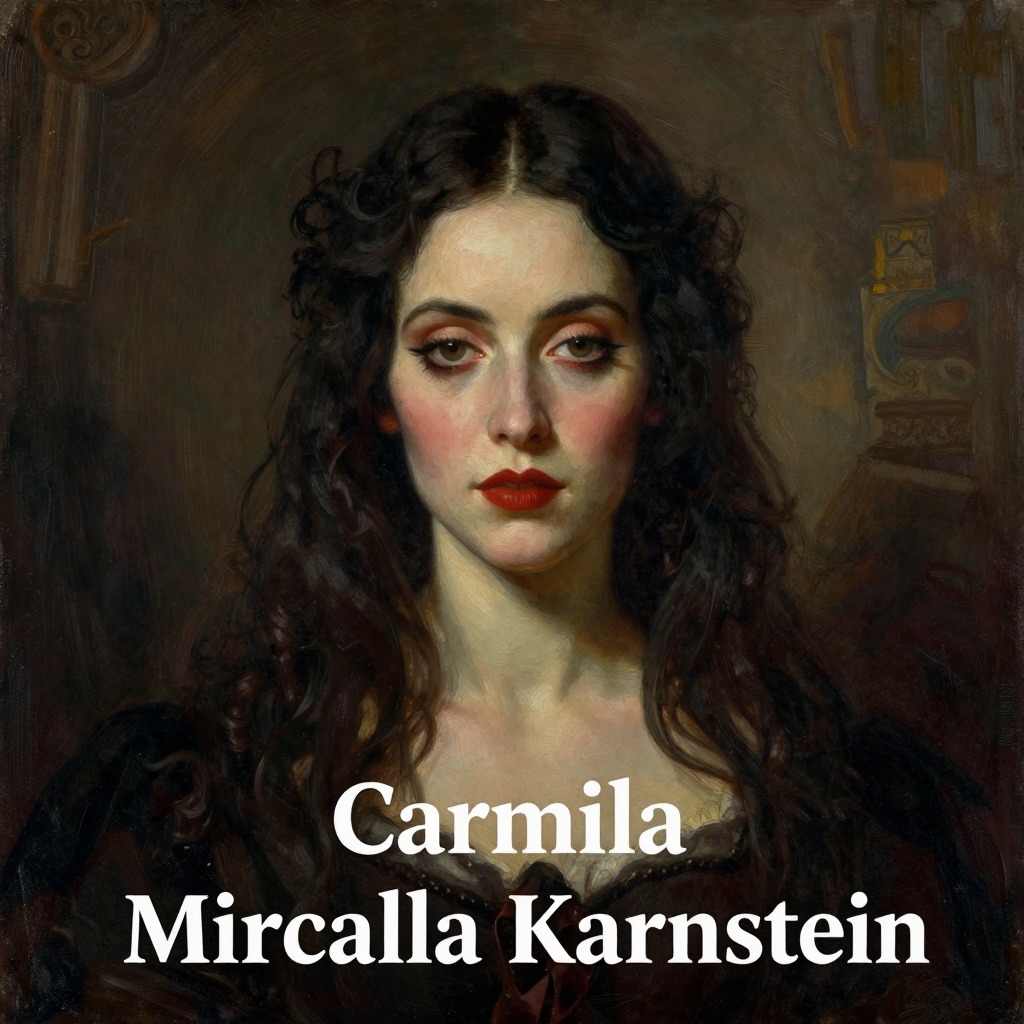
The year 1698 appears in Sheridan Le Fanu's Carmilla as the date inscribed on a portrait that proves to be the likeness of the vampire Carmilla, linking her to the extinct Karnstein family and establishing the historical depth of the novel's supernatural horror. The date is first mentioned when Laura's father reads the name "Marcia Karnstein" and the date "1698" from a small, blackened picture that has just been restored by a picture cleaner from Gratz. When the portrait is cleaned, it reveals not only a startling resemblance to Carmilla but also the true inscription: "Mircalla, Countess Karnstein," with a coronet and the date "A.D. 1698." This moment transforms the year from a mere historical marker into the key that unlocks Carmilla's identity as a centuries-old vampire, and it sets the stage for the later discovery of her tomb and the final confrontation.
The Portrait and Its Date
The portrait, about a foot and a half high and nearly square, without a frame, had been so blackened by age that Laura could not make it out when it first arrived. After renovation, it emerged as "quite beautiful; it was startling; it seemed to live," and Laura immediately recognized it as the effigy of Carmilla, even pointing out "the little mole on her throat." Her father, however, seemed little struck and looked away, while Carmilla herself, leaning back in her seat, gazed at Laura with a smile of rapture. When Laura asked to hang the picture in her room, her father consented, and it was then that the inscription became legible: "It is not Marcia; it looks as if it was done in gold. The name is Mircalla, Countess Karnstein, and this is a little coronet over and underneath A.D. 1698." Carmilla then claimed descent from the Karnsteins, saying "I am descended from the Karnsteins; that is, mamma was," and asked languidly whether any Karnsteins were still living. Laura replied that the family was ruined in civil wars long ago, and that the ruins of their castle lay only about three miles away.
The Date as a Key to Identity
The year 1698 is not merely a date on a painting; it is the first concrete evidence that Carmilla is not a contemporary young woman but a supernatural being who has lived for over a century. The portrait's inscription reveals that Carmilla's true name is Mircalla, an anagram of Carmilla, and that she is a member of the Karnstein family, whose castle and village lie in ruins nearby. This discovery foreshadows the later revelation that Mircalla, Countess Karnstein, died in 1698 and was buried in the Chapel of Karnstein, only to rise as a vampire. The date thus anchors the novel's central mystery: the beautiful, languid guest who has charmed Laura is in fact a centuries-old predator, and the portrait is the first crack in her carefully maintained disguise.
The Date's Role in the Narrative's Structure
The year 1698 also serves a structural function in the novel, connecting the present-day events of Laura's narrative to the deep past of the Karnstein family. When General Spielsdorf later tells his story of the masked ball and Bertha's death, he reveals that the vampire who killed his ward was the same Mircalla, and the date on the portrait becomes a crucial piece of evidence in the hunt for her tomb. The General, upon learning of the portrait, remarks that he believes he has seen the original, and when he and Laura's father explore the ruined chapel, they discover the tomb of Mircalla, Countess Karnstein, with the help of Baron Vordenburg. The exhumation confirms that the body, though a hundred and fifty years old, shows signs of vampirism, and the date 1698 is thus directly linked to the vampire's death and subsequent undeath.
The Date's Thematic Significance
The year 1698 embodies the novel's themes of immortality, recurrence, and the persistence of the past. The portrait, dated 1698, is a relic of a bygone era that nonetheless depicts a living, breathing woman in the present, blurring the line between past and present. The date also highlights the vampire's ability to transcend time, as Mircalla has survived for over a century by feeding on the blood of young women, including Bertha and Laura. The novel's conclusion, in which the vampire is destroyed and her ashes scattered on the river, suggests that the past can be exorcised, but the date remains as a haunting reminder of the horror that once was. For Laura, the image of Carmilla returns to memory "with ambiguous alternations," and the year 1698 stands as a permanent marker of the supernatural intrusion into her otherwise ordinary life.