Caskata Estates
Caskata Estates was a holding company formed a few months before the shark attacks began, a vehicle through which Mayor Larry Vaughan and a Mafia-connected partner, Tino Russo, sought to profit from Amity's real estate market. The company's creation and operations reveal the hidden economic forces that drove the town's disastrous decision to suppress news of the first shark attack and resist closing the beaches.
Formation and Structure
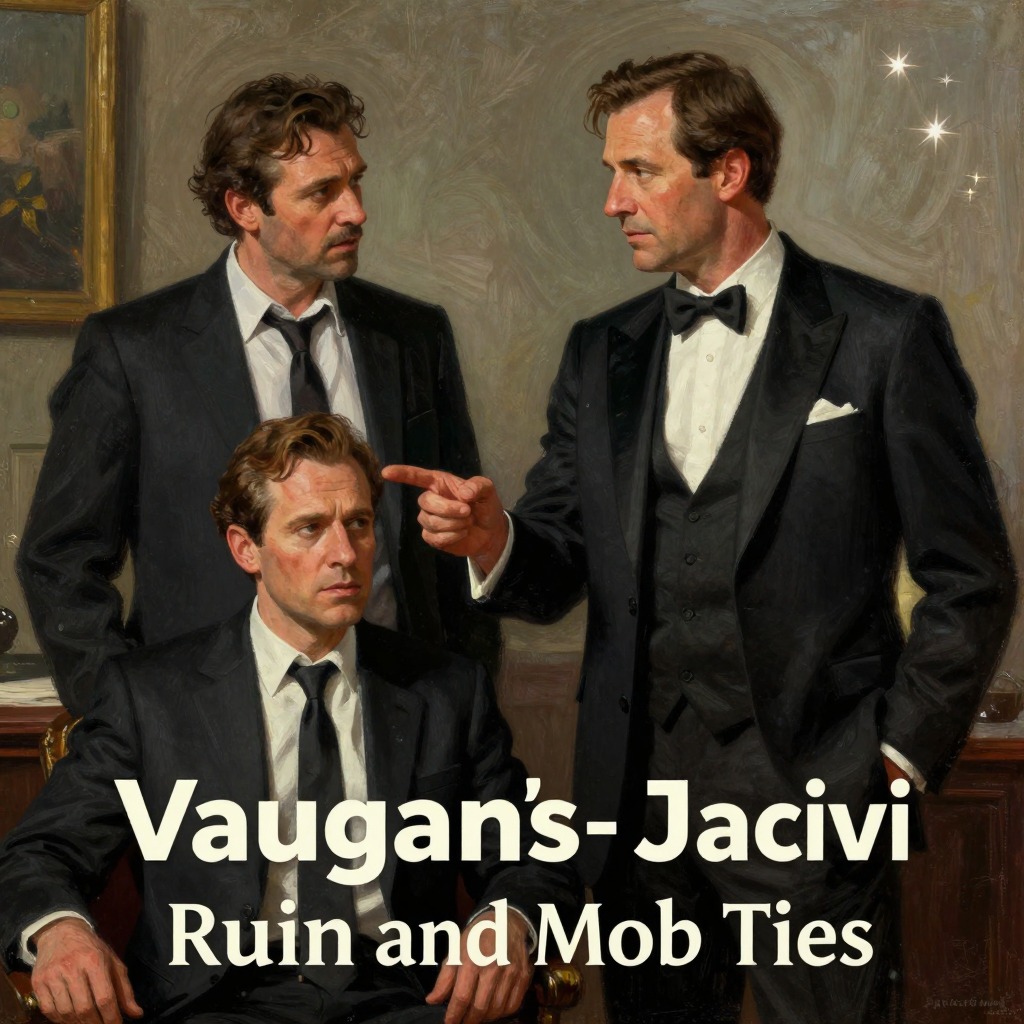
Caskata Estates was incorporated shortly before the first shark attack, initially with no real assets. Its first acquisition was a large potato field just north of Scotch Road. The company was structured with Vaughan as its president and Tino Russo as its executive vice-president. Russo was a figure the New York Times had long listed as a second-echelon member of one of the five Mafia families in New York. The company's existence was not publicly known; Vaughan had always presented himself as the sole proprietor of Vaughan & Penrose Real Estate, and the revelation of a partner—let alone one with mob ties—came as a shock to Chief Brody and editor Harry Meadows.
Exploitation of the Crisis
As the shark attacks drove down property values, Caskata Estates aggressively expanded its holdings. The company took advantage of the down market to pick up properties at very low prices, with very little money down, using short-term promissory notes signed by Vaughan. The lower real estate prices fell, the more Caskata bought, all very quietly. This strategy was a direct bet against the town's recovery: the worse the crisis, the cheaper the land, and the greater the potential profit if the market ever turned around. Vaughan's personal financial desperation was acute; by the time of the Fourth of July weekend, he had over half a million dollars in cash down payments out, and he could not possibly meet the notes if prices continued to fall.
Vaughan's Entanglement and the Pressure to Reopen
Vaughan's involvement with Russo was not a recent business arrangement but the culmination of a decades-old debt. Twenty-five years earlier, when Vaughan's wife was seriously ill, he had accepted a $10,000 loan from Russo. Vaughan tried to repay it twice, but Russo refused to cash the checks, keeping Vaughan's marker. When Russo came to collect, he did not want the money; he wanted Vaughan to make investments through Caskata Estates. Vaughan's personal financial ruin was imminent—he was out nearly a million dollars—and he saw the reopening of the beaches as the only way to salvage his position. This desperation drove him to threaten Brody's job and to pressure the selectmen, overriding all concerns for public safety.
Significance
Caskata Estates represents the corrupting influence of organized crime on a small town's economy and governance. The company's existence explains why Vaughan, a man who had been Brody's friend, became an implacable opponent of beach closures. The scandal, once uncovered by Meadows, revealed that the decision to suppress the first attack and keep the beaches open was not merely a miscalculation of risk but a deliberate act to protect a speculative real estate scheme. The company's activities underscore the novel's critique of how economic desperation can override moral and legal boundaries, and how the pursuit of profit can turn a natural disaster into a man-made catastrophe.