Opening scene, night of mid-June
The Great Fish Hunts
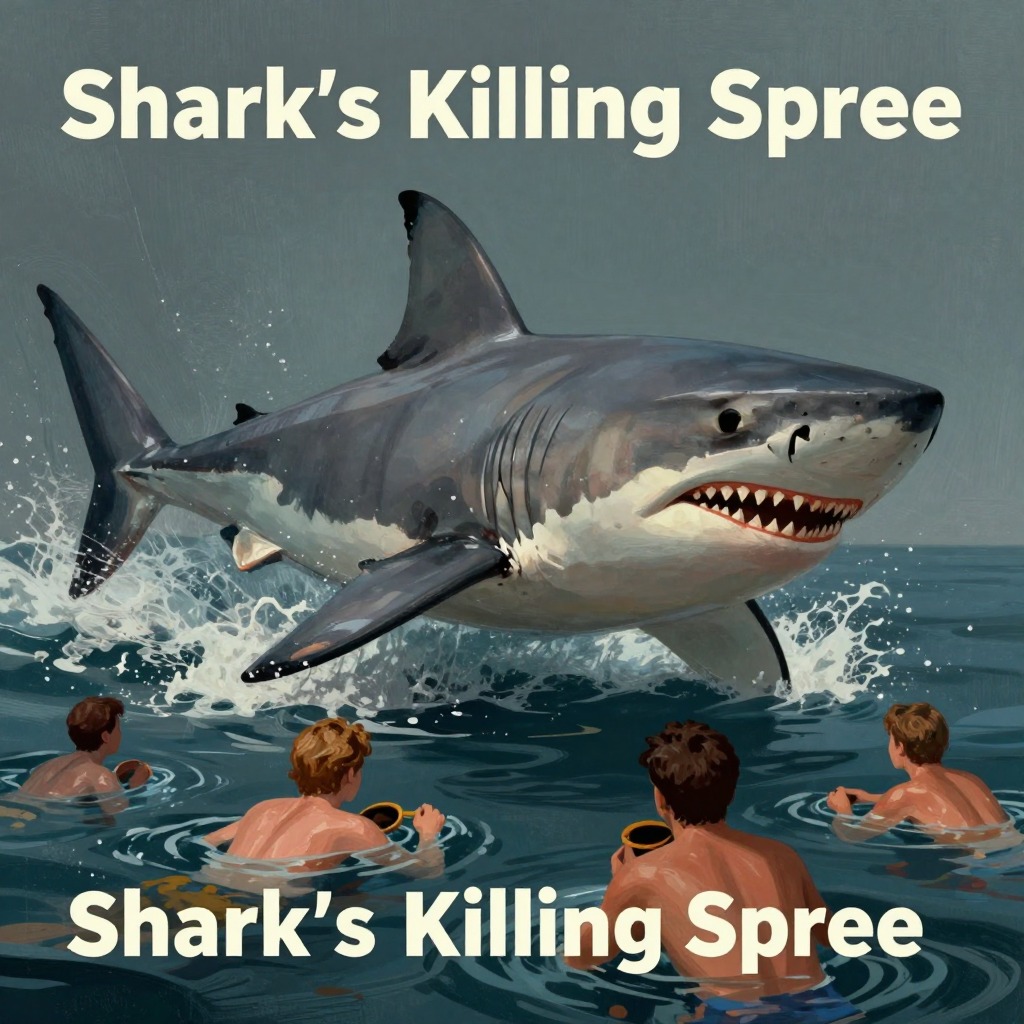
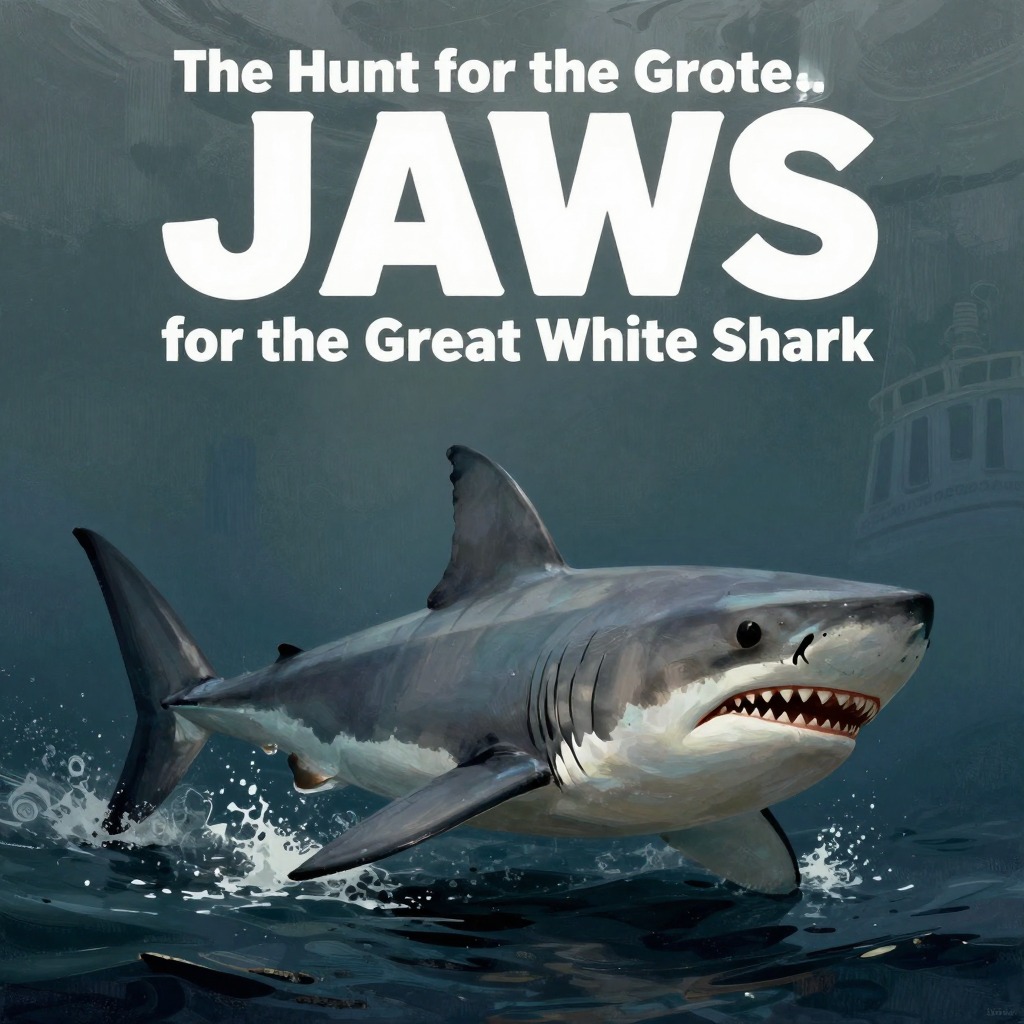
The novel opens with the great white shark moving silently through the night water off Amity. Its primitive brain registers nothing extraordinary as it cruises, propelled by instinct. On shore, a drunken man and a woman, Christine Watkins and Tom Cassidy, leave a house party and stumble onto the beach. After a quick sexual encounter, the man falls asleep while the woman decides to go for a swim. She enters the cold water and swims out, unaware of the predator below. The shark, detecting her vibrations and then her scent, attacks her savagely, tearing her apart. The man awakens at dawn, finds her clothes on the beach, and realizes she is missing. He wakes the host, Jack Foote, and they report the disappearance to the police. This opening establishes the shark as a mindless, instinct-driven killer and sets the central conflict of the novel: the threat to the community of Amity.
Early morning, after the attack
The Missing Person Report
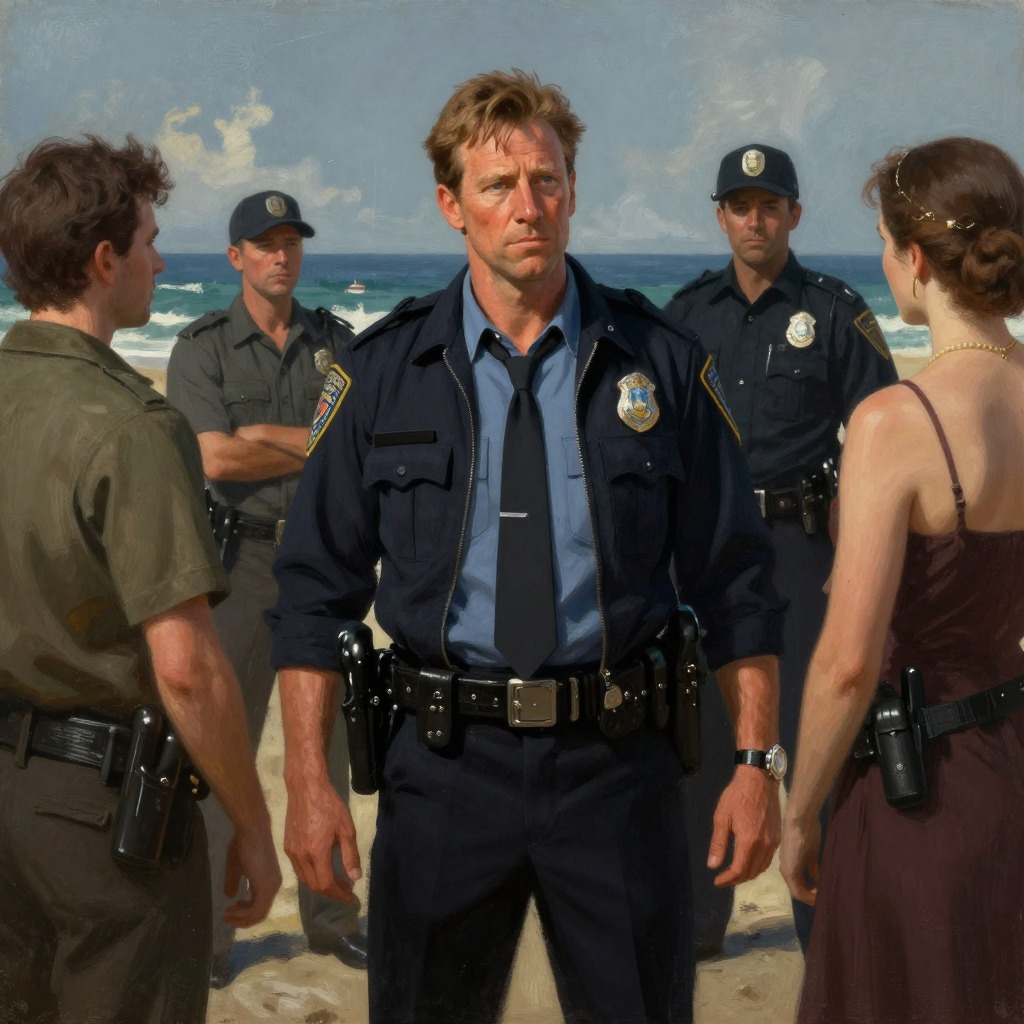
Patrolman Len Hendricks, on the midnight shift at the Amity Police Station, receives the call from Jack Foote reporting Christine Watkins missing. Hendricks, a Vietnam veteran who enjoys the cerebral aspects of police work, is initially dismissive but decides to wake Chief Martin Brody. Brody, annoyed at being disturbed, agrees to check the beach on his way to work. He drives along Old Mill and Scotch roads but finds no sign of a body, only a paper plate with scalloped orange rinds, a sign of the summer's elegant picnics. He returns to the station, where Hendricks is disappointed not to have a corpse. This event introduces Brody's character and the town's casual attitude toward the missing woman, setting the stage for the later cover-up.
Later that morning
Discovery of the Body
Brody and Hendricks, along with Tom Cassidy, search the beach. Hendricks walks east and finds a gruesome clump of seaweed containing the partial remains of Christine Watkins: a head, shoulders, part of an arm, and a third of her trunk. He vomits and signals Brody. Brody and Cassidy arrive, and Brody identifies the remains as those of the missing woman. He concludes she was attacked by a shark. Cassidy is horrified and also vomits. Brody calls for an ambulance. The discovery confirms the shark attack and forces Brody to confront the reality of the danger. The scene is a visceral introduction to the horror the shark represents.
Later that morning
Coroner Confirms Shark Attack
Back in his office, Brody fills out forms about the accident. The coroner, Carl Santos, calls to confirm the cause of death as shark attack, noting the damage could only have been done by a very large shark. Santos hints at 'other considerations'—the possibility of suppressing the news to protect the town's summer economy. Brody understands this pressure, as Amity's economy depends entirely on summer tourism. He knows a bad summer could devastate the town. This event introduces the central conflict between public safety and economic survival, a theme that will drive much of the plot.
After the coroner's call
The Amity Understanding
Brody reflects on the 'Amity understanding,' an unspoken agreement among the town's year-round residents to protect the summer tourist trade. He recalls how the town had previously suppressed news of a rapist and how the local newspaper, the Amity Leader, under editor Harry Meadows, often downplayed negative stories. Brody knows that a sensational report of a shark attack could ruin the summer season, leading to economic hardship for everyone. He decides to close the beaches for a few days, hoping the shark will move on. He calls Meadows to discuss the situation, setting up a conflict between his duty to protect the public and the town's economic interests.
Noon, the same day
Lunch with Meadows
Brody meets Harry Meadows for lunch at the newspaper office. Meadows, a large man who eats with gusto, reveals he has already investigated the attack. He contacted Matt Hooper, a young ichthyologist at the Woods Hole Oceanographic Institute, who identified the shark as a great white, or 'man-eater.' Hooper said the attack was a freak accident and the shark was likely gone. Meadows argues against publicizing the attack, citing pressure from advertisers and the newspaper's majority owner, who is also a real estate broker. Brody insists on closing the beaches, but Meadows warns him that the selectmen, led by Mayor Larry Vaughan, will oppose him. This event establishes the alliance between Meadows and Brody and the opposition from Vaughan and the business interests.
After lunch, the same day
Vaughan's Threat
Mayor Larry Vaughan visits Brody in his office. Vaughan, a successful real estate agent, is furious that Brody plans to close the beaches. He argues that the Fourth of July weekend is crucial for the town's economy and that the shark is likely gone. He threatens to have Brody removed as police chief if he closes the beaches, citing a clause in the town charter that gives the selectmen the power to fire the chief. Brody is shocked by Vaughan's aggression and his admission that he has partners. Under pressure, Brody reluctantly agrees not to close the beaches. This event marks a major turning point: Brody's decision to prioritize economic concerns over public safety, a choice that will lead to further tragedy.
Evening, the same day
Brody's Guilt and Ellen's Unease
Brody arrives home and tells his wife, Ellen, about the shark attack and his decision not to close the beaches. Ellen, a former summer resident who married Brody and now feels trapped in her life, is uneasy but trusts Vaughan's judgment. Brody is consumed by guilt and self-loathing, feeling he has been forced into a decision that could cost lives. He receives an anonymous phone call praising him for his 'terrific job,' which only deepens his unease. This event reveals the strain in Brody and Ellen's marriage and Brody's internal conflict, which will intensify as the story progresses.
Sunday, June 20, around noon
The Second Attack: Alex Kintner
A week after the first attack, the beaches are crowded with summer people. A bored six-year-old boy, Alexander Kintner, begs his mother to let him go swimming on his rubber raft. She reluctantly agrees. The boy paddles out, and a gentle current carries him offshore. The great white shark, still in the area, detects his kicks and attacks, crushing the boy and his raft in its jaws. The boy's legs are severed and sink. A witness sees a commotion but is unsure what happened. The boy's mother, realizing he is gone, becomes hysterical. This event is the direct consequence of Brody's decision not to close the beaches, and it deepens his guilt and the town's crisis.
Later that afternoon, June 20
The Third Attack: Morris Cater
Within an hour of the boy's death, the shark attacks again. An elderly man, Morris Cater, is swimming in the surf off the public beach. The shark strikes him repeatedly, savaging him. Patrolman Len Hendricks, who happens to be on the beach for his first swim in five years, witnesses the attack and tries to rescue Cater. He wades in, but the shark keeps hitting the victim. When Hendricks finally pulls Cater's body, the arm comes off in his hand. Hendricks is traumatized. The attack is witnessed by at least fifteen people, including reporters from the New York Times and Newsday. This event makes the shark crisis public and forces Brody to close the beaches immediately.
Immediately after the second attack
The Beaches Are Closed
After the attack on Morris Cater, Brody orders the beaches closed. He is furious and guilt-ridden, realizing that his earlier decision not to close them led to two more deaths. He confronts the reporters, telling them not to jump to conclusions, but the news is already out. The New York Times runs a front-page story the next day, and the Amity Leader publishes a banner headline revealing that the shark has now killed three people, including Christine Watkins. The cover-up is exposed. Brody is publicly blamed by Mrs. Kintner, who slaps him and accuses him of killing her son. This event marks the end of the cover-up and the beginning of the town's full-blown crisis.
After the beaches are closed
The Search for a Solution
Brody and Meadows discuss options. Meadows suggests chumming to attract the shark and then harpooning it. Brody is skeptical, as the town has no suitable boat or equipment. Vaughan calls, desperate to reopen the beaches for the Fourth of July, but Brody refuses. Vaughan reveals he has had cancellations and is under pressure from his partners. Brody becomes suspicious of Vaughan's business dealings. Meanwhile, a charter boat captain named Quint, who has heard about the shark, is fishing off Montauk. He tells his clients that the shark is not sport and that he will find it one day. This event introduces Quint as a potential hunter and deepens the mystery of Vaughan's motives.
Thursday, June 24
Ben Gardner's Disappearance
Brody charters local fisherman Ben Gardner to hunt the shark. Gardner goes out alone in his boat, the Flicka, but fails to return. Brody and Hendricks go out to investigate. They find the Flicka anchored, with no sign of Gardner. The boat shows signs of a struggle: a cleat has been torn out, the gunwale is abraded, and there are deep gouges in the transom. Hendricks finds a large shark tooth embedded in the wood. Brody realizes the shark attacked the boat and likely killed Gardner. This event demonstrates the shark's power and aggression, and it eliminates the town's first attempt to deal with the threat.
Evening of the same day
Matt Hooper Arrives
Harry Meadows has called Matt Hooper, the ichthyologist from Woods Hole, to come to Amity. Hooper meets Brody at the dock. Brody is initially resentful of Hooper's expertise and his status as a 'summer person.' Hooper examines the shark tooth and confirms it is from a great white, estimating the fish to be 15-20 feet long and weighing 5,000-6,000 pounds. He explains that the shark's behavior is unusual but not impossible. He offers to help find the shark. This event brings the expert into the story and sets up the dynamic between Brody, the practical cop, and Hooper, the scientific idealist.
After Hooper's arrival
Vaughan's Desperation and the Mob Connection
Vaughan continues to pressure Brody to reopen the beaches, even after Ben Gardner's death. Brody is suspicious and asks Meadows to investigate Vaughan's partners. Meadows discovers that Vaughan is deeply in debt to Tino Russo, a known Mafia figure. Vaughan had formed a company, Caskata Estates, with Russo, and they have been buying up depressed real estate. Vaughan's desperation to reopen the beaches is driven by his need to raise property values to avoid financial ruin. This event reveals the true motive behind Vaughan's actions and adds a layer of organized crime to the story.
Tuesday evening, after Hooper's arrival
The Dinner Party
Ellen Brody organizes a dinner party, inviting Hooper, the Meadows, and Daisy Wicker. She hopes to re-enter the summer community. Brody feels threatened by Hooper's presence and his easy rapport with Ellen. The evening is tense. Brody drinks too much, makes awkward comments, and argues with Ellen about the lamb. Hooper gives Ellen a tiger shark tooth pendant. The party ends badly, with Ellen accusing Brody of being awful. This event highlights the strain in Brody and Ellen's marriage and introduces the possibility of an affair between Ellen and Hooper.
The next day, Wednesday
Ellen's Affair
Ellen, feeling trapped in her life and drawn to Hooper, calls him and arranges a lunch date in Sag Harbor. They meet at Banner's restaurant, drink heavily, and engage in flirtatious conversation about sexual fantasies. After lunch, they go to a motel and have sex. Ellen returns home, feeling both exhilarated and guilty. She lies to Brody about her whereabouts. This event is a major turning point for Ellen's character and deepens the conflict between her and Brody. It also creates a secret that will later explode.
Thursday, before the Fourth of July weekend
The Selectmen's Meeting
Vaughan calls a meeting of the Board of Selectmen to force Brody to open the beaches for the Fourth of July. Hooper is also present. Brody argues against it, citing the risk of another attack. Vaughan and the selectmen, who are all economically dependent on summer tourism, pressure him. Brody receives a call from Meadows, who reveals Vaughan's mob connection. Brody confronts Vaughan, who admits his desperation. Brody reluctantly agrees to open the beaches but insists on posting warnings and having Hooper patrol. This event shows Brody's compromised position and the town's desperation.
Later that day
The Cat Killing
After the meeting, Brody returns home to find that someone has killed his son Sean's cat, twisting its neck. The killer told Sean to tell his father to 'be subtle,' echoing Vaughan's words to Brody. Enraged, Brody drives to Vaughan's house and confronts him, throwing the dead cat at him. Vaughan denies involvement but Brody doesn't believe him. This event is a direct threat from Vaughan's mob associates, showing the lengths they will go to to ensure the beaches are opened. It also pushes Brody to the edge.
Saturday, July 4
The Fourth of July Weekend
The beaches are opened for the holiday weekend. Brody, in a bathing suit, patrols the beach, watching for the shark. Hooper patrols in the Flicka. A television news crew arrives to film the scene. A teenage boy, Jim Prescott, is dared to go swimming for ten dollars. He accepts. As he swims, Hooper spots the shark and warns Brody. Brody calls the boy in, and the shark's fin is seen close behind him. The boy makes it to shore safely, but the shark is seen by the TV crew. The beaches are closed again. This event is a near-tragedy that confirms the shark is still there and makes the crisis a national news story.
After the Fourth of July incident
The Decision to Hire Quint
Brody, Hooper, and Meadows meet to discuss what to do. Brody is desperate and decides to hire Quint, the fisherman from Promised Land. He calls Quint, who demands $400 a day, cash in advance. Quint also insists on having a mate. Brody, despite his personal animosity, asks Hooper to come along as the mate. Hooper agrees, wanting to see the shark. This event sets the stage for the final confrontation at sea, bringing together the three main characters: Brody, Hooper, and Quint.
Monday, after the Fourth
The First Day on the Orca
Brody, Hooper, and Quint set out on Quint's boat, the Orca. The day is hot and still. They chum the water and wait. Quint shoots a blue shark for sport, disemboweling it to attract others, which horrifies Hooper. They argue about the ethics of killing. Quint reveals he has an unborn porpoise as special bait. The tension between the three men is palpable. They see the great white shark briefly, but it avoids the bait and attacks the boat, shaking it. Quint misses with a harpoon. The day ends with no catch. This event establishes the dynamic of the hunt and the characters' conflicting philosophies.
Tuesday, the second day of the hunt
The Second Day: Hooper's Death
The second day is also still. The shark returns and bites through the fishing lines. Hooper insists on going down in a shark cage to photograph the fish. Quint and Brody reluctantly agree. Hooper enters the cage and descends. The shark appears, circles, and then attacks the cage, bending the bars. Hooper is trapped. The shark bites him in half, killing him. Brody and Quint watch in horror. Quint throws a harpoon but misses. Brody shoots, accidentally hitting Hooper's corpse. The shark disappears with Hooper's body. This event is the climax of the novel's second act, eliminating Hooper and leaving Brody and Quint alone to face the shark.
The next day, the third day of the hunt
The Final Confrontation
Despite the tragedy, Quint is determined to kill the shark. Brody, feeling he has no choice, agrees to go with him. They set out again. The shark finds them quickly and attacks the boat, damaging it. Quint harpoons the shark three times, but the fish refuses to die. It rams the boat repeatedly, causing it to take on water. The boat begins to sink. Quint is pulled overboard by a rope wrapped around his leg and is dragged to his death. Brody is left alone in the water, clinging to a cushion. The shark approaches him but then sinks into the depths, dead from its wounds. Brody begins to swim toward shore. This event is the novel's resolution: the shark is dead, but at the cost of two lives and the destruction of the boat.