WNBC-TV News
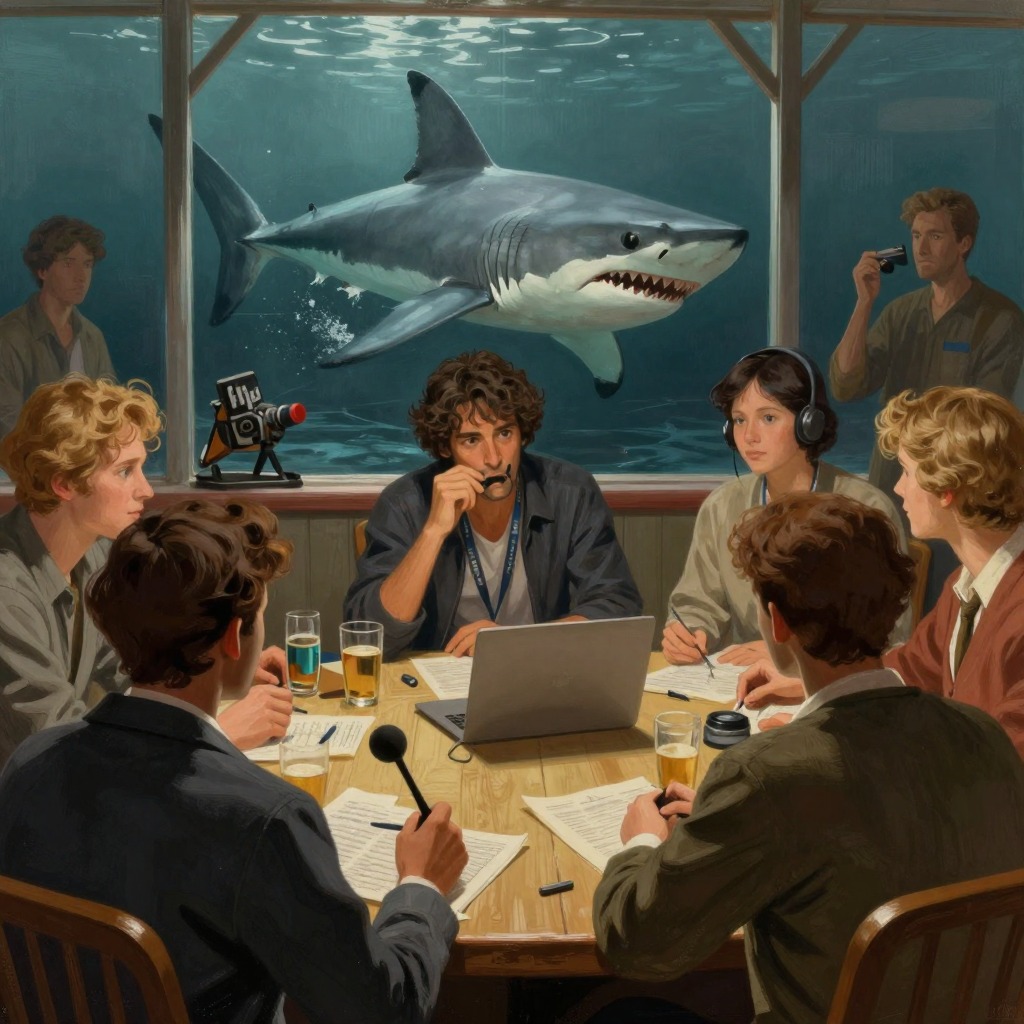
WNBC-TV News, a New York City television station, arrived in Amity on the Fourth of July weekend to cover the reopening of the beaches, and its presence transformed a local gamble into a nationally witnessed crisis. The station's news crew, led by reporter Bob Middleton, had been on the beach since early morning, filming the empty water and interviewing the few people who dared to venture near the shore. Their cameras were rolling when the great white shark reappeared, and the footage they captured—of a teenage boy swimming, the sudden appearance of the dorsal fin, and Police Chief Martin Brody's frantic rescue—became the definitive visual record of the town's failed attempt to return to normalcy. The broadcast of that footage forced the immediate re-closure of the beaches and cemented the shark's status as a national news story, a development that had profound consequences for Amity's economy and its leadership.
Arrival and Coverage of the Beach Reopening
The WNBC-TV News crew, consisting of reporter Bob Middleton, cameraman Walter, and soundman Irv, arrived on the Scotch Road beach in a white panel truck with the station's logo on its side. They had been present for most of the morning, filming the beach and interviewing people about the shark. Middleton, a young man with long, curly hair and a handlebar mustache, approached Brody on the dune and requested an interview about the decision to open the beaches. Brody, initially reluctant, agreed, seeing a chance to project a sense of normalcy. The crew set up their equipment on the sand, with Walter operating a 16 mm. camera on a tripod and Irv managing the sound. Middleton's plan was to film a segment showing a swimmer entering the water, a visual demonstration that the beach was safe.
The Near-Fatal Swim and the Filmed Attack
To create the desired footage, Middleton recruited a local teenager, Jim Prescott, who had been dared by a friend to swim for ten dollars. Middleton stopped the boy as he was about to enter the water, asking him to wait so the crew could film his swim. After a brief interview, during which Prescott stated he was not scared, the boy ran into the water and began swimming. The camera tracked him as he moved away from the shore. Suddenly, the pitch of the engine on the Flicka, the patrol boat, changed, and Brody, who had been watching from the dune, received a radio call from Matt Hooper, who had spotted a shadow in the water. Brody ordered the boy to come in, but he did not hear. As the boy swam back, Hooper's boat drew near, and Hooper shouted a warning. The camera captured the moment when the shark's dorsal fin rose behind the swimming boy, and Brody waded into the surf to pull him to safety. Middleton, standing nearby with his microphone, narrated the scene for the camera, saying, "Something is going on, ladies and gentlemen, but we don't know exactly what." The crew filmed the entire sequence, from the boy's swim to the fin's appearance to the rescue.
The Interview and the Aftermath
After the boy was safe, Middleton immediately sought an interview with Brody, who was still shaken. Brody, standing on the beach with the camera crew, confirmed that the shark had returned and that the beaches were closed again. When Middleton asked, "In retrospect, Chief, how do you feel about having opened the beaches today?" Brody replied, "Angry, annoyed, confused. Thankful that nobody got hurt." The interview was brief, but it captured the chief's raw emotion and the town's predicament. Middleton then wrapped up the segment, telling his crew to head back to the station to edit the footage. The broadcast of that footage, which showed the shark's fin and the near-death of a child, had an immediate and devastating impact. It confirmed the shark's continued presence, undermined any remaining public confidence in the town's safety, and made the story a national sensation. The incident also led to a confrontation between Brody and a tourist from Queens, who had driven two and a half hours to see the shark and was disappointed that the attack was not more dramatic, a stark illustration of the macabre tourism the crisis had attracted.