Siberia
Siberia is the immense eastern expanse of the Russian Empire that functions as the terminal destination of the Tsarist penal system, the place of exile and penal servitude for thousands of convicts, and the geographical and moral horizon toward which the entire narrative of Resurrection inexorably moves. It is not merely a setting but a symbol of the state's power to banish and destroy, and, paradoxically, the site where the novel's most profound transformations—both personal and social—are tested.
Definition and Role in the Penal System
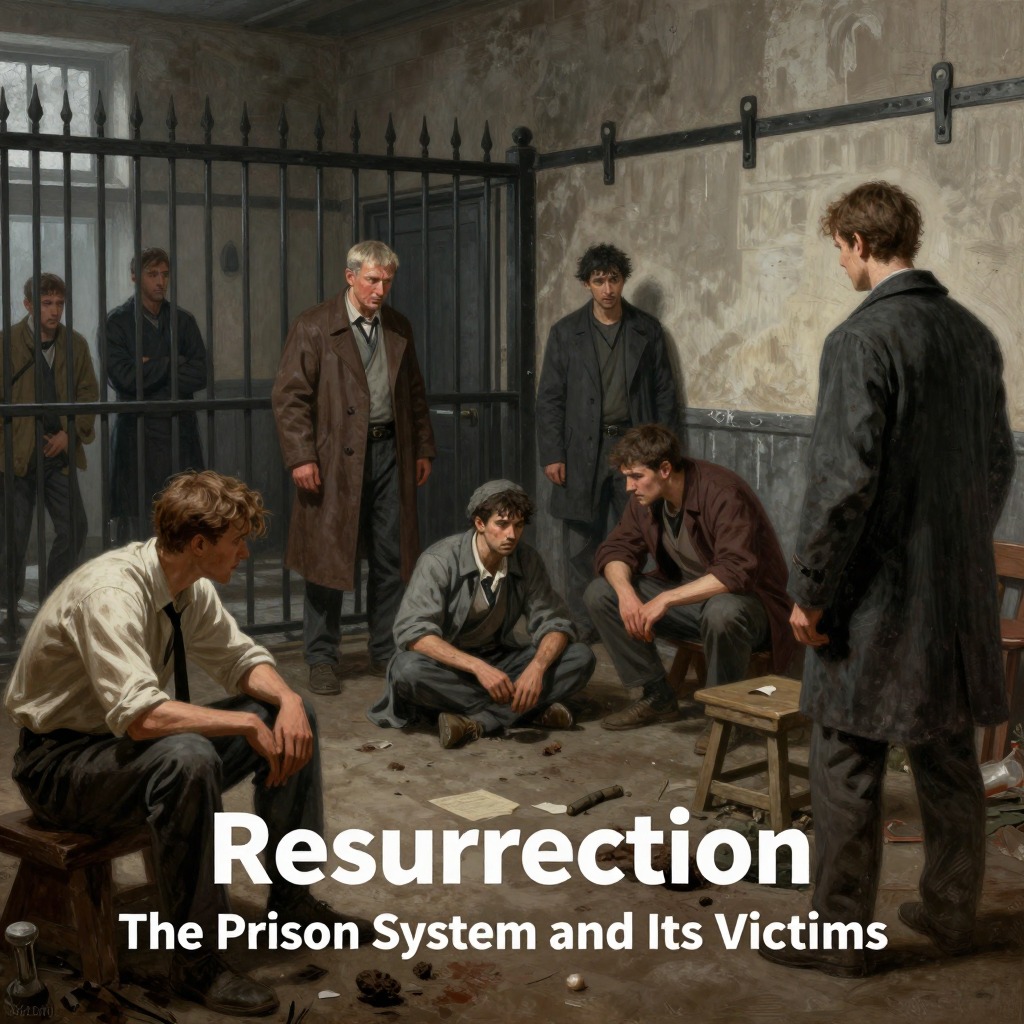
Siberia is defined in the novel as the place of punishment for those convicted by the Imperial courts. The sentence of penal servitude in Siberia is the harshest penalty short of death, and it is the fate that awaits Katerina Maslova after her wrongful conviction. The novel's preface, written by the translator, notes that the proceeds from the book were devoted to aiding the Doukhobors, a sect "persecuted in the Caucasus (especially from 1895 to 1898) for refusing to learn war," and that "about seven thousand three hundred of them are settled in Canada, and about a hundred of the leaders are exiled to the remote parts of Siberia" . This establishes Siberia as a place of exile for religious dissenters as well as common criminals. The journey itself is a central ordeal: prisoners are transported by rail, by barge, and on foot, often under brutal conditions. The convicts who arrive by rail are described as "bearded, clean-shaven, old, young, Russians, foreigners, some with their heads shaved and rattling with the chains on their feet" , a sight that fills the prison anteroom with "dust, noise and an acid smell of perspiration." The sheer scale of the system is emphasized by the fact that the gang of prisoners with which Maslova travels consists of "623 men and 64 women" .
The Journey and Its Horrors
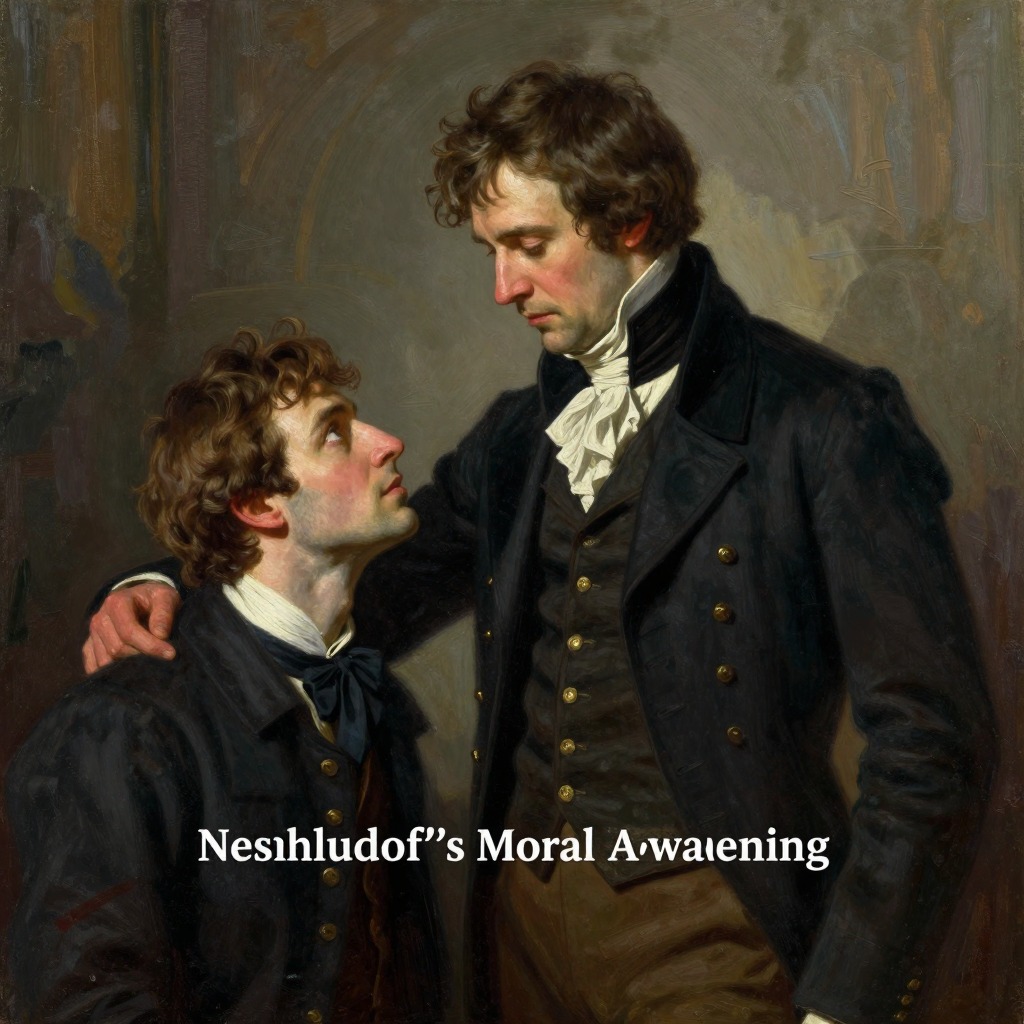
The journey to Siberia is depicted as a systematic infliction of suffering. The prisoners are marched in chains through the heat, and the novel records the deaths of multiple convicts from sunstroke in a single day. Nekhludoff, who follows the gang, witnesses two such deaths and is told that five convicts died on the way from the Boutyrki prison to the Nijni railway station in Moscow . The physical and moral degradation is relentless. The prisoners are crowded into stinking cells and halting stations, and the constant threat of violence and disease hangs over them. The journey is also a moral crucible for Nekhludoff, who decides to follow Maslova to Siberia, a decision that marks his complete break with his former life of privilege. He tells his sister, Nathalie, "I go because I must" , and later reflects that "the only place befitting an honest man in Russia at the present time is a prison" , a thought that crystallizes his identification with the condemned.
Siberia as a Place of Transformation
Despite its horrors, Siberia becomes the setting for the most significant spiritual and relational changes in the novel. It is here that Maslova, after joining the political prisoners, finds a new community and a new sense of purpose. She tells Nekhludoff, "There now, and I cried when I was sentenced. Why, I must thank God for it all the days of my life. I have learned to know what I never should have found out else" . It is also in Siberia that Valdemar Simonson, a political exile, proposes to Maslova, offering her a future based on mutual respect rather than pity or guilt. The final, decisive conversations between Nekhludoff and Maslova take place in Siberian halting stations and prisons, culminating in her choice to remain with Simonson. The novel's climactic spiritual awakening for Nekhludoff occurs in a Siberian hotel room, where he reads the Sermon on the Mount and finds the five commandments that he believes can establish the Kingdom of Heaven on Earth (E03997-E04002). Siberia, the place of punishment, thus becomes the place of resurrection.
Narrative Significance
Siberia functions as the novel's ultimate testing ground. It is the destination that organizes the plot after the trial, the source of the most harrowing depictions of state cruelty, and the backdrop for the characters' most profound moral choices. The journey to Siberia is not a detour but the novel's true destination, the place where the abstract questions of justice, punishment, and redemption are forced into concrete, lived experience. The novel ends not with a return from Siberia but with Nekhludoff's decision to remain there, his new life beginning not in spite of the place but because of it.