Healing Potion
The Healing Potion appears at a pivotal moment of crisis and transition in the novel, when Kamala, the former courtesan and Siddhartha's great love, is fatally bitten by a snake while journeying with their son to see the dying Buddha Gotama. The potion is prepared and administered by Siddhartha himself, who now lives as a ferryman with Vasudeva, and it represents the last resort of physical medicine against a poison that has already turned her wound black and swollen her body. Though the draught briefly returns her consciousness, allowing her to recognize Siddhartha and speak of her pilgrimage and her peace, it cannot halt the progress of the venom. The Healing Potion thus functions as a concrete symbol of the boundary between worldly remedies and the irreversible course of fate, a boundary Siddhartha has learned to accept through his years by the river.
Administration and Immediate Effect
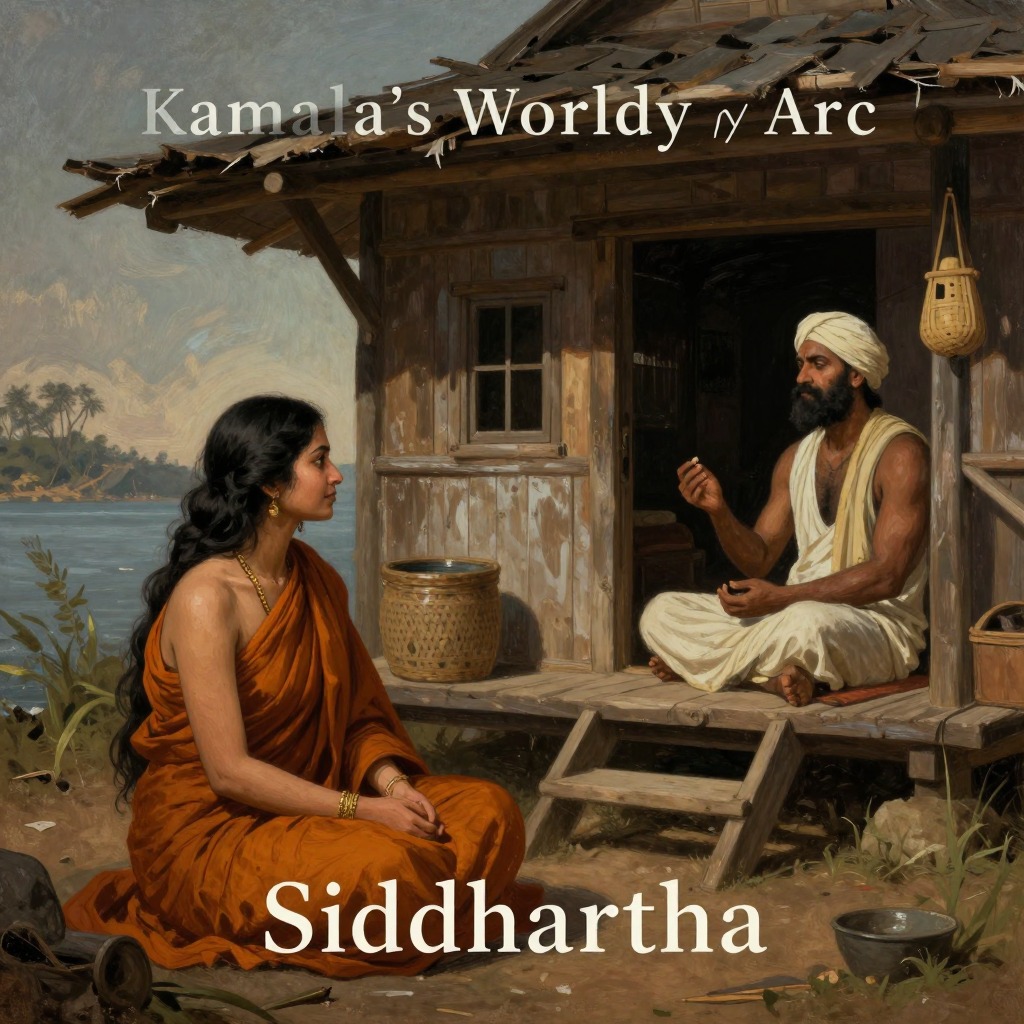
When Kamala collapses near the ferry after the snakebite, Vasudeva carries her into the hut where Siddhartha is lighting a fire. Siddhartha instantly recognizes her and their son, and his heart stirs. He washes the wound, which has already turned black, and makes her drink a healing potion. The potion brings her back to consciousness, and she lies on Siddhartha's bed, looking at him as if in a dream. She speaks with a heavy tongue, paralyzed by the poison, and remarks on how he has aged and yet remains like the young Samana who first came to her garden. The potion grants her a brief interval of lucidity, during which she points to their son and confirms his paternity, and Siddhartha, taking the boy on his knees, recites a Brahman prayer from his own childhood to calm the weeping child.
Limits of the Potion and the Nature of Healing
Despite the temporary revival, the potion cannot overcome the poison. Kamala's body remains swollen, and Siddhartha quietly tells Vasudeva, "She'll die." The potion's failure underscores a central theme of the novel: that physical remedies, however skillfully prepared, cannot address the deeper spiritual sickness or the inevitability of death. Siddhartha, who has himself passed through cycles of disgust, despair, and near-suicide before finding peace by the river, does not rely on the potion to save Kamala. Instead, he reads the suffering on her face with quiet attention, his mind becoming one with her pain, and when she asks if he has found peace, he smiles and places his hand on hers. The potion is a tool, but the true healing—the peace Kamala says she too will find—comes from Siddhartha's presence and the recognition of the oneness of all life.
The Potion as a Narrative Device
The Healing Potion serves to create a brief but profound reunion between Siddhartha and Kamala, allowing for a final conversation that resolves their relationship. Kamala, who had given her pleasure-garden to Gotama's monks and taken refuge in the teachings, had been on a pilgrimage to see the dying Buddha. In Siddhartha's hut, she realizes that she has found in him the same peace she sought from the perfected one. The potion enables this recognition, but its ultimate impotence reinforces the novel's insistence that wisdom cannot be conveyed through words or substances—it must be lived and experienced. After Kamala's death, Siddhartha sits for a long time looking at her peaceful face, remembering how he once compared her mouth to a freshly cracked fig, and feels the indestructibility of every life and the eternity of every moment. The potion, having done what it could, recedes into the background of a much larger realization.