Scroll
The Scroll appears in Siddhartha as a concrete object that embodies the limitations of written knowledge and formal teachings, standing in contrast to the direct, experiential wisdom Siddhartha seeks. It first surfaces in the merchant Kamaswami's house, where Siddhartha is asked to read a sales-contract written on a scroll, demonstrating his literacy and learning. Later, the scroll becomes a metaphor for the kind of knowledge Siddhartha rejects: the fixed, one-sided truths of scripture and doctrine that cannot convey the living, paradoxical reality of the world.
The Scroll as a Test of Literacy and Worldly Skill
When Siddhartha arrives at Kamaswami's house, the merchant tests him by handing him a scroll on which a sales-contract has been written. Siddhartha reads its contents aloud, proving his ability to function in the commercial world. Kamaswami then asks him to write something on a piece of paper, and Siddhartha produces the aphorism: "Writing is good, thinking is better. Being smart is good, being patient is better." This moment establishes the scroll as a tool of worldly commerce and a marker of the literate, intellectual class from which Siddhartha comes. Yet even here, his response subtly devalues the written word in favor of inner qualities like thinking and patience.
The Scroll as a Symbol of Teachings and Doctrines
Throughout the novel, the scroll is implicitly linked to the sacred texts and teachings that Siddhartha studies and then abandons. As a young Brahman, he had immersed himself in the holy books, particularly the Upanishads of the Samaveda, which contained "wonderful verses" about the Atman. Yet he found that these written words, however pure and wise, could not be lived; they remained abstract knowledge rather than direct experience. The scroll thus represents the kind of learning that Siddhartha comes to distrust: knowledge that is "collected and preserved" but not embodied. When he later tells Govinda that "wisdom cannot be passed on" and that teachings are "mere words," he is rejecting the scroll's promise of conveying truth through text.
The Scroll and the Act of Reading the World
Siddhartha's awakening after leaving Gotama involves a radical reorientation toward reading itself. He reflects that when someone reads a text, he does not scorn the symbols and letters but studies them letter by letter. Yet he had done the opposite with the world: for the sake of a meaning he anticipated, he had scorned the visible world as a deception. The scroll thus becomes a metaphor for how one approaches reality. Siddhartha learns to read the world not as a fixed text to be decoded for a hidden meaning, but as a living, ever-changing presence to be experienced directly. The river, which teaches him to listen rather than to read, becomes the anti-scroll: a source of wisdom that cannot be written down.
The Scroll's Absence in Siddhartha's Final Wisdom
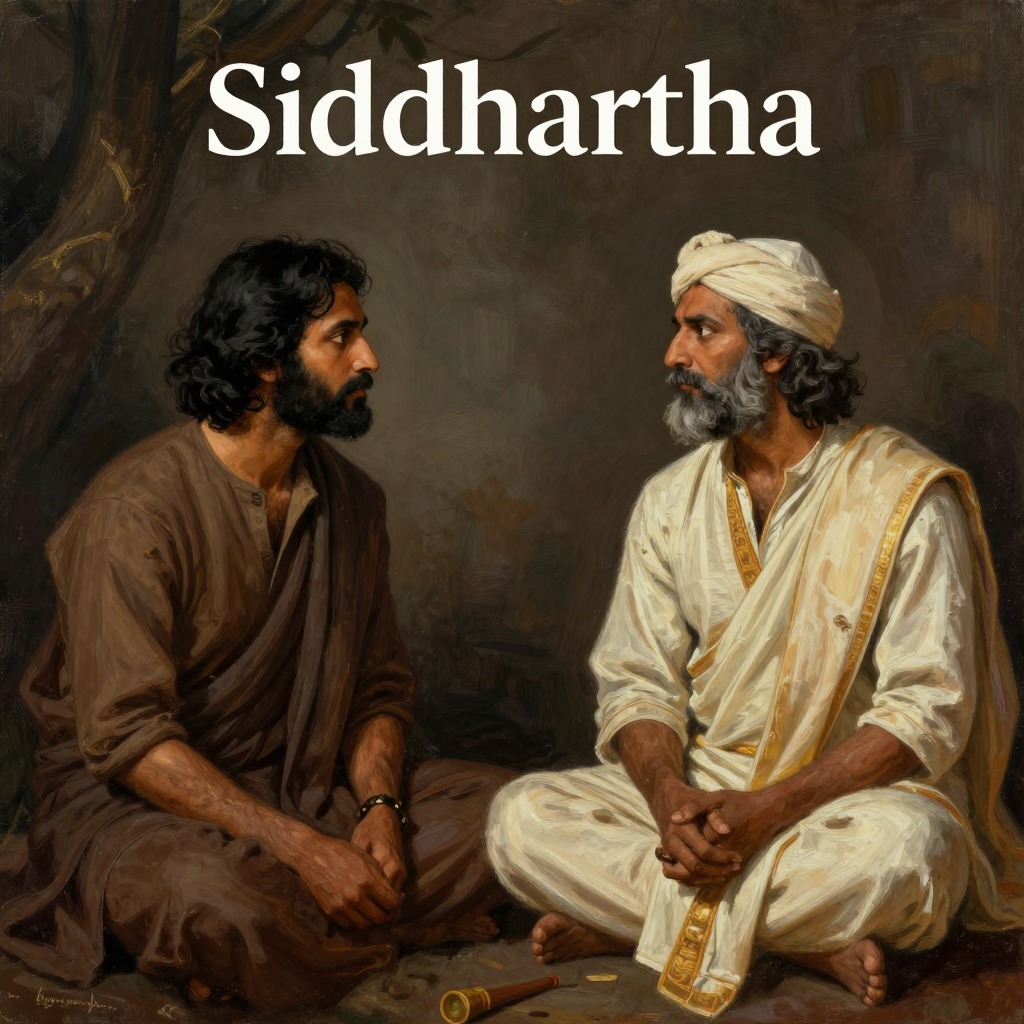
In his final meeting with Govinda, Siddhartha explicitly rejects the idea that wisdom can be conveyed through words or teachings. He picks up a stone and speaks of loving it not for what it might become but for what it is in this moment. The scroll, as a repository of words, is precisely what he has left behind. Govinda, still a seeker of teachings, struggles to understand Siddhartha's paradoxical statements, but he recognizes in Siddhartha's face and bearing a holiness that no scroll could contain. The scroll thus marks the boundary between the intellectual pursuit of knowledge and the direct, loving engagement with the world that Siddhartha finally achieves. Its presence in the narrative underscores the novel's central theme: that the deepest truths cannot be written or taught, only lived.