The Fox appears briefly but symbolically in The Scarlet Letter, a wild creature of the forest that interacts with Pearl during her mother's meeting with Arthur Dimmesdale. Its presence underscores the child's kinship with the untamed natural world and her separation from the human community.
Walden Pond is a location in the autobiographical frame of Nathaniel Hawthorne's "The Scarlet Letter," mentioned in the Custom-House sketch as the site of Thoreau's hermitage, where Hawthorne once talked with him about pine-trees and Indian relics, representing a past life of intellectual and imaginative freedom that contrasts with the stifling atmosphere of the Custom-House.
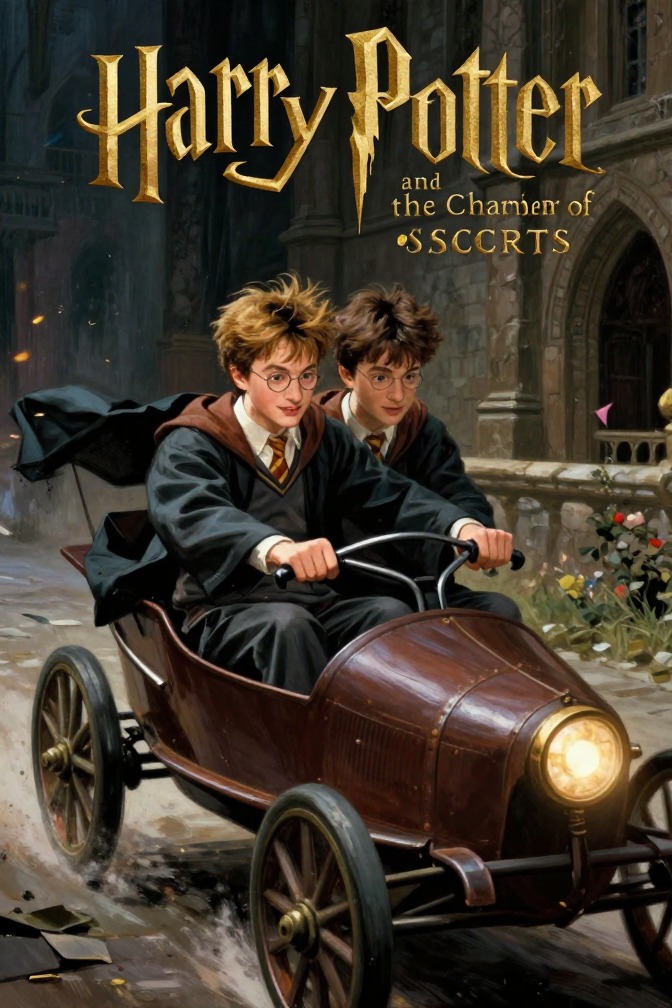
The Flying Car Rescue is the pivotal event in Harry Potter and the Chamber of Secrets where Ron Weasley, along with his twin brothers Fred and George, flies their father's enchanted Ford Anglia to 4 Privet Drive to rescue Harry from the Dursleys' imprisonment. This daring act not only frees Harry from his abusive relatives but also sets off a chain of consequences that includes a crash into the Whomping Willow, a near-expulsion, and the revelation of Arthur Weasley's illegal car enchantment, ultimately shaping the entire second year at Hogwarts.
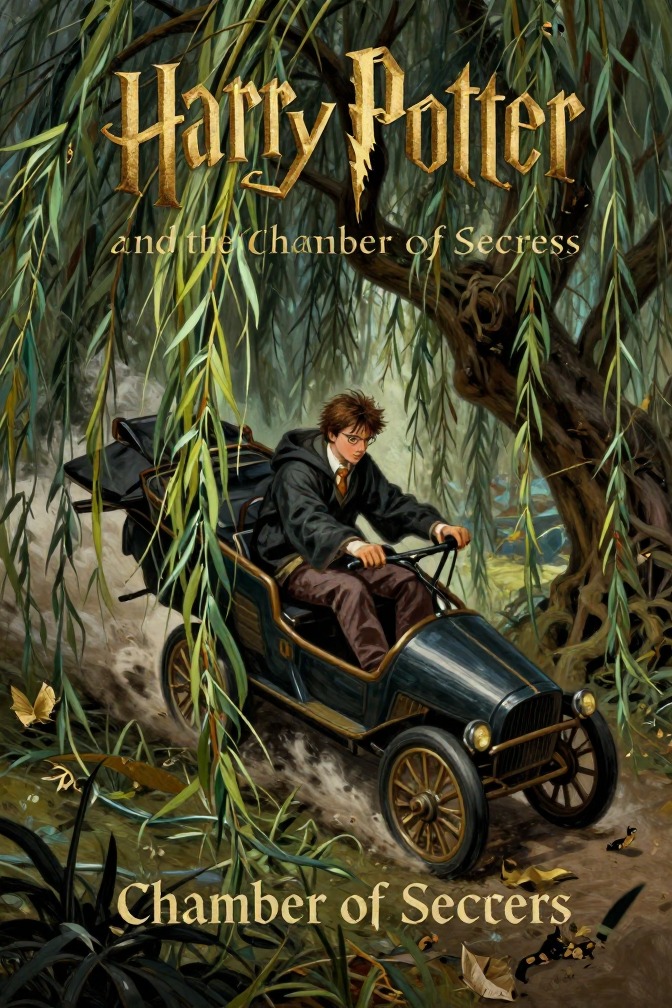
The crash of the flying Ford Anglia into the Whomping Willow is a pivotal event in Harry Potter and the Chamber of Secrets, marking the dramatic and disastrous conclusion of Harry and Ron's unauthorized flight to Hogwarts. This incident not only destroys Ron's wand and strands the boys at the school, but it also triggers a series of consequences: they are caught by Severus Snape, face disciplinary action from Professors McGonagall and Dumbledore, and their actions become known throughout the school, setting the tone for their troubled second year.
Fang is Rubeus Hagrid's loyal boarhound, a large, slobbering dog who lives in Hagrid's hut on the grounds of Hogwarts. He is a constant companion to Hagrid and a source of comfort and comic relief to Harry Potter and his friends, though his enthusiasm often gets him into trouble. Fang plays a crucial role in the second-year adventure, accompanying Harry and Ron into the Forbidden Forest and later helping them escape from the giant spiders, demonstrating his bravery despite his occasional cowardice.
Rubeus Hagrid is the Hogwarts gamekeeper, a half-giant of immense size and warmth whose deep love for dangerous creatures shapes both his past and the central mystery of the Chamber of Secrets. His expulsion fifty years ago for allegedly opening the Chamber, his lifelong friendship with the giant spider Aragog, and his arrest in the present day form the backbone of the novel's investigation, ultimately proving his innocence and underscoring the theme that appearances and prejudice often obscure the truth.
Centaurs are intelligent, half-human, half-horse beings who inhabit the Forbidden Forest at Hogwarts. They are skilled in astronomy and divination, possess their own complex society and code of honor, and maintain a wary, often hostile, distance from humans, whom they consider inferior. In Harry Potter and the Chamber of Secrets, they are mentioned as a positive presence in the forest, but their deeper significance lies in their role as a non-human species that, like house-elves, reveals the wizarding world's hierarchies and prejudices.
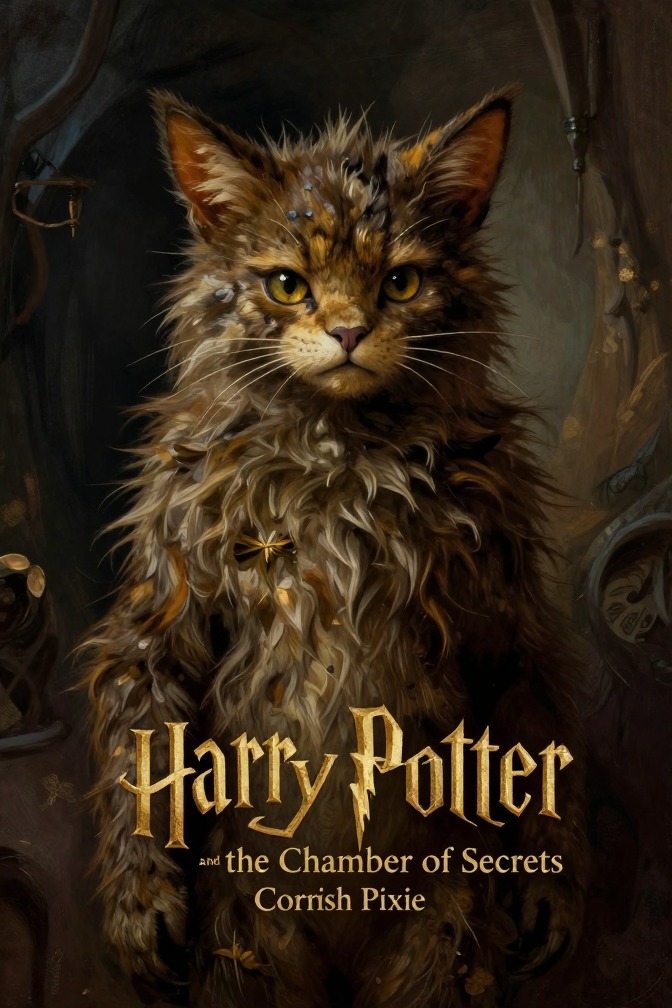
Cornish Pixies are electric-blue, eight-inch-high magical creatures introduced in Harry Potter and the Chamber of Secrets during Gilderoy Lockhart's disastrous Defense Against the Dark Arts class. Their chaotic release in the classroom, which Lockhart proves utterly unable to control, serves as a key early demonstration of his incompetence and fraudulence, contrasting sharply with his self-proclaimed heroic reputation.
Ghosts are a pervasive and integral presence at Hogwarts School of Witchcraft and Wizardry, embodying the school's layered history and its unresolved past. They serve as witnesses, guides, and comic relief, while also reflecting themes of death, memory, and the limits of the afterlife. The ghost community, from the aristocratic Nearly Headless Nick to the tragic Moaning Myrtle, enriches the castle's atmosphere and plays crucial roles in the plot, from the Deathday Party to the revelation of the Chamber of Secrets.
House-elves are a species of magical beings bound to serve one wizarding family for life, a condition that can only be broken by receiving clothes from their masters. In Harry Potter and the Chamber of Secrets, the house-elf Dobby introduces this system of servitude, first as a warning to Harry and later as a figure whose liberation through a sock becomes a central act of the story's resolution.
Vampires are a recurring creature type in the wizarding world, appearing in the second-year curriculum through Gilderoy Lockhart's books and in the historical lore of the Chamber of Secrets, where they are associated with Dark magic and the persecution of Muggle-borns.
Werewolves are a class of dangerous magical creatures in the wizarding world, humans who transform into wolf-like beasts under the full moon, and they feature in the second year at Hogwarts both as a subject of study and as a plot device that reveals Gilderoy Lockhart's fraudulence.
The Mandrake Draught Restoration is the pivotal event in Harry Potter and the Chamber of Secrets where the Mandrakes, cultivated by Professor Sprout, reach maturity and are used to brew a potion that revives all the Petrified victims, including Hermione Granger, Colin Creevey, Justin Finch-Fletchley, and Mrs. Norris. This event marks the resolution of the mystery's immediate consequences, restores hope to the school, and sets the stage for the final confrontation with the Heir of Slytherin.
He-Who-Must-Not-Be-Named is the fearful epithet used by the wizarding world to refer to Lord Voldemort, the most dangerous Dark wizard in history, whose name most witches and wizards still fear to speak aloud. The phrase embodies the terror that Voldemort inspired at the height of his power and the superstitious dread that persisted even after his apparent destruction. Its use throughout the story marks characters' attitudes toward the Dark Lord, from Dobby's terrified reverence to Harry's defiant willingness to speak the true name, and ultimately reveals the identity behind the title when Tom Riddle demonstrates that the name 'Lord Voldemort' is an anagram of his birth name.
Arthur Weasley's warning to Ginny Weasley — 'Never trust anything that can think for itself if you can't see where it keeps its brain' — is the book's most explicit statement of the principle that an object with apparent autonomy is not a neutral tool but a potential agent of harm, and it retroactively explains the entire mechanism by which Tom Riddle's diary enslaved its victim.
Peskipiksi Pesternomi is the incantation Gilderoy Lockhart attempts to use against the Cornish pixies he releases in his first Defense Against the Dark Arts class, a spell that fails completely and exposes his incompetence as a wizard and teacher.
The Muggle Protection Act is a proposed piece of wizarding legislation in Harry Potter and the Chamber of Secrets, championed by Arthur Weasley, which seeks to safeguard Muggles from dangerous enchanted objects. It becomes a central point of political conflict, drawing the ire of Lucius Malfoy and highlighting the deep ideological divide within the wizarding world over Muggle relations.
The Daily Prophet is the principal newspaper of the wizarding world in Britain, functioning as a powerful institution that shapes public opinion, controls the flow of information, and reflects the political and social interests of the magical elite.
The Hogwarts Board of Governors is the governing body of Hogwarts School of Witchcraft and Wizardry, composed of twelve members who hold the power to appoint or suspend the headmaster. In Harry Potter and the Chamber of Secrets, the Board becomes a central instrument of conflict when Lucius Malfoy, a governor, orchestrates the suspension of Albus Dumbledore during a series of attacks on Muggle-born students, only to be forced to reinstate him when the crisis is resolved.
The Ministry of Magic is the governing body of the British wizarding world, responsible for enforcing magical law, regulating underage sorcery, and maintaining the International Statute of Secrecy. In Harry Potter and the Chamber of Secrets, the Ministry appears as a bureaucratic institution whose legal frameworks, enforcement actions, and political vulnerabilities shape the central conflicts of the story.
The Slytherin Quidditch Team is the House Quidditch team representing Slytherin at Hogwarts School of Witchcraft and Wizardry. In Harry Potter's second year, the team is dramatically transformed by the arrival of Draco Malfoy as Seeker and the gift of seven Nimbus Two Thousand and One brooms from Lucius Malfoy, creating an unprecedented equipment advantage that fuels the team's arrogance and intensifies the rivalry with Gryffindor.
The connection between Harry Potter and Lord Voldemort is the central, defining relationship of the narrative, established through a shared magical heritage, a physical scar, and a profound ideological opposition that culminates in a direct confrontation within the Chamber of Secrets.
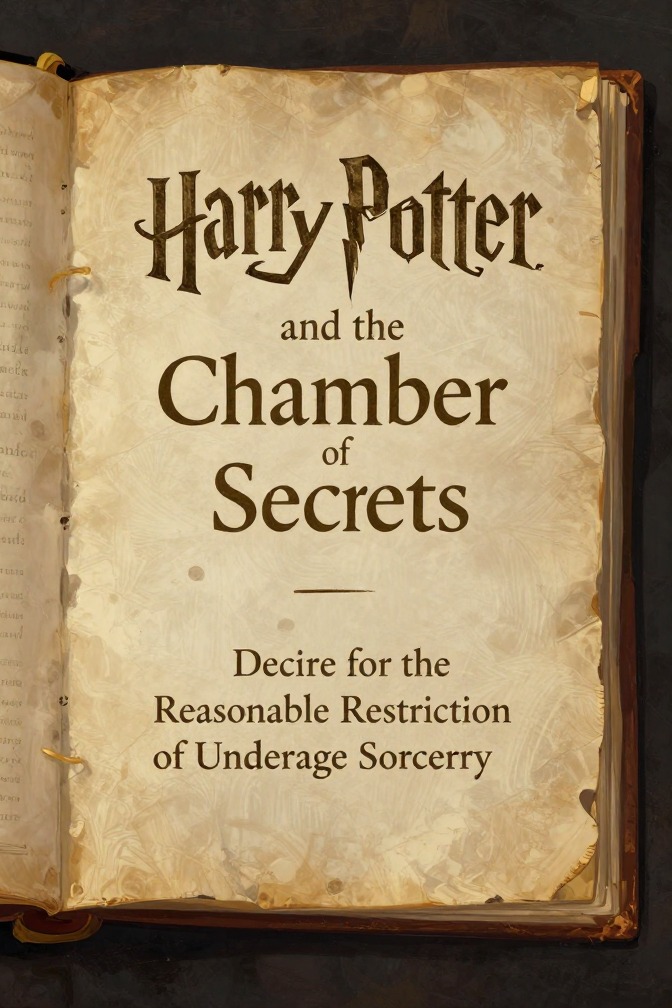
The Decree for the Reasonable Restriction of Underage Sorcery is a formal legal statute of the Ministry of Magic that prohibits witches and wizards under the age of seventeen from performing magic outside of school, serving as a central plot mechanism in Harry Potter and the Chamber of Secrets by creating legal jeopardy for Harry and exposing the gap between official law and its selective enforcement.
The No evening activities rule is a security measure imposed at Hogwarts School of Witchcraft and Wizardry after a series of attacks by the monster from the Chamber of Secrets. Announced by Professor Minerva McGonagall following the double attack on Hermione Granger and Penelope Clearwater, the rule prohibited all evening activities, including Quidditch training and matches, as part of a broader set of emergency restrictions. It marked a dramatic escalation in the school's response to the crisis, reflecting the heightened fear and the suspension of normal life at Hogwarts.
The Opening of the Chamber of Secrets is a pivotal state in Harry Potter and the Chamber of Secrets, marking the return of a legendary threat to Hogwarts. First announced by a mysterious message on a wall after the petrification of Mrs. Norris, the opening triggers a wave of fear, suspicion, and attacks on Muggle-born students, ultimately revealing the Chamber's existence as a real, recurring danger tied to the school's founder, Salazar Slytherin, and his hidden monster.
The Parseltongue ability is the rare magical power to speak and understand the language of snakes, a gift famously associated with Salazar Slytherin and inherited by his descendants. In Harry Potter and the Chamber of Secrets, this ability becomes a central plot device, marking Harry as a potential heir to Slytherin and ultimately revealing his deep, involuntary connection to Lord Voldemort.
The term at Hogwarts School of Witchcraft and Wizardry in Harry Potter's second year is a period of escalating terror and revelation, marked by the opening of the Chamber of Secrets, a series of petrifications, and the unmasking of Tom Riddle's diary as the instrument of a dark plot. It is a time when the school's stability is shattered, Dumbledore is suspended, Hagrid is arrested, and Harry, Ron, and Hermione must uncover the truth behind the attacks, culminating in a confrontation with the Basilisk and the destruction of the diary.
Play actin' is the deliberate performance of illness and weakness that Colin Craven and Mary Lennox adopt to conceal their secret garden activities and Colin's rapid recovery, transforming deception into a source of shared joy and strategic control.
Magic is the central concept in The Secret Garden, representing the life-giving force that restores health and happiness to the children and the garden itself. It is a blend of natural vitality, positive thinking, and the mysterious power of nature, which Colin Craven elevates into a personal philosophy and a scientific experiment.
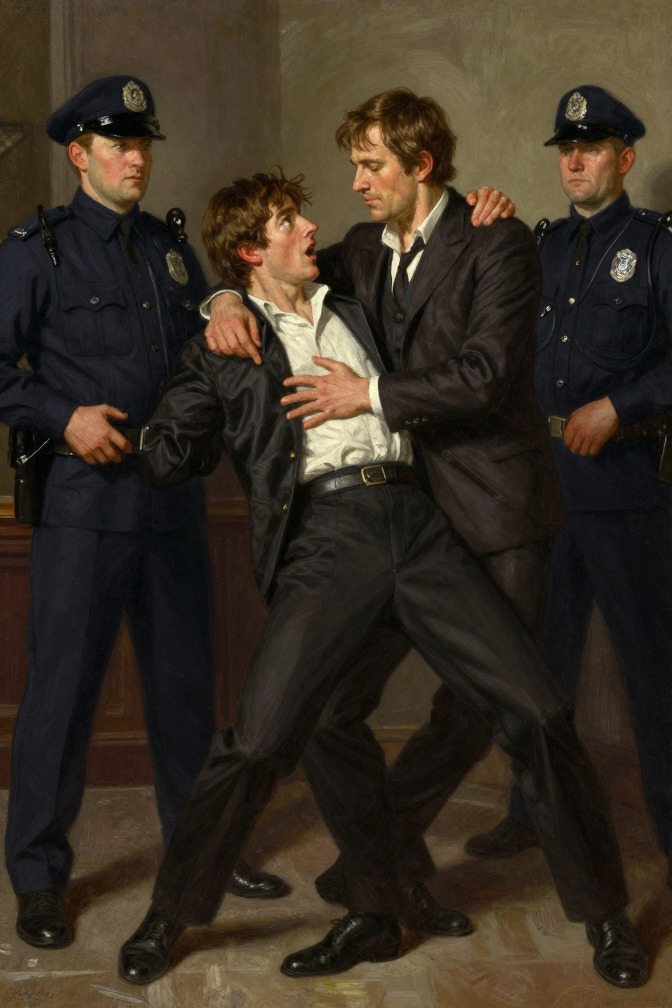
After his release from prison and the Ludovico conditioning, Alex is brutally beaten by his former enemy Billyboy and his former droog Dim, who have both become police officers, in a remote countryside location as a form of unofficial 'summary punishment'.