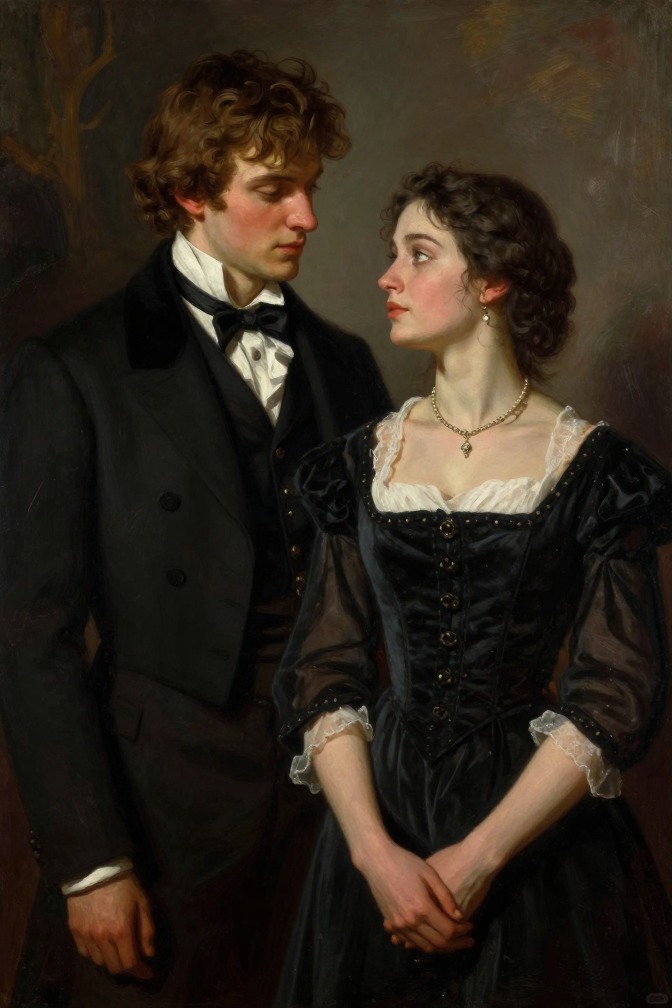
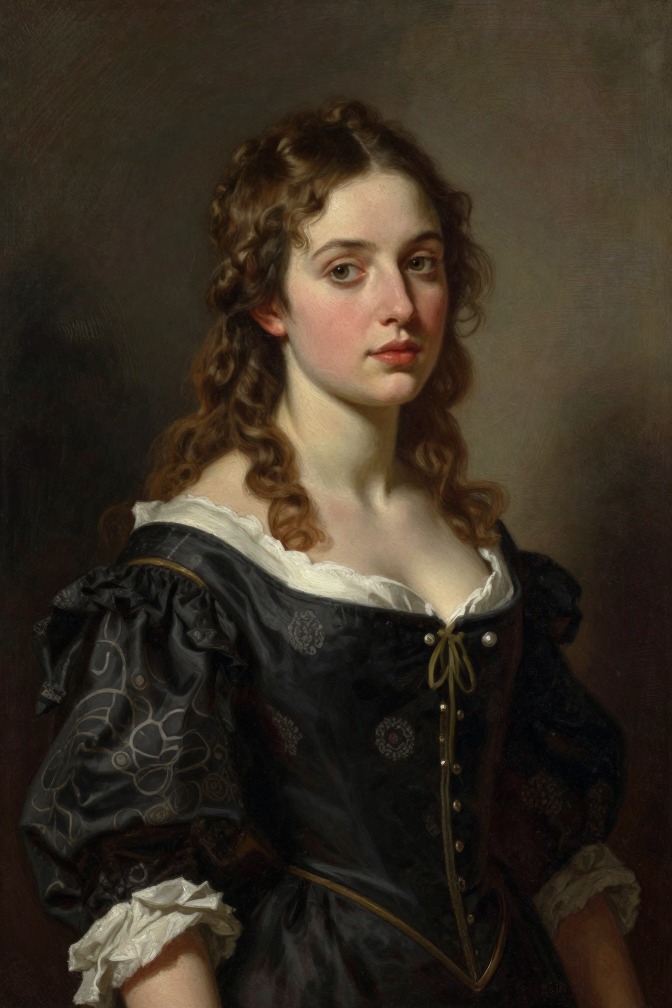
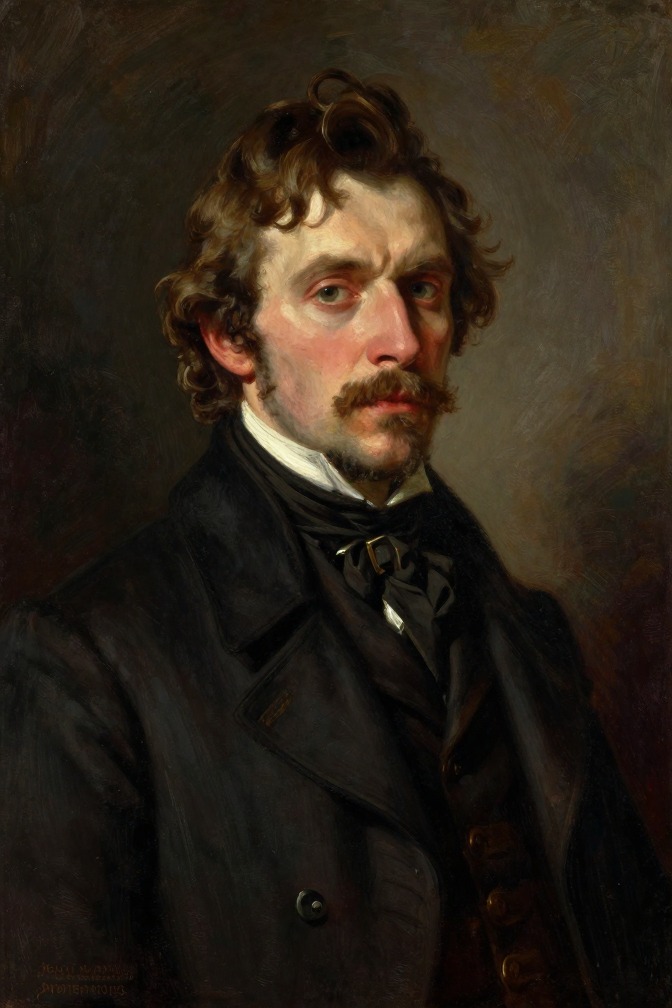
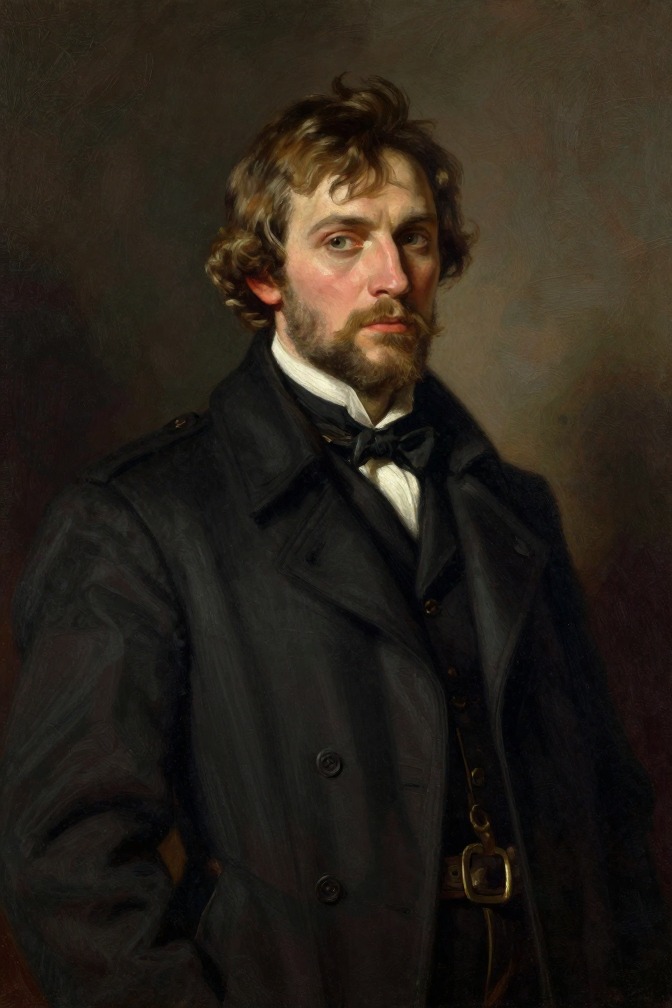
The relationship between Prince Lef Nicolaievitch Muishkin and Nastasia Philipovna Barashkoff is the central, tragic axis of the novel, a bond defined not by romantic passion but by the prince's profound, Christ-like pity for a woman he perceives as a suffering, mad, and innocent soul, a pity that ultimately destroys both their lives and those around them.
The relationship between Prince Lef Nicolaievitch Muishkin and Nicolai Andreevitch Pavlicheff is a foundational bond of orphaned dependency and lifelong gratitude, defined by Pavlicheff's unsolicited generosity and Muishkin's unwavering reverence, which together shape the prince's moral identity and erupt into public controversy when Pavlicheff's posthumous reputation is attacked.
The 1812 French invasion of Russia, a pivotal historical event, is invoked in Dostoevsky's *The Idiot* not as a direct narrative but as a symbolic and ideological touchstone, primarily through the delusional fabrications of General Ivolgin, who claims to have been a page to Napoleon in Moscow, and through Prince Myshkin's impassioned critique of Roman Catholicism, which he links to the spiritual crisis of modern Europe.
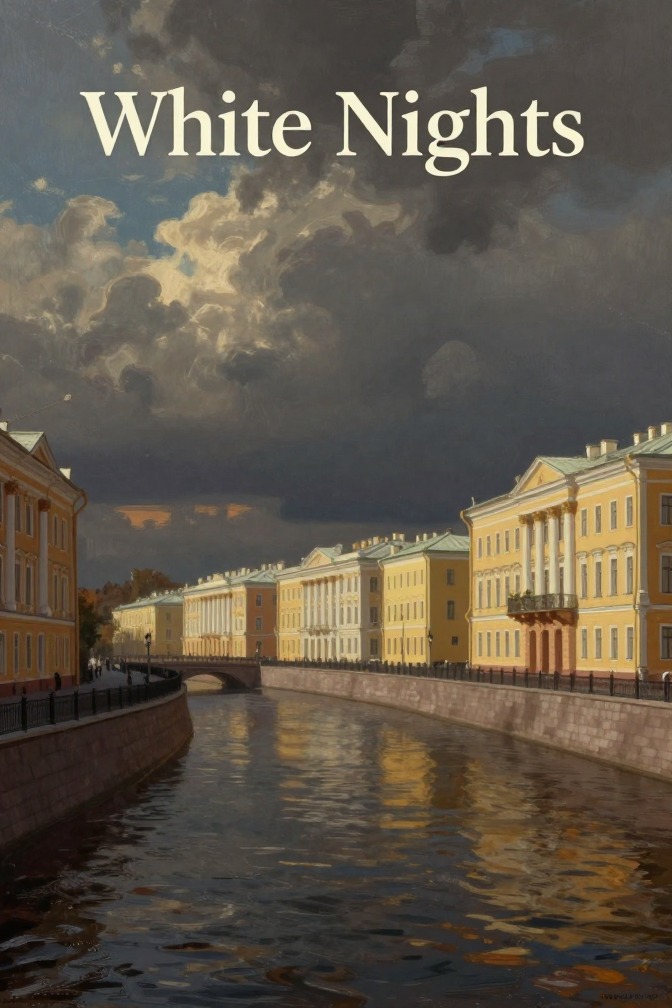
The Canal Embankment in Petersburg is the central physical and emotional stage of Dostoevsky's "White Nights," where the Dreamer first encounters Nastenka, where their four nights of conversation unfold, and where the story's crucial meetings, confessions, and farewells take place, making it a symbolic space of solitude, romantic possibility, and eventual heartbreak.
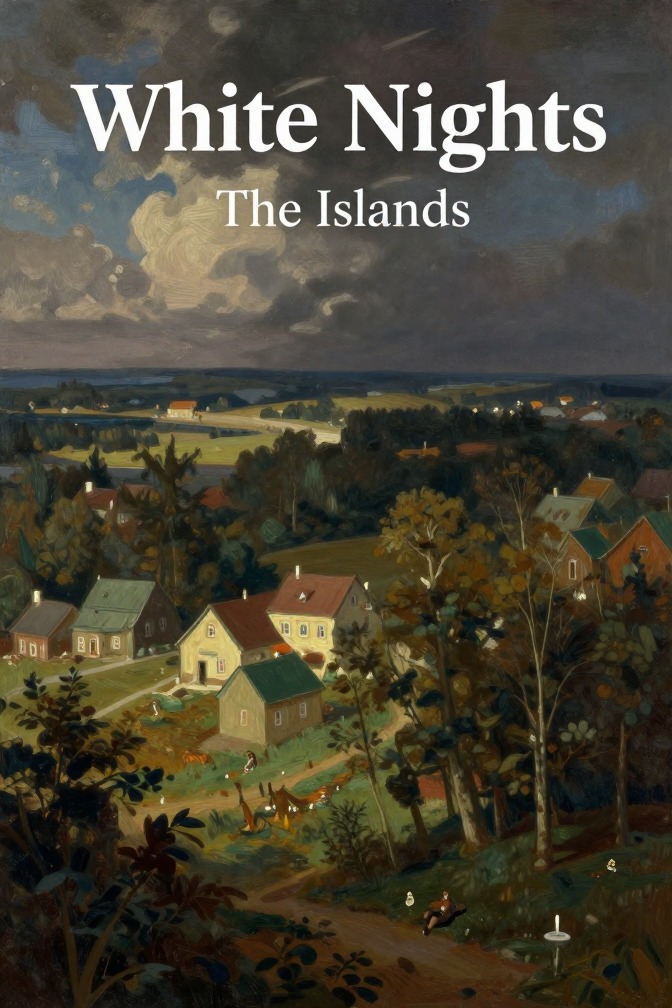
The Islands are a summer destination outside Petersburg that symbolize escape, leisure, and social distinction, and their seasonal exodus triggers the Dreamer's profound loneliness and sets the stage for his encounter with Nastenka.
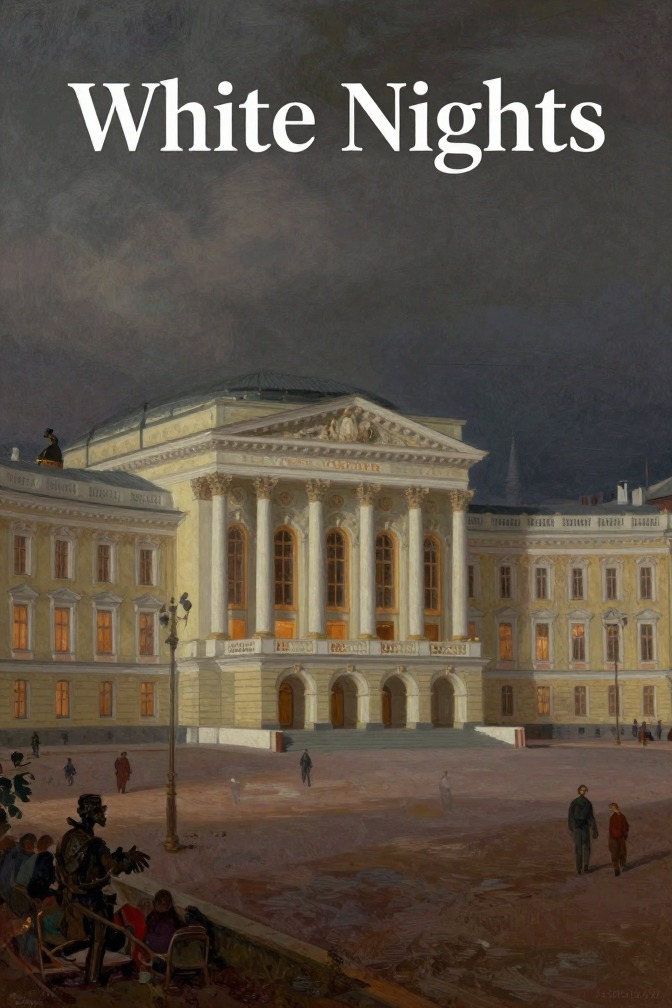
The Theatre is a central location in Fyodor Dostoevsky's "White Nights," serving as the site of Nastenka's first outing with the Lodger and the catalyst for her romantic awakening, as well as a recurring symbol of the cultural and emotional life that the Dreamer and Nastenka long for.
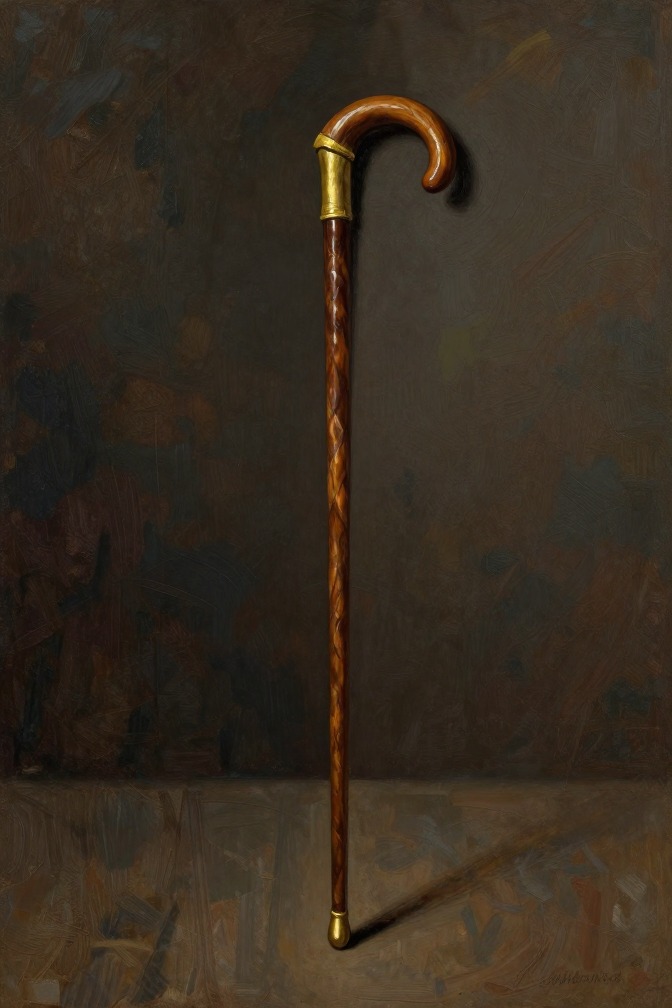
The knotted stick is a seemingly minor object in Fyodor Dostoevsky's "White Nights" that serves as a decisive instrument of intervention, a symbol of the Dreamer's latent agency, and a recurring motif linking the story's key moments of protection, confession, and domestic life.
The Moral books rule is a restriction imposed by Nastenka's blind grandmother, who forbids any book that might contain immoral content, especially love letters or seduction narratives, and personally inspects all reading material given to her granddaughter.
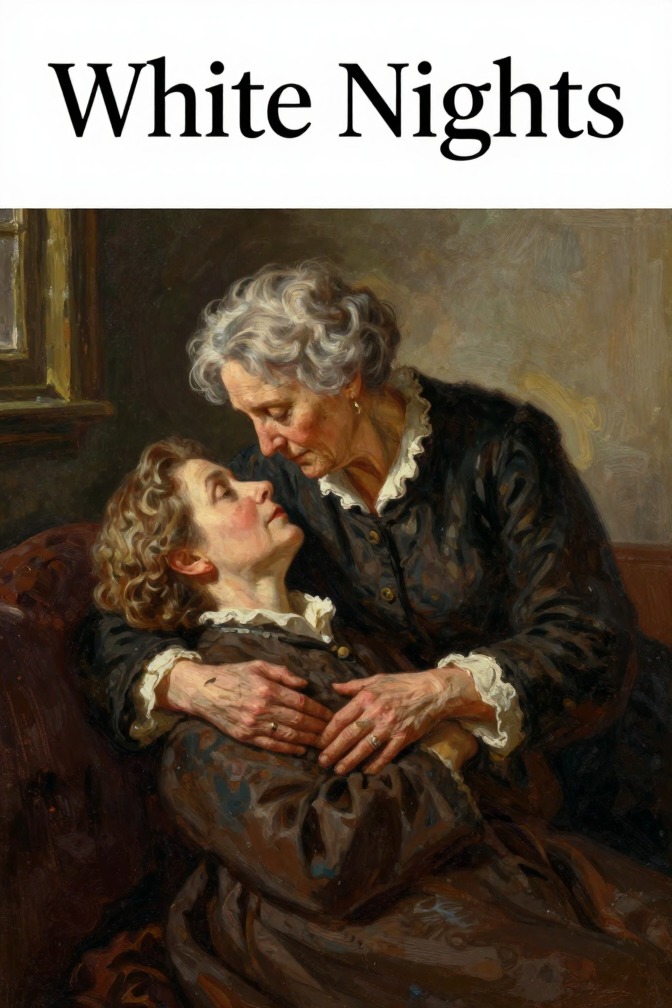
Pinned to grandmother is the central physical and social constraint governing Nastenka's life in Fyodor Dostoevsky's "White Nights." It is a literal arrangement in which her blind grandmother fastens Nastenka's dress to her own with a pin, confining the seventeen-year-old girl to her side for years and shaping her longing for freedom, her secret romance with the Lodger, and her eventual rebellion.
Beenay 25 is a young astronomer at Saro University whose discovery of an orbital anomaly leads to the revelation that a dark satellite, Kalgash Two, will cause a total eclipse of the sun Dovim, plunging the world into Darkness and triggering a cycle of madness and fire that has recurred every 2,049 years.
The Theory of Universal Gravitation is the foundational scientific principle on Kalgash that explains the orbital motions of the planet and its six suns through a cohesive force proportional to mass and inversely proportional to the square of distance. It is the life's work of the revered astronomer Athor 77, but when the young astronomer Beenay 25 discovers an orbital anomaly that challenges the theory, it triggers a crisis that ultimately leads to the revelation of the hidden satellite Kalgash Two and the prediction of a catastrophic eclipse.
Svetlana Nazarova, standing on the roof of the house on stilts during a hurricane, erases Egor's destiny from the Book of Destiny instead of rewriting it as Gesar intended, thereby rejecting the role of a Great Sorceress and choosing her own path.
Gennady is a registered vampire living in the same building as Anton Gorodetsky, the father of Kostya, and a contractor by profession. He is the first vampire Anton encounters after becoming an Other, and his calm, pragmatic acceptance of the Night Watch's authority establishes the uneasy, rule-bound coexistence between Light and Dark that defines the novel's moral landscape.
Larissa is the Night Watch's night-shift duty officer, a calm and efficient dispatcher who coordinates field agents from the office. She is the first person Anton speaks to when he wakes for his vampire hunt, and her brisk, tired voice conveys the Watch's routine pressure and her own lack of faith in Anton's mission. Though she never leaves the office, her role as the voice on the phone anchors the Watch's operational structure and highlights the tension between analytical staff and field operatives.
Pyotr Nesterov is a minor Dark magician and Day Watch field operative who appears in the first story of *The Night Watch* as Alisa Donnikova's partner during a routine confrontation with Anton Gorodetsky, and whose death later becomes a key piece of evidence in the frame-up against Anton.
Stasik is a minor Dark Magician and Day Watch agent who appears briefly during the climax of the second story, where he accompanies Alisa Donnikova in an attempt to intercept a courier from Samarkand. He is killed by Alisa after the mission fails, revealing the ruthless internal dynamics of the Dark Side.
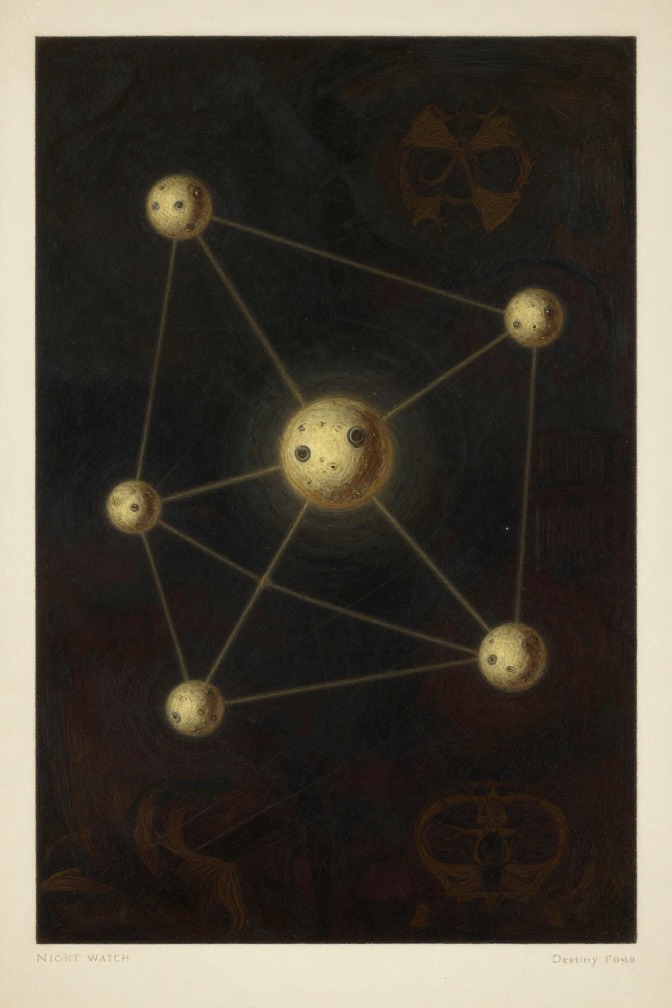
A destiny node is a point in the fabric of reality where the life paths of two or more individuals become inextricably linked, creating a bond that transcends ordinary causality and shapes their future choices and outcomes. In the world of the Others, a destiny node is not merely a chance meeting but a predetermined convergence that carries profound implications for the balance of Light and Darkness, often serving as a focal point for the plans of Great Magicians.
The Light is one of the two fundamental forces in the world of the Others, opposed to Darkness. It represents selflessness, creation, and the protection of ordinary people, but its adherents are bound by the Great Treaty to maintain a precarious balance, often forcing them to compromise their ideals and accept the existence of Evil.
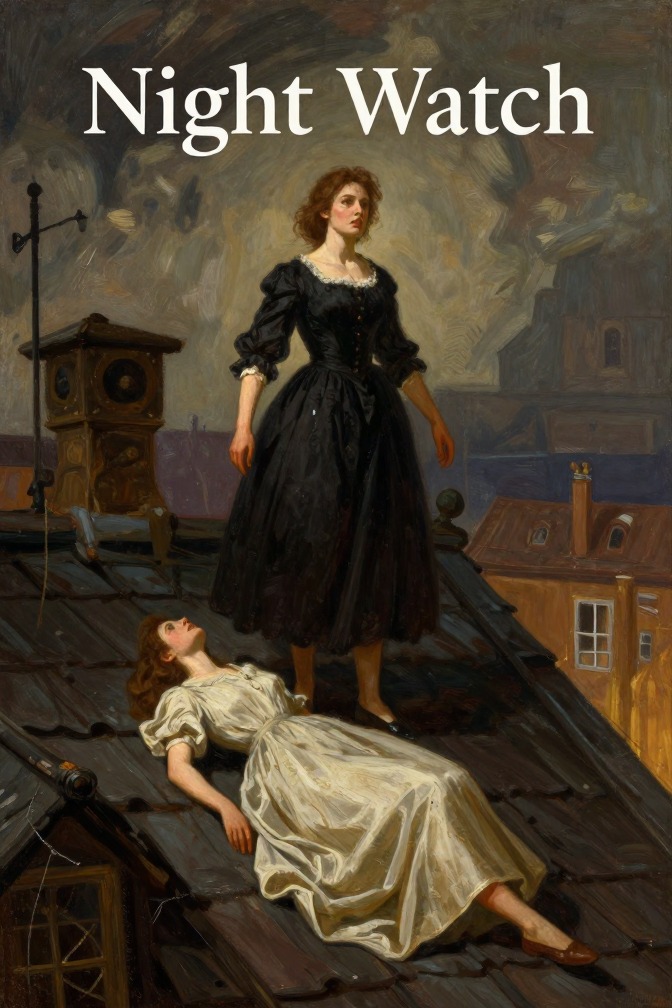
Svetlana Nazarova, standing on the roof of the house on stilts during a hurricane, is given the Chalk of Destiny to rewrite Egor's undefined destiny as a Light One, but instead erases the Book of Destiny entirely, refusing to change another person's fate and thereby rejecting her path as a Great Sorceress.
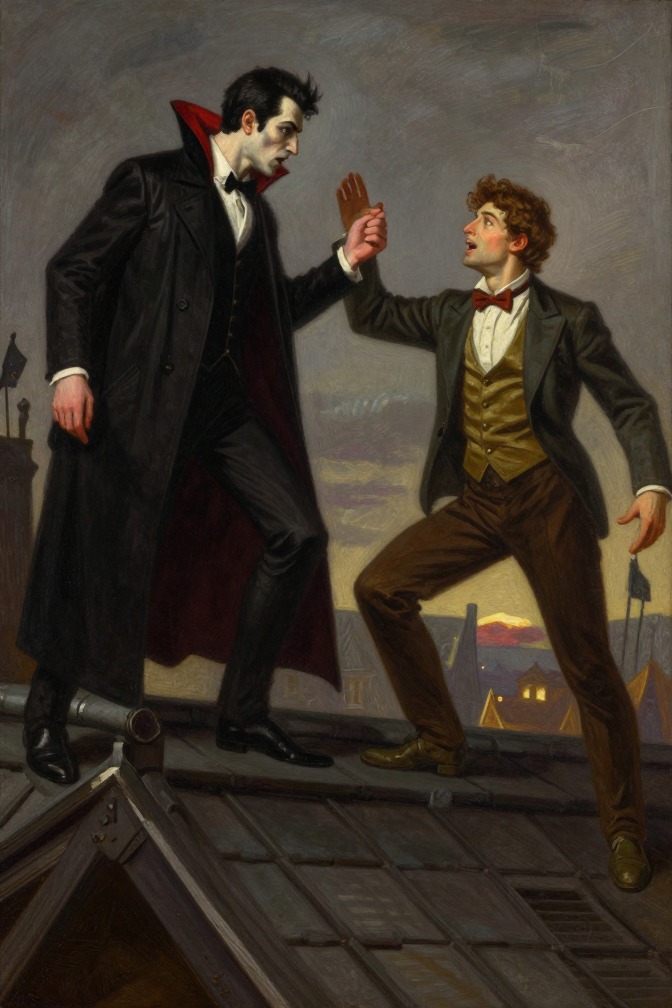
The roof confrontation with the vampire and Zabulon is the climactic battle of the first story, where Anton Gorodetsky, the Night Watch, and the Dark Magician Zabulon clash over the fate of the boy Egor, a potential Other with an undetermined destiny. This event exposes the cynical manipulation of both Watches, forces Egor to make his first independent choice, and sets the stage for the ongoing struggle between Light and Darkness in Moscow.
Anton Gorodetsky and Olga form a partnership that begins under duress—Olga is trapped in the body of a white owl, stripped of most of her powers, and assigned to Anton by Boris Ignatievich as a partner. Their relationship evolves from mutual wariness and silence into a deep, trusting alliance built on shared risk, frank confession, and complementary strengths. Olga’s centuries of experience and her memory of a catastrophic compromise with the Darkness become the lens through which Anton learns the true cost of the Light’s tactics. Their partnership is tested in the hunt for the vampire, the confrontation with Zabulon, and the climactic manipulation of Svetlana’s training, and it ultimately becomes the emotional and strategic hinge of the entire novel.
The Treaty is the foundational legal and political agreement between the forces of Light and Darkness, signed approximately fifty years before the novel's events to end millennia of open warfare. It establishes the Night Watch and the Day Watch as mutual monitoring bodies, defines the legal rights of each side, and prohibits any action that could destroy the world. The Treaty is the central structural principle of the Others' society, governing every interaction between Light and Dark magicians, vampires, werewolves, and all other supernatural beings.
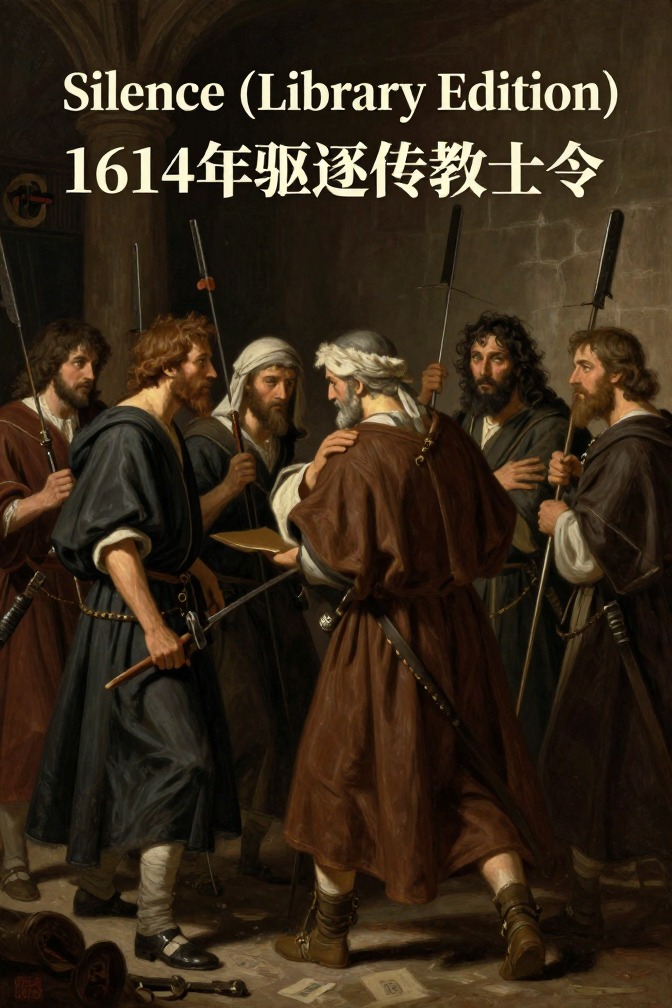
The 1614 Edict Expelling Missionaries was the decisive legal instrument by which the Tokugawa Shogunate formally outlawed Christianity in Japan, ordering all foreign missionaries to leave the country and initiating a systematic persecution that would, over the following decades, destroy the visible structure of the Church and force thousands of Christians into apostasy, hiding, or martyrdom.
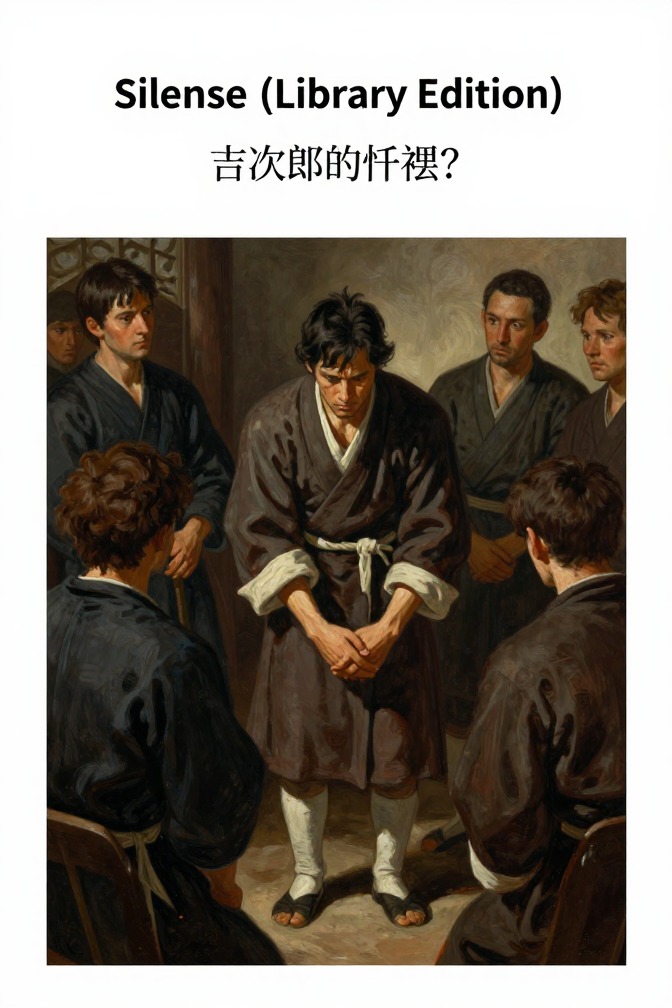
After Rodrigues's apostasy, Kichijiro seeks him out in Nagasaki to confess his sins and receive absolution, leading to a profound reconciliation between the two weak men; years later, Kichijiro is arrested at the Christian Residence in Edo for possessing a Christian image, and his interrogation reveals the ongoing suspicion surrounding the apostate priests.
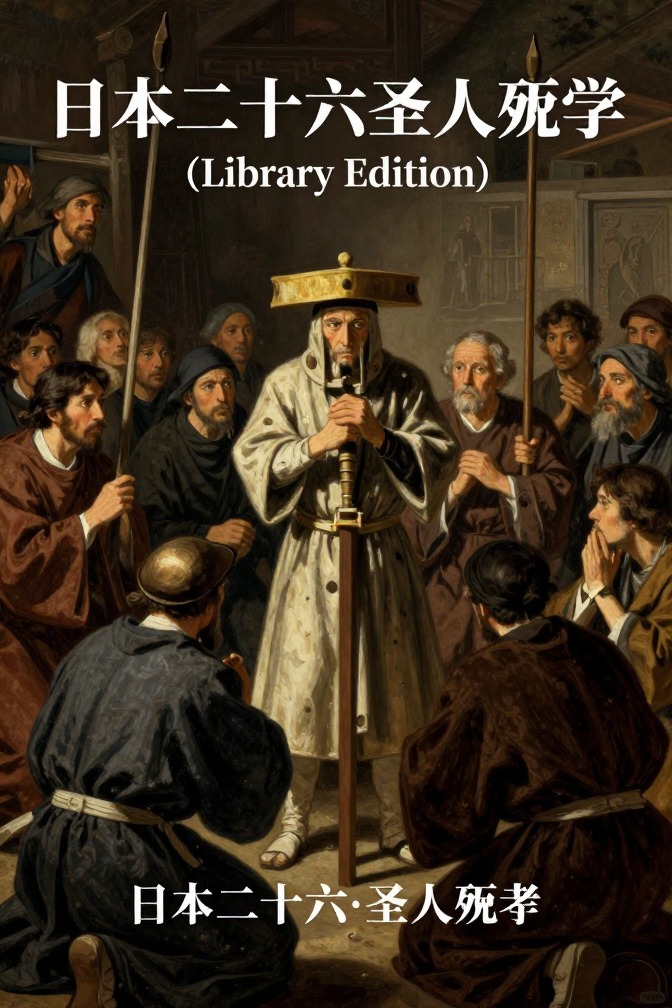
The Martyrdom of the Twenty-Six Saints of Japan was the first mass execution of Christians in Japan, a pivotal event that inaugurated the era of systematic persecution and set a precedent for the state's violent suppression of Christianity.
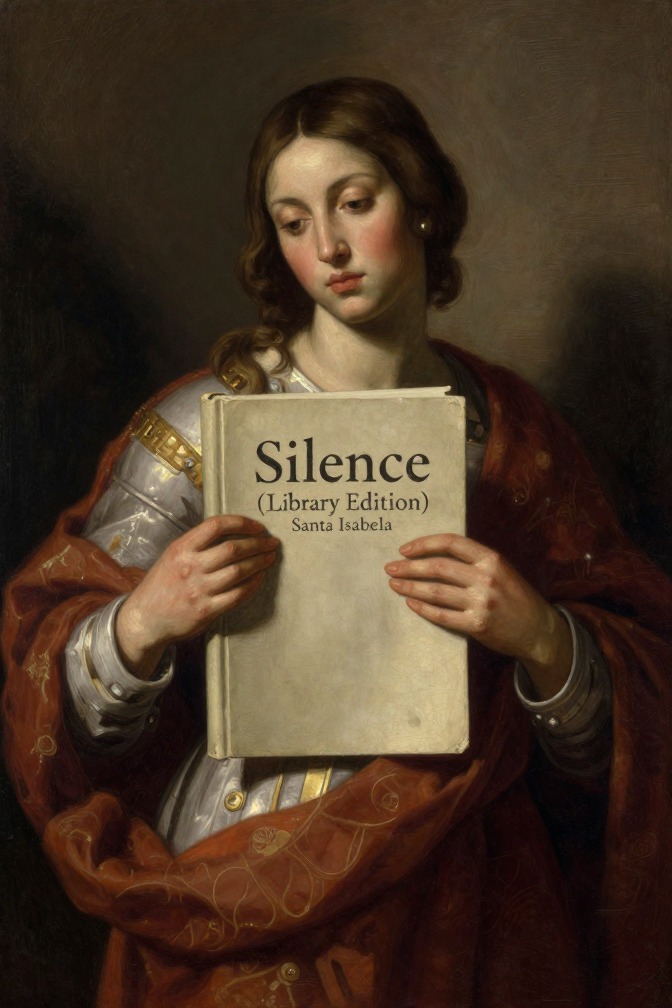
The Santa Isabella is the Portuguese ship that carried Sebastian Rodrigues, Francisco Garrpe, and Juan de Santa Marta from Lisbon to Goa in 1638, beginning their ill-fated mission to Japan. Its arduous voyage, marked by storms, disease, and near-shipwreck, foreshadows the suffering and failure that await the missionaries in the 'swamp' of Japan.
Trigger Vachon is a minor but recurring character in Stephen King's *Insomnia*, a French-Canadian dry-cleaning driver and later parking-garage attendant whose chance encounters with Ralph Roberts provide crucial pieces of information about Ed Deepneau's past and the Japanese symbols on his scarf, ultimately revealing the word "kamikaze" and confirming Ed's suicidal intentions.
Bodyguard is a brand-name aerosol self-defense spray given to Ralph Roberts by Gretchen Tillbury of WomanCare. It becomes a crucial tool when Ralph uses it to disable Charlie Pickering, a knife-wielding anti-abortion extremist who attacks him in the Derry Public Library. The spray's appearance in Ralph's jacket pocket—placed there by the mysterious Dorrance Marstellar—marks the first overt supernatural intervention in Ralph's journey, linking the mundane object to the larger cosmic forces of the Purpose.
Kamikaze, the Japanese term for "divine wind," is a recurring symbolic motif in Stephen King's Insomnia, representing the suicidal, fanatical mindset of Ed Deepneau and the apocalyptic threat he poses to Derry. The word is first introduced through the red Japanese characters on Ed's white silk scarf, later identified by Trigger Vachon as the symbol for kamikaze, and it crystallizes the novel's central conflict: a man transformed into a human guided missile, driven by a delusional belief in a holy war against abortion.
Bangor is a city in Maine, located about forty miles north of Derry, that serves as the home of Lois Chasse's son Harold and his wife Janet, and as the location of Riverview Estates, a retirement condominium development that Harold and Janet attempt to pressure Lois into moving to.