Anton Gorodetsky and Olga form a partnership that begins under duress—Olga is trapped in the body of a white owl, stripped of most of her powers, and assigned to Anton by Boris Ignatievich as a partner. Their relationship evolves from mutual wariness and silence into a deep, trusting alliance built on shared risk, frank confession, and complementary strengths. Olga’s centuries of experience and her memory of a catastrophic compromise with the Darkness become the lens through which Anton learns the true cost of the Light’s tactics. Their partnership is tested in the hunt for the vampire, the confrontation with Zabulon, and the climactic manipulation of Svetlana’s training, and it ultimately becomes the emotional and strategic hinge of the entire novel.
The Treaty is the foundational legal and political agreement between the forces of Light and Darkness, signed approximately fifty years before the novel's events to end millennia of open warfare. It establishes the Night Watch and the Day Watch as mutual monitoring bodies, defines the legal rights of each side, and prohibits any action that could destroy the world. The Treaty is the central structural principle of the Others' society, governing every interaction between Light and Dark magicians, vampires, werewolves, and all other supernatural beings.
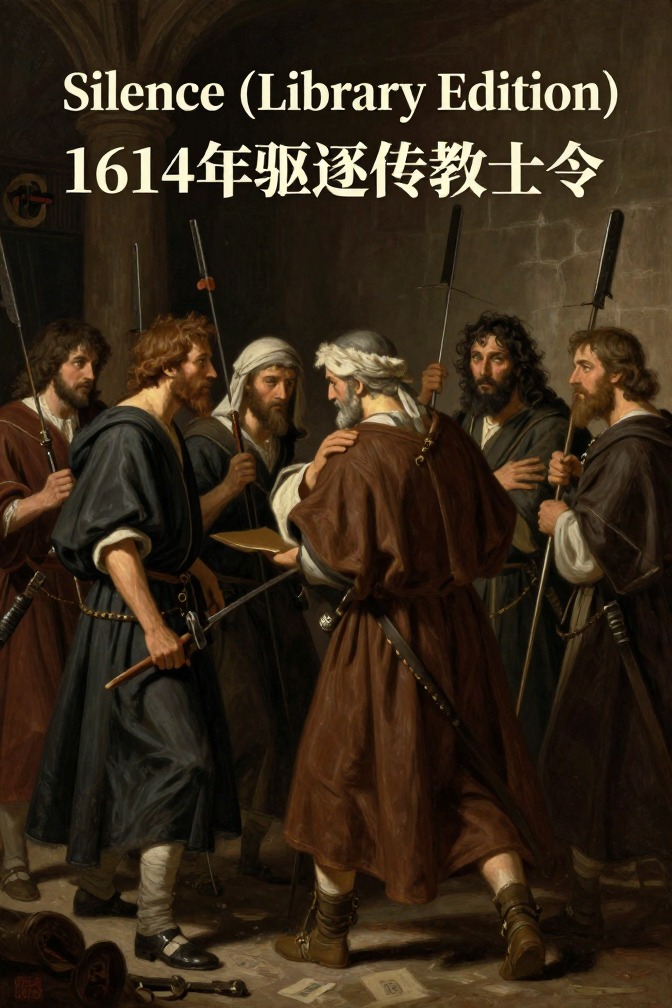
The 1614 Edict Expelling Missionaries was the decisive legal instrument by which the Tokugawa Shogunate formally outlawed Christianity in Japan, ordering all foreign missionaries to leave the country and initiating a systematic persecution that would, over the following decades, destroy the visible structure of the Church and force thousands of Christians into apostasy, hiding, or martyrdom.
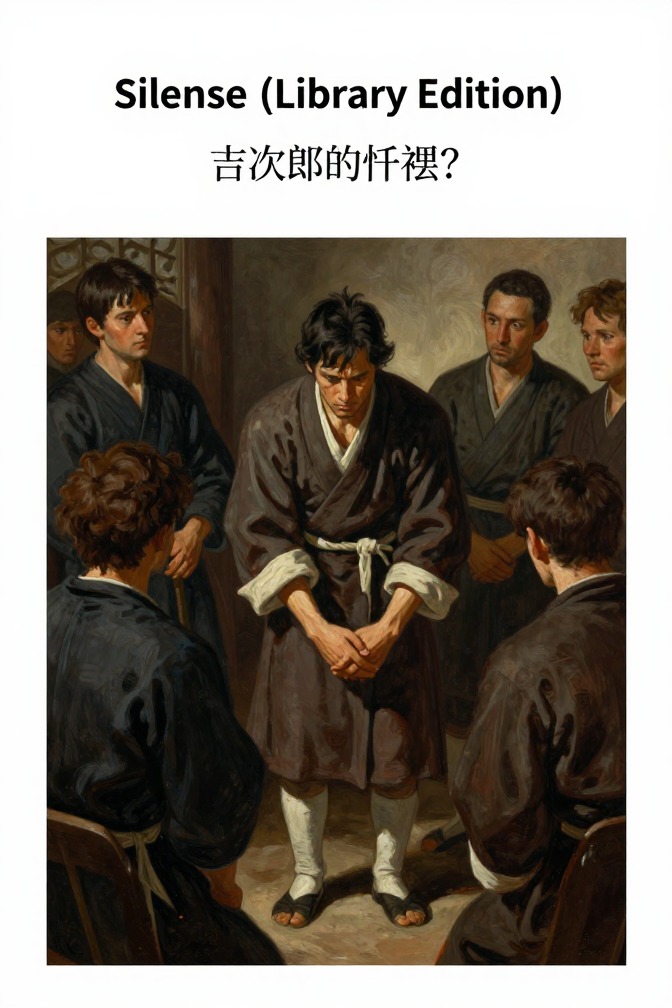
After Rodrigues's apostasy, Kichijiro seeks him out in Nagasaki to confess his sins and receive absolution, leading to a profound reconciliation between the two weak men; years later, Kichijiro is arrested at the Christian Residence in Edo for possessing a Christian image, and his interrogation reveals the ongoing suspicion surrounding the apostate priests.
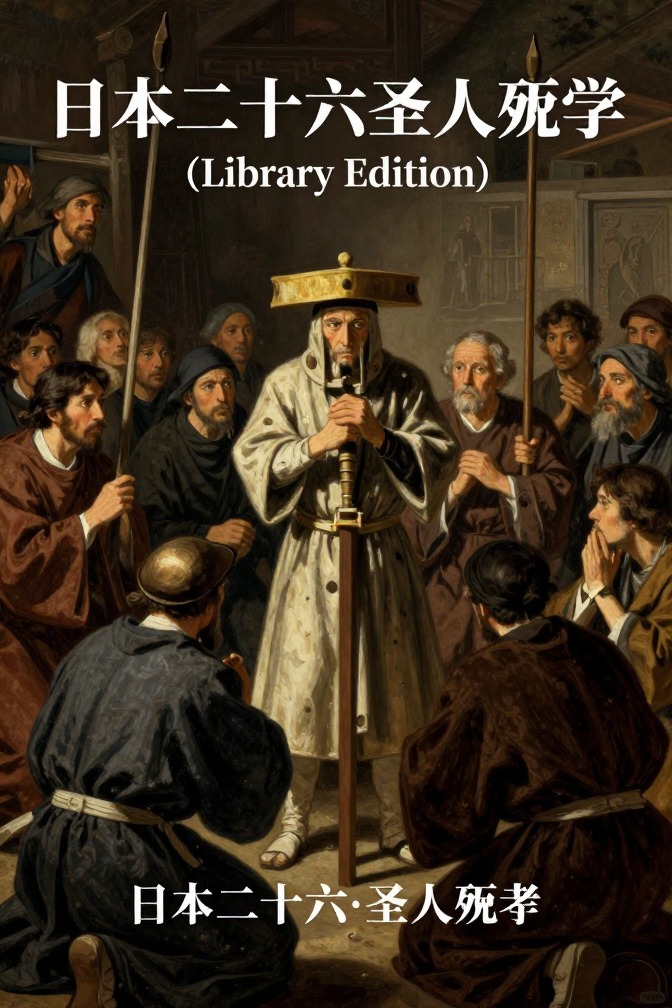
The Martyrdom of the Twenty-Six Saints of Japan was the first mass execution of Christians in Japan, a pivotal event that inaugurated the era of systematic persecution and set a precedent for the state's violent suppression of Christianity.
The Santa Isabella is the Portuguese ship that carried Sebastian Rodrigues, Francisco Garrpe, and Juan de Santa Marta from Lisbon to Goa in 1638, beginning their ill-fated mission to Japan. Its arduous voyage, marked by storms, disease, and near-shipwreck, foreshadows the suffering and failure that await the missionaries in the 'swamp' of Japan.
Ana-tsurushi, or the pit torture, was the most feared method of inducing apostasy during the Tokugawa persecution of Christians in Japan, a slow, agonizing suspension that broke even the most steadfast missionaries, including Christovao Ferreira and Sebastian Rodrigues.
Trigger Vachon is a minor but recurring character in Stephen King's *Insomnia*, a French-Canadian dry-cleaning driver and later parking-garage attendant whose chance encounters with Ralph Roberts provide crucial pieces of information about Ed Deepneau's past and the Japanese symbols on his scarf, ultimately revealing the word "kamikaze" and confirming Ed's suicidal intentions.
Bodyguard is a brand-name aerosol self-defense spray given to Ralph Roberts by Gretchen Tillbury of WomanCare. It becomes a crucial tool when Ralph uses it to disable Charlie Pickering, a knife-wielding anti-abortion extremist who attacks him in the Derry Public Library. The spray's appearance in Ralph's jacket pocket—placed there by the mysterious Dorrance Marstellar—marks the first overt supernatural intervention in Ralph's journey, linking the mundane object to the larger cosmic forces of the Purpose.
Kamikaze, the Japanese term for "divine wind," is a recurring symbolic motif in Stephen King's Insomnia, representing the suicidal, fanatical mindset of Ed Deepneau and the apocalyptic threat he poses to Derry. The word is first introduced through the red Japanese characters on Ed's white silk scarf, later identified by Trigger Vachon as the symbol for kamikaze, and it crystallizes the novel's central conflict: a man transformed into a human guided missile, driven by a delusional belief in a holy war against abortion.
Bangor is a city in Maine, located about forty miles north of Derry, that serves as the home of Lois Chasse's son Harold and his wife Janet, and as the location of Riverview Estates, a retirement condominium development that Harold and Janet attempt to pressure Lois into moving to.
The Tower is the central metaphysical structure of Stephen King's fictional cosmology, a nexus of all possible realities that appears in Ralph Roberts's visions and in the artwork of the child Patrick Danville. It represents the axis of existence, binding together the Random and the Purpose across all levels of being, and its stability depends on the preservation of certain designated lives.
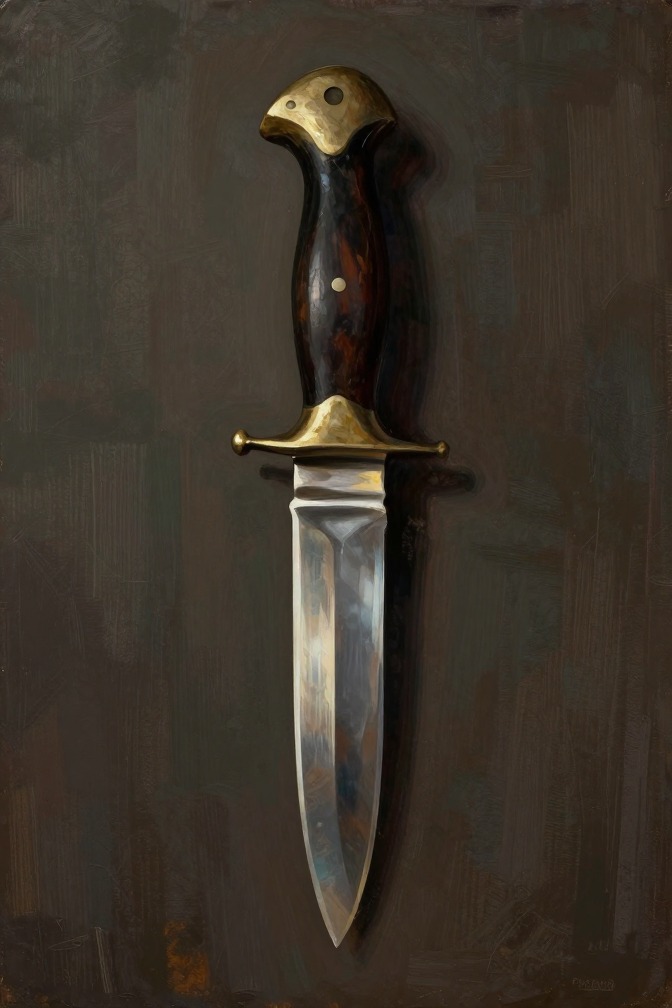
Charlie Pickering's hunting knife is the weapon used in the attack on Ralph Roberts at the Derry Public Library, a serrated blade that nearly kills him and forces him to use the Bodyguard spray to defend himself.
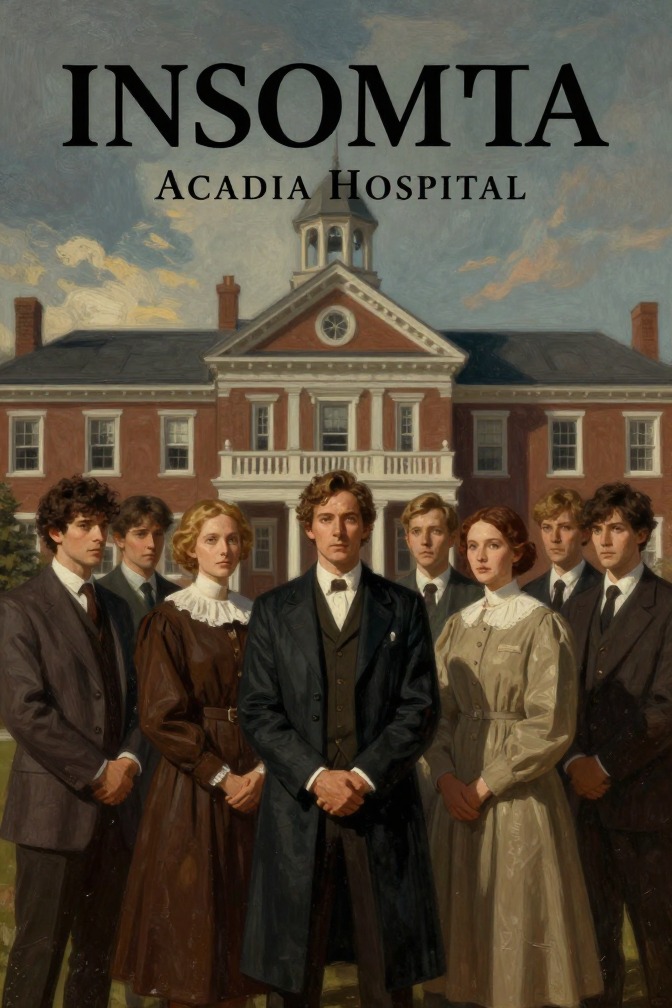
Acadia Hospital is a psychiatric institution in Maine that has treated Charlie Pickering, the anti-abortion extremist who attacks Ralph Roberts in the Derry Public Library. Its repeated failure to contain Pickering's violent delusions underscores the novel's theme that institutional mental health care cannot always prevent the Random from acting through dangerously unstable individuals.
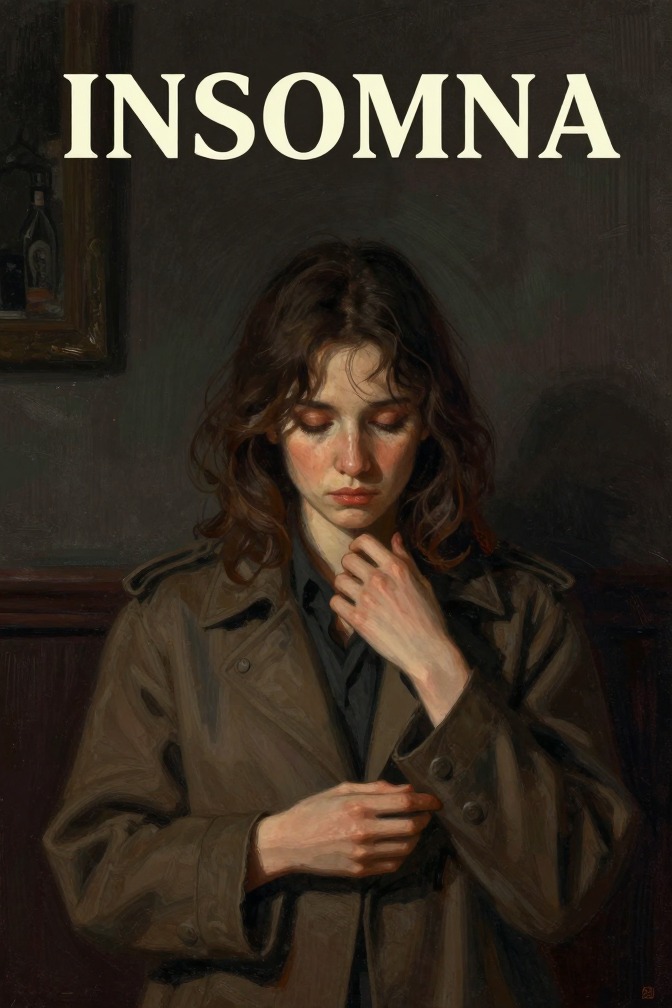
Insomnia is the central physical and psychological condition that drives the plot of Stephen King's novel, serving as the mechanism by which the protagonist Ralph Roberts and later Lois Chasse are elevated from ordinary Short-Time perception into the hyper-real world of auras, the little bald doctors, and the cosmic conflict between the Purpose and the Random. Beginning as a mundane symptom of grief after his wife Carolyn's death, Ralph's premature waking progressively strips away the veil of normal reality, allowing him to see the life-cords (balloon-strings) of living beings and the deathbags that precede catastrophe. The insomnia is not a disease but a deliberate alteration of the Short-Time aura performed by the agents Clotho and Lachesis, who need Ralph and Lois to become visible to the Long-Time entities in order to intervene in Ed Deepneau's planned mass murder. The condition's relentless erosion of sleep — from six hours to three to barely one — mirrors the narrowing window of time before the Civic Center attack, and its eventual cessation after Ralph's sacrificial death marks the completion of his purpose.
Arabella Figg is a Squib neighbor of the Dursleys who secretly works for Albus Dumbledore and the Order of the Phoenix, and her role in Harry Potter's life is decisively revealed when she testifies at his disciplinary hearing, confirming that she has been watching over him for years.
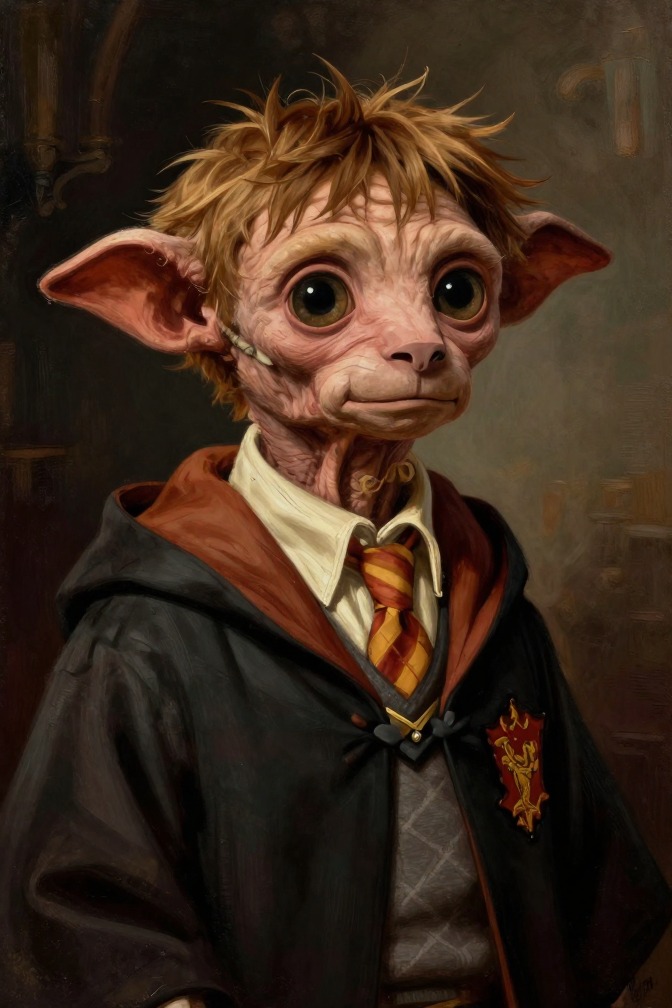
Dobby is a free house-elf who, after being freed from the Malfoy family, becomes a loyal and courageous ally to Harry Potter, ultimately sacrificing his life to save Harry and his friends.
Eileen Prince is a minor but pivotal character in the Harry Potter series, revealed in Harry Potter and the Half-Blood Prince to be the mother of Severus Snape and the original owner of the Advanced Potion-Making textbook that Harry comes to rely on, which is inscribed with the name 'The Half-Blood Prince.' Her identity as a former Hogwarts student and a talented witch provides the crucial link that allows Hermione Granger to deduce Snape's secret past and his authorship of the book, deepening the understanding of his character and his complex relationship with Harry.
Herbert Chorley is the Junior Minister in the Muggle Prime Minister's government who, during the opening of Harry Potter and the Half-Blood Prince, begins behaving so peculiarly that he impersonates a duck in public, a condition later revealed to be the result of a poorly performed Imperius Curse, leading to his removal to St. Mungo's Hospital for Magical Maladies and Injuries. His case serves as a key example of how Voldemort's war against the Wizarding world spills over into Muggle society, causing chaos that the Muggle government cannot explain or contain.
James Potter is the father of Harry Potter, a pure-blood wizard whose life and death define the central tragedy of the series. Killed by Lord Voldemort when Harry was a year old, James's legacy — his bravery, his friendship with Sirius Black and Remus Lupin, his youthful arrogance, and his love for Lily — shapes Harry's identity, his choices, and his final confrontation with Voldemort.
Madam Rosmerta, the attractive landlady of the Three Broomsticks inn in Hogsmeade, is revealed in Harry Potter and the Half-Blood Prince to have been placed under the Imperius Curse by Draco Malfoy, forced to act as his unwitting accomplice in two attempts on Albus Dumbledore's life: the cursed opal necklace that nearly killed Katie Bell and the poisoned bottle of mead that nearly killed Ron Weasley.
Morfin Gaunt is the son of Marvolo Gaunt and the brother of Merope Gaunt, making him the uncle of Lord Voldemort. A violent, unstable, and inbred pure-blood who speaks Parseltongue, he is framed by his nephew for the murder of the Riddle family and dies in Azkaban, a pawn in Voldemort's early quest for immortality.
Mr. Borgin is the proprietor of Borgin and Burkes, a sinister Knockturn Alley shop dealing in Dark artifacts. He is a nervous, oily-haired man who operates under the shadow of the Malfoy family, first cowed by Lucius Malfoy and later by Draco Malfoy, whom he is forced to assist in repairing a dangerous object and in reserving a cursed opal necklace. His shop also serves as the terminus of a Vanishing Cabinet passage that allows Death Eaters to infiltrate Hogwarts.
Mrs. Cole is the sharp, gin-drinking matron of Wool's Orphanage who oversaw Tom Riddle's early years and, under the influence of Dumbledore's gentle persuasion, revealed the disturbing incidents that marked the boy's childhood, providing the first documented evidence of his cruelty, secrecy, and magical abilities.
Parvati Patil is a Gryffindor student in Harry Potter's year, a close friend of Lavender Brown, and a minor but recurring presence whose actions and reactions—particularly her anxiety about the war, her family's fears, and her social maneuvering—illuminate the pressures and divisions within the student body during the escalating conflict with Voldemort.
Professor Merrythought was the long-serving Defense Against the Dark Arts teacher at Hogwarts whose retirement in the 1940s created the vacancy that both Tom Riddle and Albus Dumbledore sought to fill, a pivotal moment that exposed Riddle's true ambitions and set in motion the jinx that would plague the position for decades.
Regulus Black, the younger brother of Sirius Black, is a minor but pivotal figure in the sixth book, revealed through retrospective accounts as a former Death Eater who defected after discovering Lord Voldemort's true nature and sacrificed his life to steal and replace one of Voldemort's Horcruxes, leaving behind a note signed 'R.A.B.' that becomes a crucial clue for Harry Potter.
The Bloody Baron is the Slytherin House ghost at Hogwarts, a grim, silent figure covered in silver bloodstains who serves as a spectral authority and a source of crucial information about Dumbledore's return to the school on the night of his death.
The Fat Lady is the portrait guardian of the Gryffindor common room at Hogwarts, a temperamental and security-conscious gatekeeper whose shifting passwords and personal grievances directly affect Harry Potter and his friends throughout their sixth year.
Zacharias Smith is a Hufflepuff student at Hogwarts who serves as the Quidditch commentator during the 1996–1997 school year, known for his biased and snide commentary that targets Gryffindor players, particularly Harry Potter and Ron Weasley. He is also a member of Dumbledore's Army, though his loyalty is questionable, and he is one of the few students withdrawn from Hogwarts by his father following Dumbledore's death.