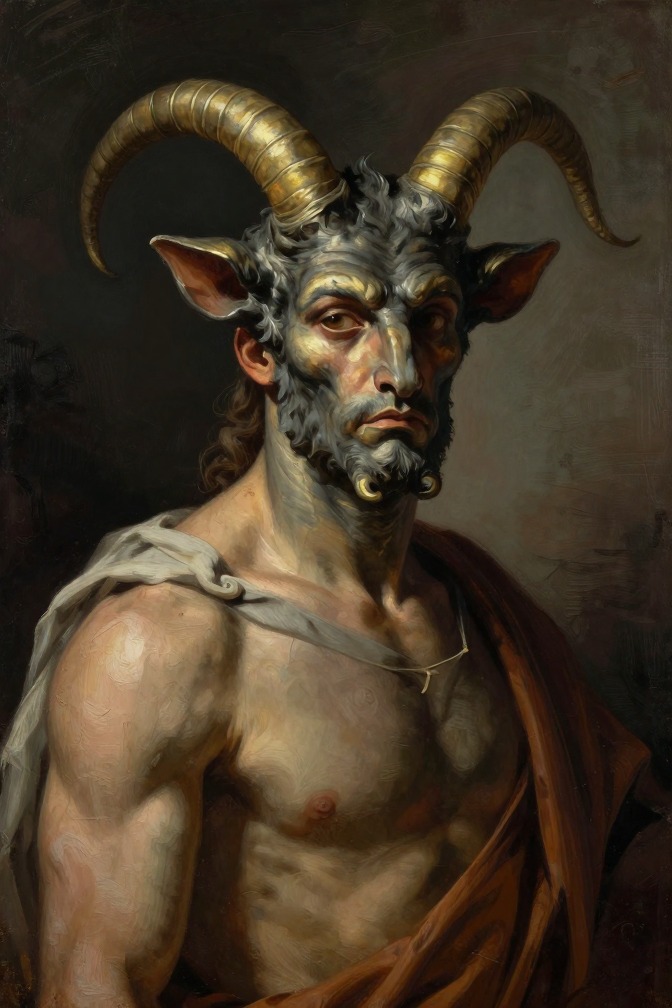
Minos is the infernal judge of the damned in Dante's Hell, a monstrous figure who assigns each soul to its proper circle by coiling his tail around himself the requisite number of times, embodying the principle of contrapasso through his very method of judgment.
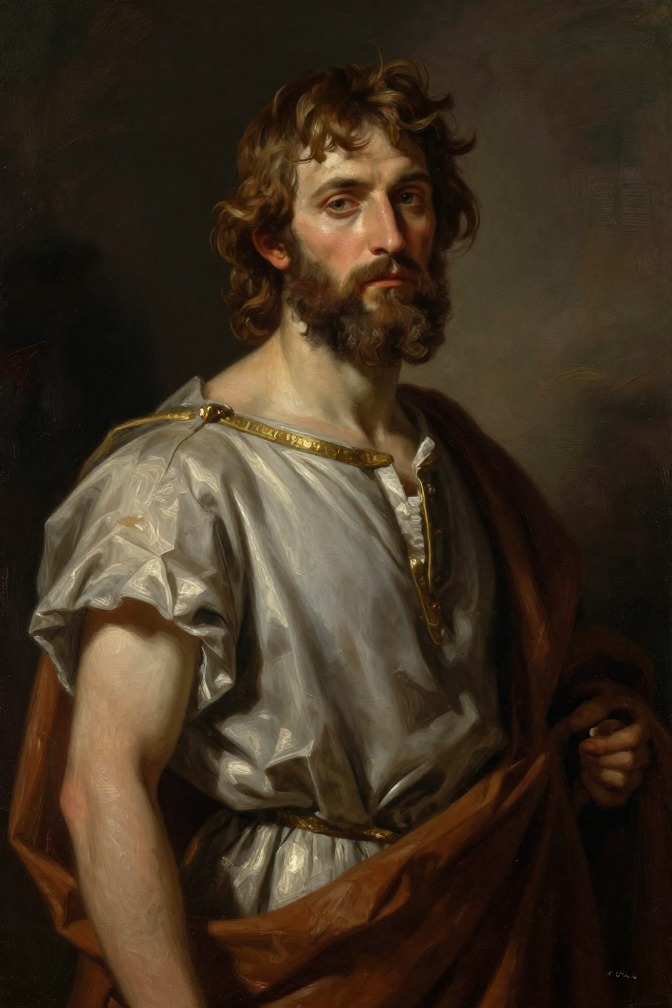
Nimrod is a giant from the biblical account of the Tower of Babel, encountered by Dante and Virgil in the Ninth Circle of Hell, where he stands as a colossal, unintelligible figure whose horn and confused speech embody the sin of pride and the fragmentation of human language.
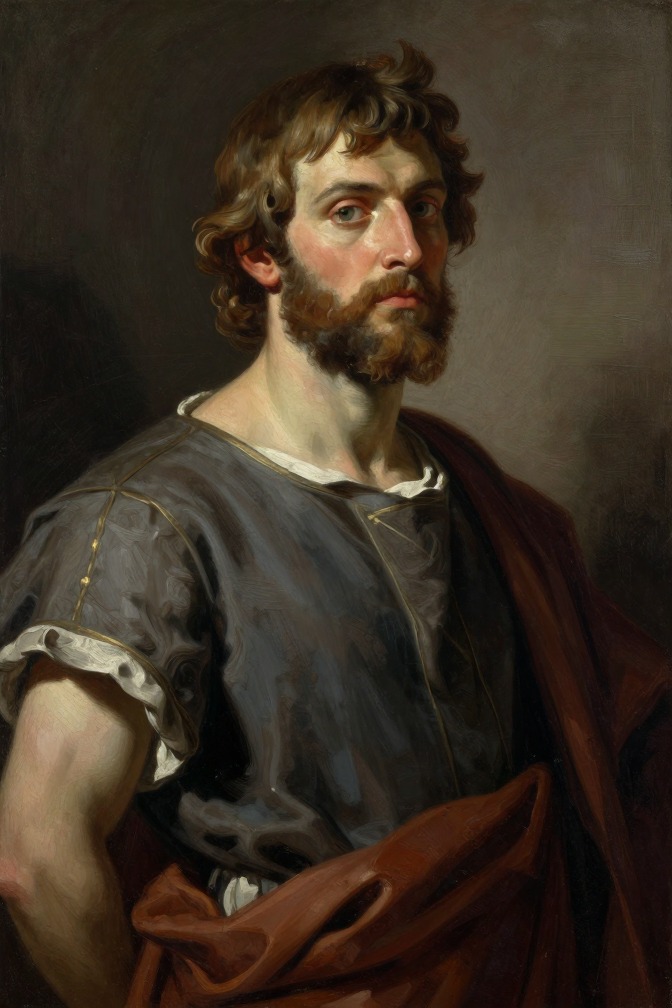
Pyrrhus is a minor figure in Dante's Inferno, appearing among the violent tyrants in the seventh circle, where he is punished for his bloodshed and pillaging during his lifetime.
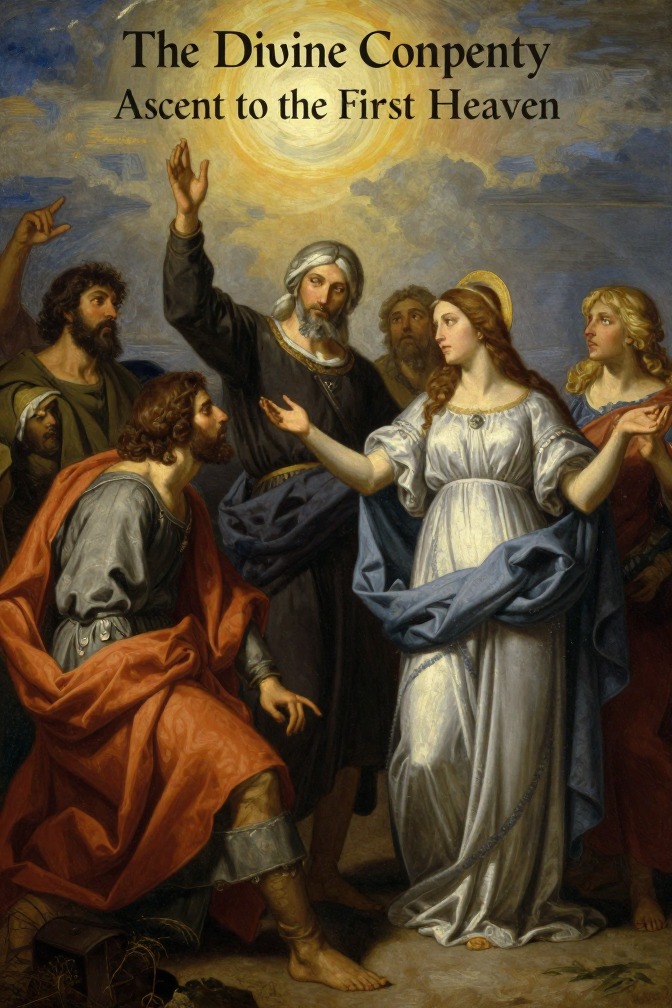
The Ascent to the First Heaven and Beatrice's Discourse on Order is the foundational event of the Paradiso, in which Dante Alighieri, guided by Beatrice, is miraculously lifted from the Earthly Paradise into the sphere of the Moon, the first of the nine celestial heavens. This ascent marks the transition from the temporal, purgatorial realm to the eternal, celestial one, and it is immediately followed by Beatrice's comprehensive discourse on the divinely ordained structure of the universe, the nature of creation, and the principle of universal order that governs all things. The event establishes the epistemological and metaphysical framework for the entire third canticle, transforming Dante's journey from a moral and penitential pilgrimage into an intellectual and spiritual ascent toward the vision of God.
Purgatory, the second realm of Dante's afterlife, is a towering mountain on an island in the southern hemisphere where souls undergo purification before ascending to Paradise. It is a place of hope, structured as seven terraces corresponding to the seven deadly sins, where the penitent willingly suffer to purge their sinful inclinations. The mountain's unique geography, including a nocturnal prohibition on ascent and an earthquake that signals a soul's liberation, embodies the theological principle that suffering, when embraced with contrition, leads to freedom and joy.
The Atbash Cipher is a simple substitution cipher used in the novel as the key to unlocking the Priory keystone. It is a Hebrew encoding system that substitutes the first letter of the alphabet for the last, the second for the second-last, and so on, and is applied to the word "Baphomet" to derive the password "Sophia."
Marie Chauvel is Sophie Neveu's grandmother, the wife of Jacques Saunière, and the mother of Sophie's parents. She was believed to have died in the same car accident that killed Sophie's parents, grandmother, and brother, but in reality she survived and went into hiding under the protection of the Priory of Sion to safeguard the Merovingian bloodline. Her reunion with Sophie at Rosslyn Chapel resolves the novel's central family mystery and reveals Sophie's true heritage as a descendant of Jesus Christ and Mary Magdalene.
K. and Barnabas is a central relationship in Franz Kafka's The Castle, tracing the land surveyor's fragile, hope-laden, and ultimately disappointing connection with the castle's young messenger. From their first meeting in the inn, where Barnabas's silken jacket and gentle smile captivate K., to the repeated failures of message delivery and the revelation of the messenger's humble family circumstances, the relationship embodies K.'s struggle to reach the castle through intermediaries. It oscillates between K.'s intense hope and bitter disappointment, culminating in K.'s realization that Barnabas, despite his apparent connection to the castle, is as powerless and uncertain as K. himself.
The landlady and Klamm relationship is a defining, lifelong attachment that shapes the landlady's identity, her marriage, and her fierce protectiveness over Frieda, revealing the castle's power to confer lasting status through intimate connection.
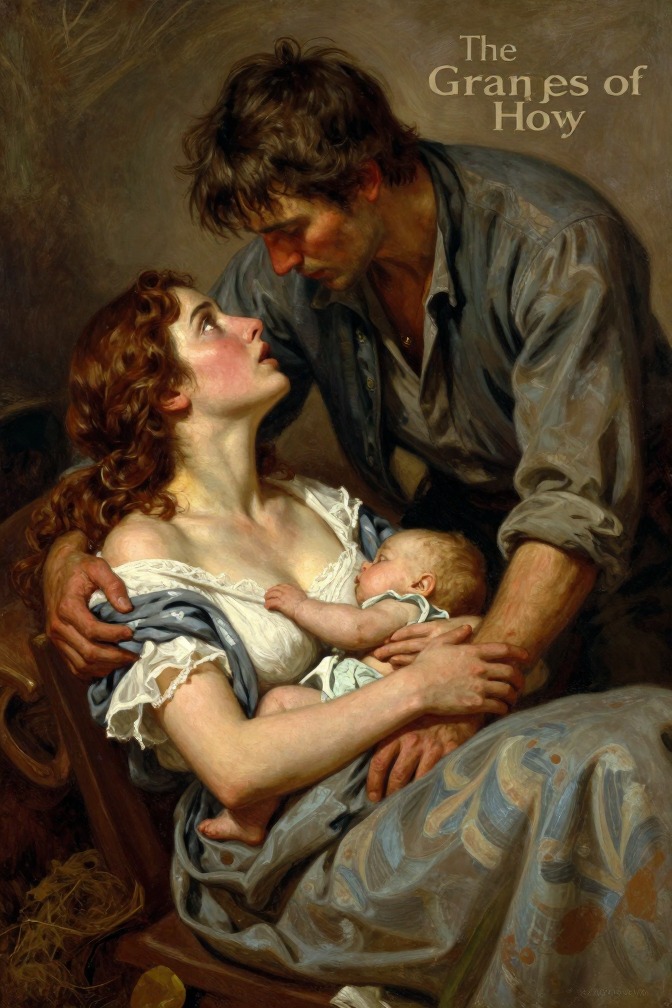
In the final scene of The Grapes of Wrath, Rose of Sharon, having just given birth to a stillborn child, nurses a starving stranger with her breast milk, transforming her personal tragedy into a radical act of communal sustenance and embodying the novel's central movement from individual loss to collective survival.
Christoph Brüder is the leader of the Surveillance and Response Support (SRS) team, a tactical unit under the European Centre for Disease Prevention and Control (ECDC) that is deployed to Florence to locate Robert Langdon and contain the threat posed by Bertrand Zobrist's engineered pathogen. A powerfully built man with a military background and an emotionless sense of duty, Brüder pursues Langdon relentlessly across the city, operating under the belief that the professor has switched sides, only to discover that Langdon is suffering from chemically induced amnesia and that the true crisis is far graver than anyone imagined.
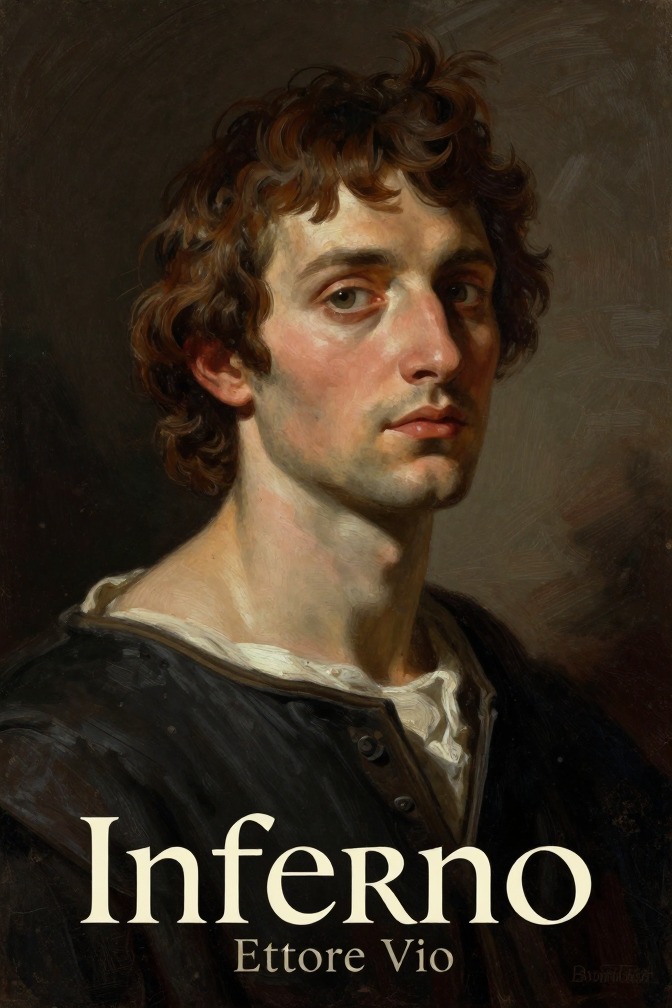
Ettore Vio is the curator of St. Mark's Basilica in Venice, a jovial and deeply knowledgeable art historian who serves as a crucial guide for Robert Langdon and Sienna Brooks when they arrive seeking the identity of the treacherous doge Enrico Dandolo. His expertise in the basilica's history and its treasures, particularly the Horses of St. Mark's, provides the key that unlocks the next stage of their desperate race to find Bertrand Zobrist's hidden plague.
Éa, the Old Island, is the mythic birthplace of Earthsea, the island from which the wizard Segoy raised the world from the ocean depths, and the source of the oldest songs and the True Speech. It is a place of origins, invoked in the Creation of Éa, the foundational poem of Earthsea's cosmology, and it stands as the ultimate reference point for the world's history, magic, and the equilibrium of all things. Though never visited by Ged in this first volume of his story, Éa's presence is felt as a distant, sacred origin, a lost golden age whose language and deeds underpin the entire Archipelago's culture and magic.
The relationship between Yossarian and Nately is a central friendship in Catch-22, marked by Yossarian's protective mentorship and Nately's naive idealism, which ultimately ends in tragedy with Nately's death and Yossarian's subsequent guilt.
The Other is the transcendent, benevolent cosmic force that opposes It in Stephen King's novel, serving as the ultimate source of the power that enables the Losers' Club to defeat the monster. Unlike the Turtle, which is a tangible entity within the macroverse, the Other is a more abstract, final authority, a power beyond all other power, and the author of all existence. It is the force that invests the Losers with the strength to perform the Ritual of Chüd and ultimately destroy It, though it never directly intervenes in the conflict.
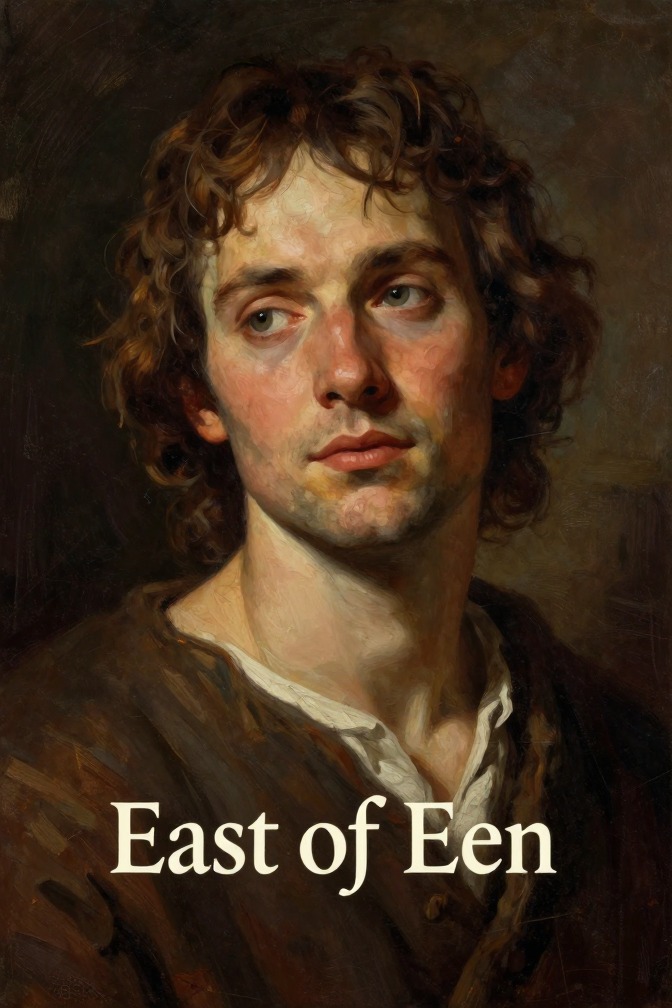
The glory is a luminous, transformative state of mind described in John Steinbeck's East of Eden, a kind of spiritual ecstasy that lights up a man's perception and releases him from fear, bitterness, and rancid memories. It is the mother of all creativeness, a lonely but world-relating force that sets each individual apart from all others. In the novel, the glory descends upon Adam Trask through his love for Cathy Ames, fundamentally altering his gray, eventless life and driving him to build a garden-like home in the Salinas Valley.
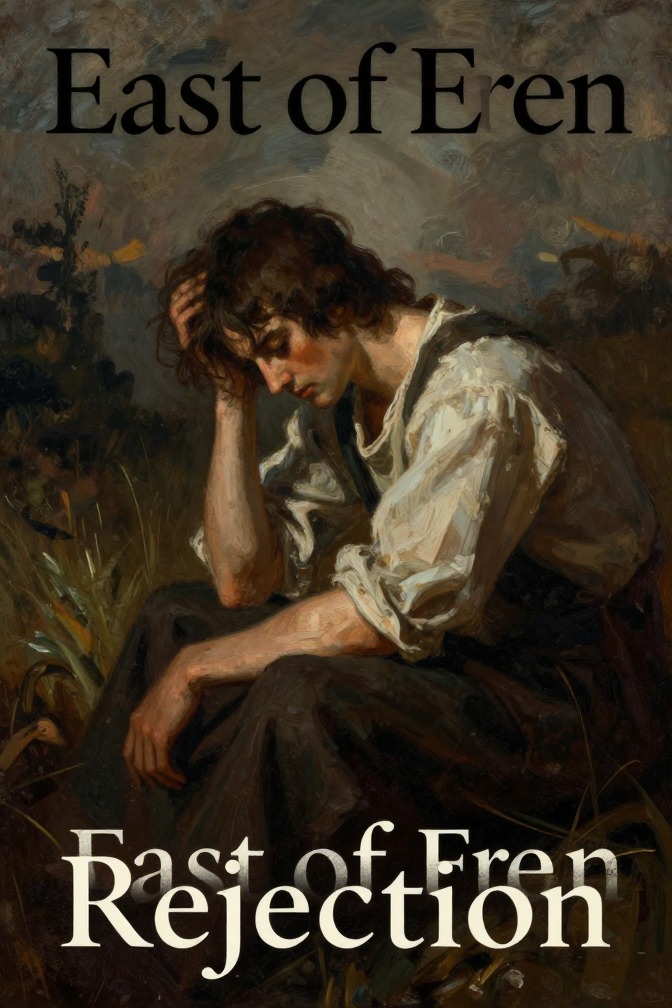
Rejection is the central psychological and spiritual wound in East of Eden, the fear that drives the story of Cain and Abel and every character's deepest conflict. Lee identifies it as the universal human terror—the fear of not being loved—which generates anger, crime, and guilt in an endless cycle. The novel traces this pattern through multiple generations, from Cyrus Trask's rejection of Charles to Adam's perceived rejection of Cal, and finally to the possibility of breaking the cycle through the choice embodied in the Hebrew word timshel.
Captain Flint (parrot) is Long John Silver's pet parrot, a two-hundred-year-old bird that serves as a living emblem of piracy and a recurring motif of the treasure's bloody history. Named after the infamous buccaneer, the parrot's constant cry of "Pieces of eight!" and its ability to mimic sea commands make it a memorable and symbolic presence throughout the novel, from the voyage to the final departure from Treasure Island.
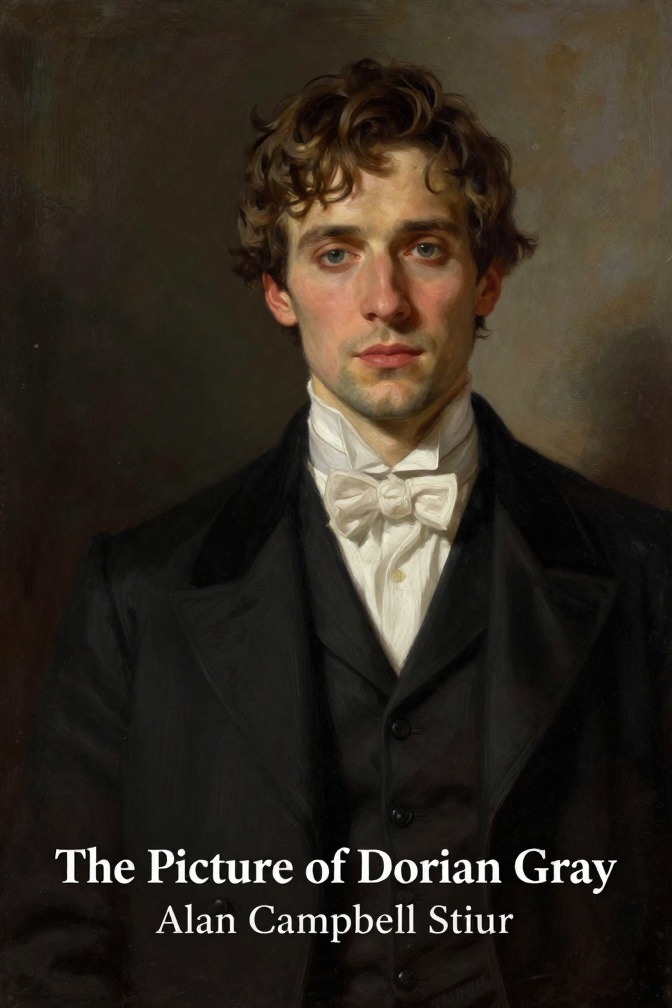
Alan Campbell's suicide is the final consequence of Dorian Gray's coercion, a self-inflicted death that seals the silence around Basil Hallward's murder and marks the irreversible moral collapse of all who become entangled with Dorian's secret.
Parker is the butler in Basil Hallward's household who appears briefly in the opening chapter of The Picture of Dorian Gray, serving as a minor functionary who facilitates the introduction of Lord Henry Wotton to Dorian Gray.
Dorian Gray's wish, uttered in Basil Hallward's studio upon seeing his completed portrait, is the supernatural pact that drives the entire novel: he prays that the portrait should age and bear the marks of his sins while he himself remains forever young, a wish that is mysteriously granted and sets in motion his moral and physical corruption.
Jack Dawkins, better known as the Artful Dodger, is a streetwise young pickpocket in Fagin's gang who introduces Oliver Twist to London's criminal underworld and serves as a foil to Oliver's innocence.
Rose Maylie is the beautiful, compassionate young woman who becomes Oliver Twist's aunt and protector, embodying the novel's ideal of feminine virtue and domestic happiness.
Bard the Bowman, a descendant of the ancient lords of Dale, slays the dragon Smaug with a single black arrow, fulfilling a prophecy and ending the dragon's reign of terror over the region.
Shell is the younger brother of Elphaba and Nessarose, the son of Frex and Melena, and a minor but recurring figure in the narrative. He is characterized by his wholeness and conventionality in contrast to his sisters' deformities, his role as a secret agent for the Munchkinland secessionist movement, and his eventual emergence as a political figure in the Free State of Munchkinland.
Shenshen is a minor character in *Wicked: The Life and Times of the Wicked Witch of the West*, a wealthy and snobbish student at Crage Hall who, along with her friends Pfannee and Milla, forms part of the exclusive social circle that initially excludes and mocks Elphaba. She is a flat character defined by her social ambition and superficiality, serving as a foil to Elphaba's depth and Glinda's eventual growth.
Arya Stark, the youngest daughter of Eddard Stark, undergoes a radical transformation in Braavos, shedding her identity to become a faceless assassin in the House of Black and White, yet her journey is marked by a persistent struggle between her training in detachment and the indelible traces of her Stark past.
Axell Florent is Queen Selyse Baratheon's uncle and the self-styled Queen's Hand, a coarse, ambitious, and persistently scheming knight who serves as the most prominent of the queen's men at Castle Black. His relentless pursuit of the wildling princess Val for marriage, his crude demands to inspect her as if she were livestock, and his willingness to see his own brother burned alive by Melisandre mark him as a figure of naked ambition and moral vacancy, a foil to Jon Snow's principled command.
Doran Martell, the cautious and calculating Prince of Dorne, is a ruler who conceals his long-term plans for vengeance and Targaryen restoration behind a mask of infirmity and indecision, using patience and deception as his primary weapons.
Edmure Tully, the Lord of Riverrun, is a captive of the Freys and Lannisters after the Red Wedding, his fate sealed by the threat to his unborn child.