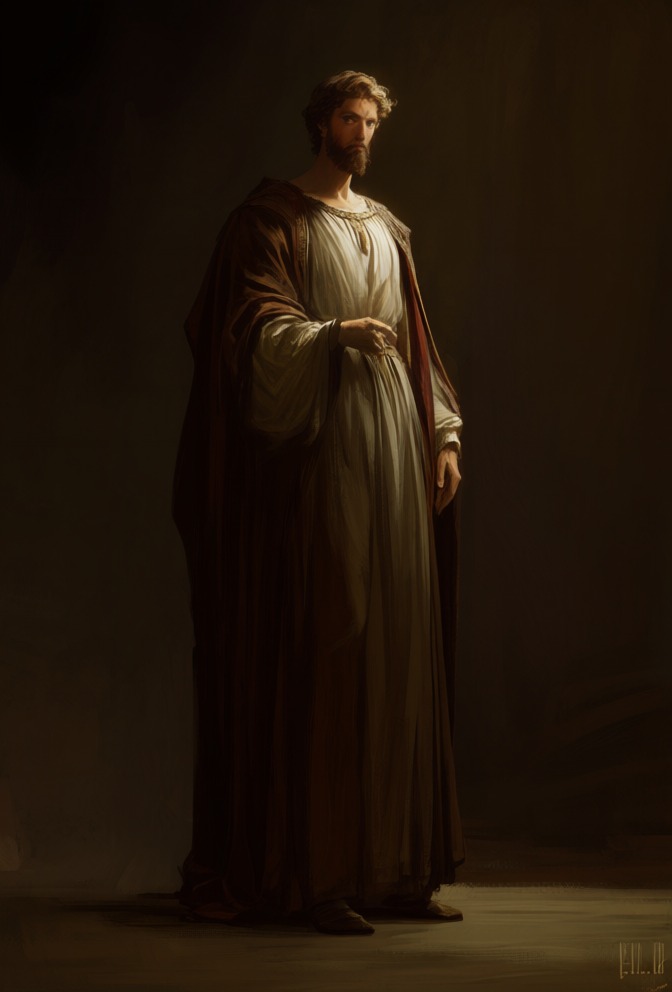
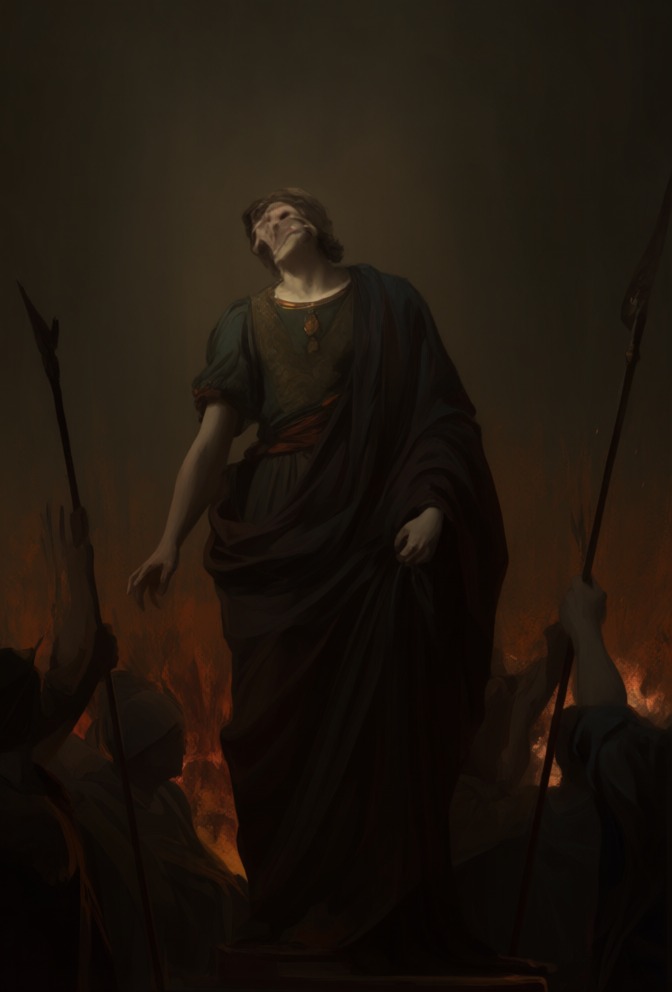
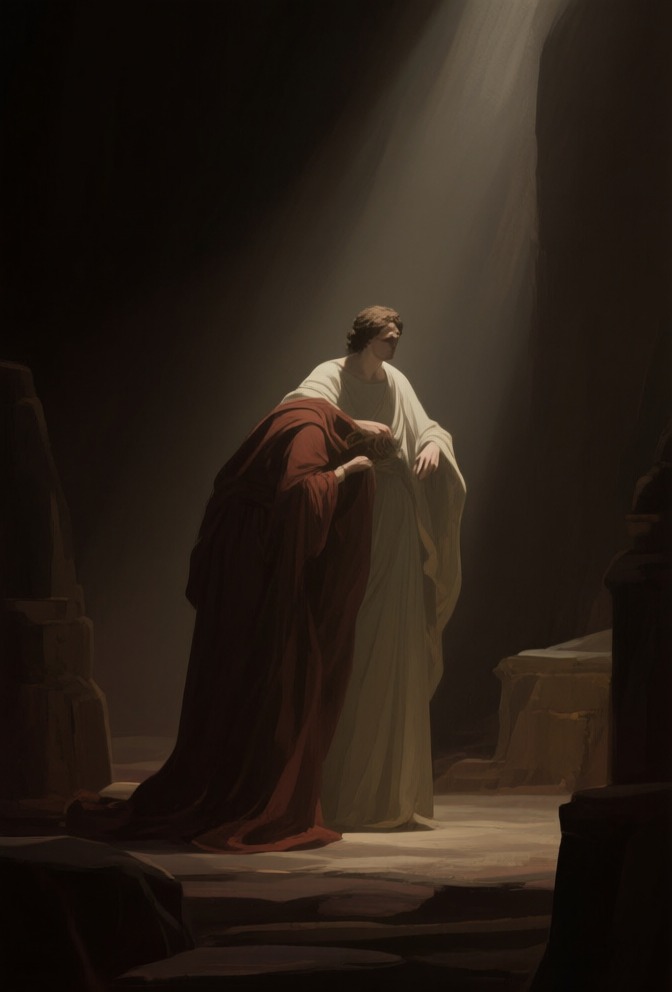
Julien Rossignol, the estranged father of Vianne and Isabelle, is executed by a German firing squad in Girot after falsely confessing to being the Nightingale, the leader of a resistance escape route, in order to save his daughter Isabelle from further torture and death.
After Rachel de Champlain is deported to Auschwitz, Vianne Mauriac hides her infant son, Ariel, in Le Jardin, renaming him Daniel Mauriac and raising him as her own child to protect him from the Nazis. This act of rescue, sustained through the brutal occupation and the presence of the predatory SS officer Von Richter, becomes a defining moral commitment that tests Vianne's courage, forces her into impossible compromises, and ultimately shapes the family's postwar identity.
Gilles Fournier is a young boy in Carriveau whose family's butcher shop is seized by the Nazis, and who is ultimately deported along with his mother, embodying the war's destruction of ordinary French families and the radicalization of a generation of children.
The Killing of Captain Wolfgang Beck is the pivotal, irreversible event in which Vianne Mauriac and her sister Isabelle Rossignol jointly kill the Wehrmacht captain billeted at Le Jardin, transforming Vianne from a passive survivor into a killer and forcing the sisters into a new, dangerous alliance that reshapes the rest of the war for both of them.
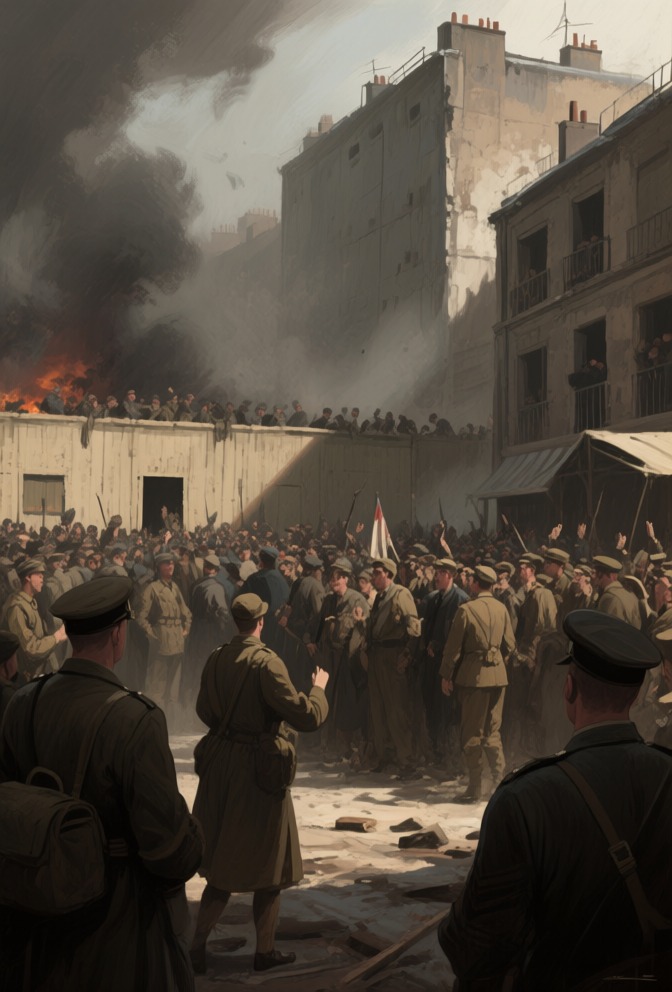
The Vel' d'Hiv Roundup was a mass arrest and deportation of foreign-born Jews in Paris on July 16–17, 1942, orchestrated by the French police under Nazi orders. Isabelle Rossignol, working as a courier for the French Resistance, inadvertently discovered the operation while sorting identity cards at the prefecture of police and witnessed the horrific spectacle of families being herded into the Vélodrome d'Hiver cycling stadium, an event that shattered any remaining illusions about the Vichy government's complicity in the Final Solution.
The expression "Patriotism is not enough" is a quotation from the British nurse Edith Cavell, executed by the Germans in 1915, and it becomes a touchstone for Isabelle Rossignol's evolving understanding of resistance, sacrifice, and love in Kristin Hannah's The Nightingale. For Isabelle, the phrase first represents a call to action beyond national loyalty, but as the war deepens, she learns that patriotism alone cannot sustain the personal costs of her work as a passeur, and that love—for her sister, for Gaëtan, for the men she saves—must be the deeper foundation of her courage.
The phrase "Wounds heal. Love lasts" is the closing affirmation of Kristin Hannah's *The Nightingale*, spoken by the elderly Vianne Mauriac as she reflects on a life shaped by war, loss, and survival. It distills the novel's central argument: that while the physical and psychological injuries of war—rape, starvation, the death of loved ones, the trauma of the concentration camps—can mend over time, it is love, in its many forms, that endures and gives life meaning. The line serves as both a personal credo and a thematic summation of the entire narrative, asserting that memory and connection outlast suffering.
Nice is a coastal city in the Provence-Alpes-Côte d'Azur region of southeastern France. In the novel, it serves as a key location for the Rossignol family's past, a source of false identity papers, and a destination for Jewish children being hidden from the Nazis.
Saint-Germain-des-Prés is a historic Parisian neighborhood that serves as a key operational hub for the French Resistance network in which Isabelle Rossignol operates, most notably as the site of her first clandestine meeting with the network and the location of a safe house used for planning the Nightingale escape route.
Boulogne-Billancourt is a Parisian suburb that becomes a recurring site of Allied bombing during World War II, most notably the March 1942 raid on the Renault factory that killed hundreds of civilians and left the surviving population jumpy and irritable. The location functions in the novel as a symbol of the war's indiscriminate violence, the cost of industrial collaboration, and the psychological toll of constant aerial bombardment on ordinary French citizens.
Vianne Mauriac and Isabelle Rossignol are sisters whose relationship is the emotional and narrative core of the novel, tracing a trajectory from childhood estrangement and mutual misunderstanding through wartime conflict and sacrifice to a hard-won, profound reconciliation that defines both their survival and their legacy.
The curfew imposed by the Nazi occupation of Carriveau was a foundational instrument of control, enforced from the first day of occupation and carrying the threat of immediate violence or death for violators. It transformed the daily rhythms of the town, criminalizing movement after dusk and forcing the entire population into a state of constant, fearful compliance. The rule was announced by Sturmbannführer Weldt of the Gestapo during the initial assembly in the town hall, where he declared a nine P.M. curfew instantly in effect, along with the requirement that no lights be on after dusk. This decree was not a suggestion but a lethal boundary: any act of sabotage, espionage, or resistance would be punished by death, and the curfew itself became the most intimate and inescapable expression of that threat. For characters like Isabelle Rossignol, the curfew was a direct challenge to her defiance, a line she repeatedly crossed in her work for the Resistance, while for Vianne Mauriac, it was a cage that defined the limits of her world and the safety of her daughter.
The Punishment for hiding Jews was a Nazi decree in occupied France that made sheltering Jewish people a capital offense, punishable by death or deportation to concentration camps. It transformed ordinary acts of compassion into life-threatening crimes, forcing French citizens to choose between moral duty and survival.
The Resistance silence for two days rule was an internal protocol adopted by the French Resistance network in which captured operatives were expected to withstand interrogation for forty-eight hours without revealing names, giving their comrades time to disappear. The rule was a grim acknowledgment that torture would eventually break most prisoners, and that the only realistic goal was delay, not permanent silence.
The Mail restriction was a set of Nazi occupation policies that severely limited communication between French civilians and their loved ones, particularly prisoners of war, by banning private mail and requiring all correspondence to be conducted on official German postcards.
The Yellow star decree was a Nazi ordinance requiring all Jews in occupied France to wear a yellow cloth star marked "JUIF" on their outer clothing at all times in public, enforced by severe sanctions including immediate arrest and deportation. It transformed Jewish identity into a visible target, enabling systematic roundups and marking the escalation from discrimination to genocide.
Food control was a central mechanism of Nazi occupation in France, systematically depriving the French population of sustenance while privileging German soldiers. From the moment of occupation, the occupying authorities seized all food production and distribution, forcing civilians into endless queues for meager rations and criminalizing any attempt to grow or trade food independently. The system was not merely administrative but punitive: it was used to enforce racial laws, reward collaborators, and break civilian morale. For women like Vianne Mauriac, food control became the daily terrain of survival, moral compromise, and, ultimately, resistance.
The STO decree (Service du Travail Obligatoire) was a compulsory labor service imposed by the Vichy government under Nazi pressure, requiring French men between eighteen and fifty to work in German factories. It drove thousands of young men into hiding, swelling the ranks of the Maquis guerrilla resistance, and became a defining mechanism of coercion and collaboration in occupied France.
The Allies, the coalition of nations including Britain, the United States, and the Soviet Union that fought against the Axis powers in World War II, serve as a distant but decisive force in *The Nightingale*, shaping the characters' fates through military campaigns, bombing raids, and the eventual liberation of France. Their presence is felt not through direct interaction but through the war's progression: the Allied bombing of German positions and French industrial targets, the hope their advances inspire in the Resistance, and the final liberation of concentration camps that brings the war to a close for the survivors.
The Armistice of 1940, signed on June 22, 1940, formalized France's surrender to Nazi Germany, dividing the country into an Occupied Zone in the north and a nominally self-governing Free Zone in the south under the collaborationist Vichy regime led by Maréchal Pétain. This event shattered the illusion of French military invincibility, imposed harsh terms including the indefinite captivity of French prisoners of war, and forced every French citizen into a moral reckoning with occupation, collaboration, and resistance.
Easter appears in the novel as a marker of ordinary family life and domestic ritual, a holiday whose associated decorations and memories are packed away in the attic trunk that the elderly Vianne opens at the beginning of the story. The mention of Easter is brief but significant: it belongs to the category of 'things I don't use much anymore but can't bear to part with,' and its presence in the trunk alongside Christmas and Thanksgiving boxes signals the lost world of peacetime family celebrations that the war and Vianne's subsequent life have rendered inaccessible.
The Final Solution was the Nazi regime's systematic plan for the genocide of European Jews, which during the German occupation of France was implemented through a series of escalating decrees, roundups, and deportations that directly shaped the lives of the characters in the novel.
The Collector is a 1963 novel by John Fowles that tells the story of Frederick Clegg, a lonely and obsessive clerk who kidnaps Miranda Grey, a young art student he has long admired from afar, and holds her captive in the cellar of a remote house. The novel is a chilling exploration of class, power, possession, and the destructive nature of obsession, told through alternating first-person narratives that reveal the starkly different perspectives of captor and captive.
Biff's discovery of Willy's affair in a Boston hotel room is the pivotal revelation of the play, shattering Biff's faith in his father and triggering the collapse of the Loman family's shared illusions.
The confrontation between Biff and Willy is the climactic scene of Arthur Miller's Death of a Salesman, in which Biff forces his father to face the truth about both of their lives, shattering the family's illusions and precipitating Willy's final, fatal decision.
Charley is Willy Loman's pragmatic, long-suffering next-door neighbor and the only character who offers Willy consistent, unsentimental help without illusion. He functions as the play's moral counterweight, embodying a workable version of the American dream based on steady labor and charity rather than personality and being well-liked.
Willy Loman is the sixty-three-year-old traveling salesman at the center of Arthur Miller's Death of a Salesman, a man whose desperate faith in the American dream of being "well liked" and materially successful drives him to psychological collapse and, ultimately, suicide. His life is a battleground between the promise of a transformed tomorrow and the humiliating reality of a career in ruins, a fractured family, and a mind that can no longer distinguish between past glory and present failure.
The football game is a central symbolic event in Arthur Miller's Death of a Salesman, representing the peak of Biff Loman's youthful promise and the moment after which his life, according to his father Willy, never recovered. It is the Ebbets Field All-Scholastic Championship, where Biff, as team captain, vows to break through for a touchdown specifically for his father. The game is never staged; it exists only in memory and as a benchmark of lost potential, a point of origin for the family's subsequent unraveling.
The stockings in Arthur Miller's Death of a Salesman function as a charged material symbol that binds together Willy Loman's adultery, his wife Linda's domestic economy of self-denial, and the collapse of his moral authority over his son Biff. They are the single object through which the play's central betrayals—sexual, emotional, and generational—are made visible and tangible.
The Boston discovery is the pivotal scene in which Biff Loman, having traveled to Boston to seek his father's help after flunking math, inadvertently discovers Willy Loman's extramarital affair with The Woman, shattering Biff's idealized image of his father and precipitating the collapse of the Loman family's shared dream.