
Powerlessness and the Search for Agency
1Q84This flow traces how characters respond to helplessness, from childhood constraint to action that may itself be morally dangerous.
increasing Bearing strength in each event
 decreasing
Bearing strength in each eventdecreasingChildren Used by Adults
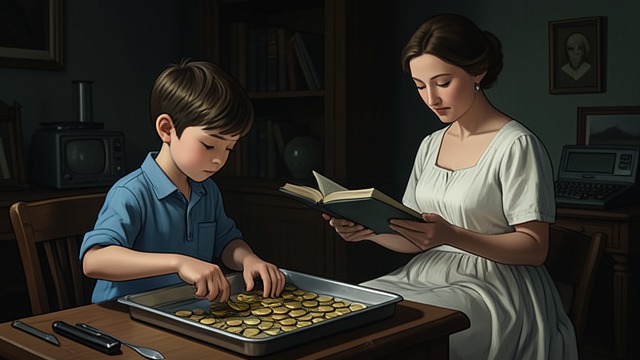
Children Used by Adults
Duties imposed from above
Tengo is made to collect fees on Sundays, while Aomamé is raised under strict religious rules. Neither child controls the demands placed on her or him.
Different forms of resistance
Tengo seeks a practical compromise with his father; Aomamé leaves her family’s faith. Their early efforts establish agency as something small, costly, and hard won.
Tamaki’s Helplessness
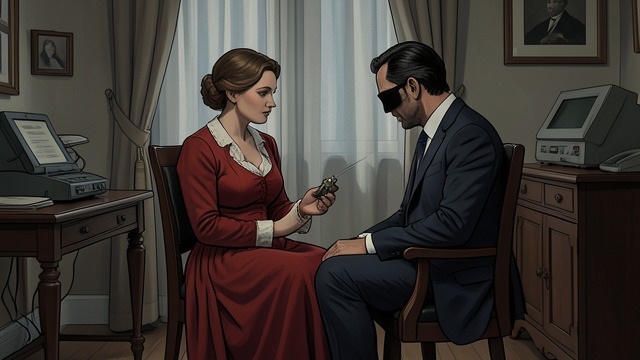
Tamaki’s Helplessness
An abuse that narrows choices
Tamaki’s husband abuses her while her family and the legal system fail to stop him. She eventually sees herself as trapped by a decision she once made.
A warning for Aomamé
Tamaki’s story makes helplessness a lasting injury rather than a temporary feeling. Aomamé’s later actions are attempts to prevent that injury from repeating.
Aomamé Acts
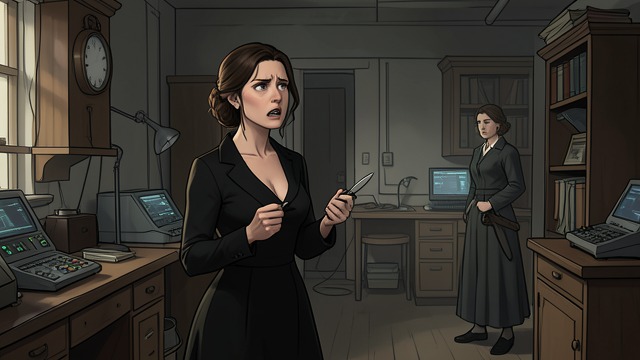
Aomamé Acts
A refusal to wait
Aomamé trains herself to kill an abuser with a concealed needle, believing she can stop future victims from suffering. The method gives her decisive control where legal remedies seem ineffective.
Agency with a cost
Her action protects others but makes her a killer acting beyond the law. The feeling of powerlessness is resisted, not erased, and its moral consequences stay with her.
Tsubasa’s Withdrawn Self
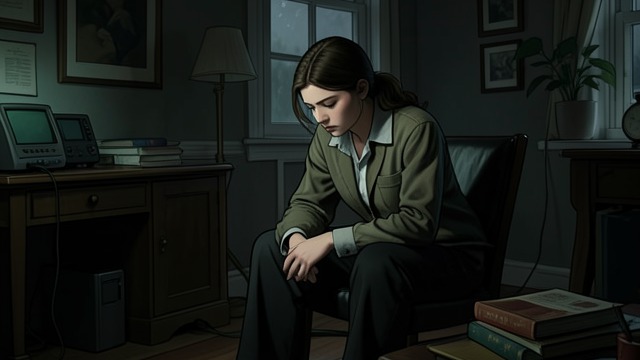
Tsubasa’s Withdrawn Self
Survival through silence
After severe abuse, Tsubasa speaks little and appears absent from the room around her. Her quiet is a sign of injury and a way of surviving what she cannot yet describe.
Care without coercion
Madame and the other women offer safety without forcing her to explain. Their patience recognizes that agency may first mean having the right to remain silent.
Justice Becomes Risk

Justice Becomes Risk
A new demand for action
The mission against the Pioneers’ leader promises to stop further abuse, but he is shielded by a closed and powerful group. Aomamé may have to enter greater danger to act.
No clean resolution
The story leaves her choice unresolved. The pursuit of agency remains entangled with violence, secrecy, and the possibility that one person’s justice may create another crisis.
Tengo’s and Aomamé’s childhoods
during her marriage
after Tamaki’s death
during her stay in the safe house
near the book’s end
