opening
Authorial Self-Portrait
The author presents an extravagant and eccentric self-portrait, describing a chaotic personality made from interrelated facets, thorny geometries, enthusiasm, boredom, competitiveness, passion, and determination. The speaker transforms daily life into painting, stairways, melodies, and solitary compositions, treating art as a way to inhabit inner and cosmic mysteries.
This opening establishes the book as an intensely subjective journey. Its imagination moves between bliss and oblivion, suggesting that the coming poems will treat identity, desire, memory, and suffering as parts of one labyrinthine design.
early in the book
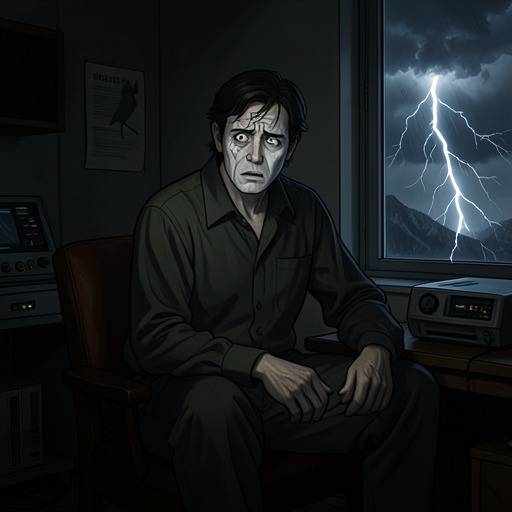
Sleepless Storm
A sleepless speaker lies on a bed surrounded by darkness while rain begins its relentless tip-tap. The storm becomes a sailor’s struggle against overwhelming waves, and the water crashes against the speaker’s colourless skin as though nature itself were attacking the body.
The rain is not merely weather but an agent of deterioration. It washes away the smallest traces of the past, turns toward a falsely promised future, and leaves the speaker physically and emotionally exposed.
during the first storm
Rain’s Assault
The rain is imagined as a destructive force that must leave nothing unchanged. It erases tiny remnants, reverses the present toward a destructive past, and hangs false expectations on a blank wall identified with the future.
The speaker is thrown upward and pushed downward, their bones cracked and heart hunted. The image turns weather into an emblem of emotional violence, making the surrounding storm a portrait of instability rather than a temporary disturbance.
after the storm’s violence
The Silent Departure
The rain abruptly falls silent, and the speaker realizes that someone has left them alone to wage an eternal, impossible war through the flames of disinterest. The abandoned person remains breathless, trying to speak to someone who is no longer truly present.
The transition from noise to quiet gives abandonment its sharpest form. The absence does not end the relationship; instead, it leaves the speaker trapped in one-sided address and emotional aftermath.
after the departure
The Lost Conversation
The speaker remembers when the pair talked for days, filling a room with warm laughter and hiding beneath moonlight and stars as though they owned the night. Their youth had been reckless and unburdened, animated by shared fantasy and intimacy.
That former abundance is contrasted with present monosyllables fading into cold darkness. Memory preserves the relationship’s brightness while also proving that it has become unreachable.
near the end of the rain sequence
Blurred Memory
A blurred vision overtakes the view of the two people, reducing the beloved and the speaker to the memory of “you and I.” The person once seen directly can now be approached only through fading recollection.
The poem closes its first emotional movement by showing perception itself deteriorating. The loss is therefore both relational and cognitive: the past no longer provides a stable image of either person.
early in the book
The Malaise’s Descent
A woman is introduced as vitriolic and permanently dissatisfied, her judgment obscured by a ubiquitous fog. Her soul and mind appear divided, while ordinary action seems insignificant beside an enduring sense of discontent.
She refuses to capitulate to other people’s requests and becomes an anomaly within the world’s frivolous theatre. Her resistance gives her a kind of independence, but it also isolates her from the social order she rejects.
after her refusal to conform
Drowning in Acedia
The woman finds herself drowning in an abyss deeper than she had imagined. No living creature holding [Hope](entity:state-recall-state-hope-16c9b2458b59)’s fragile ropes can hear her inaudible utterance, leaving her distress without witness or rescue.
[Solitude](entity:state-recall-state-solitude-d1476512d31e) and acedia scratch at her heart, while phosphenes become the principal images available to her. Her inner life is reduced to fragments and isolated perceptions, showing how despair has altered both her emotional and sensory world.
near the end of her descent
The Clock’s Sentence
Left fragmented, the woman spends each day in solitude as the clock appears to sentence her to a greater escape. She navigates through space and time toward an inevitable ultimate destination.
That destination is named as [Death](entity:state-recall-state-death-1dfd70bedbfc), turning the poem’s earlier fog, abyss, and isolation into a terminal trajectory. The movement is psychological rather than plotted, but its consequence is a complete surrender to fatal expectation.
early in the book
Seeking Equanimity
The speaker declares that equanimity is needed while describing an uncertain life on [Earth](entity:location-recall-location-earth-a6b883af9147). They are not gregarious, and feeling flummoxed in such a world is presented as almost inevitable.
The poem frames emotional balance as a scarce remedy rather than a natural condition. Its elaborate vocabulary reflects a mind trying to impose order on confusion through precision, classification, and verbal control.
after the search for balance
The Enigmatic Beloved
A dangerous faith opens its doors while a mellifluous voice escapes poisonous yet delicate lips. The beloved’s cerulean eyes conceal a private locus amoenus, a nearly perfect refuge that seems to function as an antidote to the speaker’s madness.
The beloved is therefore both healing and hazardous. Their presence concentrates beauty, secrecy, and danger into a single figure, making desire inseparable from the threat of emotional destabilization.
after the beloved’s appearance
Approaching Insanity
The speaker asks whether the beloved will be present when they are fully prepared to embrace the promised panacea. Their feeling is esoteric and not meant for everyone, suggesting an intimacy that resists ordinary explanation.
In a private tête-à-tête, the two remain disparate souls even as the beloved drives the speaker toward the precipice of [Insanity](entity:state-recall-state-insanity-3d9fd3968dbc). The speaker’s compassionate heart becomes corroded, revealing that the supposed cure also intensifies vulnerability.
following the emotional upheaval
The Lost Halcyon Life
The speaker looks back on the peaceful life they once had, calling it halcyon compared with the present. To deny the beloved’s celestial quality would feel vile and antithetical to everything the speaker experiences.
The repeated invocation of [Lustrous Panacea](entity:expression-recall-expression-lustrous-panacea-2f36fa876db8) turns the beloved into both an ideal and an accusation. The speaker’s former peace is now meaningful chiefly as a measure of how far desire has carried them from stability.
early in the book
Unspoken Confession
The speaker wishes to find words capable of conveying all their thoughts and feelings, but uncertainty and fear prevent those feelings from escaping into the empty pages. The unwritten poem waits to be filled with the beloved’s magical essence.
The inability to speak becomes the first obstacle in the confession. The speaker fears sounding banal or monotonous, yet over-elaboration only drives the declaration deeper into an abyss of unsaid whispers.
after the failed attempt to speak
Naming Love
The speaker tries to explain the concept commonly called [Love](entity:state-recall-state-love-ea2e34e34272) so that the beloved can fully grasp it and carve it into the depths of their soul. The address asks whether the beloved is ready, but the question also exposes the speaker’s own uncertainty.
Words are treated as both remedy and inadequate instrument. The speaker longs for a vocabulary intricate enough to contain the feeling, then deliberately retreats toward simple language as the only honest means available.
during the confession
Observing Small Gestures
The speaker describes loving the beloved’s bright eyes, crinkled nose when laughing, and habit of playing with soft hair when nervous. These intimate observations distinguish the beloved from everyone else the speaker has known.
The confession gains force by shifting from grand abstraction to minute physical details. [Love](entity:state-recall-state-love-ea2e34e34272) is shown as sustained attention: the beloved becomes precious not only through idealization but through recognizable gestures.
later in the confession
Opening the Soul
The beloved’s eyes are compared with windows, and the speaker claims to be the only one able to open them to the beloved’s soul. The speaker invites them toward an idyllic place imagined in youth beneath a starry sky and a scintillating moon.
The invitation is both romantic and possessive. By offering a hand and promising passage into infinite space, the speaker imagines love as escape from ordinary limits and as a shared return to an unrealized childhood dream.
near the middle of the confession
Vow of Cherishing
The speaker asks to drown in the beloved’s calm and serenity, promising to cherish their eyes as the most precious gem of every dream. Sustained eye contact becomes an experience from which the speaker no longer wants to flee.
The vow converts perception into commitment. The beloved’s gaze is not merely beautiful; it is presented as a treasure whose preservation gives the speaker emotional direction.
after the vow
The Risk of Devotion
The beloved’s love is called the speaker’s only categorical imperative. Aware that devotion is risky, the speaker nevertheless promises to fight against a thousand armies and to place the beloved’s happiness and joy above all other priorities.
The willingness to run barefoot for a comforting smile reveals devotion as self-erasure. [Love](entity:state-recall-state-love-ea2e34e34272) is elevated into a moral command, but its extremity also signals dependence and the abandonment of ordinary self-protection.
late in the confession
Dependence on Love
The speaker confesses a need for the beloved as great as a ship’s need for its captain or roses’ need for water. Physical symptoms—trembling knees, shivering, and a skipping heart—show desire becoming bodily and uncontrollable.
The relationship is imagined as fire and gasoline in a plastic world, capable of shaking the [Earth](entity:location-recall-location-earth-a6b883af9147) like an earthquake. This imagery makes intimacy both vital and explosive, suggesting that the speaker’s dependence carries the possibility of catastrophe.
end of the confession
At the Beloved’s Feet
With the slightest movement of the beloved’s cherry lips, the speaker’s world turns upside down. Overwhelmed by the force pulling them downward, the speaker ends at the beloved’s feet, harmless and surrendered.
The confession therefore culminates not in mutual certainty but in submission. The speaker’s elaborate declaration resolves into physical vulnerability, leaving love as a force capable of abolishing agency.
early in the body-centered sequence
A Body on the Floor
A speaker’s thin, snow-white arms lie on a cold floor while a fresh breeze enters through the window and generates an unfamiliar sensation. Numb to the feeling, the speaker studies the lines passing through the numerous dots called freckles.
The body is presented as an object of detached observation. This distance suggests dissociation, as though the speaker can recognize physical details more easily than the emotional condition that surrounds them.
after the bodily observation
Veins and Sunlight
The speaker’s imperfect skin contains blue lines that keep the body alive, and those lines reach toward the blinding sunlight. The image joins biological fragility to a desire for illumination and continued existence.
Life is shown as visible but precarious. The body’s survival depends on delicate internal structures, while the sun represents a brightness that is both needed and potentially overwhelming.
later in the sequence
Returning to Earth
The speaker’s shrinking body slowly deteriorates and mixes with the common mother, [Earth](entity:location-recall-location-earth-a6b883af9147), which takes back its creatures when their time comes. Human individuality is folded into a natural cycle of return.
The scene does not present death as a singular interruption but as an eventual ecological consequence. The body’s dissolution becomes part of a larger continuity, even while the speaker experiences it as loss.
after the body’s deterioration
Shadow in the Safe House
The speakers reflect light and burn brightly by themselves, yet leave behind nothing except a shadow in the corner of their secret, presumably safe house. Their refuge contains the residue of former radiance rather than reliable protection.
The safe house is therefore psychologically unstable. Its secrecy shelters intimacy, but the remaining shadow implies that brightness has already departed or become impossible to sustain.
middle of the body sequence
Animal Metamorphoses
The speaker sleeps on the floor like a dog, swims freely like a fish, and flies like an albatross through the cloudy sky. These transformations imagine freedom through movement across different environments and leave only a feather for the beloved to preserve.
The shifting animal forms loosen the speaker from a fixed human identity. Yet the final feather is a remnant, suggesting that even liberation ends in a token of absence and memory.
after the metamorphoses
Painting Personal Wounds
The speaker paints personal issues onto a canvas hanging in the corridor of life, using a brush found beneath a pillow when the first tooth announced its departure. [Childhood](entity:time-recall-time-8970b5ece589) memory and artistic practice become intertwined.
The image presents art as an improvised method of recording pain. What begins in an early domestic memory becomes a lifelong corridor in which private difficulties are made visible without necessarily being resolved.
late in the body sequence
Falling Self-Esteem
The speaker compares themself with a flower made fragile by a cold winter night and describes falling from the tree of self-esteem. That tree withers and morphs into the willow of unending loneliness.
The natural imagery charts an internal collapse from rootedness to mourning. Self-esteem is not simply diminished; it is transformed into a structure that bends beneath the weight of isolation.
near the end of the sequence
Emotional Escape
The speaker duels with overwhelming emotions but ultimately runs away from them rather than defeating them. Their fragile self is left between hands of glass, drowning in white acrylic paint.
The closing declaration, “I want to be free,” turns the scene into a demand for release. Yet the speaker remains submerged in the medium of their own art, showing freedom as desired but not achieved.
early in the romantic sequence
Walking Hand in Hand
Two people walk hand in hand through a forest, feeling the warmth of their synchronized hearts and feet. The forest is the oasis they have always dreamed of, hidden among complex desires and their unconventional way of living.
Their shared movement creates a temporary world apart from social judgment. Physical synchronization becomes evidence of emotional connection and of a life imagined beyond ordinary boundaries.
after the forest encounter
Dedication to a Woman
The speaker dedicates the poem to the woman who wipes away their tears and evokes thousands of emotions they never imagined possible. The speaker sings so she may finally acknowledge the feelings that whirl through their existence.
The woman becomes both beloved and muse. Her importance lies not only in affection but in her ability to make the speaker’s chaotic inner life articulate itself through verse.
during the dedication
The Muse of Rhymes
The beloved is named the muse of the speaker’s rhymes, and the speaker approaches her through bushes of strawberries near a cottage that smells like home. With her, the speaker can recite their mind without fear.
The domestic landscape makes intimacy feel inhabitable. Home is not a fixed place but a sensory atmosphere created by the beloved’s presence and the safety of speaking freely.
after the speaker’s confession of safety
The Eighth Wonder
The speaker swims through the depths of the beloved’s words while her brown eyes become the eighth wonder of the world. The beloved’s gaze transforms an ordinary encounter into a private marvel.
Language and sight reinforce one another: the speaker is liberated by conversation and overwhelmed by vision. The relationship becomes a space in which wonder replaces fear, at least temporarily.
middle of the romantic sequence
Sunflower Devotion
Like a sunflower in spring, the speaker blooms and turns toward the beloved as toward the sun. The beloved is described as the source of life and queen bee of the speaker’s beehive.
These natural metaphors place the speaker in a dependent orbit. Blooming is possible because of the beloved, but that dependence also means the speaker’s vitality is organized around one external source.
after the sunflower image
Searching for Treasure
The speaker becomes a brave pirate sailing the seven seas in search of the treasure represented by the beloved. Desire is figured as a voyage whose destination is not wealth but the person who gives the journey meaning.
The metaphor turns pursuit into adventure while preserving emotional vulnerability. The beloved is precious precisely because the speaker has invested an entire imaginary world in finding them.
later in the romantic sequence
Defying Heteronormativity
The wave of the pair’s desires crashes against the chains of [Heteronormativity](entity:rule-recall-rule-heteronormativity-eb6a7649c410). They identify themselves as an exception to the rule and pirouette on a thin stage of ice, unaware of—or refusing to dwell on—the danger of being themselves.
Their intimacy is therefore political as well as personal. The lovers’ freedom exists under pressure from a social order that defines their relationship as deviant, making joy inseparable from risk.
near the end of the romantic sequence
Fairies Among Stars
The pair floats around a lake while keeping pace with the cycle of the day, becoming [Fairies among the stars](entity:expression-recall-expression-fairies-among-the-9657439b3a29). Their world is dreamlike, luminous, and temporarily detached from social constraints.
The image gathers the poem’s recurring themes of transformation and exception. Their relationship survives as a magical counter-reality, one that depends on imagination to remain possible.
after the lake vision
A Starry Delivery
The beloved is imagined as a package ready to be delivered, teleporting directly to the speaker’s door. That door opens onto a starry life encircled by Christmas lights, making arrival feel like the creation of a private festive universe.
The playful image expresses longing for immediate closeness. It also reveals how fantasy compensates for distance: the speaker invents a mechanism by which the beloved can bypass every barrier and appear at home.
later in the fantasy sequence
The Prohibited Apple
The beloved becomes the prohibited apple in the garden called [Earth](entity:location-recall-location-earth-a6b883af9147). The pair is as close as atoms yet dares not touch, making physical proximity a source of tension rather than fulfillment.
The forbidden-fruit image joins desire with prohibition. Their connection is powerful because it is constrained, and the restraint imposed by the surrounding world turns intimacy into a suspended act.
after the forbidden-fruit image
Painting the Beloved’s Soul
The beloved is called the masterpiece painted on the canvas of the speaker’s journey. The speaker passes a hand over wet paint, coloring the beloved’s soul with magic.
Art becomes an act of participation rather than mere representation. The speaker wants to shape the beloved’s inner world while also acknowledging that the beloved has become the central work of the speaker’s own life.
near the end of the romantic sequence
Joining Their Veins
The speaker asks the beloved to come closer, play a harp on the strings of the heart, and connect their veins. The request is for strength to keep living and thriving in a world that was not made for them.
Intimacy is imagined as literal mutual sustenance. Their bodies and music become instruments of resistance, allowing the lovers to construct a shared vitality against an inhospitable social world.
end of the romantic sequence
The Pearl in the Constellation
The beloved is the precious pearl hidden inside the speaker’s ocean, found sleeping like an angel and aligned with the [Moon](entity:location-recall-location-moon-42d4042fe9c4) of the speaker’s constellation. The image closes the sequence by placing the beloved inside a private cosmic order.
What began as a walk through a forest ends as an entire universe organized around one treasured figure. The beloved is both hidden and discovered, suggesting that love offers meaning while remaining vulnerable to disappearance.
early in the downfall sequence
Burning Demands
Breathless illusions and lethal burning lips encircle a nest with poisonous demands. A freezing atmosphere rubs dry fingers against delicate skin and catches the nucleus of the pair’s [Freedom](entity:state-recall-state-freedom-c330e6d673af).
The imagery reverses the earlier warmth of intimacy. The nest that once implied safety becomes a site of pressure, while coldness and poison expose the destructive forces gathering around the relationship.
after freedom is captured
Heading Toward Oblivion
The speakers find themselves heading toward [Oblivion](entity:state-recall-state-oblivion-38a04ba7b94e), a land of uncertainty whose horizons continue to broaden. Their movement is directionless but irreversible, carrying them away from the freedoms they once imagined.
The journey matters because it converts emotional deterioration into geography. Oblivion is not an empty endpoint but an expanding territory that absorbs choice, memory, and hope.
middle of the downfall sequence
The Town of Ashes
Suspense melts bones as the speakers circle a town of ashes, a make-believe place where birds sing a dreadful song. Crumbling thoughts and empty bodies lie on the cold ground, waiting for the last drop to dry.
The town externalizes psychological ruin. Its artificial quality suggests that the speakers are trapped inside a nightmare assembled from fear, while the fallen bodies show thought and vitality collapsing together.
after the ash-town vision
Facing the Waterfall
With no alternative, the speakers turn and face a waterfall. The act is not presented as triumph but as compelled confrontation with a force too large to evade.
This moment marks a limited turning point: avoidance has ended, yet the speakers do not gain control. Facing the waterfall means meeting the overwhelming consequences of the downfall directly.
later in the downfall sequence
The Cloud’s Descent
The speaker looks down from a high cloud and aims to become the worst they have ever been. They sip vintage tree beneath an umbrella while holding a piece of cloth between lavender hands, combining surreal luxury with ominous stillness.
The elevated viewpoint does not grant clarity. Instead, it intensifies self-condemnation, suggesting that distance from the ground has become another form of alienation and moral disorientation.
near the end of the downfall sequence
Crystal-Ball Prison
The command to run is repeated, but there is no way out: the addressed person is trapped inside a crystal ball. They dance among winter goddesses to a song performed by the orchestra of [Death](entity:state-recall-state-death-1dfd70bedbfc).
The crystal ball turns the whole world into a sealed spectacle. Movement continues, but it cannot produce escape; beauty, winter, and death combine into a ritual of confinement.
early in the rupture sequence
The Beloved as Meteor
The speaker can no longer look at the beloved, whose glowing skin resembles a meteor. That radiance rusts the speaker’s infinite tears as the pair floats through the universe.
The beloved remains dazzling, but beauty has become corrosive. The cosmic setting preserves the scale of their former idealization while showing that the speaker’s response has shifted from wonder toward pain.
after the speaker withdraws
Crown of Bones
The speaker admits lacking the inner strength to continue and acknowledges years of regret. What remains in their hands is a crown of bones, a grotesque emblem of what their history and failed hopes have produced.
The crown suggests that suffering has become an identity. Instead of receiving honor or fulfillment, the speaker inherits the remains of a relationship that has transformed regret into a permanent burden.
after regret hardens
The Death Wish
The beloved’s bright eyes and marble desires are remembered as full of hope and joy, yet the speaker says the beloved had to wish them dead before the speaker could kill the beloved’s aura. The fantasy of radiance is deliberately destroyed.
This is a decisive emotional rupture. The speaker does not merely leave the beloved; they attack the idealized image that sustained the relationship, choosing devastation over continued enchantment.
after the aura is destroyed
Beneath the Sunless Ground
The speaker asks to be buried where the sun does not shine, where day and night are identical, so the experience can be carved into the mind forever. They ask the beloved to meet them anywhere but home.
The desired burial is both refuge and punishment. By rejecting home, the speaker rejects the former site of intimacy, while the sunless place offers a permanent memorial to pain rather than reconciliation.
later in the rupture sequence
Demand for Distance
The speaker insists that the beloved stay away and asks their souls to tiptoe-dance without speech. The beloved is compared with a fragile mirror spinning around a lonely room.
Distance becomes a desperate form of preservation. [Silence](entity:state-recall-state-silence-e65fd1fb1909) and delicacy replace direct contact because any honest encounter might shatter the remaining image of the relationship.
after the demand for distance
Walking the Edge
Icy candles illuminate an atmosphere in which the pair walks silently along an edge, afraid to break their empty promises. Their relationship persists as a precarious performance rather than a secure bond.
The edge represents the narrow boundary between continuation and collapse. Even promises that are already empty retain enough emotional force to make the speakers fearful of testing them.
late in the rupture sequence
The Shadow Imitation
The speaker silently imitates the beloved like a shadow, repeating the pattern day after day and rain after rain until silence arrives. Mimicry replaces genuine exchange.
The image shows attachment continuing after intimacy has failed. The speaker remains shaped by the beloved’s movements, but the shadow has no independent life and cannot restore the lost relationship.
after prolonged imitation
Words Like Arrows
The speaker’s words become worse than a thousand arrows, piercing the beloved’s solitary but golden heart. Language, once used to confess devotion, has become an instrument of injury.
This reversal gives speech a tragic consequence. The speaker’s inability to communicate safely means that expression now wounds the person it was originally meant to reach.
near the end of the rupture
Exiling the Heart
The beloved is addressed as queen of hearts and asked to sentence the speaker to another galaxy. Demons that cannot be escaped are turned into puppets, while permanent pain annihilates every inch of the speaker’s essence.
The speaker imagines exile as the only possible distance from destructive inner forces. Turning demons into puppets offers a brief illusion of control, but the continuing pain ultimately overwhelms that performance.
after the demons are named
Pretending Blindness
The speaker observes how innocence flees beneath the beloved’s naïve bridge and refuses to turn their head toward the truth. They pretend to be blind even while promising that they see everything.
Denial becomes a conscious strategy rather than an accidental failure of perception. The speaker knows the relationship’s reality but chooses self-protective illusion because acknowledgment would make the loss unavoidable.
end of the rupture sequence
Everything Is Not Enough
The speaker claims to have seen and tried everything, yet concludes that everything is not enough beneath the beloved’s moon. Effort, perception, and persistence all fail to repair what has been damaged.
The closing judgment strips away the romantic sequence’s earlier confidence. Under the [Moon](entity:location-recall-location-moon-42d4042fe9c4)’s symbolic light, the speaker recognizes that desire cannot manufacture mutuality or undo the consequences of pain.
later in the book
Malibu Fireworks
In [Malibu](entity:location-recall-location-malibu-60c95425040a), the beloved drinks fresh-squeezed lemonade in the sun and dances through fireworks, painting the galaxy of the speaker’s dreams with their fingers. The scene is bright, sensual, and openly celebratory.
The beach landscape offers a counter-image to the book’s darkness. Shared movement and color briefly return the relationship to pleasure, suggesting that the speaker can still imagine joy even after emotional instability has appeared.
during the Malibu interlude
Swimming Back to Earth
The pair swims through vibrant blue waves, and the fresh sensation in the speaker’s bones brings them back to [Earth](entity:location-recall-location-earth-a6b883af9147) by the beloved’s side. Hot sand under their feet anchors them while they stampede through life together.
The ocean’s movement becomes restorative rather than destructive. Physical contact with land and water gives the speaker a temporary return from fantasy into embodied companionship.
later in the book
Pearl of the Moon
The speaker remembers a time when they were a pearl, with mercury within their skin and a glow bright enough to illuminate darkness. They came alive while dreaming of the [Moon landing](entity:event-recall-event-moon-landing-17900fb9cefa) and visiting factories of stars.
The memory constructs identity as something luminous and otherworldly. The Moon landing represents a childhood-scale dream of transcendence, while the pearl suggests a self that once felt valuable, enclosed, and brilliantly alive.
after the lunar memory
Upside-Down Approach
Scratching at a wall and petrified, the speaker walks upside down toward the beloved. The beloved eventually picks them up and fixes their pouring head.
The encounter combines terror with rescue. The speaker’s distorted movement shows a mind losing ordinary orientation, while the beloved’s intervention briefly restores bodily and psychological coherence.
on 3月31日
The Silver Line
On March 31st, a silver line encircles the speaker's soul and gives it strength to swing higher and higher toward clouds protected by a fierce red dragon. The date becomes attached to a private, fantastical elevation
on 3月31日
Field of Daffodils
In a huge field full of daffodils, the beloved runs wearing a crown of flowers, while the pair imagines themselves alone in the world. The scene is innocent, expansive, and deliberately removed from ordinary society.
The field creates a temporary pastoral paradise. Its solitude is not yet loneliness but chosen exclusivity, allowing the lovers to treat their shared presence as a complete world.
later on 3月31日
Snowdon and Sand
[Snowdon](entity:location-recall-location-snowdon-394d5aaf426b) is imagined as nearby, yet the beloved’s toes remain stuck in sand. The pair’s hands are entangled, and the beloved’s million thoughts travel through the speaker’s nylon strands.
The image juxtaposes distant mountain grandeur with intimate physical grounding. Thought becomes something transmitted through touch, making closeness a material network despite the surrounding impossibility.
end of 3月31日
Climbing the Imaginary Wall
The beloved’s cerulean eyes hold the strength of a thousand waves against the speaker’s lavender skin. Together they climb the imaginary wall between them until their hands wrap around each other’s bodies.
The wall represents the emotional and social barriers that have shaped the relationship. Their embrace is a momentary victory over those barriers, but its imaginary construction also warns that the victory may belong more to desire than to reality.
after the 3月31日 memory
Ghostly Apparitions
Under moonlight, the speaker sees ghostly apparitions while the [Moon](entity:location-recall-location-moon-42d4042fe9c4)’s veil provides a strange sense of comfort. Its light enters through a French window and illuminates a cold room in which the speaker stands alone.
The supernatural images express the persistence of the past. The Moon offers companionship without presence, turning memory into a haunting substitute for the person who is absent.
during the ghostly visitation
The Box of Memories
The speaker holds a box and counts the days since the beloved’s melody was sweet rather than lethal. The box becomes a physical container for a relationship whose music has changed from comfort into danger.
Counting cannot restore the earlier harmony, but it gives the speaker a ritual for measuring loss. Memory is preserved materially even as its emotional meaning deteriorates.
later in the book
Creative Exhaustion
Without direction, determination, strength, or skill, the speaker continues typing until only a single inch of depleted creativity remains. The act of writing persists after motivation and confidence have nearly vanished.
This failure is not simple inactivity; it is a struggle to produce meaning from exhaustion. The poem presents artistic persistence as a final resource when the self feels nearly empty.
later in the book
Lost in the Woods
The speaker walks into the woods while trees surround them and their shadow. The speaker and shadow walk hand in hand, become lost, and repeatedly find each other again.
The woods turn solitude into a doubling of the self. Even without another human companion, the speaker maintains a cyclical relationship with their own shadow, making disorientation and self-recognition inseparable.
later in the book
The Fallen Dove
A white dove lies with bloody feathers beside a border, its carcass marked by the thirst for power that drives people mad. It has limped ever since a man decided he wanted more than others.
The dove becomes an emblem of peace destroyed by domination. The border makes political violence visible, while the wounded bird shows how ambition harms bodies that cannot participate in the struggle for power.
after the dove’s death
Under the Guardian Wing
A guardian figure keeps the speaker under a wing warmer than fire, sheltering them from mortal gossip and the mischievous games of the dead. Protection is imagined as physical enclosure and emotional secrecy.
The guardian creates a brief counterforce to judgment and mortality. Yet the need to hide from both the living and the dead suggests that safety remains fragile and dependent on an external protector.
later in the book
Domestic Commands
The poem of [Gender norms](entity:rule-recall-rule-gender-norms-4d5ad7520115) begins with shouted demands to wash dishes, prepare meals, clean rooms, vacuum floors, work, buy a car, make the bed, take out the bin, and have children. The addressee is reduced to a vessel expected to be filled with another person’s crude oil.
The commands expose domestic and economic expectations as a relentless system rather than isolated chores. Repetition turns social pressure into an assault that leaves no room for self-definition.
during the domestic assault
Breaking Under Expectations
The speaker says that holding everything together becomes harder every day. With their head between their hands, they sit on the floor, then lean against the wall and punch it as hard as possible.
The body becomes the place where imposed roles are resisted. Physical violence against the wall reveals desperation produced by the demand to satisfy an entire social script at once.
near the end of the gender-norm sequence
Bloody Knocks
The speaker continues receiving commands about children and grandchildren while bloody knocks find their way among their hair. The commands to perform domestic duties continue even as the speaker’s body registers injury.
The contrast reveals the cruelty of expectations that ignore distress. The speaker’s pain is treated as irrelevant, and the relentless voice of obligation becomes more powerful than bodily limits.
end of the gender-norm sequence
Disappointing the Demands
The speaker admits that letting the demanding voice down was never their full intention, yet the verdict remains: they always disappoint. The individual is condemned regardless of effort.
The ending exposes the trap at the center of [Gender norms](entity:rule-recall-rule-gender-norms-4d5ad7520115). Compliance does not guarantee acceptance, because the standard is designed to reproduce inadequacy and keep the subject permanently answerable.
later in the book
Advice to the Younger Self
The speaker addresses their younger self, urging them to take one more step and jump inside their own mind and memories. They are told to enter the heart and confront the thorns around it.
The instruction reframes memory as a difficult interior landscape rather than a passive archive. Healing requires entering the places that hurt instead of avoiding them.
after the younger self’s summons
Fighting Until Sunrise
The younger self is told to grit their teeth, open their eyes, and fight until the sun comes out. The promised result is that they will find themself.
The advice offers a direct alternative to surrender. Identity is not discovered through contemplation alone but through endurance across the night, with daylight serving as a conditional sign of survival.
later in the book
Hope as a Force
[Hope](entity:state-recall-state-hope-16c9b2458b59) is imagined as stronger than a tornado and as a force of nature that can carry a person across a rainbow. The image gives emotional endurance a scale larger than individual will.
This vision briefly counters the book’s recurring images of collapse. Hope is not quiet optimism but a violent, transporting power capable of moving someone out of paralysis.
after Hope is invoked
The Dormant Volcano
The addressed person sits like a dormant volcano, apparently inactive but filled with concealed energy. Lava eventually flows and paints their colourless world.
The metaphor distinguishes stillness from emptiness. Beneath passivity lies pressure and transformative force, suggesting that the person’s return to vitality may emerge through eruption rather than gradual calm.
later in the book
Love’s Choking Grip
[Love](entity:state-recall-state-love-ea2e34e34272) is described as something that takes away breath and makes a person choke alone in a dark room. The emotion that earlier promised rescue is now experienced as bodily suffocation.
This brief poem condenses the book’s central ambivalence. Love can inspire devotion and wonder, but it can equally imprison the person who depends on it too completely.
later in the book
Words in a Cage
The speaker repeats the word “Words” before denying that they write words at all. What they produce are gnarled, meaningless syllables forced to stick together inside a parallel cage.
Writing is presented as both compulsion and confinement. Language cannot freely express experience; it is assembled under pressure, trapped in an alternate structure that resembles the speaker’s own divided consciousness.
later in the book
Escape Before Madness
In a memory of [Survival](entity:state-recall-state-survival-7eefdfbf9985), the speaker recalls pretending for the first time while another person’s arms were entangled with theirs. They ran away before losing their mind and demand that the other person say something because silence is a killer.
The episode identifies speech as a condition of survival. Escape is chosen to prevent psychological collapse, but the speaker remains vulnerable to the silence that follows separation.
later in the book
Remembering Childhood
The speaker remembers playing outside during [Childhood](entity:time-recall-time-8970b5ece589), when there were no thoughts or regrets, no hatred or rivalry, only the fresh breeze of the countryside. The memory offers a picture of uncomplicated belonging.
This past is not merely nostalgic decoration. It functions as a contrast to the speaker’s present alienation, showing what has been lost as adulthood introduces conflict, self-consciousness, and emotional burden.
later in the book
A Suspenseful Night
During a cold and eerie night, the [Moon](entity:location-recall-location-moon-42d4042fe9c4) shines through grey waving clouds while a howling wind gives the city an atmosphere of suspense. The environment appears watchful and unstable.
The scene transforms ordinary nighttime into psychological weather. Partial concealment by clouds mirrors incomplete knowledge, while the wind amplifies the speaker’s anticipation of an unnamed threat.
after the suspenseful night
Fear of Losing Control
The speaker experiences fear induced by the unknown, specifically fear of losing their mind and control. They insist that they were not previously like this, but that today is different.
The repetition of difference marks a rupture in self-recognition. The speaker’s identity no longer guarantees stability, making the present day feel like evidence of an alarming transformation.
later in the book
Rationality’s Captives
The speaker’s feelings are described as favourite slaves of [Rationality](entity:state-recall-state-rationality-c85380eb89af), unable to break free from suffocating pressure. They are not strong enough to win the cursed game, and neither is the speaker.
Rationality is transformed from a stabilizing faculty into an oppressive ruler. The speaker’s humanity is consumed by the struggle between feeling and control, leaving neither side capable of liberation.
after the rational struggle
The Inner Thunder
A raging thunderstorm exists inside the speaker, accompanied by a tornado of emotions that consumes the tormented soul. Thunder is hidden within and cannot be released.
The concealed storm explains the preceding conflict between emotion and [Rationality](entity:state-recall-state-rationality-c85380eb89af). The speaker is not empty but overfull, carrying destructive energy that has no safe outlet and therefore continues to intensify internally.
later in the book
Walking Underwater
Feeling gloomy and filled with misery, the speaker walks along a path with their head underwater. The speaker asks whether this is the end.
The image makes ordinary progress physically impossible. Movement continues, but suffocation accompanies every step, turning the question of an ending into a direct confrontation with exhaustion and despair.
near the end of the book
Society’s Approval Machine
Society is accused of brainwashing humans into fearing other people’s opinions. Individuals constantly try to be liked and often lose themselves in the effort, becoming machines enslaved to approval.
The poem identifies social conformity as a gradual erasure of identity. Approval is not treated as a harmless desire but as a dependency that people crave more than oxygen itself.
ending
The 404 Distress
In [Failure - 404](entity:expression-recall-expression-failure-404-ed75262c8ee1), the speaker asks whether anyone can hear their voice and repeatedly sends [SOS](entity:expression-recall-expression-sos-0cef5ba51f74). The sounds leaving the mouth are inaudible, and the speaker begins to doubt whether they are alive.
The failed signal condenses the book’s recurring crisis of communication. The speaker reaches outward, but the world cannot receive the message, turning isolation into a technological and existential failure.
final movement
The Empty House
An emptiness takes over the house while the speaker continues sending [SOS](entity:expression-recall-expression-sos-0cef5ba51f74). The domestic space, once associated elsewhere with intimacy and shelter, becomes hollow and unresponsive.
The house’s transformation makes abandonment spatial. There is no longer even a private refuge capable of containing the speaker’s distress, and the silence becomes the dominant presence.
final lines
Alone Before the End
The speaker asks whether this is the end before the end, then remains alone facing a world too silent and grey for them. The book closes without rescue, resolution, or a restored relationship.
Its ending gathers together the earlier storms, failed confessions, social pressures, and inner conflicts. The final [SOS](entity:expression-recall-expression-sos-0cef5ba51f74) becomes both a plea for survival and the last proof that the speaker is still trying to be heard.