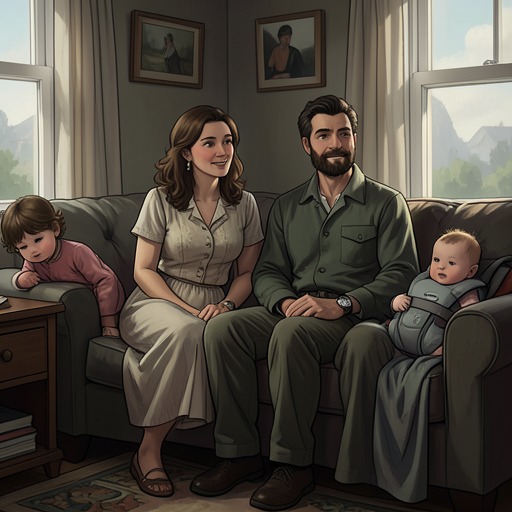
Page and Trygve: Romantic Relationship and Remarriage
AccidentPage Clarke and Trygve Thorensen’s romance develops alongside the long crisis surrounding their daughters, offering a future-facing counterpoint to the uncertainty of illness. Their relationship moves from quiet companionship and recognition of each other beyond parental duties to love, physical intimacy, plans for marriage, and the news that Page is pregnant. The commitment they discuss is not a promise of an uncomplicated life: it explicitly includes children, recovery, and the responsibilities each already carries.
Growing Close During the Crisis
The relationship becomes visible in the hospital’s outdoor spaces, where the intensity of the vigil briefly gives way to ordinary conversation. On the lawn, with nurses, medical students, and residents nearby, Trygve lies beside Page as she enjoys the flowers he has brought. Page touches his cheek without thinking, and his response makes her recognize something she has missed in her life. He compliments her and imagines the children they might have together, asking whether she wants more. The exchange matters because his interest reaches beyond her strength as a mother or her feelings about Allyson Clarke: he wants to know Page as a person with desires and a future of her own.
That possibility emerges while Allyson remains in a deep coma and Page continues to return to the intensive-care unit. The prospect of going back exhausts her; the exercises, therapy, respirator, silence, and apparent apathy make the hospital vigil a recurring trial. Yet she does not fail to visit, often sitting with Allyson for hours, stroking her hand or cheek and speaking softly. Trygve offers to accompany her upstairs after their time together outside. His presence does not displace Page’s care for her daughter; the scene places his affection alongside that steadfast duty. Their developing relationship thus takes shape not by escaping the crisis but by making room for tenderness within it.
Declarations and Intimacy
Their flirtation quickly acquires the scale of a shared future. After arranging to see Page again the next night, and inviting her to bring Andy Clarke, Trygve tells her he could imagine seeing her constantly without tiring of her. He declares that he is in love with her and jokes about their having ten children and living happily ever after. The extravagance is playful, but it also gives voice to a serious desire: he wants a lasting life with Page, not merely a moment of comfort during a hospital ordeal. Page blushes and feels young and happy in his arms, while still hoping that the happiness is real and will last.
Their relationship later becomes physically intimate at Page’s home. The narration frames the encounter as the culmination of a long-delayed closeness: Trygve says he has waited through the two months of upheaval affecting their families and, in a deeper sense, for years. The scene marks a change in their relationship from affection and declarations to mutual intimacy. Its placement after the hospital vigil gives that change weight: the crisis has not ended, but the two of them are beginning to imagine and claim a life that is not defined solely by fear for their daughters.
A Future That Includes Both Families
At a later conversation by the lake, Trygve returns to their plans without pressing Page. He hopes she will marry him once her divorce becomes final at Christmas. Page asks whether he is sure he wants the responsibilities that would come with her family: she has two children, and Allyson’s recovery will be difficult. Trygve answers by pointing to challenges within his own family, including Chloe Thorensen’s recovery and Bjorn Thorensen’s lifelong needs, then asks how Page feels about taking on his burdens. The exchange makes their proposal of marriage reciprocal in its terms. Each is considering not only a beloved partner but the children and ongoing demands attached to that partner’s life.
The conversation also reveals Page’s hesitation about having another child. She has wanted one, but worries that she may be too old and that a new baby could distract her from helping Allyson. Trygve says he can wait and that another child is not a condition of their marriage. Page then turns the question into unexpected news: she asks how he would feel about marrying at Christmas if she were nearly six months pregnant. She believes they conceived about six weeks earlier, despite her uncertainty about how it happened. She is embarrassed and pleased, and says that she has always wanted another baby. The pregnancy transforms the future they had been discussing from a possibility into an immediate family change, while leaving intact the demands and uncertainty surrounding their children.
Commitment Amid Uncertainty
The relationship’s movement is marked by the contrast between Page’s persistent presence at Allyson’s bedside and the moments in which she and Trygve look beyond that vigil. Their happiness does not erase the coma, the work of recovery, or the strain of combining two families. Instead, their conversations make those facts part of the commitment: marriage is considered in relation to the children’s needs, and the possibility of another baby is weighed against Page’s attention to Allyson.
Trygve’s recurring assurances and Page’s eventual proposal of a Christmas wedding show commitment taking shape through both affection and practical questions. He imagines a shared life and is willing to wait about having more children; Page tests whether he truly accepts the responsibilities involved before revealing her pregnancy. Their union is therefore presented not as a rescue from hardship but as a choice to build a future within it. The unexpected pregnancy intensifies that future, joining romantic hope to the family obligations that have accompanied their relationship from the beginning.