Mima's Tomb
AniaraMima's Tomb is the grave and reliquary of Mima aboard Aniara, a place where private devotion becomes a fragile shared practice. Its meaning shifts across the poem: Isagel tends it with a gesture for luck, the speaker seeks it in despair, and the remaining passengers gather around its last lamp before they die. The tomb cannot restore what has been lost, but it gives grief a place, a ritual, and finally a final communal image.
Reliquary and Ritual
The tomb is explicitly called the reliquary of Mima's grave, joining the language of burial to that of sacred keeping. In one scene, after the gathered people have been warmed by pelvic fire and lie happy and at ease, Isagel comes forth with her stave lowered. She touches the reliquary with her lamp three times for luck. The gesture is precise and repeated, a modest rite performed amid the intimacy and ease of the preceding scene. Its smallness matters: the grave is not described as a source of rescue, but it remains an object toward which care and hope can be directed.
The three touches also make the tomb a focus for actions that outlast any assurance of protection. Isagel's lowered stave and lamp distinguish her approach from the surrounding repose; the tomb receives a deliberate blessing even in a world where the passengers' larger circumstances remain beyond their control. The passage offers no claim that the rite works. Its force lies instead in the persistence of a practice: Mima is remembered through an act performed at her grave, and the grave is treated as more than a marker of absence.
Tomb, Hall, and Fragments of Memory
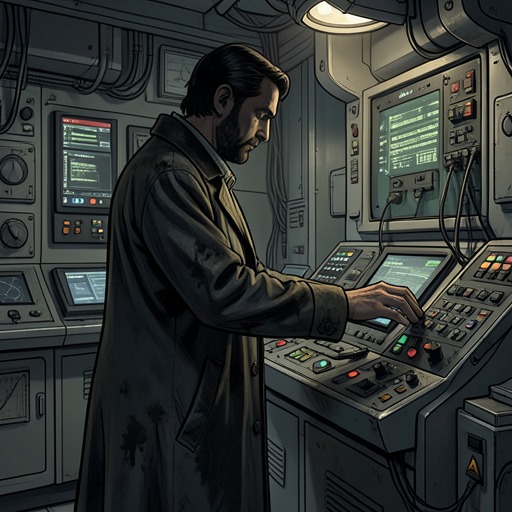
Later, the speaker opens gleanings from the days of Mima's grace in the Picture Archive. The Mima hall has become a cave, close-packed with splinters from the Mima scenes. Those fragments refract like an afterglow in the town aboard Aniara. The image connects the tomb's memorial function with a broader, damaged record of Mima: remembrance survives, but in pieces rather than as a whole, and the bright presence associated with her remains only as a refracted trace.
The contrast is between the grave as a particular place of devotion and the archive as a crowded enclosure of scattered images. Neither restores Mima to the living. The tomb holds her memory in a single grave; the hall gathers splinters whose afterglow reaches into the ship's town. Together, they show how remembrance persists through physical sites and incomplete remains, without cancelling the loss that made those sites necessary.
Prayer and the Last Lamp
The speaker goes to Mima's Tomb and lies sprawled there in prayer, uncertain which divinity is being addressed. The uncertainty is part of the scene: grief drives the speaker toward supplication, but offers no settled object of faith. At the grave, prayer is at once an act of reaching out and an admission that its recipient cannot be named. The tomb provides a place for that appeal, not an answer to it.
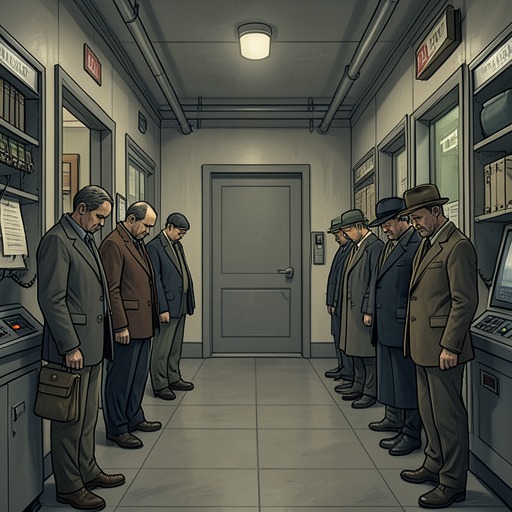
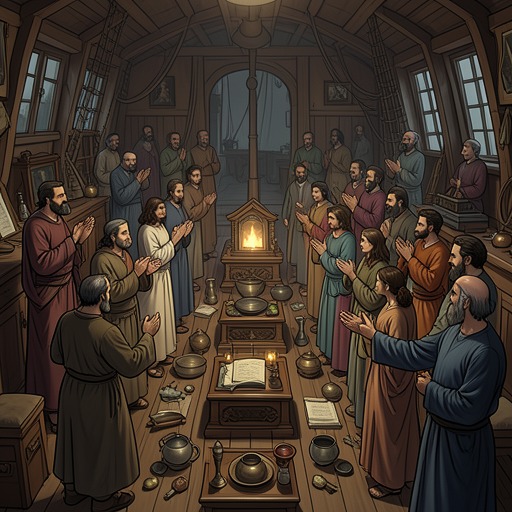
Near the end, when there are no longer any lights to light, one lamp still burns at Mima's Tomb. The helpless survivors have met there and turn their backs upon death's ocean. The surviving light gathers the earlier gestures of devotion into a final, stark image. It does not suggest that the passengers can escape their plight; rather, the grave and its lamp remain a point of orientation when other lights have failed and death lies before them.
Final Image and Significance
The poem's last image returns to the tomb. Around it, the speakers lie sprawled in rings, fallen and changed to guiltless ashes, delivered from the stars' embittered stings. The living gathering at the grave has become a ring of the dead. This ending completes the tomb's transformation from an individual burial place into the center of a final collective scene, while leaving its earlier associations with ritual, prayer, and Mima's memory intact.
Mima's Tomb thus holds together remembrance and extinction. Isagel's three touches, the speaker's uncertain prayer, and the last lamp are distinct forms of devotion, but none reverses the passengers' fate. The closing rings give the grave a severe finality: the place that preserved Mima's memory also frames the end of those who gathered around it. Its significance rests not in deliverance, but in the persistence of attachment and ritual at the edge of disappearance.