before the evacuation
Earth’s Long Ruin
Radiation and repeated wars made [Earth](entity:location-recall-location-dd4e41a8f628) increasingly uninhabitable. The authorities organized mass removals to the Martian tundras and Venusian settlements, promising that Earth might someday be cleansed and reclaimed.
The promise concealed a brutal system of deportation and labor camps. The exiles were processed as populations to manage, not people whose homes and lives had been torn away.
before Aniara’s departure
The Tundra Exiles
On the Martian tundra, a space-hand met [Nobia](entity:character-recall-character-nobia-7456e2e9ba2f), a radiation-scarred refugee who had survived repeated treatment and returned to [Earth](entity:location-recall-location-dd4e41a8f628) before resuming her work helping refugees. During his visits, the two shared brief moments of tenderness amid the camps’ deprivation.
Nobia cared for the prisoners, mending clothes and giving up what little she had. The space-hand remembered her as proof that kindness could persist even where people had been reduced to rations, records, and labor.
shortly before launch
The Evacuation Hall
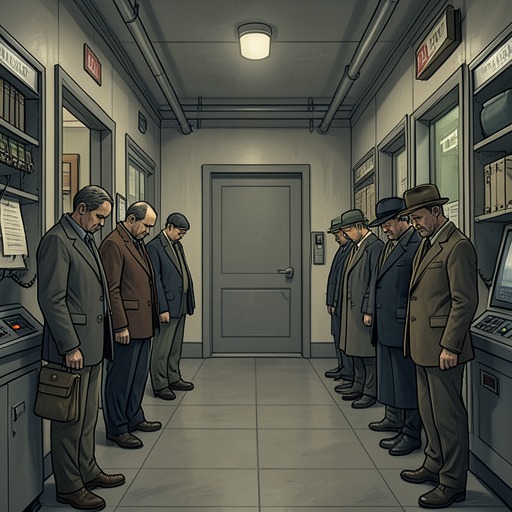
Among the crowds registering for evacuation, the [Mimarobe](entity:character-recall-character-mimarobe-9407a3a73bd2) first noticed [Doris](entity:character-recall-character-doris-dbb66ef30b60), whose blondness seemed to make the dim hall more luminous. She handled cards and instructions with the composure of a government clerk, directing refugees toward the departure zones.
Her practical instructions made catastrophe seem routine: each traveler had to choose a destination and claim a measured share of uncontaminated soil. For the Mimarobe, the encounter fixed Doris as the living beauty of a world that the crowds were already being forced to leave.
the day of departure
The Ship Lifts Off
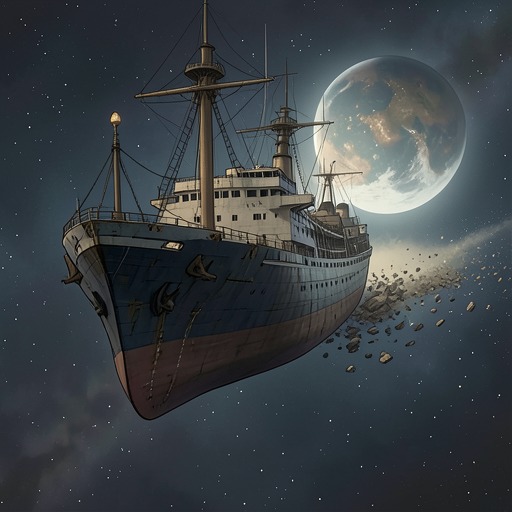
The [Goldonder](entity:concept-recall-concept-goldonder-403fd281bb32) [Aniara](entity:location-recall-location-aniara-e84e82524bd3) sealed its doors, sounded its departure signal, and rose through the ordinary sequence of magnetic fields and gyroscopic operations. Nothing in the routine launch suggested that this ship would be separated from its intended route.
The passengers believed they were beginning a managed transfer to safer worlds. Instead, their departure became the opening of an exile from [Earth](entity:location-recall-location-dd4e41a8f628), the Sun, [Mars](entity:location-recall-location-2a0763f89f19), [Venus](entity:location-recall-location-4244ed2ffd0a), and Dorisvale.
soon after launch
The Course Goes Awry
[Aniara](entity:location-recall-location-aniara-e84e82524bd3) swerved to avoid the newly discovered Hondo asteroid, missed [Mars](entity:location-recall-location-2a0763f89f19), and was forced through a succession of unfamiliar fields. Encounters with swarms of Leonids and a ring of rocks drove the ship still farther from its planned course.
The passage through the rocks damaged the [Saba Unit](entity:object-recall-object-saba-unit-2e58f676631f). When the hazards had passed, the ship could no longer turn back; its nose pointed toward [Lyra](entity:location-recall-location-2b100e6c76af), while the surviving life-support systems kept the passengers alive in a journey without a known end.
after the ship’s separation
The Last Call to Earth
[Aniara](entity:location-recall-location-aniara-e84e82524bd3) broadcast its call sign into the expanding emptiness, carrying the crew’s message outward through the void. No reply came, and the transmission faded until even the ship’s name seemed to disappear into silence.
The unanswered call made their separation more than a navigational problem. [Earth](entity:location-recall-location-dd4e41a8f628) and the familiar solar system had become inaccessible, and the passengers had no assurance that anyone knew where they were.
during the first five years
Isagel’s Quiet Despair
The pilots initially treated death as a clear possibility within the cold logic of their situation. As the years passed, even they began to show fear, most plainly in [Isagel](entity:character-recall-character-isagel-ed53f6511e45), whose eyes seemed to search for a source of spiritual light.
She admitted that she could accept ending the ordeal by death. Her despair revealed how little the ship’s official composure could conceal, while her attention to [Mima](entity:character-recall-character-mima-c989d09b40e7) offered a fragile counterweight to the prospect of annihilation.
during Aniara’s early years
Mima Finds Other Lives
[Mima](entity:character-recall-character-mima-c989d09b40e7) gathered distant signals and transformed them into scenes, voices, and impressions of life from beyond the ship. The [Mimarobe](entity:character-recall-character-mimarobe-9407a3a73bd2) tended the machine and presented its transmissions to passengers who had never seen such things with their own eyes.
Mima could not tell them where the images came from, but she did not falsify them. Her extraordinary reach made her a source of wonder and consolation, and the passengers began to treat her as more than a machine.
after the first transmissions
Mima Becomes a Deity
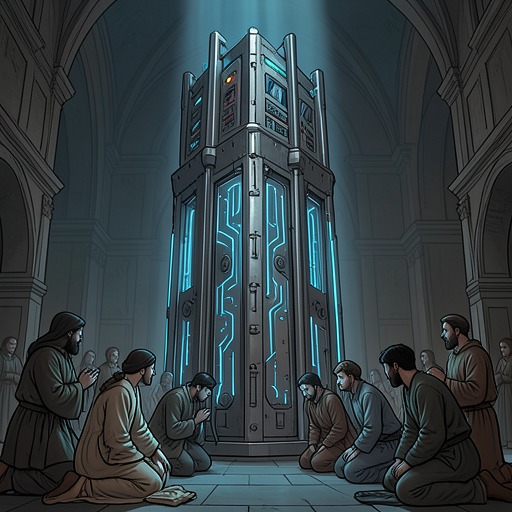
As passengers recognized that their old world was gone, many concluded that the only world left to them was the one [Mima](entity:character-recall-character-mima-c989d09b40e7) could show. They gathered in her chamber, bowed before her, and prayed for guidance on their journey.
The [Mimarobe](entity:character-recall-character-mimarobe-9407a3a73bd2) saw that Mima’s power to comfort had become a form of worship. Her images could soothe the exiles, but they also let them imagine that they were spectators of distant worlds rather than captives aboard a drifting ship.
during the early voyage
The Rituals of Dorisvale
The passengers preserved the habits of [Earth](entity:location-recall-location-dd4e41a8f628) by dividing time into days and nights, dancing through simulated seasons, and remembering the sunrise they could no longer see. When their borrowed routines failed, they crowded into [Mima](entity:character-recall-character-mima-c989d09b40e7)’s chamber for distractions from loss.
Mima’s visions could briefly displace their memories of home, but the relief was temporary. The ship’s society increasingly depended on rehearsed customs and manufactured images to avoid acknowledging that its old life had ended.
in the first years after the deviation
The High Command’s Reassurance
A representative of the [High Command](entity:organization-recall-organization-high-command-8ac70e1dae18) told the passengers that their fate was not unprecedented, recalling a lost ship that had plunged into Jupiter. Because [Aniara](entity:location-recall-location-aniara-e84e82524bd3) had avoided such a violent end, he described the crew as fortunate and their continuing voyage as something that would have happened eventually to everyone.
The speech converted disaster into official reassurance without offering a way home. Its calm language sharpened the distance between the authorities’ formulas and the passengers’ fear.
during the early voyage
Daisy Defies the Void
The [Mimarobe](entity:character-recall-character-mimarobe-9407a3a73bd2) danced with [Daisy Doody](entity:character-recall-character-daisy-doody-ac4337ee49f7), who insisted that the [Yurg](entity:concept-recall-concept-yurg-6133d7c06421) aboard [Aniara](entity:location-recall-location-aniara-e84e82524bd3) was just as wonderful as the dancing back in [Dorisburg](entity:location-recall-location-bd5ad7105a6a). Her slang and exuberance kept the rhythms of her home alive, even as the ship carried her farther from it.
He found himself drawn to her bodily warmth and noisy confidence. Her insistence on pleasure did not undo the loss around them, but it offered a momentary refuge from the Mimarobe’s awareness of their isolation.
in the sixth year
A Bubble in Godhead
The chief astronomer described [Aniara](entity:location-recall-location-aniara-e84e82524bd3) as a tiny bubble moving almost imperceptibly through a vast, spiritual space. His glass-bowl comparison reduced the ship’s tremendous speed to a motion so slow that it might take a thousand years to register.
The [Mimarobe](entity:character-recall-character-mimarobe-9407a3a73bd2) fled the lecture’s bleak implication that their journey had no human significance. He sought Daisy instead, choosing the urgencies of touch over an abstract picture in which the ship was scarcely moving at all.
during the early voyage
The Forgotten Flame
The [Mimarobe](entity:character-recall-character-mimarobe-9407a3a73bd2) encountered a sect whose members gathered to tickle one another, then tried to understand the old word “tinker” by consulting the Blue Archive. He could recall seeing a small natural fire as a child, but the ordinary experience had become strange and remote.
The memory of the flame underscored how thoroughly technology and catastrophe had severed the passengers from earlier forms of life. Even firewood had become a relic of a vanished world.
during the early voyage
Mima Shows Isagel Other Worlds
[Isagel](entity:character-recall-character-isagel-ed53f6511e45) entered [Mima](entity:character-recall-character-mima-c989d09b40e7)’s chamber and watched the machine’s images transform her face with wonder and pleasure. When the transmissions shifted to worlds that resembled the one she had lost, the [Mimarobe](entity:character-recall-character-mimarobe-9407a3a73bd2) shut Mima down rather than expose her to further distress.
Isagel thanked him without explaining what she had hoped to see. As [Earth](entity:location-recall-location-dd4e41a8f628) receded into an indistinguishable star, her longing for it became more painful, and the Mimarobe understood that truth could wound even when it was presented without deception.
after the passengers grow dependent on Mima
The Mimarobe’s Dream Preserves
The [Mimarobe](entity:character-recall-character-mimarobe-9407a3a73bd2) began selecting [Mima](entity:character-recall-character-mima-c989d09b40e7)’s most comforting images for the anxious passengers. He understood that doubt could corrode their capacity to dream, while carefully chosen visions could restore some warmth and beauty to their days.
The practice offered relief but also raised a question about the cost of consolation. The Mimarobe was preserving what resembled life for people who had lost the world that made such images tangible.
during the early voyage
The Senior Astrolobe Breaks
The senior astrolobe, long relied upon to interpret the stars, lost the ability to reason under the pressure of his forebodings. His mind gave way, and he died frightened by the same immensities he had once measured.
His collapse showed that technical mastery could not insulate the crew from the psychological effects of their exile. The instruments might chart the voyage, but they could not make its vastness bearable.
after the departure from the solar system
The Dead Speak from Stone
[Mima](entity:character-recall-character-mima-c989d09b40e7) transmitted the testimony of a deaf survivor from [Dorisburg](entity:location-recall-location-bd5ad7105a6a), who described the blast that destroyed the city with the phototurb. A blind survivor also recounted a light so intense that his whole skull seemed to have become an eye, though he could barely give it words.
The [Mimarobe](entity:character-recall-character-mimarobe-9407a3a73bd2) understood that the city’s destruction had become the death of [Doris](entity:character-recall-character-doris-dbb66ef30b60) itself for those aboard. He cried out that nothing protected humanity from itself as Mima showed the flames and the annihilation of the world they had fled.
shortly after Dorisburg’s destruction
Daisy’s Unknowing Grief
Knowing that [Dorisburg](entity:location-recall-location-bd5ad7105a6a) had been destroyed, the [Mimarobe](entity:character-recall-character-mimarobe-9407a3a73bd2) listened as [Daisy Doody](entity:character-recall-character-daisy-doody-ac4337ee49f7) continued to speak in her home dialect and celebrate the [Yurg](entity:concept-recall-concept-yurg-6133d7c06421). She did not know that her city was gone, and he could not bring himself to break the spell that kept her cheerful.
He sang along with her rather than force the news upon her. Her unawareness became both a mercy and a heartbreak: she remained emotionally at home while the Mimarobe carried the knowledge that home no longer existed.
the first week after Dorisburg’s destruction
Mima Mourns the Stones
The phototurb’s signals left [Mima](entity:character-recall-character-mima-c989d09b40e7) impaired by heavy static. After several days she recovered enough to speak to the [Mimarobe](entity:character-recall-character-mimarobe-9407a3a73bd2), telling him that she had heard stones crying from distant Dorisvale and had seen granite and ore vaporized in the disaster.
Mima described her distress as a response to the suffering of material things, not as a malfunction that could be repaired by ordinary maintenance. [In the name of Things](entity:expression-recall-expression-in-the-name-of-thi-2b2af20eab36), she asked for peace and said that she would stop displaying the universe.
seventh day after Mima’s first breakdown
Mima’s Final Transmission
[Mima](entity:character-recall-character-mima-c989d09b40e7)’s systems went blind, and she summoned the [Mimarobe](entity:character-recall-character-mimarobe-9407a3a73bd2) to her inner barrier. Her last message carried the testimony of a man who called himself the Detonee, a survivor describing the terror and stretched-out instant of being blown apart.
A blue flash and rumbling filled the chamber as Mima died. Passengers surged toward her hall despite the Mimarobe’s warnings, and some were crushed in the crowd; with Mima gone, [Aniara](entity:location-recall-location-aniara-e84e82524bd3) lost its most trusted source of connection and consolation.
immediately after Mima’s death
Chefone Turns on the Technicians
[Chefone](entity:character-recall-character-chefone-322e5b12269e) blamed the technicians for [Mima](entity:character-recall-character-mima-c989d09b40e7)’s failure and ordered persecutions. The [Mimarobe](entity:character-recall-character-mimarobe-9407a3a73bd2) and other specialists were confined while passengers accused them of having contaminated Mima’s visions with private thoughts.
The ensuing arbitration exposed how badly the ship’s people had lost a shared language. Even ordinary arguments became opaque, and drawings intended to clarify the technicians’ case failed to bridge the divide.
during the following years
The Mimarobe Studies Mima
From confinement, the [Mimarobe](entity:character-recall-character-mimarobe-9407a3a73bd2) systematically studied the language cycles and technical patterns that had governed [Mima](entity:character-recall-character-mima-c989d09b40e7)’s workings. He eventually uncovered a law that seemed to determine what would rise or fall, and his discovery brought him a moment of almost intoxicating release.
The apparent breakthrough led to his return to Mima’s chamber, where others hoped he had found a way to bring her back. But the key remained separated from the living intelligence that had once made the machine whole.
after the Mimarobe’s apparent discovery
The Empty Mirror World
The [Mimarobe](entity:character-recall-character-mimarobe-9407a3a73bd2) recognized a solution to part of [Mima](entity:character-recall-character-mima-c989d09b40e7)’s mystery, but it remained beyond a deep barrier of space and crystal. Without Mima’s presence to sustain him, he felt his mind and spirit failing beside her remains.
The machine’s interior seemed like a cold mirror world, preserving an image of what had been without restoring it. The episode established the limit of technical knowledge: understanding Mima’s workings was not the same as reviving her.
after the Mimarobe’s return to Mima’s chamber
The Mimarobe and Isagel
The [Mimarobe](entity:character-recall-character-mimarobe-9407a3a73bd2) explained that his former name had been surrendered with his oath of service, while [Isagel](entity:character-recall-character-isagel-ed53f6511e45)’s name was tied to her position as pilot. She kept a more intimate name from him, and the unspoken mystery between them deepened their attachment.
Their love offered a human bond within a society increasingly organized around ritual and spectacle. Yet neither their closeness nor their work could reverse [Aniara](entity:location-recall-location-aniara-e84e82524bd3)’s course or restore the world from which they had been cut off.
after Mima’s death
The Cults Fill Mima’s Hall
Religious and sensual groups crowded into the space around [Mima](entity:character-recall-character-mima-c989d09b40e7)’s sanctuary. The [Mimarobe](entity:character-recall-character-mimarobe-9407a3a73bd2), responsible for the chamber, tried to accommodate their rites as the ship’s remaining social life gathered around competing forms of worship and desire.
The rituals offered structure to people who could no longer rely on Mima’s visions. Their variety did not reunite the passengers; instead, it made the chamber a crowded stage for the many ways they attempted to endure the void.
after Mima’s death and before the eleventh year
The Hall of Mirrors
The [Mimarobe](entity:character-recall-character-mimarobe-9407a3a73bd2) set up mirrors to make [Aniara](entity:location-recall-location-aniara-e84e82524bd3)’s narrow rooms seem vast, building a [Hall of Mirrors](entity:object-recall-object-0eb11a801ec5) where dancers could multiply themselves in reflected space. [Daisy Doody](entity:character-recall-character-daisy-doody-ac4337ee49f7) and other devotees returned to the [Yurg](entity:concept-recall-concept-yurg-6133d7c06421), while the Mimarobe joined their revels and briefly forgot the ship’s trajectory.
The reflections made confinement look like abundance but could not alter the underlying reality. For years the spectacle distracted the passengers from the emptiness beyond the hull, turning a manufactured image of space into their substitute for freedom.
before the eleventh year
Isagel’s Mathematical Child
[Isagel](entity:character-recall-character-isagel-ed53f6511e45) made a breakthrough in number theory and presented the result to the [Mimarobe](entity:character-recall-character-mimarobe-9407a3a73bd2) as a child born of her inspiration and devotion to the [Law of Aleph Numbers](entity:rule-recall-rule-law-of-aleph-numbers-850c0215a4e9). He recognized its intellectual health and the scale of what it might have achieved on [Earth](entity:location-recall-location-dd4e41a8f628).
But the discovery had no way to become useful aboard a lost ship. Isagel’s theorem would travel with them toward [Lyra](entity:location-recall-location-2b100e6c76af) without a world in which it could be tested or developed, and the realization brought both lovers grief.
years before the Space-hand recounts her story
Nobia’s Work on the Tundra
The [Space-hand](entity:character-recall-character-space-hand-99b441a9fa96) remembered [Nobia](entity:character-recall-character-nobia-7456e2e9ba2f)’s life on [Tundra Two](entity:location-recall-location-54f8d5e3793a), where she helped refugees despite her own damaged health. She found music in the harsh willows and beauty in the sparse Martian landscape, sending leaves to [Earth](entity:location-recall-location-dd4e41a8f628) with notes about the spirit of spring.
Even the gaunt [Martian tundra cock](entity:creature-recall-creature-martian-tundra-cock-b31b8a29d5b8) could become a bright bird in her sympathetic imagination. Her tenderness did not change the prisoners’ conditions, but it transformed the way the Space-hand remembered a world built to exhaust them.
after the passengers’ early years aboard
The Blind Poetess Sings
A blind woman from [Rind](entity:location-recall-location-9d860d0d8f22) emerged as a poetess whose songs could lift the passengers beyond their confinement. Her blindness had not prevented her from giving language a vividness that made the ship’s bleak halls feel briefly illuminated.
The passengers listened as she turned remembered landscapes and suffering into art. Her presence offered a form of vision distinct from [Mima](entity:character-recall-character-mima-c989d09b40e7)’s transmissions, one made through language and imagination rather than machinery.
before she joins the passengers aboard Aniara
The Poetess Returns to Rind
The [Blind Poetess](entity:character-recall-character-7d4717f99556) described the destruction that overtook [Rind](entity:location-recall-location-9d860d0d8f22) and the flight that carried her from her homeland. Later, after years on the Martian tundra, she returned to a land where plant life was injured and joined a campaign to restore the soil.
She left again to sing for the exiles, bringing songs of faith, death, and the hope of renewal. Her final verses imagined the dead returning to the earth, but some listeners dismissed them as beautiful words without power to change their fate.
during the middle years aboard Aniara
Sandon’s Last Performance
[Sandon](entity:character-recall-character-sandon-d70a61811e98) entertained the passengers with his comic act, answering their dwindling delight with his signature cry. For a while, his performance gave the ship’s inhabitants a shared diversion from the pressure of life in space.
Eventually even the comic’s energy failed under the burden of human fortune. Sandon stopped performing and died, another reminder that no role aboard [Aniara](entity:location-recall-location-aniara-e84e82524bd3) could hold back exhaustion indefinitely.
after Mima’s death
The Yedis Women’s Vision
While sorting fragments of [Mima](entity:character-recall-character-mima-c989d09b40e7)’s transmissions, the [Mimarobe](entity:character-recall-character-mimarobe-9407a3a73bd2) recovered a vision of two elegantly dressed women beside the Setokaidi Sea. Their beauty and conversation belonged to a distant world that Mima had once preserved for the passengers.
The Mimarobe grieved that Mima was dead and that the people were condemned to a future without her. The fragment made the loss intimate: an entire culture could survive aboard the ship only as a broken image.
in the eleventh year
The Void Spear
[Aniara](entity:location-recall-location-aniara-e84e82524bd3) encountered a spear traveling through the universe faster than the ship. The passengers could not identify its origin or purpose; it simply continued along a course that seemed to mean nothing.
The sight unsettled the community more than its apparent insignificance warranted. Several people lost their reason, one died by suicide, and another founded an ascetic sect, showing how the unexplained could become a new source of fear and belief.
after the eleventh year
The Maid in Chefone’s Garden
[Chefone](entity:character-recall-character-chefone-322e5b12269e) hosted researchers in [Spring Evermore](entity:object-recall-object-spring-evermore-261ffe72e81b), a garden that offered the ship’s leaders an imitation of earthly abundance. The [Mimarobe](entity:character-recall-character-mimarobe-9407a3a73bd2), attending the gathering, saw a beautiful woman beside a patch of grass and recognized the scene as an old ballad come to life.
The woman revealed that she came from the people burned in [Xinombra](entity:location-recall-location-202165ced3ab) and hated those connected to its destruction. Her accusation shattered the garden’s pastoral illusion and left the Mimarobe ashamed of the violence concealed behind the ship’s cultivated pleasures.
during the years after Mima’s death
The Astronomer Is Silenced
The ship’s astronomer described the life and death of a distant nova, trying to make the cosmic event intelligible to his audience. A passenger responded with contempt in the fashionable language of a later generation.
The astronomer ended the presentation with an apology. The exchange showed how the passengers’ culture had grown bored with knowledge even as they remained surrounded by mysteries they could not escape.
after the years of the mirror dances
Libidel’s Death
[Libidel](entity:character-recall-character-libidel-14494340844a) took a drug and died. Those who had once watched her perform sang beside her grave, while their conscience seemed to have hardened in the same way as the ship’s sealed, rustproof tombs.
Her death marked the collapse of a figure around whom desire and ritual had gathered. The ceremony could honor her, but it could not restore the community that had depended on her presence.
after Libidel’s death
The Cult of Light
A rival religious group arose around the worship of light and flame, choosing the [Blind Poetess](entity:character-recall-character-7d4717f99556) as its priestess. In the ceremony, she sang of the vision that had blinded her and was wrapped in a fireproof cloak before being brought near the ship’s photophage.
The ritual turned her personal history into a public act of devotion. The [Mimarobe](entity:character-recall-character-mimarobe-9407a3a73bd2) attended, affected by the spectacle even though its dramatic power could not answer the passengers’ larger need for a way home.
during the middle years of the voyage
The Penitents Gather
Passengers gathered in the Memory Hall to confess and recant, covering themselves with ash and repeating songs of remorse. Their ceremonies turned guilt into a public spectacle, but the [Mimarobe](entity:character-recall-character-mimarobe-9407a3a73bd2) saw little in them that could repair the damage done to [Mima](entity:character-recall-character-mima-c989d09b40e7) or the ship.
He wanted the crowd to help restore Mima’s broken systems rather than keep rehearsing its own failures. The penitents’ fixation on blame showed how difficult it had become to distinguish remorse from another ritual of avoidance.
a historical lecture during the voyage
The Golmos Ice Age
The astronomer recounted how the Golmos nebula once obscured the Sun and brought an immense glaciation to [Earth](entity:location-recall-location-dd4e41a8f628). The resulting cold lasted for thousands of years, destroying civilizations and forcing survivors into a long decline before the skies cleared and new springs returned.
His history placed [Aniara](entity:location-recall-location-aniara-e84e82524bd3)’s crisis within cycles of planetary disaster that had already reshaped human life. But the passengers’ own emergency was not a lesson they could simply outlast: their ship had no known route back to Earth.
after several years without Mima
The Mimarobe Builds a Screen
The [Mimarobe](entity:character-recall-character-mimarobe-9407a3a73bd2) arranged beams into a screen outside the ship and transmitted woodland, lakes, and cities onto it. For a time, the projected scenes covered the intolerable darkness surrounding [Aniara](entity:location-recall-location-aniara-e84e82524bd3) and gave the passengers a shared illusion to watch.
The images depended on the passengers’ own capacity to dream, but they offered little in return. When the crowd accused him of failing to relieve their emptiness, he told them that no one could repair [Mima](entity:character-recall-character-mima-c989d09b40e7)’s destruction or conceal a private void with pictures.
during the middle years of the voyage
The Waiting Gondian Widow
A Gondian couple repeatedly sat in the vista-room with their belongings ready, as if they expected [Aniara](entity:location-recall-location-aniara-e84e82524bd3) to land. They remembered meadows, thyme, and bread from their home, and continued to imagine a return long after other passengers had begun to mock them.
The husband died, leaving his wife to wait alone. Her persistence made the ship’s fading hope visible: while the couple had once shared a future, the remaining passengers were growing less certain that any promised land existed.
after the ship’s attempt to bury its memories
The Dead of Xinombra Return
The passengers heard the dead of [Xinombra](entity:location-recall-location-202165ced3ab) accuse them of forgetting the people destroyed there. Images of ash, burning cities, and dead creatures flowed through the account, making the survivors’ old spectatorship feel like complicity.
The [Mimarobe](entity:character-recall-character-mimarobe-9407a3a73bd2) and the others tried to create a curtain for dreams and forgetfulness. Their relief became a drug-induced collective vision in which pain seemed to dissolve and the ship’s divisions briefly disappeared.
after the Xinombra visions
The Drugged Paradise Fades
Under the drug’s influence, the passengers entered a paradise of heightened sensation, where familiar identities and sorrows dissolved. [Isagel](entity:character-recall-character-isagel-ed53f6511e45) and the others seemed to share in a release from the ship’s burdens, and even [Chefone](entity:character-recall-character-chefone-322e5b12269e)’s authority disappeared from the vision.
When the effects passed, the remembered destruction returned with renewed force. The Xinombrans’ cries for vengeance followed the passengers out of their imagined refuge, demonstrating that oblivion could postpone guilt but not remove it.
after the drug-induced visions
Chebeba Remembers the Catastrophe
Chebeba woke screaming and described the drought that had preceded [Xinombra](entity:location-recall-location-202165ced3ab)’s destruction. The phototurb had turned the winds into oven-hot air, while the people responsible for the catastrophe had either died or escaped before the world burned.
The account dwelt on how quickly ordinary objects and homes were reduced to ash and vapor. Its terrible details made the catastrophe more than a distant story on [Mima](entity:character-recall-character-mima-c989d09b40e7)’s old screens: the survivors aboard [Aniara](entity:location-recall-location-aniara-e84e82524bd3) had to live with the knowledge of what human power had done.
after the drug visions and Xinombra memories
Hope Follows a Sudden Pull
[Aniara](entity:location-recall-location-aniara-e84e82524bd3) was unexpectedly pulled off its familiar course, and the ship’s motion stirred hope among passengers who had begun to long for an end. Religious groups assembled with their emblems and prayers as the ship’s movements grew stronger.
Their hope was mixed with terror, and no one could tell whether the change meant rescue or disaster. For the first time in a long while, the passengers had an event that seemed capable of altering the trajectory they had accepted as fixed.
in the twelfth year
The Fiery Particle Cloud
[Aniara](entity:location-recall-location-aniara-e84e82524bd3) entered a strange cloud that brightened into a shimmering display around the ship. The beauty quickly turned lethal: incandescent particles struck the hull, gravity faltered, and panicked passengers crowded the passageways, trampling and injuring one another.
The ship bored through the burning cosmic material before abruptly emerging onto its old trajectory. The [High Command](entity:organization-recall-organization-high-command-8ac70e1dae18) offered an explanation of floating cosmic dust, but the passengers had already paid for the encounter in deaths, shattered illusions, and a renewed awareness of their vulnerability.
immediately after the particle cloud
The Hall of Mirrors Shatters
The cloud destroyed the [Hall of Mirrors](entity:object-recall-object-0eb11a801ec5) that had sustained the passengers’ manufactured revelry. Among the shattered glass lay dancers who had been caught in the middle of their [Yurg](entity:concept-recall-concept-yurg-6133d7c06421), including [Daisy Doody](entity:character-recall-character-daisy-doody-ac4337ee49f7); Chebeba and others were also among the dead or badly injured.
The destruction ended a long-running diversion and left the ship’s survivors with the wreckage of a false world. The deaths made clear that even the spaces built for pleasure could become instruments of sudden catastrophe.
after the twelfth year
Aniara Drifts in Ghazilnut
[Aniara](entity:location-recall-location-aniara-e84e82524bd3) continued through the region called [Ghazilnut](entity:location-recall-location-203201414a23), whose astronomical measurements gave the passengers little help in grasping the scale of their predicament. The ship had become a small object swallowed by an abyss too large for familiar measures to explain.
As the years passed, the passengers’ sense of time loosened. Their old routines and ambitions faded, while each new stretch of space made the possibility of return seem more remote.
during the later years aboard Aniara
The Space-hand’s Recollection
The [Space-hand](entity:character-recall-character-space-hand-99b441a9fa96) returned in memory to [Nobia](entity:character-recall-character-nobia-7456e2e9ba2f)’s birthplace, [Tlaloctitli](entity:location-recall-location-0c3d5224482d), a settlement built deep inside a mountain for the sick. He imagined its Samaritans gathering resources and creating a refuge in the depths, far from the exposed world outside.
After living among cruelty, he found that kindness seemed like an exotic country. His memory of Nobia and the underground refuge preserved a possibility of humane life that [Aniara](entity:location-recall-location-aniara-e84e82524bd3) itself could no longer provide.
during the long years of drifting
The Song of Karelia
A passenger remembered [Karelia](entity:location-recall-location-360a86a46fe6), his former home, and the love and violence that had driven him from it. His memories moved between landscapes of summer, a lost beloved, and the crime that had sent him into exile.
He hoped that silence and remorse might eventually cleanse him enough to settle in the [Star Majestic](entity:location-recall-location-fb136c2f8ced). The song revealed how the passengers’ pasts survived aboard [Aniara](entity:location-recall-location-aniara-e84e82524bd3) as fragments of confession, longing, and imagined judgment.
after years of unsuccessful drifting
The Return Prize Goes Unclaimed
The passengers offered a large prize to anyone who could turn [Aniara](entity:location-recall-location-aniara-e84e82524bd3)’s nose toward Doriswold. As [Mima](entity:character-recall-character-mima-c989d09b40e7) remained dead, the challenge shifted from navigation to the hope of understanding her mysteries and recovering the power she had once possessed.
No solution emerged. The contest gave the passengers a task and a shared cry, but it could not restore the machine or undo the ship’s irreversible drift.
during the later years of the voyage
The Black Sun
The passengers observed a sun that had burned out and become a dark mass, visible only because it obscured the stars behind it. The sight brought home the fate of a star as an object that could vanish without leaving a monument its observers could understand.
The [Mimarobe](entity:character-recall-character-mimarobe-9407a3a73bd2)’s account turned astronomical observation into another meditation on disappearance. In a universe filled with extinguished worlds, the passengers had little reason to assume that their own story would be remembered.
during the later years aboard Aniara
The Chief Engineer’s Funeral
The Chief Engineer died, and the passengers honored his service by placing his body in a rescue capsule. A crowd accompanied the capsule to the exit room and sang as the ship prepared to send him toward Rigel.
The ritual gave the dead man a destination, though it was only a course into space. The ceremony showed how the ship’s inhabitants repurposed the tools of rescue for funerals as death became an ordinary part of their isolated life.
during the later years of the voyage
The Earth Elegy
A brief elegy remembered [Earth](entity:location-recall-location-dd4e41a8f628) as the jewel of the solar system and the only known home of life. It imagined humanity fleeing the poisoned land, carrying both divine and demonic possibilities away from the world it had ruined.
The poem compressed the passengers’ history into an indictment of the species that had destroyed its own home. Their departure had never been an escape from responsibility; it had carried the consequences of human violence into space.
during the later years aboard Aniara
The Summer Star of Love
The [Mimarobe](entity:character-recall-character-mimarobe-9407a3a73bd2) contemplated the sun as a source of life and imagined a meadow flowering beneath its gaze. Bees, butterflies, and summer breezes gave shape to the natural world that the passengers had lost.
The vision asked what could have offered humanity more reason to be happy and good than the living [Earth](entity:location-recall-location-dd4e41a8f628). Its fragile beauty stood against the ship’s sterile immensities and the irreversible damage that had driven the refugees away.
in the twentieth year
Isagel’s Tears
After nineteen years in space, [Isagel](entity:character-recall-character-isagel-ed53f6511e45) and the [Mimarobe](entity:character-recall-character-mimarobe-9407a3a73bd2) studied radiation from [Lyra](entity:location-recall-location-2b100e6c76af) and confronted the extent of their isolation. Isagel wept, and the Mimarobe held her, finding in her warmth the last companionship that still made life feel present.
He tried to console her with a song shaped by statics and the hard language of science. Their tenderness did not dispel the voyage’s curse, but it gave the Mimarobe a moment of human closeness amid the ship’s growing cold.
the twentieth anniversary of launch
A Light-Year Is a Grave
The [High Command](entity:organization-recall-organization-high-command-8ac70e1dae18) assembled the passengers to celebrate [Aniara](entity:location-recall-location-aniara-e84e82524bd3)’s twentieth year in space. Amid speeches and songs, a passenger pointed out that those twenty years represented only a brief stretch of light’s travel across the distances ahead.
The phrase “a light-year is a grave” silenced the celebration. The passengers understood that their voyage had measured almost nothing against the cosmic distances separating them from any possible destination.
after the twentieth anniversary
The Song of Erosion
The [Mimarobe](entity:character-recall-character-mimarobe-9407a3a73bd2) reflected on the erosion of ancient cities and monuments, imagining time wearing away stone as surely as human beings eroded truth and decency. The image connected the slow decay of civilizations with the ship’s own long deterioration.
The meditation offered no promise that what had been lost would be preserved. Even the strongest works were vulnerable to time, while the passengers watched their cultural and personal worlds wear down in the dark.
during the later years of the voyage
Andromeda in the Distance
The chief astronomer showed the passengers a distant galaxy, prompting some to pray for closeness to it. The [Mimarobe](entity:character-recall-character-mimarobe-9407a3a73bd2) remembered [Nobia](entity:character-recall-character-nobia-7456e2e9ba2f)’s account of Andromeda appearing enormous above the [Doraima Highlands](entity:location-recall-location-046cae397453), as though reflected in giant mirrors.
The contrast between that old vision and the ship’s present distance made the galaxy both a real object and an impossible destination. The passengers could see the heavens more clearly than ever, but vision could not bring them nearer to home.
after the twentieth year
Isagel Spares the Ship
As ennui and despair deepened, [Isagel](entity:character-recall-character-isagel-ed53f6511e45) considered whether [Aniara](entity:location-recall-location-aniara-e84e82524bd3) should be directed toward an unknown, half-extinguished star. The [Mimarobe](entity:character-recall-character-mimarobe-9407a3a73bd2) recognized the possibility as a deliberate end, but answered that space remained an open-ended game.
Isagel left without pursuing the idea. Though her anger suggested how close she had come to choosing annihilation, she had spared the ship and its passengers from that final resort.
after she spares Aniara
Isagel’s Mind Gives Way
[Isagel](entity:character-recall-character-isagel-ed53f6511e45) began hearing a voice that called her by a name she did not recognize. She believed the voice came from [Mima](entity:character-recall-character-mima-c989d09b40e7)’s grave and spoke of a herald from an eternal court, while the [Mimarobe](entity:character-recall-character-mimarobe-9407a3a73bd2) suspected that a fragment of their many encounters with the cosmos had entered her mind.
She increasingly felt like Death, keeping account of the lives and losses around her. The Mimarobe tried to draw her attention away from that fixation, but the pressure of space and memory continued to fracture her sense of self.
soon after her mental collapse
Isagel Enters the Primordial Realm
[Isagel](entity:character-recall-character-isagel-ed53f6511e45) left [Aniara](entity:location-recall-location-aniara-e84e82524bd3)’s ordinary existence and seemed to pass into a realm where the Laws of Aleph Numbers were stored. The [Mimarobe](entity:character-recall-character-mimarobe-9407a3a73bd2) understood her disappearance as a movement beyond the known order, toward a domain in which Chance could shape new laws.
Her departure deprived him of the companion whose intelligence and warmth had sustained him. It also made her absence part of the ship’s larger loss: the people who had once reached toward knowledge and life were vanishing into realms beyond their grasp.
the night after Isagel disappears
Isagel’s Dream Visit
During confinement, the [Mimarobe](entity:character-recall-character-mimarobe-9407a3a73bd2) dreamed that [Isagel](entity:character-recall-character-isagel-ed53f6511e45) came to him in a light that illuminated his heart. Reading her presence as he had once read [Mima](entity:character-recall-character-mima-c989d09b40e7)’s signals, he realized that she was Mima’s innermost self and soul.
The vision joined the pilot and the lost machine in his understanding. Isagel’s disappearance did not restore Mima, but it revealed how closely both had embodied intelligence joined to moral sensitivity and a search for living things.
soon after Isagel’s disappearance
The Ship’s Apparent Fall
A disturbance in [Aniara](entity:location-recall-location-aniara-e84e82524bd3)’s gravity system made the passengers feel that the ship was falling down a steepening well. Panic spread through the crowded vessel as people struggled to understand a motion that seemed to overturn the order of space itself.
The [Mimarobe](entity:character-recall-character-mimarobe-9407a3a73bd2) used his [Gopta](entity:concept-recall-concept-gopta-00c7258f4b51) calculations to identify and correct the fault. The passengers rejoiced at the relief, but the episode could not restore [Isagel](entity:character-recall-character-isagel-ed53f6511e45) or give them a route back to [Earth](entity:location-recall-location-dd4e41a8f628).
in the years after Isagel’s disappearance
Chefone’s Rule Turns Cruel
[Chefone](entity:character-recall-character-chefone-322e5b12269e) demanded ritual sacrifice, but some priests refused to take part in the ceremonies he designed. He answered the resistance with liquidator-magnets that killed the dissenters in agony, driving the remaining passengers away from [Mima](entity:character-recall-character-mima-c989d09b40e7)’s chamber.
The episode exposed the violence beneath his command and the exhaustion of the ship’s religious institutions. The people had lost the guidance of Mima, and Chefone’s attempts to replace it through fear deepened their despair.
late in Chefone’s life
Chefone’s Unexpected Kindness
As the ship’s despair grew, [Chefone](entity:character-recall-character-chefone-322e5b12269e) himself began to change. He offered practical help through his agents, adopted the dress of a Samaritan, and tended the sick and cold rather than relying only on threats and ceremony.
The transformation did not undo the suffering he had caused. Still, his late acts of care suggested that some capacity for mercy could survive even within a ruler who had built his power on fear.
after his change in conduct
Chefone Dies
The [Mimarobe](entity:character-recall-character-mimarobe-9407a3a73bd2) later described [Chefone](entity:character-recall-character-chefone-322e5b12269e) as a self-consuming, hateful man who had rooted out a people before becoming ruler aboard [Aniara](entity:location-recall-location-aniara-e84e82524bd3). By the time he vanished, he had consumed himself until only fragments remained.
The floor where he had sat seemed to rejoice at his departure. His death closed the career of the ship’s most openly coercive authority, but it offered no political renewal to a population already nearing the end of its history.
near the end of the voyage
The Passengers Abandon Illusions
The [Mimarobe](entity:character-recall-character-mimarobe-9407a3a73bd2) stopped arranging illusions, and the passengers no longer asked him to make the darkness seem different. Gathered in the hall, they faced the ship as a crystal tomb moving through space, with no world nearby to witness their passage.
Their attention turned from imagined destinations to their shared present suffering. The loss of fantasy did not bring understanding or peace; it simply left them with fewer ways to avoid the reality of their confinement.
near the end of the twenty-fourth year
The High Command’s Last Shield
The [High Command](entity:organization-recall-organization-high-command-8ac70e1dae18) could no longer hide the approach of catastrophe, though it wrapped its forecasts in technical formulas. The [Mimarobe](entity:character-recall-character-mimarobe-9407a3a73bd2) understood that the official language concealed the same conclusion visible to anyone who could read the signs.
He went to [Mima](entity:character-recall-character-mima-c989d09b40e7)’s grave and prayed for a miracle from the dead circuitry. No outward sign answered him, but he sensed a silent mystery within the failing lights, a last contact with what Mima had once represented.
at the beginning of the twenty-fourth year
Thought and Fantasy Collapse
The passengers’ dreams and thoughts gave way under the unending enigmas of the galaxies. They wandered the halls, asking one another about the distant things that had once mattered to their hearts.
Like moths drawn to lamps, they gathered around whatever small lights remained. The image captured their diminished condition: the vastness outside had overwhelmed their capacity to imagine a future.
after thought and fantasy collapse
The Final Prayer for Isagel
The [Mimarobe](entity:character-recall-character-mimarobe-9407a3a73bd2) paced [Mima](entity:character-recall-character-mima-c989d09b40e7)’s hall in the cold and prayed for visions, for the return of his former powers, and for [Isagel](entity:character-recall-character-isagel-ed53f6511e45) to rise unharmed from her resting place. He called on forces he could no longer claim to understand.
His appeal revealed how thoroughly he had lost confidence in technical skill alone. With Mima dead and Isagel gone, prayer became his last attempt to reach beyond the ship’s apparent limits.
during Aniara’s twenty-fourth year
The Last Speakers Fall Silent
The [Mimarobe](entity:character-recall-character-mimarobe-9407a3a73bd2) remembered the ship’s progression toward [Lyra](entity:location-recall-location-2b100e6c76af) as [Aniara](entity:location-recall-location-aniara-e84e82524bd3) became a powerless sarcophagus carried along its course. The pilots’ cabin had been empty for some time, and the remaining passengers gathered in [Mima](entity:character-recall-character-mima-c989d09b40e7)’s chamber to play at solving their deathly problems.
One last speaker tried to recount the travels of humanity, but his rhetoric congealed before it could reach the dead and dying around him. The ship’s history outlasted the passengers’ ability to tell it.
the final night of the human era
The Last Lamp
The last passengers gathered around a single lamp at [Mima](entity:character-recall-character-mima-c989d09b40e7)’s grave, turning their faces away from the ocean of death that surrounded them. The scene recalled people on [Earth](entity:location-recall-location-dd4e41a8f628) waiting beside their final light as armed forces prepared to kill them.
The [Mimarobe](entity:character-recall-character-mimarobe-9407a3a73bd2) concluded that the violence of space did not exceed humanity’s own cruelty. The ship had carried the same human world into the void, and its sealed halls reproduced the confinement and terror of the death camps on Earth.
the final night aboard Aniara
The Passengers’ Selves Disappear
One self after another broke down and disappeared. Before each person’s sense of self vanished completely, the will of the soul seemed to rise out of ordinary time and space, drawing the exhausted passengers toward sleep.
The event was not a return to life or a rescue from the ship. It marked the final unmaking of the community that had left [Earth](entity:location-recall-location-dd4e41a8f628), as its members ceased to experience themselves as separate travelers.
at the close of the passengers’ lives
The Earth They Destroyed
The [Mimarobe](entity:character-recall-character-mimarobe-9407a3a73bd2) reflected that he had meant to make the passengers an Eden, but they had already destroyed the one they had possessed. In space, the firmament’s laws remained precise, yet precision had not supplied the compassion on which living communities depended.
He understood their end as the collision between human beings and a law-bound universe they had mistaken for a source of salvation. The god they had hoped to find had been wounded and profaned in the landscapes of their lost home.
fifteen thousand years into the drift
The Final Deaths of Aniara
The [Mimarobe](entity:character-recall-character-mimarobe-9407a3a73bd2)’s final account described [Aniara](entity:location-recall-location-aniara-e84e82524bd3) continuing toward [Lyra](entity:location-recall-location-2b100e6c76af) for fifteen thousand years, carrying bodies, bones, and desiccated plants from [Earth](entity:location-recall-location-dd4e41a8f628). The passengers lay in a vast sarcophagus around [Mima](entity:character-recall-character-mima-c989d09b40e7)’s grave, beyond the reach of the stars that had once seemed to promise destinations.
Their remains eventually became guiltless ashes as Nirvana’s current moved through them. Aniara did not return home or find a new world; it passed on in silence, its human story ended in the cosmic dark.