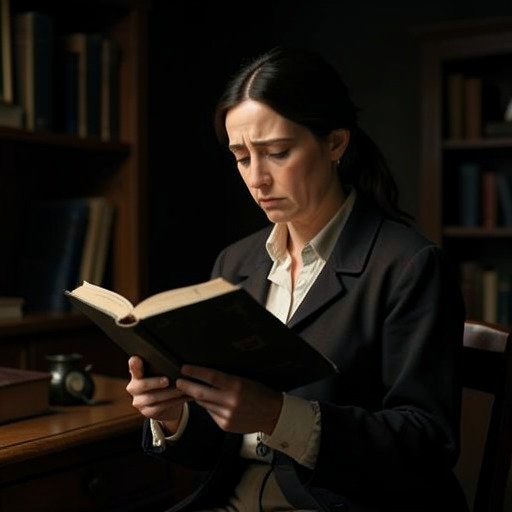
Laura and Bill’s father-daughter relationship
AnimalsIdentity and Pattern
Laura Joyce and Bill Joyce’s father-daughter relationship is presented less through declarations than through familiar, lightly barbed conversation. In their clearest shared scene, Bill Joyce reflects on a registry-office ceremony and its brisk pace; Laura Joyce turns his complaint into a joke, and he accepts the joke rather than withdrawing from it. Their humor is affectionate without being polished: it allows disagreement, embarrassment, and closeness to coexist in the same exchange.
The evidence also places this bond beside Laura Joyce’s uncertainty about marriage. For her, marriage had long been an abstract phrase, but the prospect becomes a huge, heavy, expensive object in her imagination, unsettling because she does not know what to do with it. That private uncertainty establishes a broader life-stage context for the family scenes, though the account does not present Bill Joyce as its cause or as the person who resolves it.
A Conversation About Ceremony
Bill Joyce describes the registry office as a production line. He would have preferred decoration, candles and flowers, with singing to interrupt the proceedings and give those present time to take in the occasion. His complaint is not simply about duration: he wonders whether efficiency is symptomatic of atheism and whether speed can count as spiritual progress. The questions reveal his appetite for ceremony, and his dissatisfaction with a form of marriage that, to him, leaves too little room to savour the event.
Laura Joyce answers by recasting that reflection in comic, concrete terms: her father did not miss God so much as the canapés. Bill Joyce agrees that he missed the food, then calls out to the sky about the absence of vol-au-vents. The exchange moves from religious and philosophical unease to a deliberately ordinary appetite. Laura’s teasing makes the complaint manageable without dismissing it; Bill’s theatrical reply shows that he is willing to join her in the joke. Their shared humor becomes a way of handling an awkwardly sincere subject without forcing either of them into solemnity.
Familiarity and Awkwardness
The scene’s physical details retain some of the awkwardness that the banter softens. Laura Joyce steps back and blows cigarette smoke away from Bill Joyce, while acknowledging an unstated complication in doing so. He has his hands in the pockets of his best suit as he explains what he would have wanted from the ceremony. The contrast is telling: his formal clothes accompany a personal, somewhat plaintive account, while her response is casual and wry. Neither gesture settles the meaning of the relationship, but together they make the exchange feel lived-in rather than ceremonial.
The conversation does not erase discomfort. Laura Joyce’s joke is sharp enough to reduce her father’s concern to food, yet Bill Joyce responds with agreement and an exaggerated appeal to the sky rather than taking offence. Their ease lies in being able to move through that small mismatch: he can express disappointment in his own terms, and she can answer in hers. Affection here is not represented as constant agreement but as the capacity to keep speaking when one person’s earnestness meets the other’s irreverence.
Family Presence and Everyday Affection
In a later brief exchange, Bill Joyce greets Tyler, who replies with a remark about having a few more years of grace. The moment places him within the informal circle around Laura Joyce, but it does not establish the precise subject of their exchange. Bill Joyce then tells Laura Joyce he will be inside in a bit, addressing her affectionately as he leaves. The transition is small, without a formal farewell or extended explanation; its significance rests in the ease of the parting.
Taken together, these moments portray the relationship through ordinary access: Laura Joyce can answer her father’s reflections with teasing familiarity, and Bill Joyce can move between conversation with her and greeting someone in her circle before going inside. The registry-office discussion gives the bond its clearest shape because it brings private feeling and comic deflection into direct contact. Bill Joyce’s wish for more ceremony is heard, even as Laura Joyce translates it into a joke; his response keeps the exchange open. The relationship’s defining evidence is therefore not a sweeping declaration but a pattern of candid talk, playful correction, and affectionate everyday address.