Magic Kebab’s “Dickhead Policy”
BeautifulMagic Kebab’s “Dickhead Policy” is Ricky’s two-tier response to customers who behave obnoxiously: Class A customers get a painfully hot kebab, while Class B customers are quietly charged far more than the listed price. The rule turns the indignities of busy weekend shifts into a joke at the offenders’ expense, and its chilli sauce later becomes a small, personal sign of Ricky’s support for Ava Spirini after Kelly Waititi dies.
Classification and Penalties
Ricky divides offenders into “Class A dickheads” and “Class B dickheads.” The distinction determines the punishment. A Class A customer gets jalapenos or Ricky’s homemade hot chilli sauce added to their kebab; the staff enjoy watching some of the drunk customers struggle with the heat. A Class B customer gets an inflated bill instead: Ricky works the till and adds an extra zero, turning an $8.50 kebab into an $85.00 one. The customers do not notice, and on those nights Ricky shares cash tips with the staff.
The policy’s logic is comic rather than formal. It offers two ways to make an obnoxious customer pay—one that sets their mouth on fire and another that makes them unknowingly pay ten times the price—while leaving the ordinary transaction looking unchanged to the person being targeted.
The Weekend Workplace
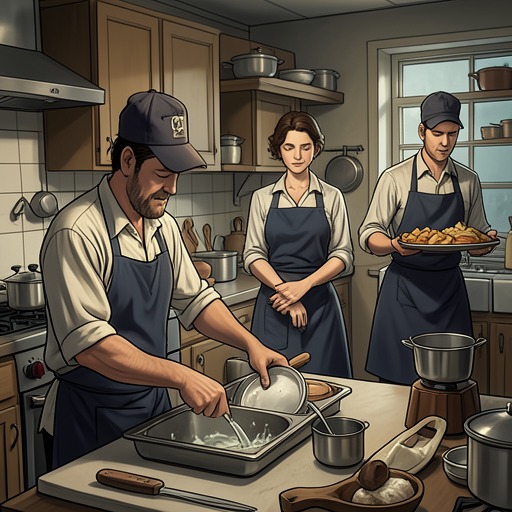
The rule belongs to the unpleasant rhythm of Friday and Saturday nights at Magic Kebab. Ava describes shifts filled with drunk customers yelling, fighting, and making gross comments; men telling her to smile are another recurring irritation. Against that background, Ricky’s policy gives the staff a private counter-script: the customers who make the workplace miserable become the targets of its running joke. Ava admits that, for all the weekend chaos, Magic Kebab is not actually that bad, and Ricky is part of why the job can still have its highlights.
Ricky inherited the business from his father, and Ava regards him as the funniest person she knows. His policy makes that humour practical: the penalties are enacted through the food and the till, not delivered as a public lecture. Its small-scale reversal of power is part of the appeal—the customers who act as though they can dominate the room are made ridiculous without being told what has happened.
Chilli Sauce as a Gesture of Care
After Kelly Waititi dies, Ava finds a bottle of Ricky’s homemade chilli sauce on her doorstep with a note: “For the dickheads. Love Ricky.” The note invokes the policy’s familiar language, but its placement at Ava’s home makes the gesture more than another shift-time prank. It brings the comic ritual into a moment of bereavement and offers support in Ricky’s own idiom, without pretending to undo the loss.
In a later exchange, Ava tells Ricky that he acts as he does because he loves her; he agrees, then immediately hands her window cleaner and tells her to clean the windows. The brisk return to work keeps affection from becoming a speech. Together, the doorstep bottle and this matter-of-fact exchange show the policy’s tonal double edge: its language is irreverent, but the relationship around it is warm, and practical jokes and ordinary acts of care occupy the same space.