
Lestat’s Public Confession
Blood CanticleThe Vampire Chronicles’ existence within the novel makes Lestat confront how his candid accounts can influence other vampires and become dangerous examples.
increasing Bearing strength in each event
 decreasing
Bearing strength in each eventdecreasingReaders Demand the Vampire

Readers Demand the Vampire
A public performance
Lestat addresses readers who wanted the stylish, wicked vampire rather than metaphysical reflection. He promises a conventional story while making his own need for an audience part of the performance.
A hunger for connection
His books are presented as a way to share memory and emotion. The confession is both artistic ambition and dependence on the readers he claims to mock.
Imitation as Excuse

Imitation as Excuse
A reader turns to violence
The rogue vampires cite Lestat’s recorded killings as justification for their own attacks on children. They treat a confession as an instruction manual.
The author’s responsibility
Lestat rejects their argument but recognizes that his stories can be misused. His past cannot be undone by declaring that others should not imitate it.
Confession Without a Website
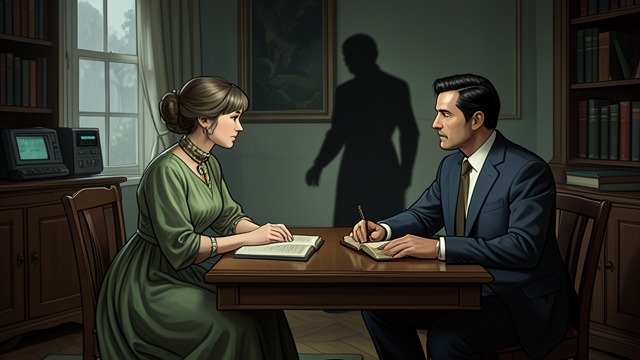
Confession Without a Website
A defense of books
Mona asks why real vampires do not use websites, and Lestat defends the Chronicles as a quiet, old form of public confession. He distinguishes a book from an immediate digital broadcast.
The risk of exposure
His defense does not remove the danger of being known. It reveals his preference for a controlled, durable form of confession that can be ignored, preserved, or rediscovered.
Opening chapter
During the confrontation with the rogue vampires
Near the ending, after the island events
