Longboat Bay marine sanctuary protection
BluebackLongboat Bay marine sanctuary protection gives legal force to the effort to preserve the bay’s marine life. Secured through Dora Jackson’s campaign and marked by boundary buoys reaching Robbers Head, the sanctuary changes the bay from a place vulnerable to intensive extraction into a protected refuge. Its effects extend beyond shielding individual animals: the story presents recovering habitats and breeding populations as capable of replenishing the wider coast.
Origins and Establishment
The sanctuary was the culmination of a change in how the Jackson family understood its relationship with the sea. Generations of the family had made their living from marine resources; their history at Longboat Bay included whaling, sealing, fishing, and the use of the surrounding land. Dora eventually concluded that the inheritance now required a different responsibility: helping the sea live and protecting the bay for the future.
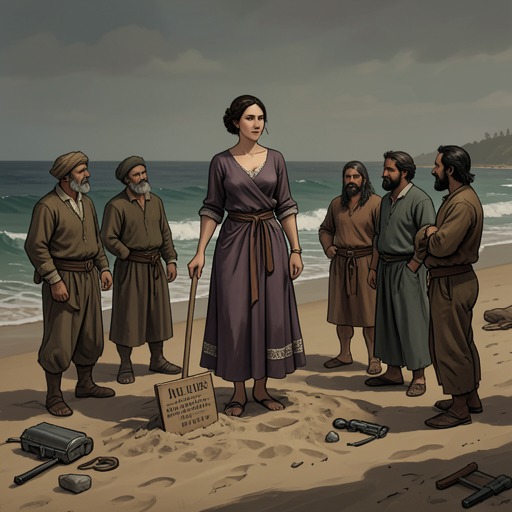
Her campaign was sustained rather than sudden. After a storm damaged her house, Dora wrote hundreds of letters to politicians, business leaders, and scientists. She repeatedly sent photographs of Blueback to newspaper editors, using the fish’s image to draw attention to the bay. The letters initially met with indifference, but Dora persisted until Longboat Bay was declared a sanctuary and marine park, with its marine life protected by law.
The declaration reached Abel Jackson and Stella while they were working on an expedition. A fax announced the new legal status, and Stella immediately arranged a helicopter while Abel packed to return home. The news connected Dora’s years of local effort to an official decision made while her son was far away.
Boundaries and Protection
The sanctuary’s limits were made visible by marker buoys, set out when officials came to declare the bay a marine reserve. Dora watched them define a protected area extending all the way to Robbers Head. The boundary mattered in practical as well as symbolic terms: it identified the waters in which the marine environment was to be safeguarded, rather than leaving protection as a private hope or an unmarked claim.
The story contrasts this protected space with the exploitation that preceded it. At Robbers Head, Abel saw Costello’s boat carrying large quantities of fish, many undersized, as well as crates of abalone and illegal crayfish. Abel and Dora later saw the operation continue to strip the reef until a Fisheries patrol boat arrived; officers boarded Costello’s boat, which was taken away under tow. Costello’s fines cost him his licence and put him out of business. These episodes show the pressure the bay faced and the role of enforcement, while the sanctuary represents a broader, lasting legal commitment to protect the ecosystem.
Ecological Effects
The account links the sanctuary to visible recovery. Fish enter the bay to find refuge, breed there, and increase stocks beyond its boundary. The protected area therefore functions not only as shelter within its marked waters but also as a source of replenishment for the coast outside them. The narrative specifically distinguishes the haven from the waters just beyond Robbers Head, where hooks and nets still await fish.
Recovery is described across the ecosystem, not simply as an increase in fish. Seagrass, coral, and sponges thrive; abalone become abundant; dolphins and sharks return; and sea lions reappear at Robbers Head after an absence of a hundred years. These changes present protection as enabling marine life and habitats to flourish together. The bay’s renewed abundance also allows visitors to dive and witness an ocean that can sustain itself when given room to recover.
Stewardship and Continuing Significance
The sanctuary does not end human involvement with the bay; it changes its character. Abel and Stella return to Longboat Bay and resume work as scientists. They supervise the bay, monitor summer visitors, and write papers on abalone breeding habits. They also take divers to observe Blueback on his reef. Their work combines research and public access with ongoing attention to the protected place, rather than treating its declaration as the end of responsibility.
Dora had wanted other havens along the coast, although she was content that Longboat Bay itself had become safe. The story’s concluding account supports the importance of that local achievement without claiming that every threat has disappeared: it depicts a thriving sanctuary whose ecological benefits extend outward. The rule’s significance lies in this shift from extracting value from the sea to preserving conditions in which marine life can recover and continue to sustain the wider coast.