Generations before Abel’s childhood
The Jackson Inheritance
The Jackson family settled at [Longboat Bay](entity:location-recall-location-longboat-bay-4a9b7ead6d42) during the whaling era, making a living from the sea and leaving their dead in a small cemetery behind the orchard. Their home and livelihood carried a history of taking from the ocean, though later generations would inherit the same coast with a different responsibility.
By the time Abel grew up, only he and Dora remained on the family land. The old crosses, the orchard, and the sea made family history part of everyday life rather than a story confined to the past.
Before Abel’s second birthday
A Diver Lost at Sea
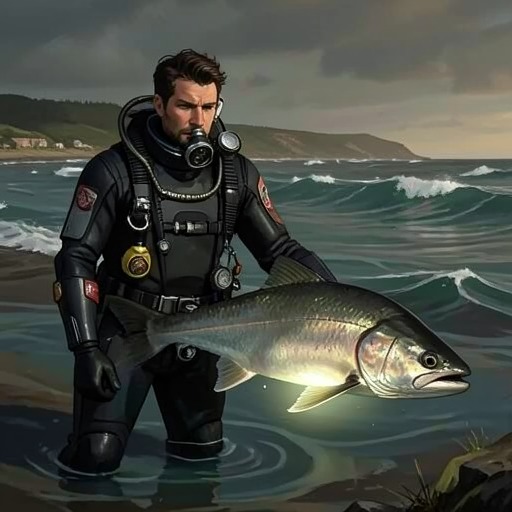
[Abel’s father](entity:character-recall-character-72086e1ff66c) was a pearl diver who travelled north for the season each year, returning with money and insisting he would not go back. One year a tiger shark took him while he was working in [Roebuck Bay](entity:location-recall-location-roebuck-bay-c983cb955c71); the crew hauled in his air hose and found no diver at the end of it. His body was never recovered.
Dora kept his memory close, tending a private shrine at a peppermint tree near the orchard. Abel was too young to remember his father, but the bay, the house, and his mother’s manner all seemed to preserve traces of him.
At Abel’s birth
Abel Meets the Sea
Dora later remembered that [Abel’s father](entity:character-recall-character-72086e1ff66c) wanted their newborn to meet the sea at once, so the family carried him to the warm shallows and lowered him into the water. Abel stiffened briefly, then kicked as if he already knew how to swim, and cried when they took him back to the house.
The story became a family explanation for Abel’s lifelong ease in the water. His closeness to the sea began before he could consciously remember it, binding his own identity to the coast his family had inhabited for generations.
Abel’s early childhood
A Life at Longboat Bay
Abel grew up with Dora on the family land, where they fished, gathered shellfish, tended fruit trees and vegetables, and kept animals. With no mains electricity or television, daily life depended on work, weather, and the resources of the coast and bush.
He sometimes imagined having a large family like the kangaroos that gathered in the orchard, but he loved his life with his mother. The place was not merely a home to him: it was the setting of nearly everything he knew and the measure of where he belonged.
When Abel is ten
The First Blue Shadow
During an abalone dive off [Robbers Head](entity:location-recall-location-robbers-head-068fd7a3116e), Abel was nearing the end of his breath when a huge blue fish rushed at him and seized his hand. He escaped to the surface frightened and bleeding from a small scratch, certain that something dangerous had attacked him.
Dora urged him to look again. The fish was a gigantic [Blue groper](entity:creature-recall-creature-blue-groper-37ecc9f482bb), not a shark, and Abel returned underwater with her to see it properly. Its size, colour, and wary movement transformed his fear into wonder.
The day of Abel’s first encounter
The Name Blueback
Dora offered the great fish abalone meat, and it eventually accepted the food before darting into a deep hole. Back in the boat, Abel and his mother marvelled at its size and intelligence, aware that they had witnessed an unusually old and striking animal.
While helping prepare the catch, Abel decided to call the fish [Blueback](entity:character-recall-character-blueback-b80fa93af0f2), a name drawn from the colour that had so impressed him. Naming it made the encounter personal and marked the beginning of a lasting bond.
The day after Abel names Blueback
The First Return
Abel wanted to go back to [Robbers Head](entity:location-recall-location-robbers-head-068fd7a3116e) immediately, but school and work delayed him. When he and Dora finally returned, [Blueback](entity:character-recall-character-blueback-b80fa93af0f2) was absent until he suddenly swept in and snatched a crayfish they had pulled from a crevice.
The fish’s swift theft showed that he was at home on the reef and capable of surprising them. Abel wanted to dive after him, but the water grew cold and they headed back, leaving the boy more eager to see his new acquaintance again.
When Abel is about ten
A Friendship Takes Shape
Abel began returning to [Robbers Head](entity:location-recall-location-robbers-head-068fd7a3116e) whenever work and weather allowed. [Blueback](entity:character-recall-character-blueback-b80fa93af0f2) sometimes kept his distance, but on other days he approached boldly; Abel learned to touch him, offer food, and play with him in the water.
The fish remained powerful enough to crush Abel against the reef or drag him toward the deep drop-off, so their companionship always carried risk. Their quiet familiarity nonetheless made Blueback feel less like a sighting than a presence in Abel’s life.
During Abel’s early school years
The Fish’s Secret Years
At school, Abel wondered how old [Blueback](entity:character-recall-character-blueback-b80fa93af0f2) was and what the fish might remember. He imagined the changes the groper had witnessed in the reef, the passing boats, and the people who had come and gone, but knew that a fish’s years could not be read like the rings in a tree.
His thoughts carried him away from class and earned him lines from his teacher, which he never finished. Abel was beginning to understand that the sea held histories that humans could observe but not simply translate.
During Abel’s early childhood
The Father at the Tree
Abel knew that Dora visited the peppermint tree where she kept a candle, pearl shells, and a driftwood dolphin in memory of his father. Some days she stayed there for hours, grieving and remembering while Abel understood that the lost man remained present in their family life.
Abel wondered about the thoughts of the dead as well as those of fish. Both mysteries drew him toward the unseen histories held by the sea and by the people whose lives had been shaped by it.
Before Abel turns twelve
A Warning About Macka
Each season, [Mad Macka](entity:character-recall-character-mad-macka-14d4fd08178b) worked the coast alone from an abalone boat, using a compressor and air hose to dive for shellfish. Dora worried that his solitary method was dangerous, especially with abalone meat in the water and sharks nearby.
Abel had seen the diver’s empty boat tugged along by an unseen man below, a sight that made the risks plain. Macka rejected the usual safety of a partner, and Dora watched his work with apprehension even while welcoming him to the bay.
The year Abel turns twelve
Dora Finds Macka
One morning Abel noticed that the compressor on Macka’s boat had gone silent while the diver’s hose remained underwater. He and Dora raced across the bay, and Dora prepared Macka’s spear with a powerhead before descending to investigate.
She found Macka without a mark on him and believed he had suffered a heart attack, lost the ability to reach the surface, and drowned after the compressor ran out of fuel. Abel helped haul the body aboard as gulls circled the quiet boats, confronting the danger Dora had feared.
When Abel turns thirteen
Leaving for School
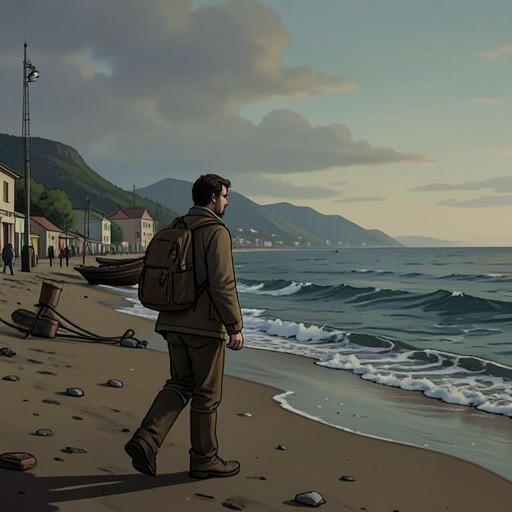
On Abel’s last morning at home before leaving for high school, rough seas kept him from visiting [Blueback](entity:character-recall-character-blueback-b80fa93af0f2). He chopped wood instead, then walked through the forest to look down at [Longboat Bay](entity:location-recall-location-longboat-bay-4a9b7ead6d42), seeing the house, the jetty, and the old abalone boat as the whole world he was about to leave.
At the peppermint tree, he placed a piece of coral among his mother’s offerings to his father. As the truck carried him inland, Abel felt certain that he belonged at the bay, even though school required him to go.
At thirteen
The Inland Years Begin
The inland town felt flat, crowded, and noisy to Abel, its wheat country a sharp contrast with the forests and water at home. He worked at school and made friends, but the hostel offered little of the solitude he had known on the coast.
He described his separation from home as holding his breath until he could return. The image captured both his longing and the self-control he learned to endure the life required of him.
During Abel’s first school years away
A Dream of the Drowned
In a dream, [Blueback](entity:character-recall-character-blueback-b80fa93af0f2) led Abel down a cold rock shaft past drowned sailors and children to [Mad Macka](entity:character-recall-character-mad-macka-14d4fd08178b) and the ragged body of [Abel’s father](entity:character-recall-character-72086e1ff66c). Abel saw that his father remained the young man who had died at thirty-two, and tried to reach him.
Blueback carried him upward, away from the body and toward the surface, while Abel watched his father shrink below. He woke crying in the dormitory with no one nearby to tell, left to bear the dream and his grief alone.
Before Abel’s first summer holiday home
Macka’s Boat for Abel
Dora wrote that a new diver was coming to work the coast and worried he might strip the reef. She also brought Abel welcome news: Macka’s family had given him the diver’s boat and trailer.
When the holidays began, Abel hurried home, and the sight of the sea restored his spirits. He soon dived with [Blueback](entity:character-recall-character-blueback-b80fa93af0f2) again, then began learning the boat and its equipment under Dora’s guidance, turning Macka’s former workboat into a vessel for his own life on the water.
During Abel’s first summer with the boat
Whales and Inherited History
As Abel learned to handle the boat beyond the bay, he and Dora watched right whales surface around them while they fished. Dora explained that the Jacksons had once hunted whales from [Longboat Bay](entity:location-recall-location-longboat-bay-4a9b7ead6d42), rowing out with harpoons after spotting pods from the ridge.
Abel wondered whether the whales remembered the hunt. Dora hoped they did not, while acknowledging the sea had also taken members of the family. Their encounter placed the family’s history of exploitation and loss beside the living animals still passing the coast.
During Abel’s early teens
Costello Approaches the Bay
Abel and Dora saw a red jet boat working along the coast and learned that its owner, [Costello](entity:character-recall-character-costello-6d4b453b4acd), was a licensed abalone diver with a reputation for taking whatever he could. Dora feared not only for [Blueback](entity:character-recall-character-blueback-b80fa93af0f2) but for the whole bay.
Abel wanted to keep the diver away, but Dora explained that the water belonged to everyone and that only Fisheries officers could enforce the rules. Abel could not accept the idea of doing nothing if Costello threatened the reef.
Soon after Costello reaches Longboat Bay
A Threat to Home
[Costello](entity:character-recall-character-costello-6d4b453b4acd) anchored near [Robbers Head](entity:location-recall-location-robbers-head-068fd7a3116e) and sent divers down while Dora watched through binoculars. Abel suggested cutting the divers’ hoses, but she rejected the idea and warned him not to act recklessly without knowing whether Costello had broken the law.
At breakfast, Dora admitted she had considered selling their place so they could live together inland. Abel insisted that he wanted the house, land, and water more than money, while Dora confessed that she could not bear life away from the sea. Their conversation clarified that their attachment to the bay was shared, even as Abel faced the prospect of being away at school.
The morning Costello works at Robbers Head
Costello’s Illegal Catch
Abel watched [Costello](entity:character-recall-character-costello-6d4b453b4acd)’s boat fill with abalone and fish and saw undersized and protected-looking catch among the bloodied heaps. When he and Dora approached, he recognized the scale of the slaughter and wanted to return the shellfish to the reef.
Dora warned him that stepping onto Costello’s boat could get him badly hurt. She then prepared to dive herself, telling Abel to remain with their boat, while he decided he could not stay safely out of the water as the situation unfolded.
During the Costello confrontation
Abel’s Reckless Intervention
While Dora went underwater, Abel climbed onto [Costello](entity:character-recall-character-costello-6d4b453b4acd)’s boat and tipped crates of abalone back into the sea. He then followed the divers’ hoses and saw the shellfish settling toward the reef as smaller fish gathered to feed.
[Blueback](entity:character-recall-character-blueback-b80fa93af0f2) appeared among the food, and one of Costello’s divers fired a spear that narrowly missed him. Abel surfaced knowing the fish was in danger and that his own intervention had drawn him into a confrontation with armed divers.
Moments after the spear misses Blueback
Dora Saves Blueback
Dora surged between the divers and [Blueback](entity:character-recall-character-blueback-b80fa93af0f2), putting her body in the way as the men advanced with spearguns. The fish circled her, attracted by the food, while Dora ran out of air and Abel feared both she and Blueback would die.
Blueback finally darted away after Dora punched him in the head to drive him off. Abel helped his exhausted mother back to the boat, and they left before [Costello](entity:character-recall-character-costello-6d4b453b4acd)’s divers could confront them. Blueback survived, but the encounter exposed how far Dora and Abel were willing to go to protect him.
Later that day
Costello Loses His Licence
Abel and Dora waited ashore for trouble, but [Costello](entity:character-recall-character-costello-6d4b453b4acd) resumed diving without spearing more fish or finding [Blueback](entity:character-recall-character-blueback-b80fa93af0f2). A Fisheries patrol boat soon arrived, boarded his vessel, and later towed it away as the patrol sounded its horn across the bay.
Costello’s fines cost him his licence and put him out of business. Abel was relieved that Blueback had stayed hidden, although the fish kept clear of Dora for the rest of the summer after her rough attempt to save him.
A few weeks after Costello’s arrest
The Dying Tiger Shark
A tiger shark entered the bay dragging a red buoy and chain from a hook in its jaws. The animal could not dive, and it swam in visible exhaustion and pain; Abel recognized the buoy as marked with [Costello](entity:character-recall-character-costello-6d4b453b4acd)’s name.
The shark died by morning. Abel towed its body offshore, replaced the buoy with weights, and cut it free to sink. The sight left him with a lasting understanding that greed could make human beings crueler than the predators they feared.
During Abel’s high school years
The Developers’ Campaign
Businessmen and councillors tried to persuade Dora to sell [Longboat Bay](entity:location-recall-location-longboat-bay-4a9b7ead6d42) for a resort, offering gifts and money before turning to pressure. The road deteriorated, mail and fuel deliveries became unreliable, and suspicious fires damaged the forest.
Away at school, Abel read about the harassment in his mother’s letters and worried about what it was doing to her. Dora refused to sell, and after years of patient resistance the developers gave up and left her alone.
After Abel graduates from high school
The Pilchards Die
One morning the beach was covered with dead pilchards, with no storm or obvious spill to explain the disaster. Abel and Dora hauled the decaying fish away and spread them over the orchard and gardens, while Dora insisted that the sea was behaving abnormally.
Abel searched the bay and [Robbers Head](entity:location-recall-location-robbers-head-068fd7a3116e) and found the reefs and fish there apparently healthy. The mismatch between what he could see locally and the unexplained deaths along the coast deepened his sense that the ocean was an intricate puzzle he did not yet know how to solve.
After the pilchard deaths
Abel Chooses Marine Science
Abel went to university determined to understand the sea. He studied through books, specimens, photographs, films, and computer models, and travelled on field trips, but none of it answered his childhood question about what fish thought.
During breaks he returned to [Longboat Bay](entity:location-recall-location-longboat-bay-4a9b7ead6d42) to help Dora with the work of the place. He brought home solar panels to replace the noisy generator, and in time his scientific ambition grew alongside a personal life beyond the coast.
During Abel’s university years
Stella Comes to the Bay
Abel fell in love with [Stella](entity:character-recall-character-stella-1c92ed1acee3), a marine biologist who had grown up far from the sea. When he brought her to [Longboat Bay](entity:location-recall-location-longboat-bay-4a9b7ead6d42), he noticed how old Dora looked beside her and realized how much of his mother’s ageing he had missed while away.
Dora welcomed Stella by telling her that Abel would have to be shared. She meant [Blueback](entity:character-recall-character-blueback-b80fa93af0f2) as well as herself, and the three went to [Robbers Head](entity:location-recall-location-robbers-head-068fd7a3116e) to swim with the fish. Stella was startled when Blueback nuzzled close and took food from their hands.
That summer at Longboat Bay
A Family by the Sea
During a meal on the verandah, [Stella](entity:character-recall-character-stella-1c92ed1acee3) noticed that Abel and Dora seemed able to understand one another without speaking. Dora attributed their closeness to the fish in them, while dolphins jumped and called across the moonlit bay.
The night became a turning point for Abel and Stella: he asked her to marry him. Their future together would include a shared career in marine science, but [Longboat Bay](entity:location-recall-location-longboat-bay-4a9b7ead6d42) and Dora remained central to Abel’s idea of family and home.
After Abel and Stella marry
The Scientist Abroad
Abel became a marine biologist and travelled with [Stella](entity:character-recall-character-stella-1c92ed1acee3), studying oceans around the world. He gained expertise and recognition, yet remained unsettled by the distance between scientific knowledge and the intimate understanding he had hoped to gain as a boy watching [Blueback](entity:character-recall-character-blueback-b80fa93af0f2).
While diving in the Greek islands among reefs damaged by dynamite fishing and pollution, Abel realized that he had outlived his father. His father would remain forever a young man, frozen at the moment the tiger shark killed him.
During Abel and Stella’s years of travel
Blueback Becomes Famous
A diving magazine showed [Blueback](entity:character-recall-character-blueback-b80fa93af0f2) with divers, and Dora wrote that boatloads of visitors were arriving to swim with the famous fish. Some came in groups and speared in the bay, leaving her worried that Blueback and the wider marine life were at risk.
Abel’s private childhood friend had become an attraction, a change that brought the pressures of tourism and exploitation directly to the coast. He was far away and could not easily help his mother protect the place.
A month after Dora’s letter
The Tanker Near Disaster
An oil tanker cracked apart off the coast of [Longboat Bay](entity:location-recall-location-longboat-bay-4a9b7ead6d42), and Abel watched news footage of the spreading slick from overseas. Later he saw the ship catch fire, while bad weather broke up and drove the oil away before it reached shore.
Abel called Dora after seeing how close the coast had come to catastrophe. She called the incident a warning, adding to the growing evidence that the sea around her was under pressure and that the bay could not be taken for granted.
In the years before the great storm
Dora’s Changing Coast
Dora watched the coast grow stranger: a leopard seal arrived from Antarctica, salmon failed to appear, and dead dolphins were found at [Robbers Head](entity:location-recall-location-robbers-head-068fd7a3116e). Abel and [Stella](entity:character-recall-character-stella-1c92ed1acee3) called and wrote, but their work kept them from coming home often, while Dora struggled with the orchard, animals, arthritis, and failing engines.
She still took Abel’s old boat out or walked among the trees, finding comfort in the quieter winter bay. Her knowledge came from staying, observing, and listening, even as the effort of maintaining the family place became harder to bear.
After years of worsening weather
Whalebones Unearthed
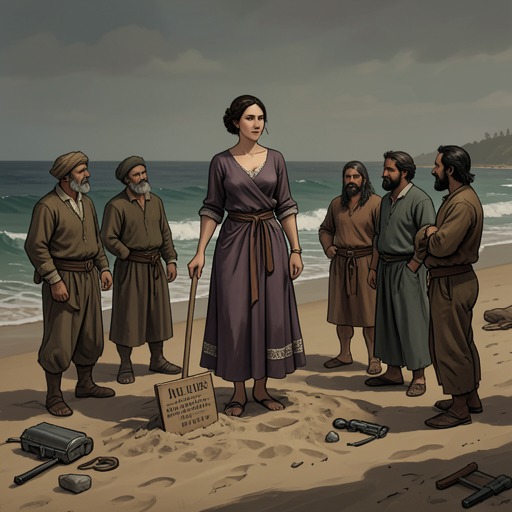
A violent storm tore through [Longboat Bay](entity:location-recall-location-longboat-bay-4a9b7ead6d42), damaging fences and sheds and stripping the shore with waves and wind. When Dora went down to inspect the destruction, she found thousands of whale bones exposed along the beach, remnants of the Jackson family’s whaling past.
The bones made the family’s inheritance impossible to ignore: the land had been paid for through extraction from the sea. With only Dora and Abel left in the family, she decided that their responsibility now was to help the sea live and protect the bay for the future.
Immediately after the storm
Letters for a Sanctuary
In the damaged house, Dora began writing to politicians, scientists, officials, and newspaper editors. She sent hundreds of letters, including photographs of [Blueback](entity:character-recall-character-blueback-b80fa93af0f2), asking for attention to the bay and the need to protect it.
Many people ignored her, but she persisted month after month. The campaign turned her quiet, place-based knowledge into public action, and her patience once again outlasted the people and institutions she was trying to move.
After Dora’s sustained campaign
The Bay Becomes a Sanctuary
While Abel and [Stella](entity:character-recall-character-stella-1c92ed1acee3) were working in a remote lagoon, a fax announced that [Longboat Bay](entity:location-recall-location-longboat-bay-4a9b7ead6d42) had been declared a marine sanctuary, with the life within it protected by law. Stella summoned a helicopter, and Abel hurried to pack for home.
For Abel, the decision marked the success of Dora’s long campaign and the preservation of a place she had understood through decades of attention. The news also made his return urgent: the sanctuary was secured, but he did not know what awaited him at home.
On Abel’s flight home
A Dream of Dora’s Death
On the plane, Abel dreamed that Dora floated in [Longboat Bay](entity:location-recall-location-longboat-bay-4a9b7ead6d42) and sank into its dark depths while [Blueback](entity:character-recall-character-blueback-b80fa93af0f2) followed her. He woke crying, recognizing that the dream was sad rather than simply frightening.
He told [Stella](entity:character-recall-character-stella-1c92ed1acee3) that although he had travelled and studied the sea, Dora understood it through staying, watching, and listening. Abel had wanted to learn the language of the sea, but his mother had already become part of the place she protected.
The night Abel returns home
Dora’s Fall
Abel came back to a small celebration on the verandah, where Dora shared stories of the ocean and displayed the papers protecting the bay. The family celebrated the sanctuary and their reunion under the night sky.
As they were going to bed, Dora stumbled down the verandah steps and broke her hip. She wept that she was old, and Abel understood that the injury threatened the life she had fought to remain in: she could no longer safely manage the place alone.
During Dora’s hospital stay
Abel Chooses Home
While Dora was in hospital, Abel began repairing the deteriorated house, jetty, sheds, fences, and gardens. Calls from around the world continued to bring professional emergencies, but he kept working on the family place and visited the peppermint tree where his father was remembered.
At the jetty, watching [Blueback](entity:character-recall-character-blueback-b80fa93af0f2) move beneath the water and the whalebones line the beach, Abel felt the place calling him. [Stella](entity:character-recall-character-stella-1c92ed1acee3) told him they would stay, and Abel admitted that home was what he had always wanted, despite the difficult life it would demand.
After Dora leaves the hospital
Dora Returns Home
Abel brought Dora back to a repaired house and nursed her on the shady verandah. When officials formally marked the bay’s marine reserve, Dora recognized the same politicians who had once tried to turn the land into a resort and watched them install the sanctuary buoys.
The protected area reached out to [Robbers Head](entity:location-recall-location-robbers-head-068fd7a3116e). Dora wanted more havens along the coast, but she was satisfied that the bay she loved had finally been secured, and Abel and [Stella](entity:character-recall-character-stella-1c92ed1acee3) committed themselves to caring for it with her.
In the years after Abel and Stella stay
A New Life at the Bay
Abel and [Stella](entity:character-recall-character-stella-1c92ed1acee3) made their life at [Longboat Bay](entity:location-recall-location-longboat-bay-4a9b7ead6d42), mending nets, preserving food, studying marine life, and watching the whales. They sometimes took divers out to see [Blueback](entity:character-recall-character-blueback-b80fa93af0f2), while keeping an eye on summer visitors and writing about abalone breeding.
A daughter was born during a cold winter night, and they named her Dora after her grandmother. Her arrival joined the generations of the family to the place and the sea that had shaped them.
After Little Dora’s birth
Dora’s Last Years
As time passed, Dora grew too frail to walk the beach, dive, pick fruit, or tend the vegetables. Abel carried her to the verandah so she could watch the water, and [Little Dora](entity:character-recall-character-8cf04018bb88) played with her grandmother’s white hair as Dora told stories of the family.
She remembered carrying newborn Abel into the warm sea with his father and described how naturally he had kicked in the water. The story returned Abel’s childhood to its beginning and preserved his connection to the sea as family memory passed to the next generation.
The day before Dora’s death
Dora’s Last Swim
Abel carried Dora down to the shore and held her in the clear, still water. She floated in his arms as whiting passed nearby, and a long blue shadow circled them, stirring sand around their bodies.
Dora told Abel that people came from water and belonged to it. The moment joined her final words to the sea that had defined her life and to [Blueback](entity:character-recall-character-blueback-b80fa93af0f2), whose presence accompanied her farewell.
The afternoon after Dora’s last swim
The Family Cross
Dora died in her sleep the day after Abel took her into the sea. Abel made a new cross for the small cemetery behind the orchard, placing her among the Jacksons whose lives and deaths were tied to the coast.
Her death left Abel to carry forward the family’s memory and the work of living at [Longboat Bay](entity:location-recall-location-longboat-bay-4a9b7ead6d42). The place she had protected remained both home and inheritance, no longer something he could leave to his mother alone.
After Dora’s death
The Sanctuary Thrives
Under protection, [Longboat Bay](entity:location-recall-location-longboat-bay-4a9b7ead6d42) grew rich with life. Fish bred in the sanctuary and replenished the surrounding coast, while seagrass, coral, sponges, and abalone flourished; dolphins and sharks returned, and sea lions came back to [Robbers Head](entity:location-recall-location-robbers-head-068fd7a3116e) after a century away.
Abel and [Stella](entity:character-recall-character-stella-1c92ed1acee3) continued their scientific work, receiving visitors and observing the bay, but they never uncovered every secret of the sea. Abel came to believe that Dora and the generations before her had understood much through attention and experience, and that the sea also needed to be left to itself.
Little Dora’s third birthday
Little Dora Meets Blueback
On [Little Dora](entity:character-recall-character-8cf04018bb88)’s third birthday, Abel and [Stella](entity:character-recall-character-stella-1c92ed1acee3) took her diving in clear water off [Robbers Head](entity:location-recall-location-robbers-head-068fd7a3116e). The smallest diver hung between the adults as they descended toward the reef.
[Blueback](entity:character-recall-character-blueback-b80fa93af0f2) emerged from a crack in the shadows, enormous enough to frighten the child at first. Then he eased close, his shining scales and rippling fins alive with colour, and rested against her as he had once done with Abel. The meeting carried the family’s bond with the fish into another generation.