
The Soldiers in Happy Valley
BluebeardThis thread traces the wartime experience that becomes Rabo’s final painting and his attempt to imagine peace without concealing violence.
increasing Bearing strength in each event
 decreasing
Bearing strength in each eventdecreasingThe Captive March
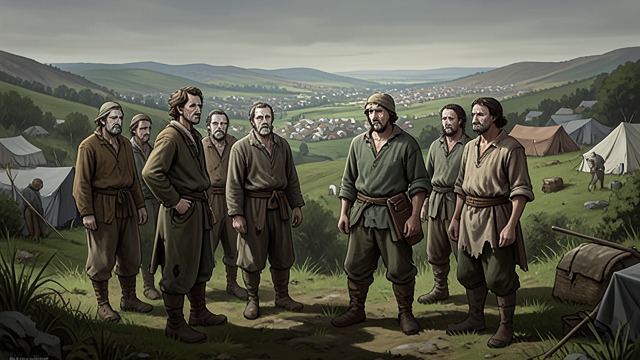
A Valley of Displaced People
A Camp Breaks Apart
After the guards vanish, Rabo and other captured officers find themselves above a valley crowded with concentration-camp survivors, forced laborers, prisoners, released inmates, soldiers, and civilians.
No Simple Liberation
The people have escaped one form of captivity but arrive without food, shelter, or clear protection. The scene gives Rabo a view of victory as a mass of vulnerable lives rather than a clean ceremonial ending.
The Memory Becomes Art
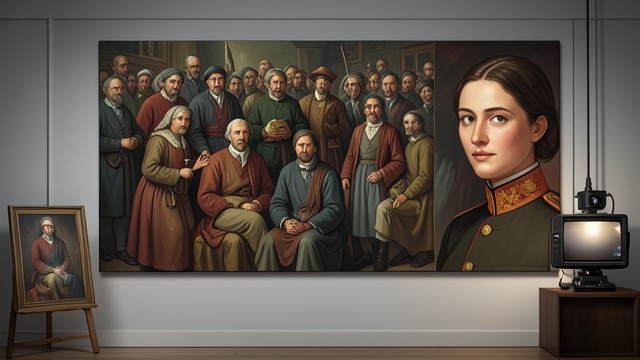
A Reconstructed Crowd
Thousands of Individual Lives
Rabo paints more than five thousand people and gives each a history, from a dying Canadian bombardier to displaced soldiers and civilians. Details such as uniforms and small objects make the fictionalized scene feel materially specific.
The Title’s Provocation
He names the painting “Now It’s the Women’s Turn,” directing attention to the danger women face after armies pass. The title makes peace itself uneasy, since the supposedly safe valley remains structured by threats and unequal power.
A Home for Survivors
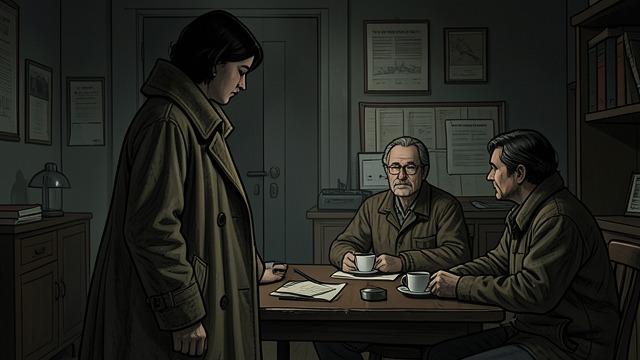
The Valley Reconsidered
Stories Inside the Image
Circe asks about figures across the enormous painting, and Rabo tells her their invented histories. The painting’s details turn an anonymous crowd into particular lives without pretending that the painter can rescue them.
A Fragile Peace
Rabo tells a dying soldier that they are home, even though the picture cannot promise safety to everyone. “Happy Valley” is a hopeful name for a scene where war’s injuries and consequences remain visible.
May 1945, near the end of the war in Europe
After Edith’s death, decades after the valley scene
Near the novel’s ending, during Circe’s viewing
