
The Value of a Story
BluebeardThis thread follows how letters, novels, and painted biographies become forms of communication that give lonely people an audience.
increasing Bearing strength in each event
 decreasing
Bearing strength in each eventdecreasingMarilee Writes to Rabo
Letters Become a Voice
A Growing Correspondence
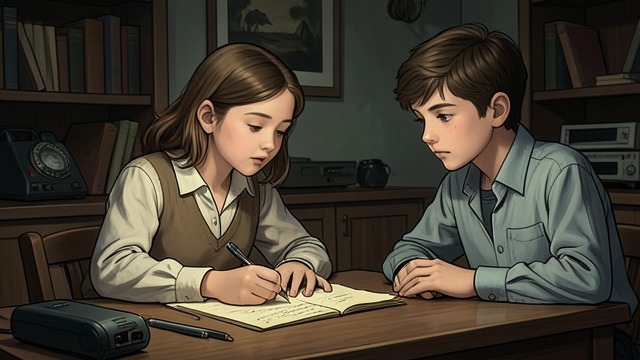
Marilee writes Rabo seventy-eight letters, and her handwriting and vocabulary develop with time. Her writing describes city life and the Depression to a boy who listens closely.
An Audience Makes a Writer
Circe later recognizes that Rabo’s attention helped Marilee discover her talent. The letters were not merely advice about drawing; they were a sustained relationship in which someone’s words mattered.
Circe’s Young Readers
Popular Writing and Respect
A Hidden Career
Circe reveals that she writes popular young-adult novels under the name Polly Madison. Her success contrasts with Paul’s assumptions about who can count as a serious professional writer.
A Reader’s Defense
Paul eventually reads the novels and praises them, while their commercial stature unsettles his literary pride. The episode questions whether critical prestige is the only measure of whether writing reaches people.
A Biography in Progress
Writing Through Loss
Abe’s Biography
Circe initially says that she has come to write her late husband’s biography, a cover for the novel she is actually researching. The false explanation still reflects her desire to write through the reality of bereavement.
Work as an Ending
She tells Rabo that handing a finished manuscript to her publisher is a writer’s moment of release. Writing gives her a structure for grief while also allowing her to move beyond the person she has lost.
Between 1927 and 1933
During the summer of 1987, when Rabo learns her identity
From the summer of 1987 toward Circe’s departure
