Before the calamities
A Righteous Man in Uz
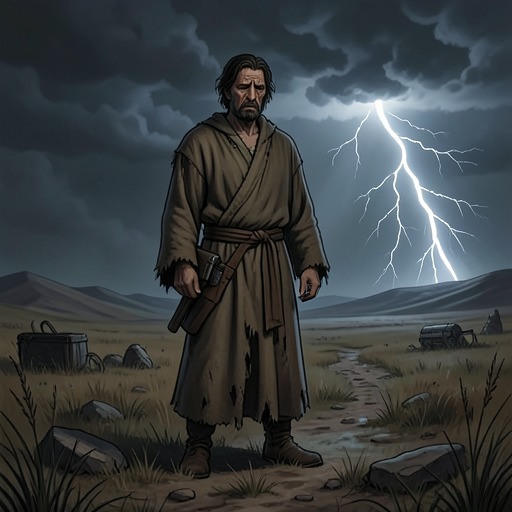
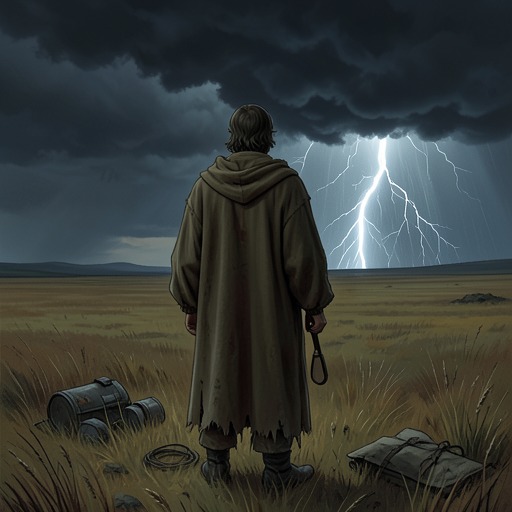
In [Uz](entity:location-recall-location-uz-fd795636552c), [Job](entity:character-recall-character-job-8aff911842b2) is known as a blameless and upright man who fears [God](entity:character-recall-character-833766c1de3f) and turns away from evil. He is also exceptionally prosperous, with a large household, abundant flocks and herds, and seven sons and three daughters.
The opening establishes the contrast on which the story will turn: Job’s goodness and flourishing appear joined, but the coming ordeal will test whether his devotion depends on his fortune.
Before the calamities
Offerings for His Children
[Job](entity:character-recall-character-job-8aff911842b2)’s children regularly hold feasts in one another’s homes and invite their sisters to join them. After each round of celebrations, Job rises early to offer burnt offerings for all of them.
He worries that his children may have sinned inwardly and cursed [God](entity:character-recall-character-833766c1de3f), and so he makes this observance a continual practice. His devotion is presented as conscientious care, not merely public display.
Before the first calamity
The Heavenly Challenge
When the [Sons of God](entity:organization-recall-organization-sons-of-god-96f3338988ff) present themselves before [God](entity:character-recall-character-833766c1de3f), [Satan](entity:character-recall-character-b63cf6814b32) appears among them. God draws attention to [Job](entity:character-recall-character-job-8aff911842b2)’s unmatched integrity, and Satan challenges the idea that Job serves God without a reward.
Satan argues that Job is protected and prosperous, and predicts that stripping away his possessions will make him curse God. The story thus frames the coming losses as a test of disinterested piety, not as punishment for a disclosed wrongdoing.
Immediately after the heavenly challenge
Permission to Test Job
[God](entity:character-recall-character-833766c1de3f) permits [Satan](entity:character-recall-character-b63cf6814b32) to touch [Job](entity:character-recall-character-job-8aff911842b2)’s possessions but forbids him to harm Job himself. Satan leaves the heavenly assembly with a defined limit on the trial.
The permission sets the first test in motion while preserving the story’s central question: whether Job’s reverence will survive the loss of the blessings that Satan claims explain it.
The day the first test begins
The First Calamities
A succession of messengers brings [Job](entity:character-recall-character-job-8aff911842b2) news of disaster. Sabean attackers seize his oxen and donkeys and kill the servants tending them; fire from heaven consumes his sheep and their keepers; and Chaldean raiders carry off his camels and slaughter more servants.
Before the last messenger can finish, Job learns that a great wind has collapsed the house where his sons and daughters were feasting. All his children have died. The rapid reports leave no interval for recovery and strip away both his wealth and his family.
Immediately after the first calamities
Worship After Loss
[Job](entity:character-recall-character-job-8aff911842b2) tears his robe, shaves his head, falls to the ground, and worships. He acknowledges that he came into the world with nothing and will leave with nothing, blessing [God](entity:character-recall-character-833766c1de3f) for giving and taking away.
The narrator states that Job does not sin or accuse God foolishly. His response answers [Satan](entity:character-recall-character-b63cf6814b32)’s first challenge: even after the destruction of his household and livelihood, Job does not curse God.
After Job endures the first test
The Second Challenge
At another heavenly gathering, [God](entity:character-recall-character-833766c1de3f) points out that [Job](entity:character-recall-character-job-8aff911842b2) still holds fast to his integrity despite having been harmed without cause. [Satan](entity:character-recall-character-b63cf6814b32) replies that a person will surrender everything to save his own life.
Satan proposes an attack on Job’s body, insisting that bodily pain will make him curse God. God permits the test but commands that Job’s life be spared.
Immediately after the second challenge
The Bodily Affliction
[Satan](entity:character-recall-character-b63cf6814b32) strikes [Job](entity:character-recall-character-job-8aff911842b2) with painful sores from the soles of his feet to the crown of his head. Job sits among ashes and scrapes himself with a potsherd.
The new trial makes his suffering bodily and unrelenting, following the loss of his children and possessions. The change tests not only his trust but his ability to endure life in a condition he cannot escape.
During Job’s bodily affliction
His Wife Urges Despair
[Job](entity:character-recall-character-job-8aff911842b2)’s wife asks whether he will continue to hold on to his integrity and urges him to curse [God](entity:character-recall-character-833766c1de3f) and die. Job rejects her advice, saying that people should receive adversity as well as good from God.
The text again says that Job does not sin with his lips. His answer refuses both the demand to renounce God and the assumption that faith can be measured only by a life free of suffering.
After the second test
Friends Sit in Mourning
[Eliphaz](entity:character-recall-character-7bcb8f3ef4f8), [Bildad](entity:character-recall-character-733cbe6e801f), and [Zophar](entity:character-recall-character-ad699c87f728) hear of [Job](entity:character-recall-character-job-8aff911842b2)’s suffering and travel from their homes to mourn with him and comfort him. From a distance they barely recognize him; they weep, tear their robes, and scatter dust over their heads.
They sit with Job on the ground for seven days and seven nights without speaking because his grief is so great. Their silent presence is the last moment of companionship before their attempts to explain his suffering turn into conflict.
After seven days of silence
Job Curses His Birth
[Job](entity:character-recall-character-job-8aff911842b2) finally breaks the silence by cursing the day he was born and the night he was conceived. He wishes that the day had been dark and unremembered, and asks why he did not die at birth.
He imagines death as a place where the weary rest and the oppressed no longer hear their masters. His lament gives voice to the depth of his despair, while still directing its questions toward the life [God](entity:character-recall-character-833766c1de3f) has allowed him to endure.
First speech in the debate
Eliphaz Defends Retribution
[Eliphaz](entity:character-recall-character-7bcb8f3ef4f8) begins gently, recalling that [Job](entity:character-recall-character-job-8aff911842b2) once strengthened others but now falters under his own affliction. He asks whether the innocent ever perish and argues from experience that those who sow wickedness reap its consequences.
He invokes a frightening night vision in which a voice declares that mortals cannot be purer or more just than their Maker. Eliphaz then advises Job to seek [God](entity:character-recall-character-833766c1de3f), presenting suffering as correction that can lead to renewed security and prosperity.
After Eliphaz’s first speech
Job Rejects Empty Comfort
[Job](entity:character-recall-character-job-8aff911842b2) says that the weight of his calamity would outweigh the sand of the sea and describes [God](entity:character-recall-character-833766c1de3f)’s arrows as poison within him. He longs for God to end his life, but insists that he has not concealed the words of the Holy One.
He compares his friends to seasonal streams that vanish when travelers need water. Rather than demand rescue or payment from them, he asks them to show him plainly where he has erred, accusing them of failing a friend in distress.
First speech in the debate
Bildad Accuses Job’s Household
[Bildad](entity:character-recall-character-733cbe6e801f) insists that [God](entity:character-recall-character-833766c1de3f) does not pervert justice and suggests that [Job](entity:character-recall-character-job-8aff911842b2)’s children were cast away for their own transgressions. He tells Job that if he seeks God and is pure, God will restore him and make his latter end greater than his beginning.
To support his certainty, Bildad appeals to inherited wisdom and images of plants that wither without water. His argument treats prosperity as the visible sign of righteousness and suffering as evidence against it, precisely the conclusion Job’s experience unsettles.
After Bildad’s first speech
Job Questions Divine Justice
[Job](entity:character-recall-character-job-8aff911842b2) agrees that no person can prevail in a dispute with [God](entity:character-recall-character-833766c1de3f), whose power can move mountains and shake the earth. Yet he says that such power does not explain why the innocent suffer or why he is crushed without cause.
He longs for an impartial daysman who could place a hand on both God and himself, allowing them to meet without terror. Finding no such mediator, he speaks bitterly of a world in which the wicked and the blameless alike can be destroyed.
First speech in the debate
Zophar Calls for Repentance
[Zophar](entity:character-recall-character-ad699c87f728) rebukes [Job](entity:character-recall-character-job-8aff911842b2) for speaking so much and accuses him of claiming purity. He argues that [God](entity:character-recall-character-833766c1de3f) is beyond human searching and that Job has received less punishment than his iniquity deserves.
He urges Job to put away wickedness and promises that repentance will bring security, hope, and relief from misery. Zophar’s confidence leaves little room for the possibility that Job’s suffering is not punishment for some hidden offense.
After Zophar’s first speech
Job Appeals to God
[Job](entity:character-recall-character-job-8aff911842b2) mocks his friends’ certainty, saying that wisdom would seem to die with them, and observes that the world already shows how both the deceiver and the deceived remain within [God](entity:character-recall-character-833766c1de3f)’s power. He accuses his friends of speaking deceitfully on God’s behalf and calls them physicians of no value.
He insists that he would rather reason with God directly than accept their defense of divine justice. Even as he says that God may slay him, Job declares that he will maintain his own ways before God and demands to know the charge against him.
Continuing his reply to Zophar
Job Describes Human Frailty
[Job](entity:character-recall-character-job-8aff911842b2) describes human life as brief and troubled, like a flower cut down or a shadow that does not last. He wonders why [God](entity:character-recall-character-833766c1de3f) watches and judges so closely a creature whose days are so short.
He longs for concealment in the grave until God’s anger passes, yet imagines that God might someday call and desire the work of his hands. The speech holds together despair over death and a fragile hope of being remembered by God.
Second speech in the debate
Eliphaz Renews the Accusation
[Eliphaz](entity:character-recall-character-7bcb8f3ef4f8) accuses [Job](entity:character-recall-character-job-8aff911842b2) of speaking vainly and letting his words reveal his guilt. He declares that no mortal is clean before [God](entity:character-recall-character-833766c1de3f) and paints the wicked as pursued by dread, darkness, and ruin.
His account of punishment repeats the friends’ insistence that suffering follows wrongdoing. Rather than address Job’s claim of innocence, Eliphaz treats the complaint itself as further evidence against him.
After Eliphaz’s second speech
Job Names His Comforters
[Job](entity:character-recall-character-job-8aff911842b2) calls his friends miserable comforters and says that he could heap accusations on them if their positions were reversed. He describes himself as torn apart and set up as a target, while maintaining that there is no injustice in his hands and that his prayer is pure.
He longs for someone to plead for a human being before [God](entity:character-recall-character-833766c1de3f) as one person pleads for a neighbor. The wish expresses the isolation at the heart of his complaint: he believes his witness is in heaven, but no one beside him will speak for him.
Second speech in the debate
Bildad Describes the Wicked’s End
[Bildad](entity:character-recall-character-733cbe6e801f) chastises [Job](entity:character-recall-character-job-8aff911842b2) for challenging the friends and gives a grim portrait of the wicked person’s fate. The wicked lose light, strength, home, descendants, and remembrance, until their downfall becomes a warning to others.
He presents this fate as the settled lot of anyone who does not know [God](entity:character-recall-character-833766c1de3f). The speech makes the friends’ moral formula explicit, but it cannot explain why Job, whom the story has called upright, appears to suffer that very ruin.
After Bildad’s second speech
Job Proclaims His Redeemer
[Job](entity:character-recall-character-job-8aff911842b2) describes how [God](entity:character-recall-character-833766c1de3f) has overthrown and surrounded him, while relatives, servants, and friends have turned away. Even his breath is strange to his wife, and he says he has escaped with the skin of his teeth.
He longs for his words to be permanently recorded and declares that his redeemer lives and will stand upon the earth. Job hopes that, even after his body is destroyed, he will see God for himself, a startling assertion of future vindication within his present desolation.
Second speech in the debate
Zophar Repeats the Wicked’s Doom
[Zophar](entity:character-recall-character-ad699c87f728) answers quickly, insisting that the triumph of the wicked is brief. He describes ill-gotten riches turning to poison and predicts that the oppressor will lose his goods, security, and life under [God](entity:character-recall-character-833766c1de3f)’s judgment.
His vivid account assumes that visible ruin reveals a person’s moral condition. It offers no response to [Job](entity:character-recall-character-job-8aff911842b2)’s central objection: suffering and prosperity do not reliably disclose who is righteous.
After Zophar’s second speech
Job Challenges the Retribution Rule
[Job](entity:character-recall-character-job-8aff911842b2) asks his friends to listen before answering and describes the prosperity of the wicked. They grow old, see their children established, and live in secure homes; some even openly reject [God](entity:character-recall-character-833766c1de3f), yet their days pass in ease before they die.
Others die in bitterness, and both the comfortable and the afflicted return alike to the dust. Job’s account directly challenges the friends’ claim that earthly fortune reliably rewards virtue and punishes wickedness, and he dismisses their consolations as false.
Third speech in the debate
Eliphaz Accuses Job of Oppression
[Eliphaz](entity:character-recall-character-7bcb8f3ef4f8) moves from general claims to specific accusations, alleging that [Job](entity:character-recall-character-job-8aff911842b2) has taken pledges, withheld water and bread, and mistreated widows and the fatherless. The story has not established these charges; Eliphaz offers them to make Job’s suffering fit his theory.
He urges Job to return to [God](entity:character-recall-character-833766c1de3f) and promises that repentance will bring peace, wealth, answered prayer, and renewed influence. His confident offer exposes the cost of the friends’ explanation: they preserve their doctrine by inventing guilt for the sufferer.
After Eliphaz’s third speech
Job Seeks a Hearing
[Job](entity:character-recall-character-job-8aff911842b2) longs to find [God](entity:character-recall-character-833766c1de3f)’s seat and present his case, believing that God would hear him and strengthen him rather than crush him. Though he cannot perceive God in any direction, he insists that God knows the path he takes and that his tested integrity will emerge like gold.
Job also asks why justice seems absent and why the wicked can move landmarks, exploit the poor, and escape visible punishment. The speech sharpens his demand for a hearing while keeping faith and protest side by side.
After Job’s answer to Eliphaz
Bildad Shrinks Humanity
[Bildad](entity:character-recall-character-733cbe6e801f) gives a brief defense of [God](entity:character-recall-character-833766c1de3f)’s dominion and asks how anyone born of a woman could be justified or clean before God. Even the moon and stars, he says, are not pure in God’s sight.
His image of humanity as a worm intensifies the gap between divine power and human frailty, but it does not resolve [Job](entity:character-recall-character-job-8aff911842b2)’s protest about undeserved pain. Bildad’s final speech in the debate leaves the friends with assertion rather than an answer.
After Bildad’s final speech
Job Turns to Wisdom
[Job](entity:character-recall-character-job-8aff911842b2) first mocks the friends for offering no real help, then describes the reach of divine power over the underworld, the sea, and the heavens. These visible wonders, he says, are only parts of [God](entity:character-recall-character-833766c1de3f)’s ways; the full measure of divine power remains beyond human understanding.
He then reflects on human skill in mining silver, gold, iron, and precious stones, while asking where wisdom can be found. The poem concludes that God understands wisdom’s way and that, for human beings, fearing the Lord and turning from evil is wisdom.
Late in the debate
Job Recalls His Former Honor
[Job](entity:character-recall-character-job-8aff911842b2) remembers the months when [God](entity:character-recall-character-833766c1de3f)’s protection seemed near and his children surrounded him. At the city gate, young and old once honored him because he delivered the poor, helped the fatherless and widow, and pursued the cause of those in need.
He had expected to die in security, with his standing and influence intact. Recalling his former life establishes the scale of his reversal and the character of the man his friends have begun to accuse.
Late in the debate
Job Mourns His Humiliation
[Job](entity:character-recall-character-job-8aff911842b2) contrasts his former authority with his present degradation. Younger men mock him, outcasts sing about him, and his body is consumed by illness while he cries to [God](entity:character-recall-character-833766c1de3f) without receiving an answer.
He had shown compassion to those in trouble, yet now he waits for good and receives evil, and for light only to meet darkness. The contrast deepens his complaint that moral conduct has not protected him from misery.
The close of Job’s speeches
Job Swears His Innocence
[Job](entity:character-recall-character-job-8aff911842b2) makes a covenant with his eyes and lists the wrongs he denies: deceit, adultery, injustice toward servants, neglect of the poor, confidence in wealth, idolatry, delight in an enemy’s ruin, and refusal of hospitality. He calls down consequences on himself if he has committed these acts.
He asks for the Almighty to answer and says he would carry an adversary’s written indictment openly, confident that he could account for his steps. He also denies exploiting his land or its owners, and his long oath ends the friends’ debate without producing a confession.
After Job’s speeches end
Elihu Enters the Dispute
The three friends stop answering because [Job](entity:character-recall-character-job-8aff911842b2) remains convinced of his own righteousness. [Elihu](entity:character-recall-character-ec014fc7bdce), a younger man who has waited while his elders spoke, grows angry: Job, he believes, has justified himself rather than [God](entity:character-recall-character-833766c1de3f), while the friends have condemned Job without answering him.
Elihu says that age alone does not guarantee wisdom and claims that the inspiration of the Almighty gives understanding. He now takes up the argument that the older speakers have left unresolved.
First speech by Elihu
Elihu Presents God as Teacher
[Elihu](entity:character-recall-character-ec014fc7bdce) addresses [Job](entity:character-recall-character-job-8aff911842b2) directly and disputes the claim that [God](entity:character-recall-character-833766c1de3f) is treating him as an enemy without explanation. He argues that God may speak through dreams and visions, or through pain that turns a person from pride and keeps him from the pit.
In Elihu’s account, suffering can be discipline and warning rather than simple punishment for a past offense. He allows for a messenger to interpret the sufferer’s condition and for restoration to follow, but Job’s own story has not confirmed that this is the cause of his affliction.
Second speech by Elihu
Elihu Defends Divine Justice
[Elihu](entity:character-recall-character-ec014fc7bdce) rebukes [Job](entity:character-recall-character-job-8aff911842b2) for claiming that [God](entity:character-recall-character-833766c1de3f) has taken away his judgment and argues that God cannot act wickedly or pervert justice. He stresses that God governs all people without favoring rank or wealth and sees human conduct even in darkness.
He concludes that Job’s words have been reckless and calls for him to be tested further. Elihu’s defense upholds divine justice, but like the friends’ arguments it does not establish what caused Job’s particular losses and illness.
Third speech by Elihu
Elihu Reproves Job’s Complaint
[Elihu](entity:character-recall-character-ec014fc7bdce) argues that human righteousness cannot enrich [God](entity:character-recall-character-833766c1de3f), nor can human wrongdoing diminish God; it affects other people instead. He faults [Job](entity:character-recall-character-job-8aff911842b2) for treating his own innocence as a reason to expect a different outcome from God.
He also says that the oppressed cry out without asking where their Maker is, and suggests that Job’s words have multiplied without knowledge. Elihu shifts the argument from whether Job’s suffering proves guilt to whether Job’s complaint presumes too much about what justice should deliver.
Final speech by Elihu
Elihu Points to the Storm
[Elihu](entity:character-recall-character-ec014fc7bdce) again insists on [God](entity:character-recall-character-833766c1de3f)’s power and on the possibility that affliction disciplines people, then turns to the weather: clouds, rain, thunder, frost, and the forces that govern the earth. He urges [Job](entity:character-recall-character-job-8aff911842b2) to consider works no human being can command or fully comprehend.
As he describes the storm’s terrifying majesty, Elihu declares that people cannot find God out and that God does not regard those who are wise in their own eyes. The gathering storm leads directly into the divine appearance that Elihu’s speech anticipates.
After Elihu’s final speech
God Speaks from the Whirlwind
[God](entity:character-recall-character-833766c1de3f) answers [Job](entity:character-recall-character-job-8aff911842b2) out of the whirlwind and demands that he gird himself like a man, for God will question him and expects an answer. Rather than explain the cause of Job’s losses, God begins by asking where Job was when the foundations of the earth were laid.
The change in speaker overturns the expectation that divine appearance will settle the dispute by giving a simple account of suffering. Job, who has demanded a hearing, is now confronted with questions about the limits of his knowledge and power.
During God’s first address
The Wonders of Creation
[God](entity:character-recall-character-833766c1de3f) questions [Job](entity:character-recall-character-job-8aff911842b2) about the sea’s boundaries, the dawn, the depths, light and darkness, snow and hail, rain in empty wilderness, and the constellations. He asks whether Job can command the forces of the sky or provide food for the [Lion](entity:creature-recall-creature-lion-9c602d24ae73) and the [Raven](entity:creature-recall-creature-raven-e27a1103a2d2).
The questions present creation as vast, strange, and not ordered merely around human needs. God does not solve Job’s specific riddle; instead, the spectacle exposes how little Job can know of the whole world whose justice he seeks to judge.
Continuing God’s first address
The Wildness of the Animals
[God](entity:character-recall-character-833766c1de3f) asks [Job](entity:character-recall-character-job-8aff911842b2) about the birth of wild goats and hinds, the freedom of the [Wild ass](entity:creature-recall-creature-wild-ass-1ab3b1af986c), and the strength of the [Unicorn](entity:creature-recall-creature-unicorn-782b08edd723). He describes the [Ostrich](entity:creature-recall-creature-ostrich-2e9191815338) leaving its eggs exposed and the [Horse](entity:creature-recall-creature-horse-8868f0994c4c) charging into battle, then asks whether Job gives the Hawk and [Eagle](entity:creature-recall-creature-eagle-98c7b5b4b2f8) their powers.
The catalogue includes creatures that are untamed, puzzling, or seemingly imprudent by human standards. Their existence enlarges the vision of creation beyond a tidy system of rewards and punishments designed for human comprehension.
After God’s first address
Job Falls Silent
[God](entity:character-recall-character-833766c1de3f) asks whether someone who contends with the Almighty can instruct him. [Job](entity:character-recall-character-job-8aff911842b2) answers that he is vile, puts his hand over his mouth, and says he will proceed no further.
His silence marks a turning point: he no longer treats the encounter as a trial in which he can secure an explanation on his own terms. God, however, continues questioning him rather than ending the exchange there.
During God’s second address
Behemoth and Leviathan
[God](entity:character-recall-character-833766c1de3f) challenges [Job](entity:character-recall-character-job-8aff911842b2) to govern the proud and execute justice with an arm like God’s own. He then describes [Behemoth](entity:creature-recall-creature-behemoth-5afce2a24b47), a mighty creature beyond ordinary human control, and [Leviathan](entity:creature-recall-creature-leviathan-910c5bb56c79), whose strength and terrible appearance make human weapons seem useless.
The creatures are presented not as manageable instruments but as formidable parts of a creation under God’s dominion. Their scale carries the earlier argument further: Job cannot master the world’s powers, much less claim a complete account of how God orders them.
After God’s speeches
Job Acknowledges His Limits
[Job](entity:character-recall-character-job-8aff911842b2) answers that [God](entity:character-recall-character-833766c1de3f) can do everything and that no purpose of God can be thwarted. He admits that he has spoken about matters he did not understand, things too wonderful for him to know.
Having heard of God before, Job now says that his eye sees God. He abhors himself and repents in dust and ashes, surrendering his claim to comprehend the whole design without retracting the suffering that prompted his questions.
After Job’s response
God Rebukes the Friends
[God](entity:character-recall-character-833766c1de3f) tells [Eliphaz](entity:character-recall-character-7bcb8f3ef4f8) that his anger is kindled against him and his two companions because they have not spoken rightly of God as [Job](entity:character-recall-character-job-8aff911842b2) has. The friends must take seven bulls and seven rams to Job and offer a burnt offering for themselves.
Job is to pray for them, and God will accept his prayer. The command reverses the friends’ posture: the man they accused becomes the one through whom they must seek acceptance.
After Job prays for his friends
Job’s Fortunes Are Restored
After [Job](entity:character-recall-character-job-8aff911842b2) prays for his friends, [God](entity:character-recall-character-833766c1de3f) turns his captivity and gives him twice as much as he had before. His relatives and former acquaintances gather at his home to comfort him, and each gives him money and a gold ring.
Job again has large flocks and herds, and he has seven sons and three daughters. His daughters, [Jemima](entity:character-recall-character-9e23c2d5923b), [Kezia](entity:character-recall-character-223e31c1341a), and [Keren-happuch](entity:character-recall-character-1c2b7f66a64f), are named, and Job gives them an inheritance among their brothers.
After his restoration
Job’s Long Life
[Job](entity:character-recall-character-job-8aff911842b2) lives another 140 years after his restoration and sees his children and grandchildren through four generations. The book closes with his death, old and full of days.
The ending restores his public and material life, but it does not supply a detailed explanation for the losses that preceded it. The unresolved question of innocent suffering remains part of the story’s lasting force.