John destroys soma and incites a riot at the Park Lane Hospital for the Dying
Brave New WorldJohn’s revolt against soma at the Park Lane Hospital for the Dying turns his grief for Linda into a public challenge to the World State’s method of keeping its citizens content. Confronted with the Deltas’ routine distribution of the drug, he tries to make them reject it, then throws the tablets away. Helmholtz Watson joins him, but the crowd resists, the police suppress the disturbance, and the Deltas receive a replacement ration. The episode exposes the gulf between John’s idea of freedom and a society that has trained its people to experience soma as comfort and its loss as a threat.
Background: Grief in the distribution hall
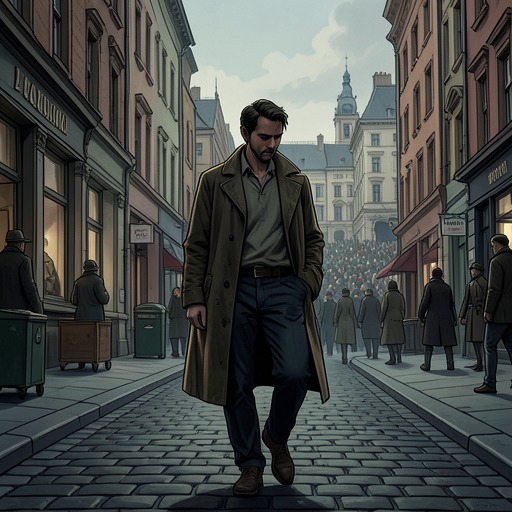
The hospital’s menial staff consists of 162 Deltas, divided into two Bokanovsky Groups: 84 red-haired female twins and 78 dark, long-headed male twins. At the end of their working day, the groups gather in the vestibule to receive their soma ration. John enters while consumed by grief and remorse over Linda’s death. As he pushes through the crowd, he sees the mass of nearly indistinguishable twins as a recurring nightmare, and the scene of distribution becomes inseparable in his mind from the way they seemed to swarm over his mother’s death.
The moment’s emotional turn comes as a Shakespearean phrase changes meaning for him. The words “O brave new world” had seemed to mock the ugliness surrounding him; now he hears them as a call to action, a possibility that the nightmare might be transformed into something better. He resolves that Linda’s enslavement and death must not be followed by the continued enslavement of others. In his mind, preventing that future becomes a duty of reparation: the people should live freely, and the world should be made beautiful.
The attempt to awaken the Deltas
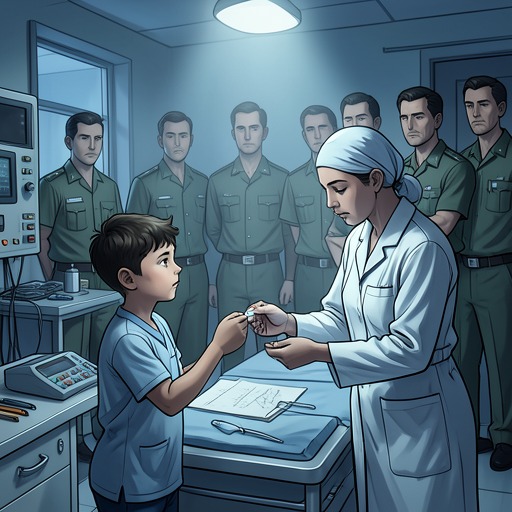
The distribution proceeds from a black iron cash-box, from which the Deputy Sub-Bursar takes small pill-boxes. The Deltas step forward one at a time. John breaks into this orderly routine with a shout to stop. He asks the workers to listen and warns them that soma is poison to both soul and body. When he tells them to throw it away, the words penetrate their initial incomprehension and provoke an angry murmur.
John’s appeal soon changes into confrontation. He asks whether the Deltas like being slaves and calls them children, hoping to rouse them to desire freedom and adulthood. Their blank, resentful response frustrates him; he begins insulting those he had come to save and declares that he will make them free whether they want it or not. He then opens a window overlooking the hospital’s inner court and throws handfuls of soma tablets outside. His act makes the abstract dispute over liberty immediate: the drug is no longer merely being condemned in speech but removed from the ration on which the crowd expects to rely.
Helmholtz joins the revolt
Bernard Marx arrives with Helmholtz after hearing that John is at the hospital and that the situation is urgent. Bernard sees the crowd turn against John and fears they will kill him. Helmholtz, by contrast, pushes into the conflict and fights alongside John. John continues throwing the tablets through the open window while Helmholtz helps; between their efforts, the supply is exhausted. John holds up the empty cash-box and declares the Deltas free.
The gesture does not persuade the crowd. The Deltas charge with renewed fury, turning the attempt to emancipate them into a riot. Bernard remains uncertain at the edge of the fighting: he moves forward, stops, and struggles with the possibility that helping could get him hurt. His hesitation contrasts with Helmholtz’s decision to act. Bernard eventually tries to summon help, but his intervention does not decide the confrontation.
Suppression and aftermath
The police arrive equipped to control the crowd. They use machines to disperse soma vapour, play a synthetic anti-riot speech, and subdue the more aggressive fighters with anaesthetic water pistols. One policeman also incapacitates Bernard when his shouting becomes a nuisance. The recorded voice asks the crowd to be happy and good together, translating social control into an intimate-sounding appeal for peace. Once the disturbance is over, hospital staff bring in more pill-boxes and distribute soma again; the Deltas disperse as the voice bids them farewell.
A sergeant asks John and Helmholtz whether they will come quietly or must be anaesthetized. John agrees to go, tending to his cuts and scratches, and Helmholtz confirms that he will accompany him. When Bernard is asked whether he is a friend of the prisoner, he hesitates but ultimately refuses to deny the connection. The three are led to a waiting police car and taken to the Controller’s study, carrying the conflict beyond the hospital.
Political and literary significance
The revolt gives physical form to a political disagreement that is later stated directly in the Controller’s study. Mustapha Mond argues that the World State’s stability depends on citizens being content, protected from difficult desires, and able to take soma when unpleasantness arises. He presents freedom as a concept the Deltas cannot understand and identifies John’s disposal of the drug as an attempt to impose liberty on people who have not chosen it. The hospital scene shows the human consequence of that argument: John sees a captive population, while the Deltas experience the interruption of their expected ration as an assault.
The episode also anticipates the dispute over art and happiness. John’s call to make the world beautiful is shaped by Shakespeare, whose tragic writing gives language to grief, conflict, and values that the World State has largely removed from ordinary life. Mond later concedes that works such as Othello are superior to the feelies, but argues that high art must be sacrificed for stability. At the hospital, the same opposition appears in action: John’s demand for a difficult freedom confronts an order that answers disorder with sedation, a calming recording, and the prompt restoration of soma.