Holly saves the narrator during the runaway-horse incident
Breakfast at Tiffany'sHolly saves the narrator during the runaway-horse incident when a birthday outing in Central Park becomes a dangerous pursuit through the park and into Fifth Avenue. The episode gives their friendship its sharpest immediate test: the narrator’s life is at risk, Holly rides after him, and his gratitude culminates in a declaration of love before he faints.
Circumstances and Invitation
The incident occurs on September 30, the narrator’s birthday. He has gone downstairs to await the postman, hoping for some monetary remembrance from his family; the narration makes that small expectation the hinge of the scene. Had he not been waiting in the vestibule, he would not have been there for Holly to invite him riding, and would not have been in a position to need her rescue.
Holly proposes that they walk a couple of horses around the park. She is dressed in a windbreaker, blue jeans, and tennis shoes, and emphasizes that the ride is not an attempt to lose the heir she is carrying. She wants instead to say goodbye to Mabel Minerva, her “darling old” horse. The excursion is therefore framed as a farewell as well as a casual outing, before the danger abruptly changes its meaning.
The horses come from stables on West Sixty-sixth Street. Holly chooses an old, sway-backed black-and-white mare for the narrator and reassures him that she is safe; his riding experience amounts to pony rides at childhood carnivals. She helps him into the saddle, then mounts a silvery horse of her own. They cross Central Park West and enter a leaf-strewn riding path, where the narrator’s initial apprehension gives way to pleasure. Watching Holly’s hair flash among the autumn colors, he becomes absorbed in her happiness and forgets his self-pity. The sudden change from contented ride to danger makes the ensuing rescue a reversal, not a continuation of the outing’s easy mood.
The Runaway Horse
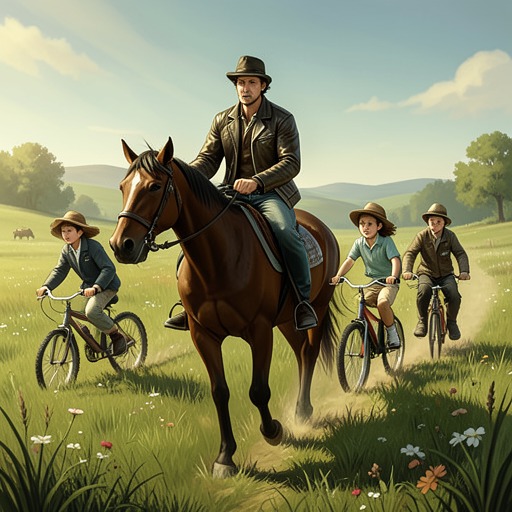
The crisis begins when a group of boys leaps from the shrubbery beside the path, shouting, throwing rocks, and striking the horses’ rumps with switches. The narrator’s mare rears, loses control, and bolts down the path. He is bounced partly out of the stirrups and can barely hold on as the horse races past trees, a lake with children’s sailboats, and statues. People shout advice, but he recalls those voices only afterward; in the moment, his attention is fixed on the runaway horse and Holly racing behind him, calling encouragement.
The mare carries him out of the park and into Fifth Avenue traffic. Taxis and buses swerve as the horse stampedes past the Duke mansion, the Frick Museum, the Pierre, and the Plaza. The route makes the danger public and escalating: a frightened animal has become a runaway in the middle of city traffic, with the narrator still clinging to its back. Holly gains ground, while a mounted policeman joins the chase and flanks the mare with another horse. Their pincer movement finally forces it to stop.
Only after the mare is halted does the narrator fall. He picks himself up, uncertain of his location, while a crowd gathers. The policeman writes in a book, then becomes sympathetic and offers to arrange for the horses to be returned to their stable. The official’s practical response marks the end of the immediate pursuit, but the narrator is still shaken enough that the rescue continues in the taxi Holly puts them into.
Rescue and Aftermath
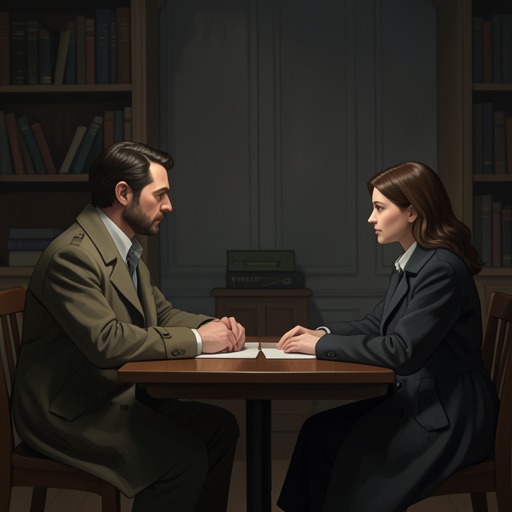
In the taxi, Holly asks how the narrator feels and checks his wrist. She notices that he has no pulse and presses him to tell her the truth about his condition, reminding him that he might have been killed. His answer is that he is fine, except for feeling ashamed; then he thanks her for saving his life, calls her wonderful and unique, and says that he loves her. His direct acknowledgment of the danger turns his earlier exhilaration into gratitude, while Holly’s concern makes the consequences of the ride unmistakable.
Holly calls him a damn fool and kisses him on the cheek. The narrator sees multiple versions of her, faints, and later recalls that her face had multiplied as his consciousness failed. The scene ends not with a further declaration but with a physical gesture and collapse: the danger has passed, yet its force overwhelms him. The episode thus joins action and relationship, making the narrator’s dependence on Holly concrete and giving his admission of love the urgency of a near-fatal event.