Doctor's letter (vampire diagnosis)
The Doctor's letter (vampire diagnosis) is a written note from the elderly physician summoned from Gratz to attend Bertha Rheinfeldt, in which he diagnoses her fatal illness as the result of vampire attacks and prescribes a vigil with a sword, a document that General Spielsdorf initially dismisses as absurd but later follows in desperation, leading to the revelation of the vampire's true nature.
Origin and Delivery
The letter was written by the old physician from Gratz, a good and pious as well as learned man, whom General Spielsdorf called in for a consultation after the first physician had failed to produce any impression on Bertha's disease. The two doctors withdrew to the library to confer, and from the adjoining room the General heard their voices raised in something sharper than a strictly philosophical discussion. When he entered, he found the old physician from Gratz maintaining his theory while his rival combated it with undisguised ridicule and bursts of laughter. The physician from Gratz, looking displeased, stated that by his skill and science he could be of no use, but before he went he would do himself the honor to suggest something. He sat down at a table and began to write, and the other doctor, as the General turned to go, pointed over his shoulder to his companion who was writing and, with a shrug, significantly touched his forehead. The physician from Gratz then overtook the General in the grounds, apologized for following him, and said he could not conscientiously take his leave without a few more words. He told the General that he could not be mistaken—no natural disease exhibited the same symptoms—and that death was already very near, with perhaps a day or two of life remaining if the fatal seizure were at once arrested. He placed the note in the General's hands upon the distinct condition that he send for the nearest clergyman and open the letter in his presence, and on no account read it till the clergyman was with him, warning that he would despise it otherwise and that it was a matter of life and death. Should the priest fail him, then he might read it.
Contents and Diagnosis
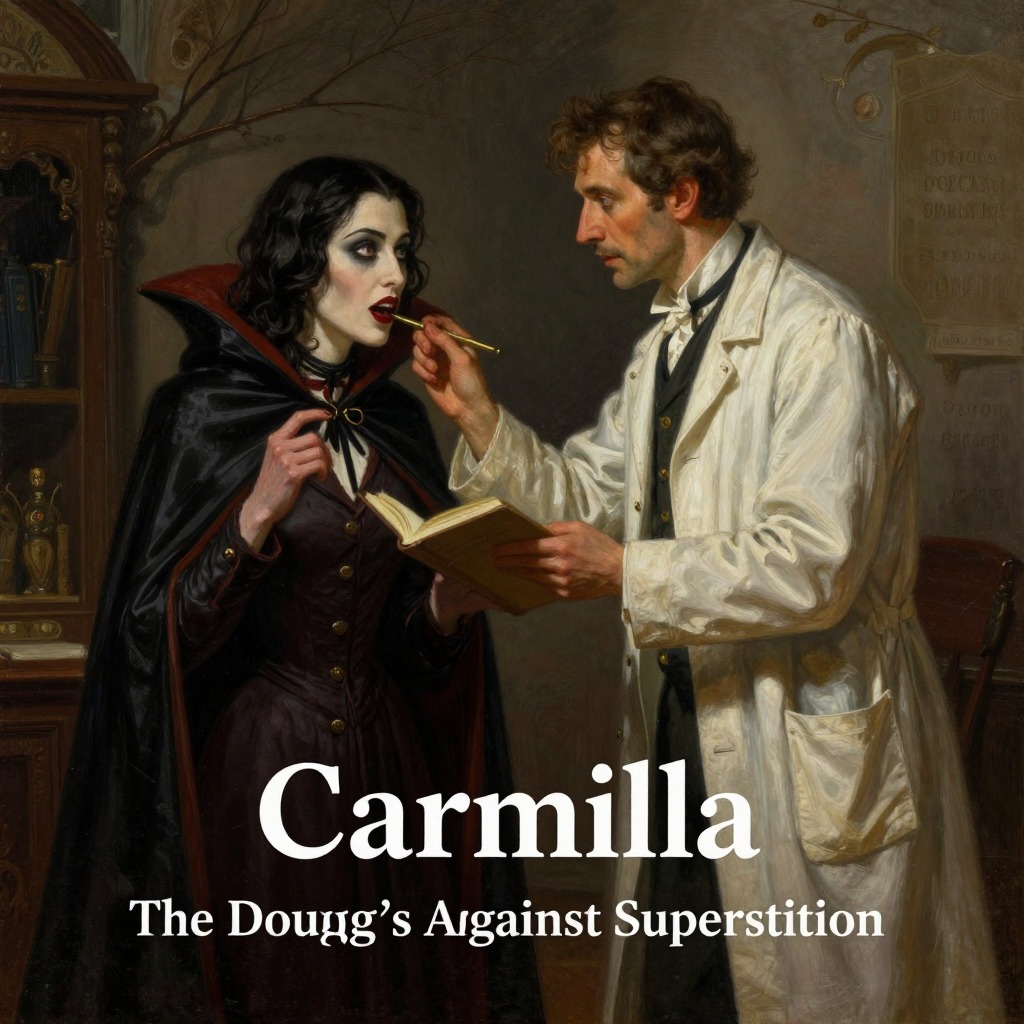
The letter, which the General later read by himself because the ecclesiastic was absent, stated that the patient was suffering from the visits of a vampire. The punctures Bertha described as having occurred near the throat were, the physician insisted, the insertion of those two long, thin, and sharp teeth peculiar to vampires. There could be no doubt, he added, as to the well-defined presence of the small livid mark which all concurred in describing as that induced by the demon's lips, and every symptom described by the sufferer was in exact conformity with those recorded in every case of a similar visitation. The letter also instructed the General to conceal himself in the dark dressing room that opened upon the patient's room, with his sword laid on the table beside him, and to watch there until she was fast asleep, then to stand at the door peeping through the small crevice.
Reception and Consequences
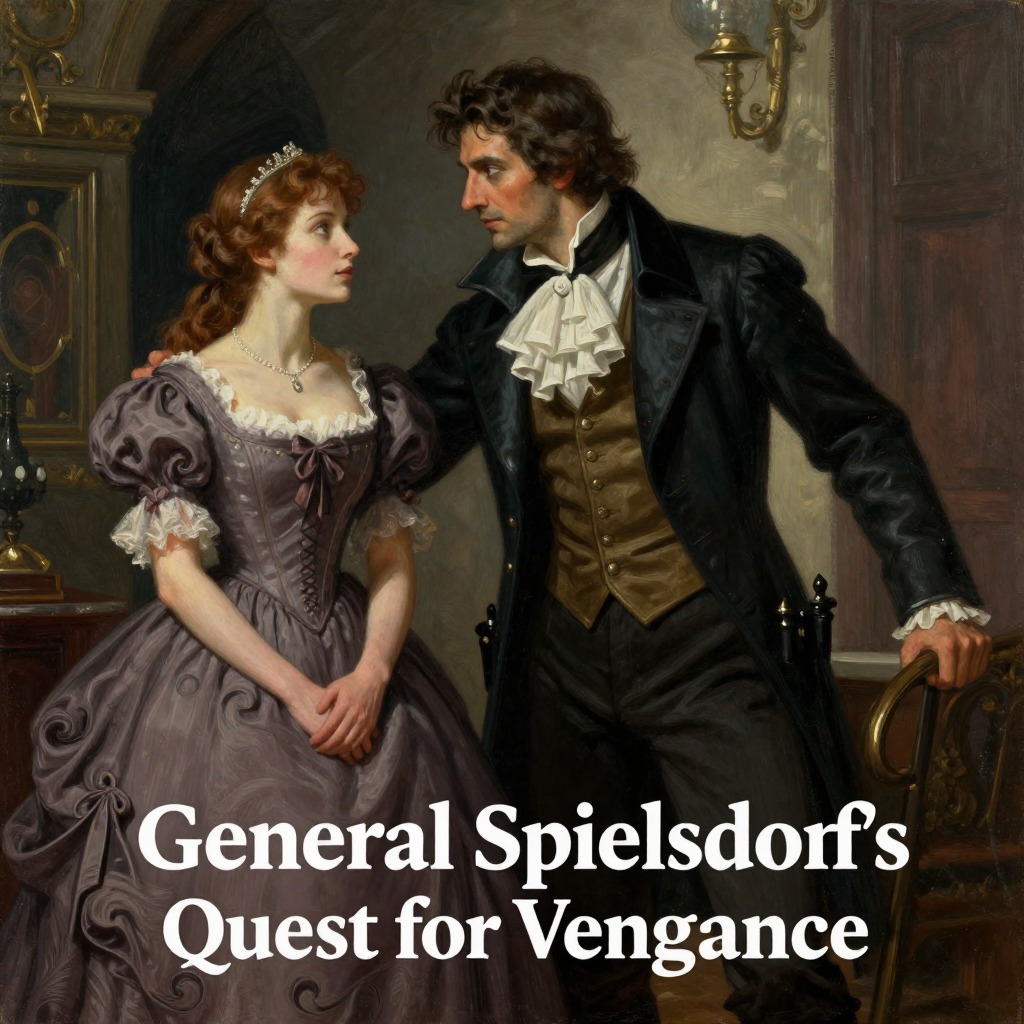
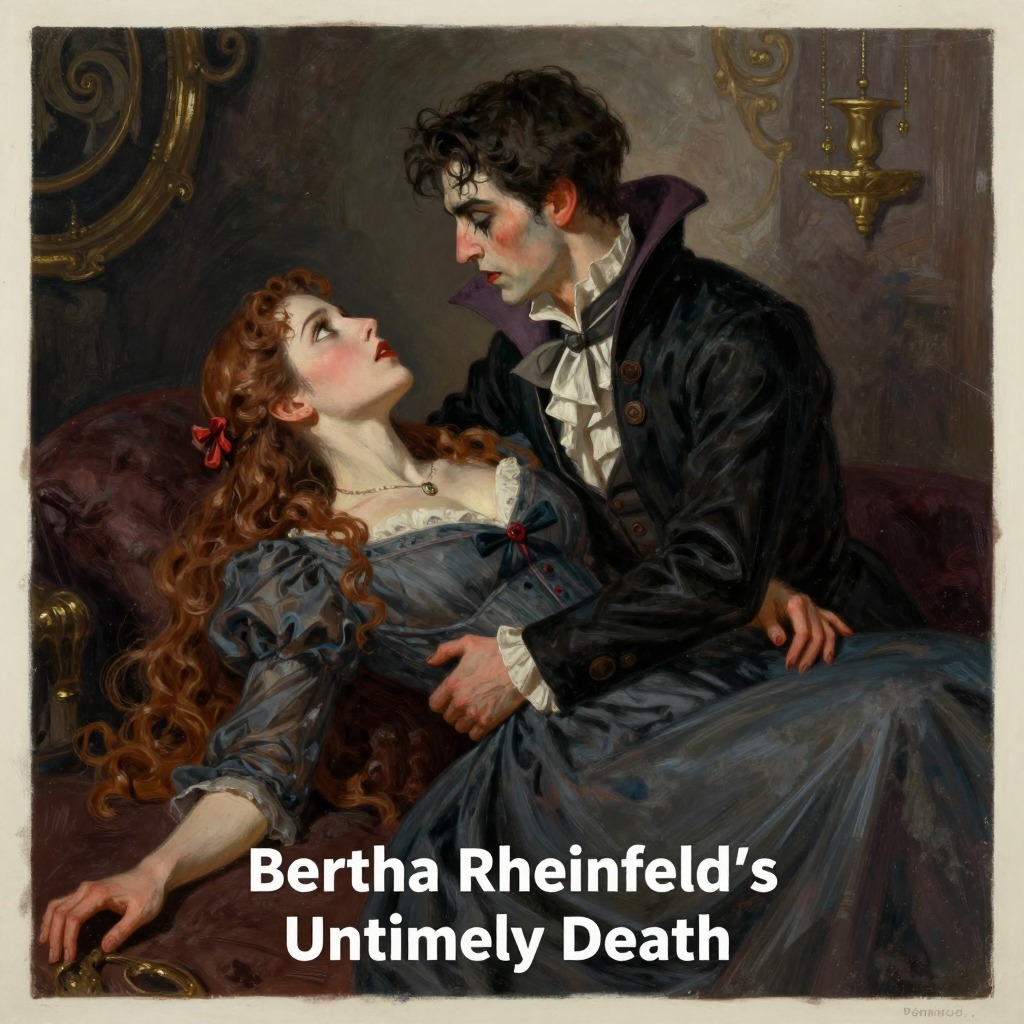
The General, being wholly skeptical as to the existence of any such portent as the vampire, considered the supernatural theory of the good doctor to furnish but another instance of learning and intelligence oddly associated with some one hallucination. He reflected that into what quackeries will not people rush for a last chance when all accustomed means have failed and the life of a beloved object is at stake. Rather than try nothing, however, he acted upon the instructions of the letter. He concealed himself in the dark dressing room, his sword laid on the table beside him, and watched until Bertha was fast asleep. A little after one o'clock he saw a large black object, very ill-defined, crawl over the foot of the bed and swiftly spread itself up to the poor girl's throat, where it swelled into a great, palpitating mass. He sprang forward with his sword, and the black creature contracted toward the foot of the bed, glided over it, and standing on the floor about a yard below the foot of the bed, with a glare of skulking ferocity and horror fixed on him, he saw Millarca. He struck at her instantly with his sword, but she stood near the door unscathed; he pursued and struck again, but she was gone and his sword flew to shivers against the door. Before the morning dawned, Bertha died. The letter thus proved to be the instrument that forced the General to confront the supernatural reality of the vampire, transforming his incredulity into a burning quest for vengeance that would eventually lead him to Karnstein and to the destruction of Carmilla.