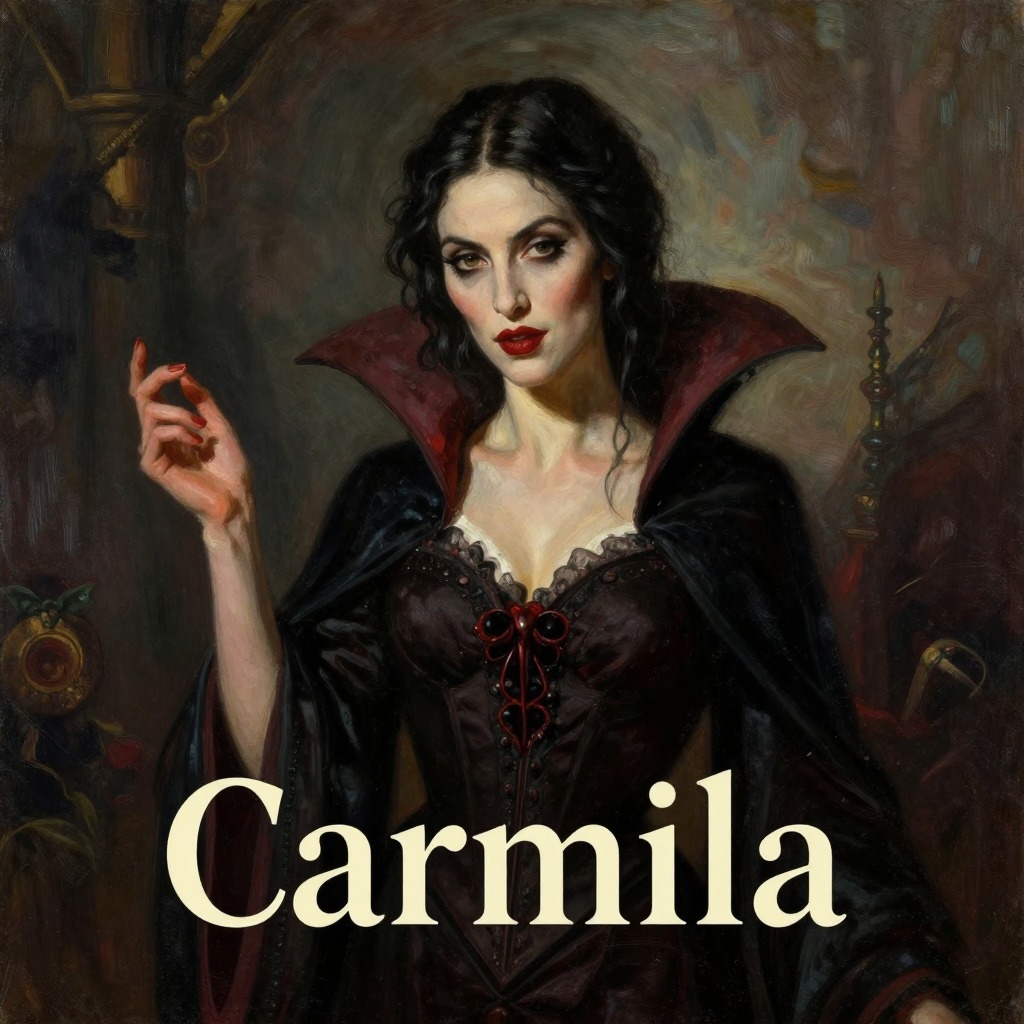
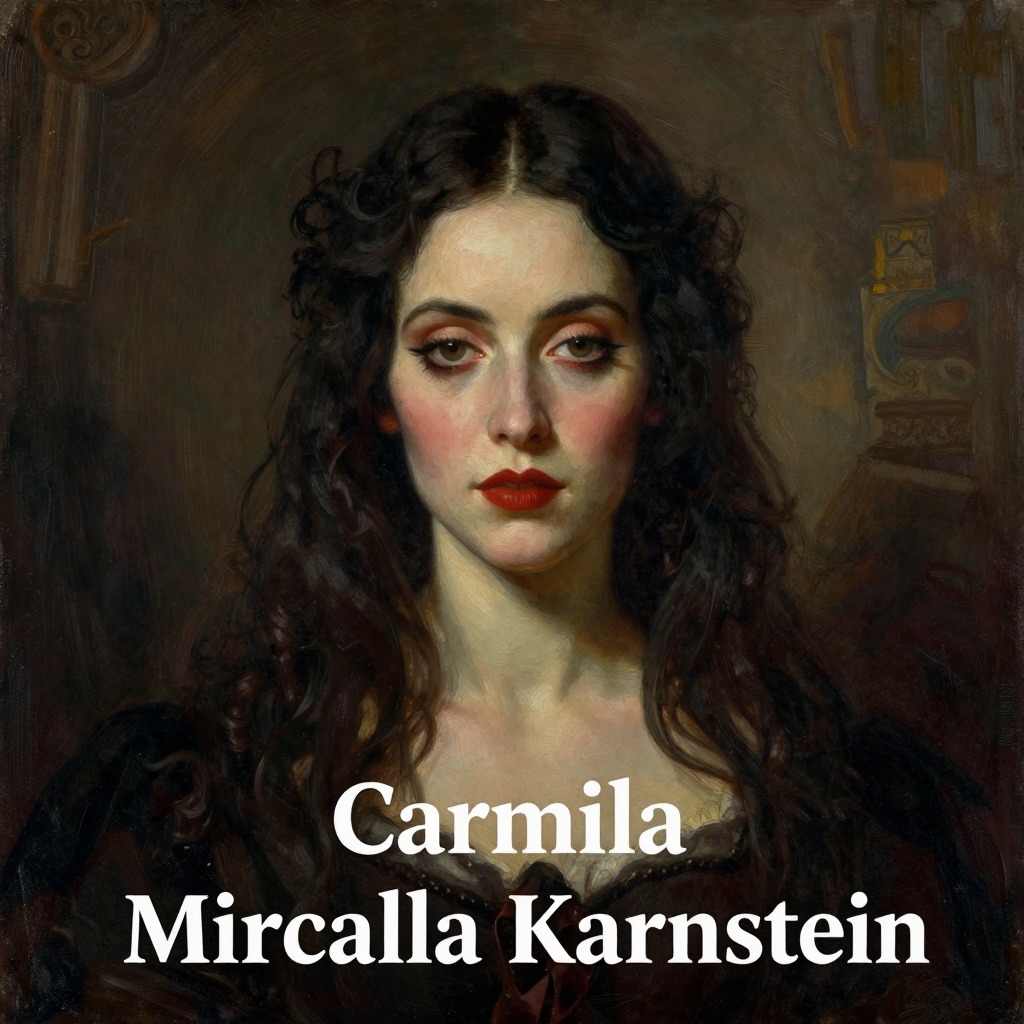
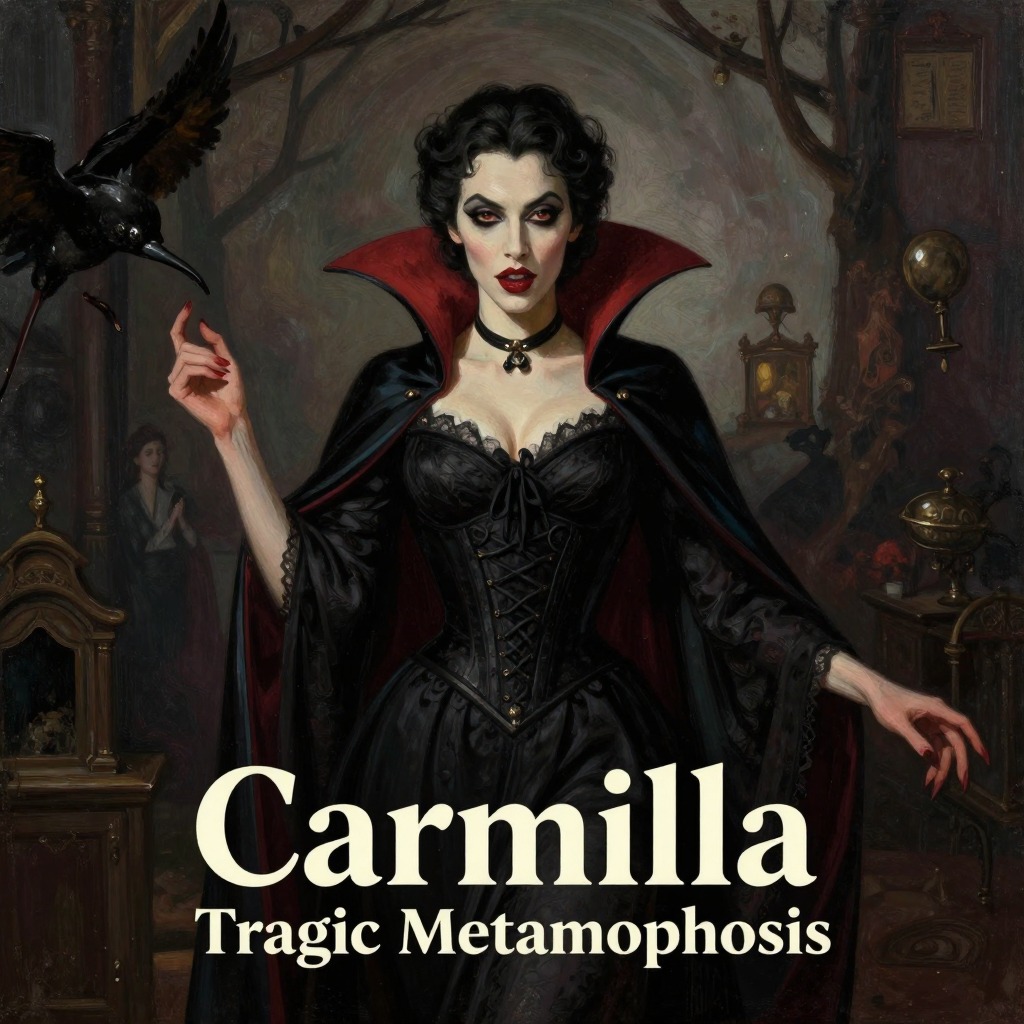
Portrait of Mircalla Countess Karnstein
The Portrait of Mircalla Countess Karnstein is a restored painting from 1698 that reveals Carmilla's true identity as the vampire Mircalla, Countess Karnstein, and serves as the crucial visual link connecting the ancient Karnstein family to the present-day haunting of Laura's schloss. The portrait arrives at the schloss in a shipment of old family paintings from Gratz, having been sent for restoration, and its unveiling triggers a cascade of recognition that binds the living guest to the dead countess.
Discovery and Restoration
The portrait arrives in a packing case carried by the grave, dark-faced son of the picture cleaner, along with a horse and cart laden with two large cases containing many pictures. The journey from Gratz is ten leagues, and the arrival creates a sensation in the secluded schloss. Laura's father reads from a list as the artist rummages out corresponding numbers, and he mentions a picture he has not yet seen: in one corner at the top is the name "Marcia Karnstein" and the date "1698." Laura remembers it as a small picture, about a foot and a half high and nearly square, without a frame, so blackened by age that she could not make it out. The artist produces it with evident pride, and it is quite beautiful, startling, seeming to live.
The Startling Likeness to Carmilla
The restored portrait is the effigy of Carmilla. Laura exclaims, "Carmilla, dear, here is an absolute miracle. Here you are, living, smiling, ready to speak, in this picture. Isn't it beautiful, Papa? And see, even the little mole on her throat." Laura's father laughs and says "Certainly it is a wonderful likeness," but he looks away and seems but little struck by it, going on to talk to the picture cleaner about the portraits or other works. Laura is more and more lost in wonder the more she looks at the picture. She asks her father to let her hang the picture in her room, and he agrees, smiling, saying "It must be prettier even than I thought it, if it is." Carmilla does not acknowledge this speech; she is leaning back in her seat, her fine eyes under their long lashes gazing on Laura in contemplation, and she smiles in a kind of rapture.
The Name and Identity Revealed
Upon closer inspection, the name in the corner is not Marcia but appears to be written in gold: "Mircalla, Countess Karnstein," with a little coronet over and underneath "A.D. 1698." Laura notes that she is descended from the Karnsteins through her mother. Carmilla languidly says she is also descended from the Karnsteins, a very long descent, very ancient, and asks if any Karnsteins are living now. Laura replies that none who bear the name are believed to be alive, as the family was ruined in some civil wars long ago, but the ruins of the castle are only about three miles away. Carmilla finds this interesting but quickly changes the subject to the beautiful moonlight, suggesting a ramble. The portrait thus establishes the anagrammatic name—Mircalla, Millarca, Carmilla—that the vampire is bound to use, and confirms her identity as the long-dead countess whose tomb will later be discovered in the Chapel of Karnstein.
Narrative Significance
The portrait functions as the story's central piece of material evidence, a visual proof that the beautiful guest is the same being who lived and died more than a century earlier. It also deepens the uncanny atmosphere: the painting seems to live, and Carmilla's reaction—a silent, rapturous smile—suggests a recognition that goes beyond mere coincidence. The portrait's placement in Laura's room, at her own request, brings the vampire's image into the most intimate space of the narrator's life, foreshadowing the nightly visitations that follow. The painting is later mentioned by Laura's father during the trip to Karnstein, when he asks General Spielsdorf if he would like to see it, and the General replies that he believes he has already seen the original—a remark that, in retrospect, confirms Carmilla's true nature before the final confrontation.