Leaden coffin
The leaden coffin of Mircalla, Countess Karnstein, is the central material object in the story's climactic scene of revelation and destruction. When the grave of the long-dead Countess is opened during the formal proceedings in the Chapel of Karnstein, the coffin does not contain the expected remains of a century-and-a-half-old corpse. Instead, it presents the definitive, physical evidence that confirms the supernatural nature of the affliction that has plagued the region and claimed the lives of Bertha Rheinfeldt and nearly Laura herself.
Discovery and Contents
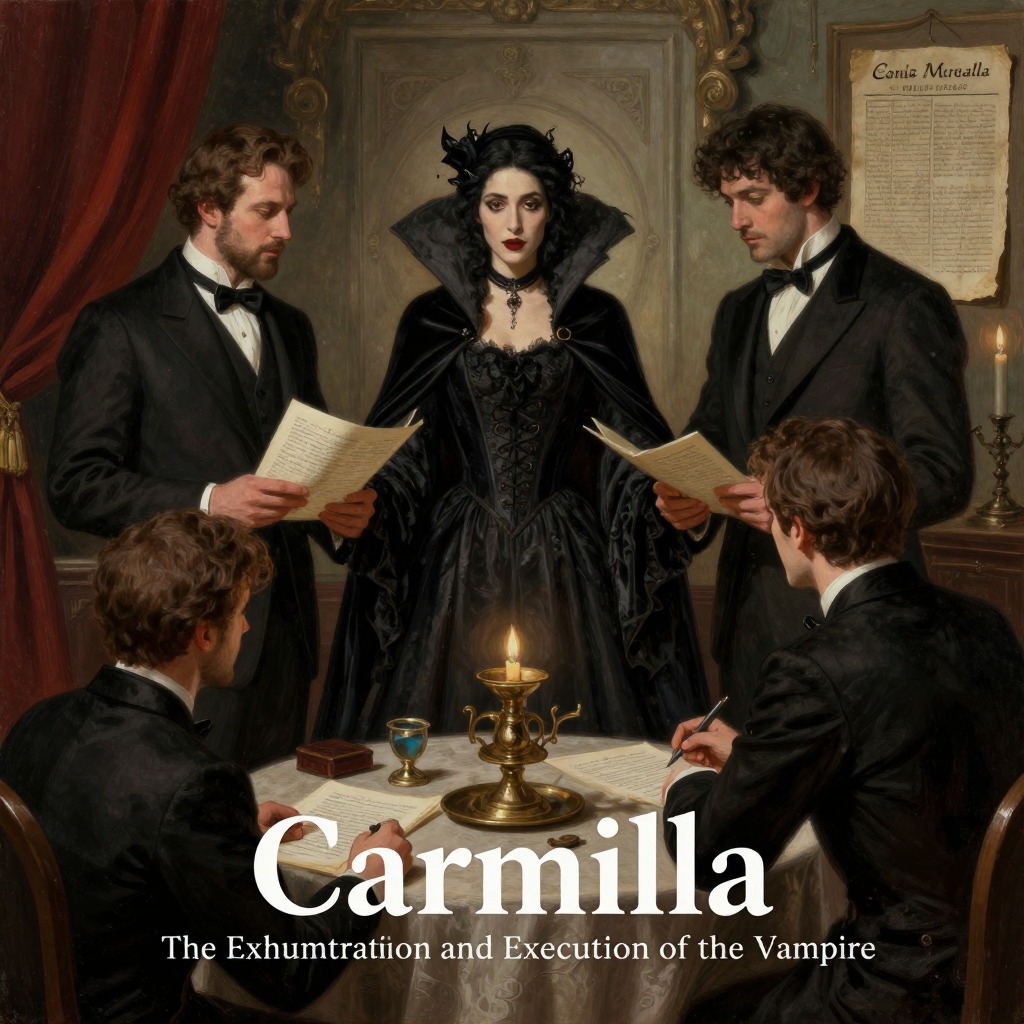
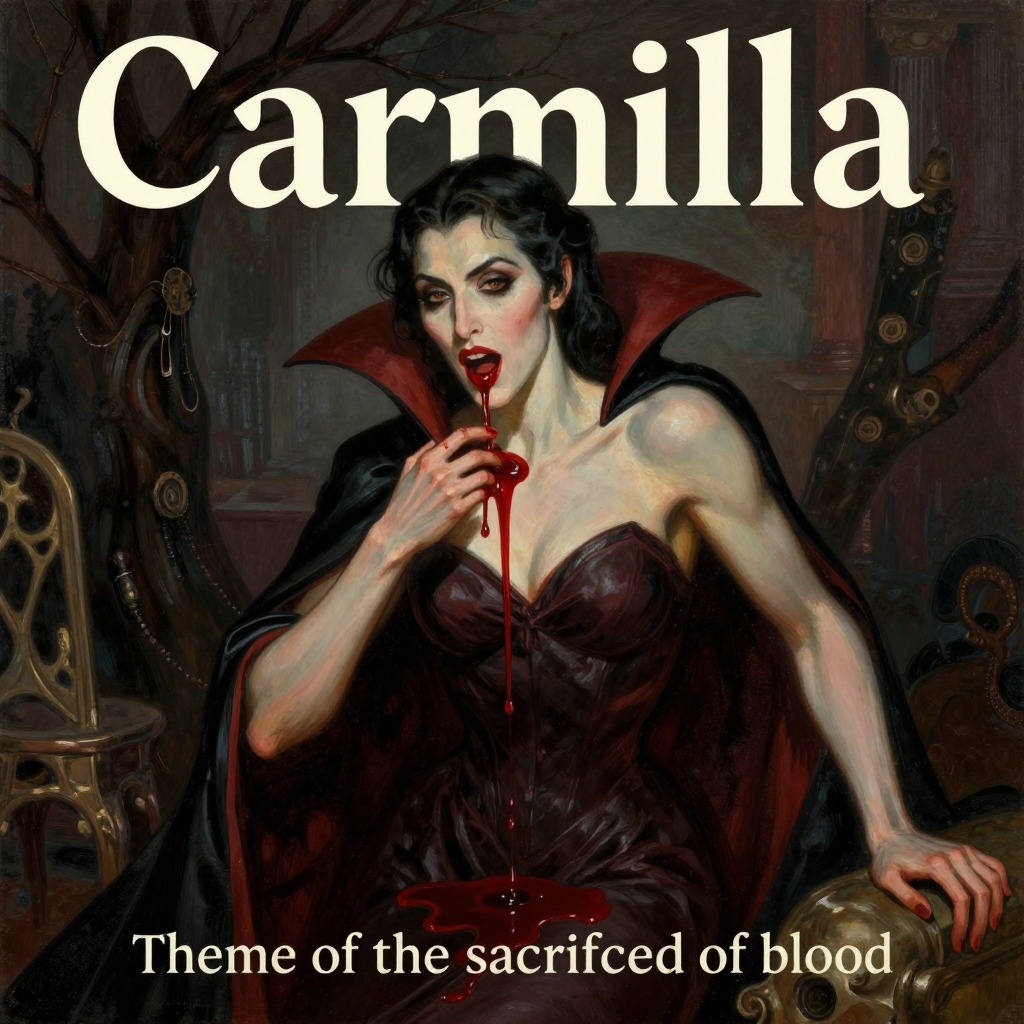
The coffin is opened in the presence of the Imperial Commission, with General Spielsdorf and Laura's father among those who recognize the face within as that of their perfidious and beautiful guest. The features, though a hundred and fifty years had passed since her funeral, were tinted with the warmth of life. Her eyes were open, and no cadaverous smell exhaled from the coffin. The two medical men, one officially present and the other on the part of the promoter of the inquiry, attested to the marvelous fact that there was a faint but appreciable respiration and a corresponding action of the heart. The limbs were perfectly flexible, the flesh elastic. Most strikingly, the leaden coffin floated with blood, in which to a depth of seven inches, the body lay immersed. This combination of signs—the living appearance, the open eyes, the warmth, the flexibility, and the extraordinary quantity of blood—constituted all the admitted signs and proofs of vampirism.
Role in the Execution
The coffin's contents dictate the ancient procedure that follows. The body, in accordance with the ancient practice, was raised from the leaden coffin, and a sharp stake was driven through the heart of the vampire, who uttered a piercing shriek at the moment, in all respects such as might escape from a living person in the last agony. Then the head was struck off, and a torrent of blood flowed from the severed neck. The body and head were next placed on a pile of wood and reduced to ashes, which were thrown upon the river and borne away. The leaden coffin itself, having served its purpose as the vessel that preserved and revealed the vampire's unnatural state, is left behind as the empty shell of a threat that has been finally extinguished. Laura's father possesses a copy of the report of the Imperial Commission, with the signatures of all who were present at these proceedings, attached in verification of the statement, and it is from this official paper that Laura summarizes her account of this last shocking scene.
Narrative Significance
The leaden coffin functions as the point where the story's accumulated dread and suspicion crystallize into undeniable, material fact. Until its opening, the vampire's existence remains a matter of terrifying dreams, ambiguous symptoms, and the General's wild story. The coffin, with its impossible contents, transforms belief into knowledge. It also serves as the final, grotesque confirmation of the anagrammatic identity that has been hinted at throughout the narrative: the name Mircalla, an anagram of Carmilla and Millarca, is literally inscribed on the monument that leads to this very coffin. The object thus bridges the historical legend of the Karnstein family and the immediate horror experienced by Laura and Bertha, proving that the same entity has been active across centuries. The coffin's seven inches of blood, the flexible limbs, and the beating heart are the concrete details that the narrative's legalistic and scientific framing requires to validate the supernatural, making the leaden coffin the story's most potent piece of forensic evidence.