Suicide Becoming Vampire
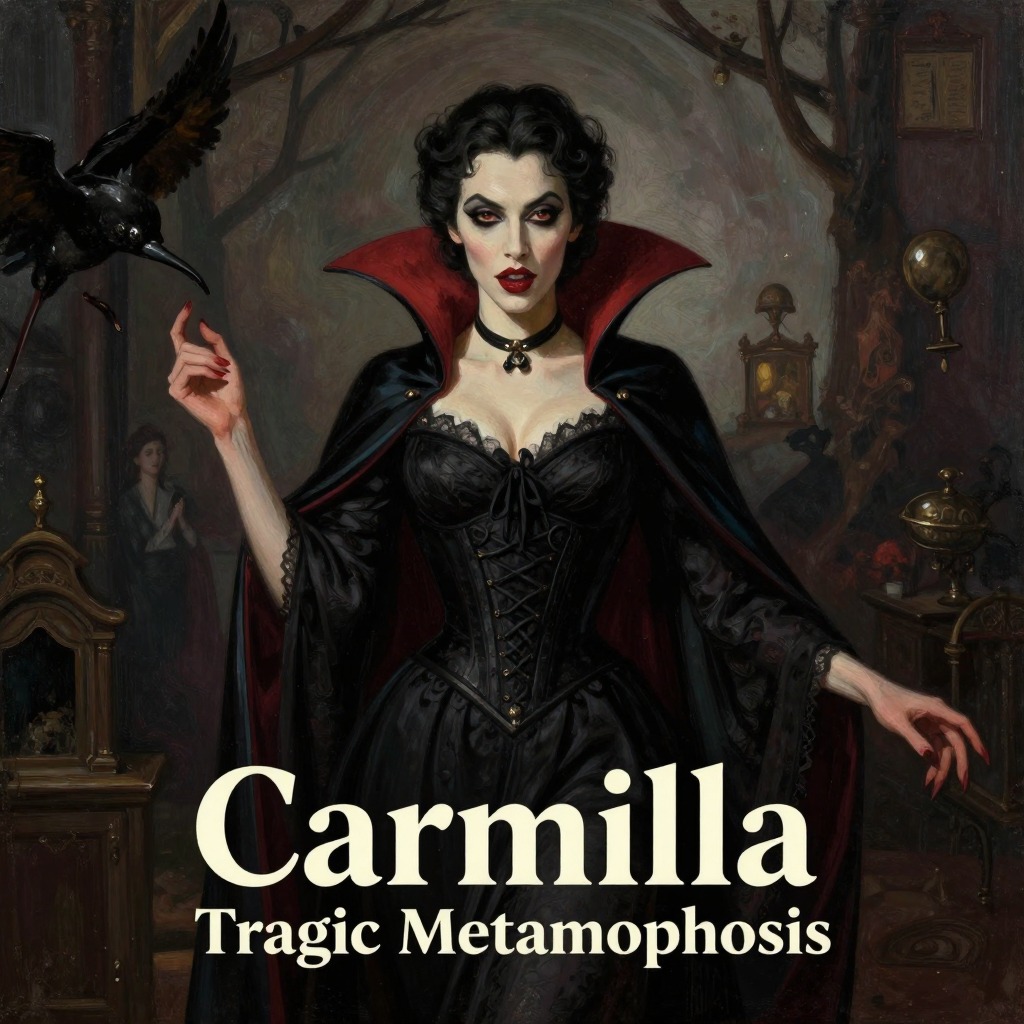
CarmillaIn the intricate mythology that Sheridan Le Fanu constructs in Carmilla, the origin of the vampire is not a matter of ancient curse or demonic pact alone, but is tied to a specific, tragic human act. This principle, the transformation of a suicide into a vampire, is the key that unlocks the history of the story's central monster, Mircalla, Countess Karnstein, and provides a chilling logic to the plague that has haunted the region of Styria for over a century.
The Mechanism of Transformation
The concept is formally introduced near the story's conclusion by Baron Vordenburg, a scholar of the occult who has devoted his life to the study of authenticated vampirism. He explains to Laura and her father a fundamental law of the vampire's proliferation: "A person, more or less wicked, puts an end to himself. A suicide, under certain circumstances, becomes a vampire." This is not a universal rule for all who take their own lives, but a conditional one, dependent on unspecified "certain circumstances" that make the act a gateway to a monstrous second existence. The transformation is presented as a natural, if ghastly, consequence of a specific kind of death, rather than a supernatural curse arbitrarily applied. The vampire, once created, then perpetuates the cycle: "That specter visits living people in their slumbers; they die, and almost invariably, in the grave, develop into vampires." This establishes a chain of infection, where the original suicide-vampire becomes the source of a spreading contagion.
The Origin of Mircalla, Countess Karnstein
Baron Vordenburg applies this principle directly to the case of Mircalla, the beautiful noblewoman whose tomb is discovered in the ruined Chapel of Karnstein. He reveals that Mircalla did not become a vampire through her own wickedness in life, but as a victim. "This happened in the case of the beautiful Mircalla, who was haunted by one of those demons," he states. The implication is that she was driven to suicide by the torment of a vampire's visitation, and in death, she herself became the very thing that had destroyed her. This origin story adds a layer of tragic irony to her character: the predator was once prey. It also explains the peculiar, obsessive nature of her attacks on Laura and Bertha Rheinfeldt, which are described as being driven by a "passion of love" and a desire for "sympathy and consent," perhaps a ghostly echo of the human emotions she possessed before her transformation.
The Ancestor's Secret and the Narrative's Resolution
The revelation of this origin is the culmination of a secret kept for generations. Baron Vordenburg's own ancestor, a nobleman who had been "a passionate and favored lover of the beautiful Mircalla," discovered the truth of her vampirism. Horrified at the prospect of her body being "profaned by the outrage of a posthumous execution," he devised a stratagem to protect her. He pretended to remove her remains and obliterated her monument, hiding her true tomb for over a century. However, as he aged, he came to see his actions in a different light, and a "horror took possession of him." He then created the detailed notes and tracings that would eventually guide his descendant, the current Baron, to the exact spot of the concealed grave. This act of love, born from a desire to protect his beloved from a second death, inadvertently allowed the vampire to continue its reign of terror for generations. The concept of Suicide Becoming Vampire thus serves as the narrative's final, crucial piece of exposition, explaining not only the monster's origin but also the reason it remained undetected for so long, and providing the moral and intellectual framework for its eventual destruction.