rush hour
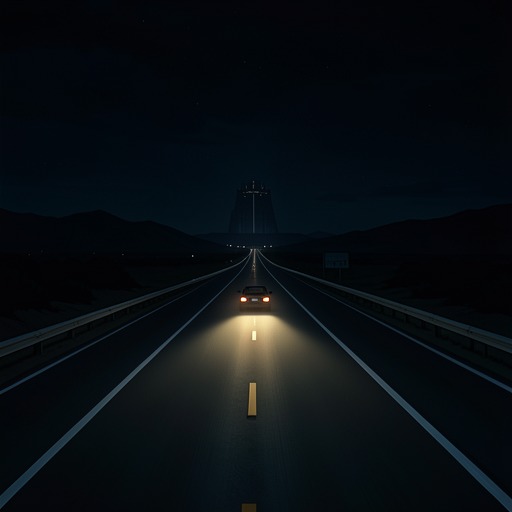
CrashRush hour is not merely a time of day in the novel but a governing condition of its world: a vast, unstable traffic system in which speed can collapse into paralysis and private desire can be carried, concealed, or intensified by the movement of vehicles. Around London Airport, Western Avenue, the flyover, and the motorway interchanges, rush-hour traffic repeatedly converts infrastructure into a theatre of memory, danger, and pursuit.
Definition and Urban Setting
Rush hour appears most concretely as the period when traffic leaving London sweeps toward the airport and the surrounding motorways. After his accident, James Ballard repeatedly drives the perimeter roads near Stanwell, moves around the airport’s eastern flank to the interchanges at Harlington, and is carried back into the crowded lanes of Western Avenue by what he experiences as a tidal race of metal. The route is not neutral geography: at the hour of his accident, it draws him invariably toward the foot of the flyover, either wrenching him past the collision site as traffic jerks toward the next lights or trapping him in a jam only ten feet from the precise point of impact.
The time is therefore defined by recurrence as much as by congestion. James Ballard’s movements retrace the accident’s temporal coordinates, making rush hour a daily return to the conditions that produced his wounds and awakened his thoughts of death. The road’s timetable becomes an external mechanism of memory, compelling him toward the scene even when the traffic does not permit him to stop there.
Movement and Stasis
The novel repeatedly holds velocity and immobility in the same frame. From the balcony of the apartment at Drayton Park, James Ballard sees the motorway traffic stationary in a southward queue, while Western Avenue is filled with stalled cars and airline coaches waiting for the lights. Three lines of vehicles climb the flyover ramp and continue toward the southern motorway extension, forming an artificial horizon around the landscape. The silence is so complete that the drivers, trapped in the hot sunlight, seem to inhabit a world that has stopped.
This vision is later set against the ordinary rush-hour flow along Western Avenue, where traffic speeds and swerves from one jam to the next and airliners rise above London Airport. The contrast does not restore a stable distinction between motion and rest. Instead, movement itself appears as a sequence of interruptions, while the stationary queue suggests that the road’s ultimate destination may be a perfected form of suspension. The drivers seem imprisoned by the infrastructure that promises mobility, and the motorway becomes both channel and enclosure.
During another rush-hour journey, the traffic jam extends from the junction of the motorway and Western Avenue to the ascent ramp of the flyover. Windshields absorb the molten colours of the setting sun, brake-lights flare through a mass of vehicles, and an airline coach stands beside the car like a cliff of watching faces. The energy of the twentieth century is described as being spent merely to maintain this immense motionless pause. Police lights, warning tripods, ambulances, firemen, and oxy-acetylene torches then reveal that the apparent pause is also an active field of risk, organized around collision and its aftermath.
Traffic as a Social and Erotic System
Rush hour gathers together the novel’s otherwise separate populations and activities. The airport and its suburbs contain hotels, discotheques, terminal concourses, restaurant mezzanines, and apartment complexes along the motorway, all occupied by a hierarchy of prostitutes serving transit passengers and local clients. The same road system that carries commuters and airline traffic also connects these temporary rooms and commercial spaces, making sexual exchange another form of circulation within the airport landscape.
The car provides the private enclosure that allows this circulation to become intimate. James Ballard drives toward the terminal buildings and the upper decks of the multi-storey car parks, spaces that are empty in the evening but still belong to the larger traffic complex. The contrast between the crowded roads and the secluded parking structure allows the rush-hour world to shift from public congestion to concealed sexual encounter without leaving its technological setting.
Rush hour also gives Robert Vaughan and Catherine Ballard a medium through which their attraction can be staged. Vaughan follows Catherine through the traffic, cutting in and out of lanes, advancing until he is level with her and then falling back so that other cars intervene between them. He imitates her driving, including the repeated use of the brake pedal; their synchronized brake-lights move along the expressway like a dialogue between a long-married couple. The traffic does not merely obstruct their courtship. It supplies its rhythm, distance, concealment, and repeated opportunities for approach.
Pursuit and Collision
The same conditions that make rush hour erotic make them violently unstable. When Catherine climbs the flyover behind fuel tankers, Vaughan accelerates away from the junction, and James Ballard follows through roundabouts and intersections beneath the elevated road. Vaughan drives through the afternoon traffic with abrupt braking and high-speed turns, while James Ballard races behind him toward the descent ramp. The congestion creates both the danger and the choreography of the pursuit: tankers, traffic lights, ramps, and converging airport traffic determine when the men can separate, rejoin, or force a confrontation.
Rush hour thus transforms pursuit into a collective event. The private intentions of Vaughan and James Ballard are embedded in a public stream of vehicles, where every lane change can appear ordinary and every hesitation can become an opportunity for violence. The traffic system supplies cover while also narrowing the available choices, making the road’s standardized movements serve an increasingly personal conflict.
Memory, Vision, and Significance
For James Ballard, rush hour is inseparable from the reconstruction of identity after the accident. From the balcony, he sees the motorways as the sharpest landmarks of the landscape, more reliable than the human inhabitants of the surrounding housing development. Their embankments, interchanges, and car parks define the borders of his world, while his wounds seem like signals capable of unlocking the immobilized drivers and releasing them toward the destinations of the electric highway.
After the LSD experience and near-death episode, the traffic retains this visionary charge. The cars that once appeared oppressive become an endless illuminated queue waiting for an invisible slip road into the sky. From the apartment, James Ballard searches the moving traffic for the paradisial incline on which all vehicles might flow. Rush hour consequently survives as both physical congestion and metaphysical promise: it is the daily evidence of a technological civilization trapped in its own circulation, yet still dreaming of release through speed.
The recurring traffic period also binds together the novel’s principal structures of repetition. James Ballard returns to the hour of his accident; Vaughan uses the congested road as the setting for pursuit; Catherine’s braking becomes a recognizable sign within the traffic stream; and the motorway repeatedly shifts from a route of travel to a static landscape of bodies, machines, spectators, and wreckage. Rush hour is therefore the novel’s most concentrated image of the electric highway’s contradiction: a system built to accelerate human movement that continually produces delay, fixation, danger, and new forms of desire.