
Die, My Love
Overview
Die, My Love is an Argentine psychological novel by Ariana Harwicz. Its original Spanish title is Matate, amor, and it was first published in Buenos Aires by Mardulce in 2012. The English edition appeared in 2017 from Charco Press, translated by Sarah Moses and Carolina Orloff. A short, formally experimental work, it belongs at once to the traditions of the domestic novel, the marriage novel, feminist fiction, and the literature of psychological disturbance. Its international profile expanded considerably when it was longlisted for the 2018 Man Booker International Prize.
Story and setting
The novel takes place in the French countryside, in and around the isolated home of an unnamed young woman living with her husband and their infant son. The setting initially resembles an image of rural peace: a house, fields, domestic routines, and a family removed from the pressure of the city. For the narrator, however, the countryside becomes a place of confinement. Laundry, meals, childcare, and the repeated gestures of household life do not create security; they become a performance of normality that conceals an increasingly unmanageable inner life.
The book opens with the narrator imagining a knife in her hand and the possibility of killing her husband. The fantasy does not simply become a conventional murder plot. Instead, violent thought persists as a measure of the intensity of her alienation, moving alongside love, dependence, resentment, erotic attraction, and disgust. She suspects her husband of infidelity and experiences the marriage as emotionally vacant. She is also drawn toward another man, while her relationship with her child alternates between tenderness, estrangement, guilt, and rage. As her mental state deteriorates, she moves through fantasies of self-harm, harm to others, escape, sexual freedom, and the destruction of the domestic world around her.
The narrative does not proceed through a calm sequence of explanatory events. It advances through fragments of sensation, memory, observation, fantasy, and abrupt emotional reversals. Reality and imagination remain deliberately difficult to separate. This structure places the reader inside a consciousness that can no longer organize experience according to the reassuring logic of the ordinary family story.
Central concerns
Harwicz’s subject is not simply a mother who is failing to be good. She examines a woman struggling not to be absorbed entirely by the roles of wife and mother. Motherhood is shown as an intimate bond and also as a force that claims the body, time, attention, and identity of the person who provides care. The narrator resists the demand that her entire existence be explained by maternal devotion, yet she cannot escape the obligations of care. Her resistance is therefore neither a tidy declaration of liberation nor an uncomplicated rejection of her child; it is a frightening conflict involving shame, desire, exhaustion, guilt, and a desperate need for an independent self.
Marriage is equally unstable. The novel explores how love can become banal through repetition, how domestic partnership can produce emotional solitude, and how desire can be both an imagined route out and another source of danger. The countryside offers no pastoral cure. Grass, fallen trees, blood, bodies, animals, and the knife-like violence of perception turn the supposedly peaceful landscape into an extension of the narrator’s agitation. The book addresses postpartum mental crisis, suicidal thoughts, violent fantasies, and possible psychosis, but it does not function as a clinical case history. Its important refusal is to reduce the woman’s rage to pathology and thereby silence its social meaning.
The prose is the novel’s central instrument. Sentences and paragraphs can be compressed, lyrical, obscene, comic, or brutal, often changing direction without warning. The fragmentary form is not an ornamental imitation of disorder: it makes the reader experience the collapse of a stable narrative order. Harwicz’s unnamed narrator is at once highly particular—a foreign woman living in rural France—and broadly recognizable as someone whose experience cannot be contained by the language of respectable domestic life.
Background and lasting significance
Harwicz was born in Buenos Aires and later settled in France, where she continues to live and write. Her education in performing arts and comparative literature, together with her movement between Argentine and French cultural contexts, helps illuminate the novel’s unusual combination of visceral intensity, theatrical perception, and literary compression. She has said that she wrote the three novels later gathered as the Passion Trilogy in a spirit of vengeance. Die, My Love, the first of those novels, directs that rebellious energy toward marriage, motherhood, gender expectations, and the ideal of the well-adjusted woman.
The book has been translated into numerous languages, including English, French, Hebrew, Arabic, Italian, Ukrainian, and German. Harwicz’s fiction has also been adapted for the theatre in several countries, and the novel’s continued circulation has placed it within contemporary conversations about motherhood horror, female anger, bodily autonomy, and the violence hidden inside ordinary family life. It is influential not because it offers a reassuring model of recovery, but because it insists on giving form to thoughts that conventional narratives of motherhood often suppress. Its lasting status rests on that uncompromising combination of political provocation, psychological risk, and hypnotic prose.
About the Author
Life and education
Ariana Harwicz is an Argentine writer, screenwriter, playwright, and documentary maker. She was born in Buenos Aires in 1977 and was raised in a Jewish family. She later moved to France, where she has lived since 2007 and currently resides in Paris. Harwicz studied performing arts at the University of Paris VII and earned a master’s degree in comparative literature from the Sorbonne. Her artistic training helps explain the bodily, vocal, and theatrical force of her fiction, while her comparative-literature background informs its wide range of literary and cultural references.
Harwicz writes in Spanish, but French literature has had a visible influence on her work. Her movement between Argentina and France also provides an important context for her recurring interest in exile, foreignness, displacement, and the feeling of being cut off from familiar social language. She generally avoids discussing her private life in public, preferring to make the work itself the place where difficult experiences are tested. She has described the three novels later collected as the Passion Trilogy as having been written in a spirit of vengeance. The phrase captures the adversarial energy of her writing: her target is less an individual than the social expectations, family myths, and gendered forms of obedience that make certain lives appear natural and others unacceptable.
Major works
Harwicz’s first novel, Matate, amor, was published by Mardulce in Buenos Aires in 2012. It appeared in English as Die, My Love in 2017, translated by Sarah Moses and Carolina Orloff and published by Charco Press. The novel follows an unnamed young mother and wife in the French countryside as marriage, motherhood, desire, violent fantasy, and mental instability collide. Its English translation brought her work to a substantially wider readership and helped the novel reach the longlist for the 2018 Man Booker International Prize.
Her second novel, La débil mental, appeared in 2014, followed by Precoz in 2015. Together with Die, My Love, these books form the Passion Trilogy, a sequence joined less by conventional plot than by an intense examination of bodies, intimacy, female identity, erotic desire, and family structures. Her fourth novel, Degenerado, was published by Anagrama in 2019. It extended her interest in social exclusion, moral judgment, and violence beyond the particular domestic crisis at the center of her earlier novels. She has also written short fiction, plays, screen and documentary work. Her short stories have appeared widely, and her novels have been adapted for the stage in several countries. The supplied material also identifies a later work titled Unfit, but does not provide a reliable publication date for it.
Reputation
Harwicz is regarded as a major and distinctive voice in contemporary Argentine and Latin American literature. Her books have been translated into many languages, including English, French, Hebrew, Arabic, Italian, Ukrainian, and German. The English translations, particularly those published by Charco Press, have been central to her international visibility, bringing her writing to new readers, literary prizes, and further translation markets. She has maintained a literary dialogue with fellow Argentine writer Gabriela Cabezón Cámara, another prominent contemporary voice whose work has also reached international audiences through translation.
Her reputation rests on a deliberately unruly style. Her prose can be fragmentary, lyrical, comic, obscene, and violent, often within a very small space. She does not make her characters respectable in order to make them legible, nor does she turn female anger into a lesson in acceptable behavior. Instead, she gives serious literary form to contradiction, bodily revulsion, erotic longing, maternal ambivalence, and the desire to escape ordinary life. Critics and readers have consequently connected her work with contemporary discussions of motherhood horror, psychological crisis, and the hidden violence of domestic arrangements. Harwicz is alive and continues to live and write in France; her career has not reached a posthumous conclusion. Her lasting standing so far is marked by international translation, major prize recognition, theatrical adaptation, and the continuing force of novels that challenge the language of family, femininity, and normality.
StoryFlow

The Collapse of the Narrator's Marriage
This flow traces the slow, violent unmaking of the narrator's marriage from the opening family portrait to the final forest conversation.
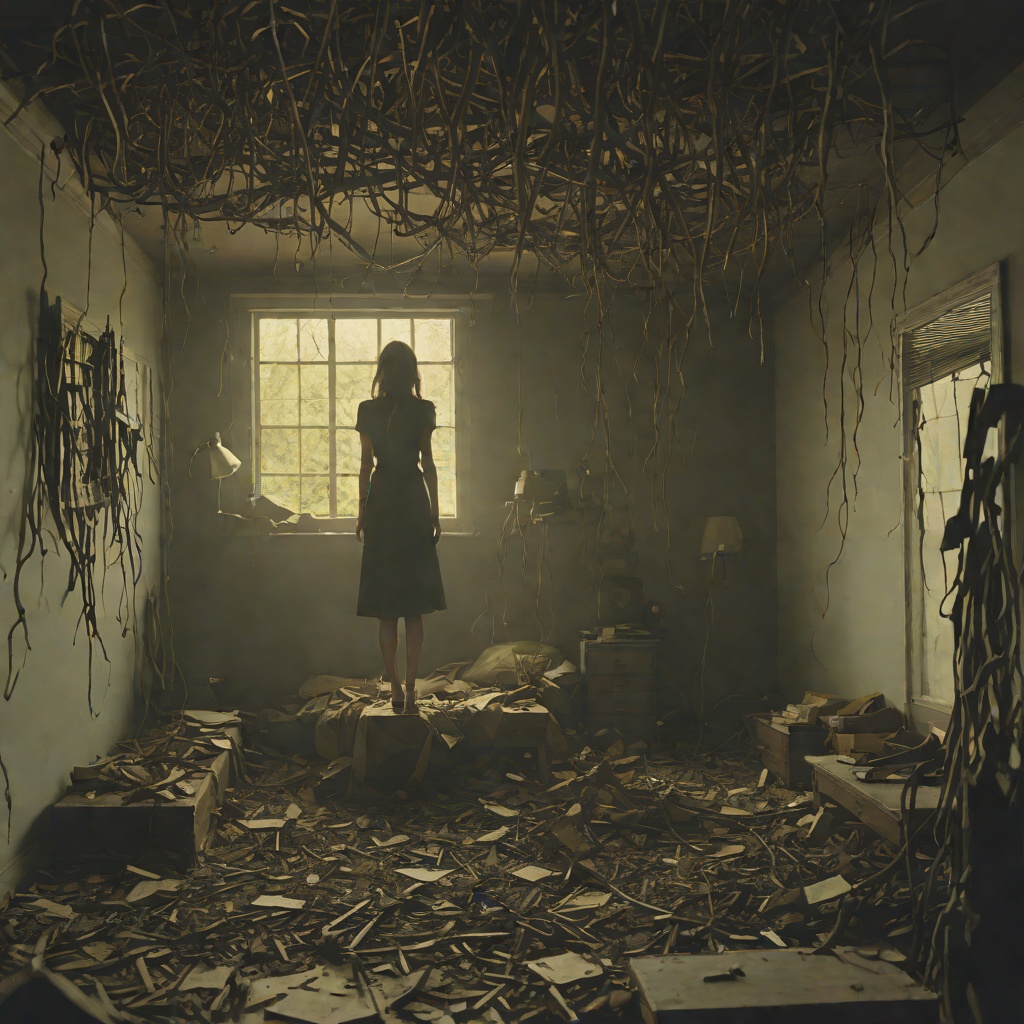
The Narrator's Descent into Madness
This flow follows the narrator's progressive unravelling from suicidal fantasy through self-destruction to the institutional attempt to cure her.
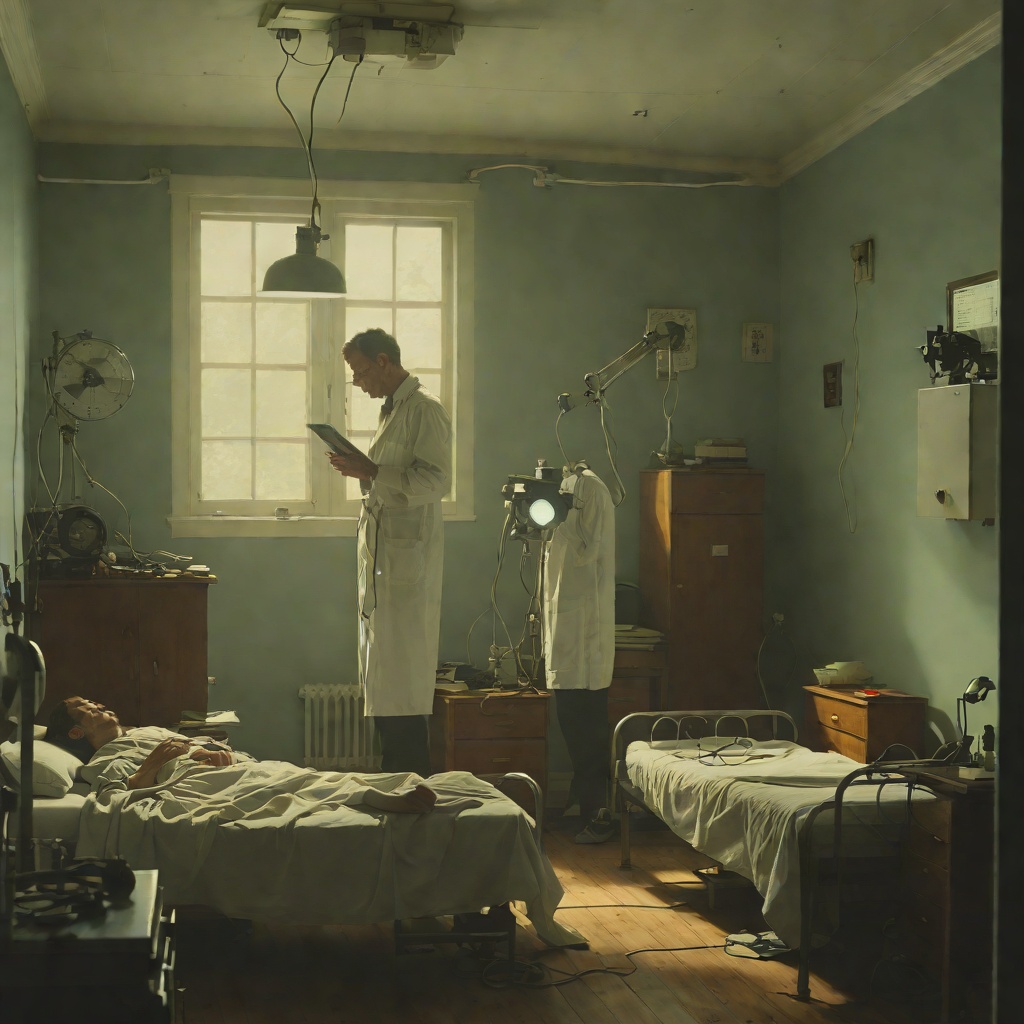
The Affair with the Radiologist
This flow traces the narrator's affair from the radiologist's first obsessive sightings to the morning after the attic encounter.
