Animal Subjectivity and Animal Rights
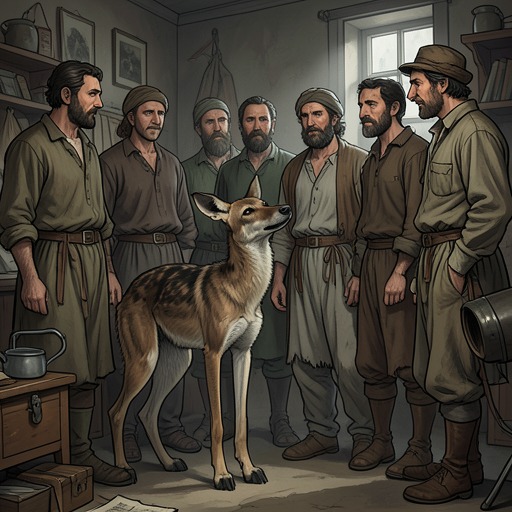
DingoAnimal Subjectivity and Animal Rights names a central reversal in the novel: animals are not passive objects for human use or interpretation, but individuals with preferences, judgment, and forms of communication that people have scarcely learned to respect. Dingo’s resistance to being remade in human terms changes the narrator’s affection into something more demanding: respect for a life whose needs and standards are not simply human ones.
Dingo’s individuality and resistance
The narrator later admits that he was wrong to try to teach Dingo human notions and habits, as though one sensibility could be imposed on plants, insects, birds, animals, and people alike. Dingo resisted those efforts. In the narrator’s account, he understood what suited his body and mind, and what humans shared with animals as well as what would always separate them. Obedience to the narrator’s program, he reflects, would have made Dingo neither a dog nor a human being, but a vague and defenseless creature. What had first irritated the narrator became a source of admiration, tenderness, and finally respect: Dingo’s resistance was also an insistence on his own character.
That character is presented as practical rather than idealized. Dingo refuses abstract ideals and prefers tangible satisfactions. He does not separate beauty from use: the narrator describes his standard of beauty as a thing’s edibility. A Persian carpet, for instance, might be praised by experts for its age and quality, but Dingo’s judgment also depended on whether it was comfortable to lie on and, if he chose, possible to eat. The comic example gives material form to the novel’s distinction between human systems of value and an animal’s embodied preferences.
Preference, judgment, and the claim to rights
The narrator’s reflection broadens from Dingo to animals generally. Daily observation, he argues, should make people recognize animals’ will and the individuality of their calculations, passions, and fancies. He treats preference as evidence of critical judgment: animals weigh alternatives and select the beings or things most suited to their physical needs and moral qualities. Ants and bees, along with the mole, spider, and weaverbird, appear in this argument as examples of animal lives and organizations that ought to prompt human reflection rather than serve merely as curiosities.
From that premise follows a direct challenge to human entitlement. People torture and kill animals for food, adornment, pleasure, and science, often without considering what those acts destroy. The narrator names intelligence, sensitivity, and freedom among the losses, and insists that animal life is complementary to human life and, in some respects, may be superior to it. His argument does not depend on claiming that animals are simply like people; it asks instead that their distinct lives be treated as no less worthy of respect.
Language and unequal understanding
The novel also makes communication a test of human exceptionalism. The narrator asserts that Dogs understand what people say, while people have not learned to understand what Dogs say. In his account, animals speak among themselves, to other animals, and to humans, while people have failed to decipher their languages. He extends the claim across many human tongues, suggesting that animals can understand languages they have never been taught, at least where their interests are concerned.
A small exchange over whether Dingo will go for a walk supplies the narrator with an observable example. When told in a neutral tone that he will stay home, Dingo protests, then lies down looking dejected; told that he will go, he leaps up, cries out, tugs at the narrator’s clothes, and leads him toward the door. These contrasting reactions make the claim of comprehension part of their ordinary relationship, not merely an abstract proposition. The gap lies not only in what animals can understand, the narrator suggests, but in how little humans can interpret in return.
Human categories and the limits of authority
The novel places this challenge beside its mockery of the categories humans use to define animals. Sir Edward Herpett’s account of Dingo describes an animal with features associated with dogs, foxes, and wolves, then presents the scientific classification of the dingo as settled despite earlier changes in classification and dissent among naturalists. Herpett’s extravagant confidence turns taxonomy into a performance of authority: the animal’s identity is treated as something human systems can name conclusively, even as the account exposes how those systems have shifted.
Herpett also presents dingoes as fashionable gifts and predicts that they will become a mark of gentlemanly status. That social use sits uneasily beside the novel’s attention to Dingo as a creature with needs and preferences of his own. The contrast is not that classification or human description can simply be discarded; it is that neither fashion nor a confident label exhausts the animal’s reality. Later, a veterinary practitioner’s claim that rabies does not exist, despite the diagnoses and professional teaching accepted elsewhere, extends the book’s skepticism toward scientific certainty. The assertion belongs to the practitioner, not to an independently established account of animal disease, and underscores how human knowledge itself is contested.
Civilization and the narrator’s changing view
The narrator’s attempt to offer Dingo a more polished European ideal repeats, in another form, his earlier effort to impose human habits. He describes France and its social order in vague, consoling generalities and urges Dingo to accept the benefits of civilization. Dingo appears unimpressed. The episode makes the narrator’s own assumptions visible: even affection can carry the belief that an animal should adopt human standards, while the animal’s response resists that hierarchy.
Taken together, these episodes make animal subjectivity more than a plea for kindness. Dingo’s resistance, his selective appetites, and his responses to speech reveal a life that cannot be reduced to a human symbol or possession. The narrator’s movement from instruction to respect gives the concept its ethical force: recognizing animals requires not only concern for what humans do to them, but humility about what they choose, understand, and communicate beyond human judgment.