about thirty years before Dingo’s arrival
Pierrot’s Fatal Shock
Long before [Dingo](entity:character-recall-character-dingo-fa74976893f5) came into the narrator’s life, the narrator’s little dog [Pierrot](entity:character-recall-character-pierrot-4b0d541cf325) was sleeping beside him when a grotesquely ugly woman entered the room. Pierrot awoke to find her face close before him and, unable to flee past her, tried to bark.
about thirty years before Dingo’s arrival
Pierrot Dies of Fright
[Pierrot](entity:character-recall-character-pierrot-4b0d541cf325)’s mouth opened without a sound; he collapsed, convulsed, and died. The narrator remembered the incident as evidence that animals could be wounded by perceptions and sensitivities that people barely recognized in themselves.
before the Easter delivery
The Mother’s Shipboard Slaughter
During the voyage from [Australia](entity:location-recall-location-29432536e761), [Dingo](entity:character-recall-character-dingo-fa74976893f5)’s mother escaped the Malay boy entrusted with her care and reached the ship’s animal pens. She killed the poultry, sheep, and caged birds, then arranged the dead animals methodically by kind and size.
before the Easter delivery
Herpett Sends a Dingo
After returning from [Australia](entity:location-recall-location-29432536e761), [Sir Edward Herpett](entity:character-recall-character-sir-edward-herpett-cfd07eea4ed7) wrote to the narrator to explain that the wild dog he was sending belonged to a distinct species, the dingo. The letter mixed scientific claims with extravagant anecdotes, including his mother’s slaughter aboard ship and the origins of the hunting tableau.
the morning before Easter, nine years before the narrator’s account
The Puppy Arrives
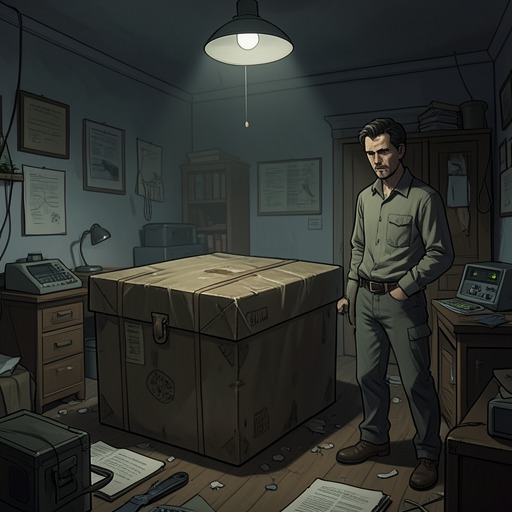
[Vincent Péqueux](entity:character-recall-character-vincent-p-queux-4b2554fa8bea) delivered a blackened, ventilated wooden box from [London](entity:location-recall-location-1bfd335cdd1b). Its paperwork identified the contents as a living dog, but the narrator had ordered no animal and was unsettled by the ominous package.
the morning before Easter
The Narrator Opens the Box
Inside, the narrator found a tiny, helpless puppy lying in filthy straw, with an absurdly large bone and hard bread beyond his ability to eat. The puppy immediately trembled and protested against being handled, prompting the narrator to joke that dogs were born misanthropes.
the morning before Easter
Dingo Is Adopted
A few days later, [Sir Edward Herpett](entity:character-recall-character-sir-edward-herpett-cfd07eea4ed7)’s long letter explained the puppy’s Australian origins and predicted that the breed would become fashionable. The narrator adopted him, named him [Dingo](entity:character-recall-character-dingo-fa74976893f5), and chose to trust that care and education might temper inherited instincts.
before Dingo’s adoption
Dingo’s Mother’s Hunting Tableau
Herpett described how his mother had killed the ship’s animals and laid them out in orderly ranks. He treated her behavior as a major scientific discovery, claiming that it revealed the origin of the hunting tableau and satirizing scholars’ appetite for grand theories.
the months after his adoption
Dingo’s Rapid Growth
[Dingo](entity:character-recall-character-dingo-fa74976893f5) grew quickly, driven by a robust constitution and an urgent appetite for life. The narrator, who had initially recoiled from the puppy, came to delight in his lopsided proportions and in the unruly energy through which his body seemed to train itself.
during Dingo’s puppyhood
A Wild Taste for Comfort
[Dingo](entity:character-recall-character-dingo-fa74976893f5) selected soft upholstery and luxurious fabrics for resting, while showing a particular dislike of the rigid, gaudy Empire furniture. The narrator eventually sold an Empire sofa, only for Dingo to devour the comfortable replacement and make himself ill.
during Dingo’s puppyhood
Dingo’s Food Refusals
[Dingo](entity:character-recall-character-dingo-fa74976893f5) rejected food he considered impure or poorly prepared, turning away from modern dog biscuits and unsuitable meals. Yet he eagerly devoured filthy finds outdoors, as if distinguishing between food supplied by humans and prey or scavenged quarry found for himself.
during his early months
Dingo Understands Human Speech
[Dingo](entity:character-recall-character-dingo-fa74976893f5) reacted precisely to casual remarks about whether he would be taken for a walk and learned to fetch all eight of his rubber balls, searching until none remained missing. The narrator concluded that dogs understood human languages even while people failed to decipher theirs.
soon after Dingo’s arrival in Ponteilles
The Village Fears Dingo
Marie Toton exaggerated [Dingo](entity:character-recall-character-dingo-fa74976893f5)’s origins into tales of a dangerous beast from a distant land. The villagers of [Ponteilles](entity:location-recall-location-ponteilles-82cb5afc5193) interpreted his reserve and his refusal of offered treats as ominous signs, and rumors about him spread before he had harmed anyone there.
before Dingo’s public conflict with Ponteilles
Jaulin’s Fatal Fall
[Jaulin](entity:character-recall-character-jaulin-5de02c113466) confined his elderly mother in a miserable attic after securing her property. When she began to grow healthier and heavier despite her neglect, he secretly weakened the threshold of the attic door; during a passing regiment’s noise, she stepped onto it and fell to her death.
during the narrator’s residence in Ponteilles
The Village’s Stagnant Order
The narrator observed a village governed by [Théophile Lagniaud](entity:character-recall-character-th-ophile-lagniaud-a9e19855b6c0)’s cautious politics and by [Évariste Jaulin](entity:character-recall-character-variste-jaulin-36bc662c7d08)’s influence as its leading innkeeper. Despite poor roads, unreliable deliveries, and no railway, the villagers resisted changes that might disturb familiar arrangements.
during Dingo’s youth
The Bas-Rouges Reject Dingo
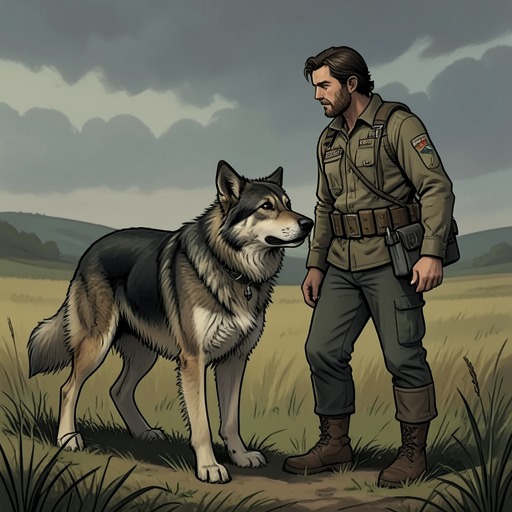
[Dingo](entity:character-recall-character-dingo-fa74976893f5) first sought company among the village dogs, especially the disciplined Bas-Rouges. They distrusted his wolfish scent and defended their role as flock guardians; Dingo, contemptuous of their service to human masters, declared that he would rather kill sheep than guard them.
during his youth
Dingo’s Affection for Miche
[Dingo](entity:character-recall-character-dingo-fa74976893f5) became deeply attached to [Miche](entity:character-recall-character-miche-a16958e6d2dd), a young black cat he helped raise and defended even from her mother. They slept together, and he treated her with careful tenderness despite their different species and the predatory instincts that might have set them against each other.
during his early adult life in Ponteilles
Dingo Befriends the Poor
[Dingo](entity:character-recall-character-dingo-fa74976893f5) welcomed beggars and wandering laborers whom the household sometimes fed, showing a warmth he rarely offered prosperous visitors. Two such men later returned to rob the house, but Dingo’s response suggested that he judged human acts by a different moral measure.
the day before the murder at Montbiron
The Cart-Hauling Encounter
On a scorching road, [Dingo](entity:character-recall-character-dingo-fa74976893f5) noticed a frail, limping old man struggling to pull a cart laden with his possessions. He fell into step beside him and mimed the effort of helping draw the load uphill, then left only when the man reached the crest.
the evening after Dingo helped the old man
The Chemineau’s Crime
The old man reached [Montbiron](entity:location-recall-location-montbiron-f438ce9a650b) and obtained shelter at the Radicet farm. There he sexually assaulted and killed twelve-year-old Marguerite Radicet, a crime that soon became the center of village gossip and spectacle.
the day after the murder
Dingo Recognizes Coquereux
When the old man appeared in custody, [Dingo](entity:character-recall-character-dingo-fa74976893f5) rushed to him and caressed his bound hands and legs. The crowd read the gesture as evidence of Dingo’s depravity, while the narrator recognized the prisoner as the exhausted traveler Dingo had helped the previous day.
soon after the arrest
Coquereux’s Trial
At the assizes in [Beauvais](entity:location-recall-location-beauvais-267a54e396e9), Coquereux described how exhaustion, poverty, and a storm had led him to seek shelter. He said that he killed Marguerite after she resisted his advances, then assaulted her body; the jury sentenced him to twenty years of penal servitude rather than death.
after the Coquereux trial
The Narrator Doubts Dingo’s Judgment
The narrator wondered whether [Dingo](entity:character-recall-character-dingo-fa74976893f5)’s compassion had revealed an insight into Coquereux or whether the dog had simply been drawn to the man’s misery. The episode unsettled the narrator’s habit of using Dingo’s likes and dislikes to guide his own relationships.
during Dingo’s years in Ponteilles
Joliton Wins the Narrator’s Trust
[Anselme Joliton](entity:character-recall-character-anselme-joliton-b439351ab87a) presented himself as a courteous, respectable notary and flattered the narrator while discussing a supposedly promising gold-cyanide venture. [Dingo](entity:character-recall-character-dingo-fa74976893f5), by contrast, watched him with suspicion and snarled whenever Joliton tried to approach.
a spring morning after months of Dingo’s warnings
Joliton Flees with the Money
Joliton disappeared overnight with the narrator’s investment and the villagers’ money, leaving behind fraudulent plans and tangled property claims. The narrator realized that [Dingo](entity:character-recall-character-dingo-fa74976893f5) had recognized the notary’s dishonesty, though he had repeatedly shut the dog away to protect Joliton from him.
the morning after Joliton’s flight
The Villagers Storm the Office
Furious residents smashed the notary’s windows and entered the office demanding their money and property. They found little to seize and turned their anger on [Mme Joliton](entity:character-recall-character-mme-joliton-3da668cb2060); after being struck and abandoned, she later drowned herself in a nearby pond.
after Dingo’s arrival in Ponteilles
Piscot’s Poverty and Friendship
[Pierre Piscot](entity:character-recall-character-pierre-piscot-e4e6b8ebac86) worked as a day laborer while supporting a family of eight on precarious wages. [Dingo](entity:character-recall-character-dingo-fa74976893f5) singled him out as a friend, stayed close while he worked, helped push his wheelbarrow, and played with [Piscot](entity:character-recall-character-piscot-68415242bb85)’s neglected children.
during the narrator’s residence in Ponteilles
Piscot’s China Memories
[Piscot](entity:character-recall-character-piscot-68415242bb85) recounted his service in the [China](entity:location-recall-location-134e6ca3a450) expedition, describing soldiers and clergy alike pillaging and killing civilians. He regretted that he had refused to loot valuable objects and believed that this was why he had not received a medal.
during Dingo’s friendship with Piscot
Piscot’s Unpaid Benefits
[Piscot](entity:character-recall-character-piscot-68415242bb85) could not collect a promised family-prize payment because the required certificates cost more than the benefit itself. He also complained that poor-relief bread was inedible and suspected that local charity funds served the comfortable rather than the destitute.
during Piscot’s period of financial hardship
The Doctor Shares Piscot’s Pain
When [Piscot](entity:character-recall-character-piscot-68415242bb85) suffered agonizing pain behind one eye, the village doctor was struck by how closely it resembled his own recurring ailment. Unable to diagnose it, he prescribed compresses and abstinence from alcohol; Piscot promptly obtained liquor and soon recovered while remaining drunk.
after Piscot bought a work coat
The Six-Franc Dispute
[Piscot](entity:character-recall-character-piscot-68415242bb85) owed [Toutlemal](entity:character-recall-character-toutlemal-3c2069ac9183) nine francs for a work coat, while Toutlemal owed him three francs for announcing the merchant’s visits. Piscot offered the six-franc balance, but the merchant insisted on collecting the full nine first, turning a simple offset into a legal dispute.
the months after the six-franc disagreement
The Debt Devours Piscot’s Work
The dispute reached the court and accumulated fees, judgments, and wage garnishments until [Piscot](entity:character-recall-character-piscot-68415242bb85)’s debt exceeded two hundred francs. Employers stopped hiring him to avoid legal trouble, leaving his wife and children in deeper poverty while the villagers continued to mock his insistence that he owed only nine francs.
during Piscot’s debt crisis
Dingo Brings the Children Home
As [Piscot](entity:character-recall-character-piscot-68415242bb85)’s prospects collapsed, [Dingo](entity:character-recall-character-dingo-fa74976893f5) continued to visit the family and entertain the children. Finding their cramped, filthy home inadequate for their play, he gently led the three youngest children back to the narrator’s garden for games on the lawn.
as Dingo reached adulthood
The Narrator’s Civilizing Project
The narrator worried that [Dingo](entity:character-recall-character-dingo-fa74976893f5)’s predatory instincts would bring disaster and tried to teach him the civic virtues of French life. His speeches about citizenship and civilization failed to hold the dog’s attention, while Dingo’s instinctive responses to livestock grew more intense.
after the narrator’s speech in Paris
Dingo Kills the Two Cats
Returning from a congress on the superiority of French, the narrator learned that [Dingo](entity:character-recall-character-dingo-fa74976893f5) had killed two household cats. Dingo was still playing affectionately with [Miche](entity:character-recall-character-miche-a16958e6d2dd), and the narrator could not determine whether the killings were an unprovoked return to instinct or part of a family struggle.
soon after the cats’ deaths
The Legrel Visit
The narrator brought [Dingo](entity:character-recall-character-dingo-fa74976893f5) to visit [Édouard Legrel](entity:character-recall-character-douard-legrel-f9212a30bb8c), a celebrated but overlooked naturalist, his ambitious wife, and their daughter Irène. The family admired Dingo, while Legrel inspected the dog with scientific interest and agreed to show them an unusual sheep after lunch.
during the visit to Sazy-sur-Viorne
Legrel’s Escaped Spider
At lunch, Legrel spotted a horned spider loose on the dining-room cornice and abandoned the conversation to capture it carefully. The family’s alarm over the escaped specimen exposed how completely the scientist’s attention was governed by his collection and research.
the afternoon of the Legrel visit
Dingo Kills the Legrel Sheep
Irène led the party to see her prized sheep, expecting [Dingo](entity:character-recall-character-dingo-fa74976893f5) to play with it. Dingo instead charged and tore at its throat, killing it before the adults could stop him; Irène wept while her parents tried to console the narrator and minimize the loss.
after the sheep’s death
The Legrel Friendship Breaks
The narrator and the Legrels exchanged apologies and assurances, but the visit left a lasting wound. They never resumed their former intimacy, and Irène’s later marriage to a young naturalist passed without an invitation to the narrator.
soon after the Legrel visit
The Poultry Yard Massacre
[Thuvin](entity:character-recall-character-thuvin-bfda8905d183) showed the narrator a devastated poultry yard where [Dingo](entity:character-recall-character-dingo-fa74976893f5) had killed and arranged a hundred birds in rows. The eggs lay untouched among the wreckage, a display of astonishing precision that recalled Herpett’s account of the hunting tableau.
the following month
The Village’s Animals Disappear
[Dingo](entity:character-recall-character-dingo-fa74976893f5) went on to kill the village’s turkeys, peacocks, rabbits, waterfowl, and other captive animals. He ranged beyond the narrator’s property, devastating coops, hutches, cages, and ponds throughout [Ponteilles](entity:location-recall-location-ponteilles-82cb5afc5193).
during the village animal killings
The Crowd Confronts the Narrator
The furious [Irma Pouillaud](entity:character-recall-character-irma-pouillaud-08070d479757) accused the narrator of allowing [Dingo](entity:character-recall-character-dingo-fa74976893f5) to slaughter her guinea pigs, while the priest’s cook lamented a pet magpie and others mourned their own animals. The crowd turned against the narrator as an outsider, and he ended the confrontation by paying compensation.
the day after the crowd’s confrontation
The Muzzling Ordinance
[Théophile Lagniaud](entity:character-recall-character-th-ophile-lagniaud-a9e19855b6c0) visited the narrator under the pretext of inviting him to a school ceremony, but avoided discussing the animal killings directly. After the narrator declined, the mayor arranged for an ordinance requiring most dogs to wear muzzles, with [Dingo](entity:character-recall-character-dingo-fa74976893f5) pointedly excluded from its protections.
after the ordinance
The Countryside Blames Dingo
Reports arrived of sheep, pigs, goats, cattle, and horses injured or killed across the surrounding countryside. Farmers blamed [Dingo](entity:character-recall-character-dingo-fa74976893f5) not only for attacks but also for miscarriages, crop losses, disease, and bad prices, while the priest began speaking of the dog as a vessel of the devil.
during the campaign of countryside attacks
Dingo’s Enemies Hunt Him
Farmers armed themselves and tried to trap or shoot [Dingo](entity:character-recall-character-dingo-fa74976893f5), while rumors and threats spread through the region. The narrator began avoiding the village and chaining Dingo indoors, but the dog repeatedly escaped and returned from the countryside unharmed.
after the farm-animal attacks
Dingo Decimates the Game
[Dingo](entity:character-recall-character-dingo-fa74976893f5) began pursuing partridges and hares across the open fields, exhausting the birds through repeated chases until they could no longer escape. [Pierre Piscot](entity:character-recall-character-pierre-piscot-e4e6b8ebac86) witnessed the destruction of the local game and secretly recovered several partridges, selling them to [Théophile Lagniaud](entity:character-recall-character-th-ophile-lagniaud-a9e19855b6c0) despite the closed season.
after the game had vanished
Jaulin Speaks for the Hunters
[Évariste Jaulin](entity:character-recall-character-variste-jaulin-36bc662c7d08) came to tell the narrator that the local hunters could no longer tolerate [Dingo](entity:character-recall-character-dingo-fa74976893f5). The dog had wiped out the partridge companies they expected to hunt, and [Jaulin](entity:character-recall-character-jaulin-5de02c113466) delivered the complaint awkwardly on behalf of the hunting association.
after the village’s anger had mounted
Dingo Bites Joseph Velu
[Joseph Velu](entity:character-recall-character-joseph-velu-b4d50aac7218) had once drenched [Dingo](entity:character-recall-character-dingo-fa74976893f5) with soapy water after the dog urinated on a new horse collar. Dingo waited until morning, then ambushed Velu outside his shop and bit him severely, provoking a new wave of hostility against the dog and his owner.
after the attack on Velu
Dingo Attacks Soldiers
Following the quarrel with Velu, [Dingo](entity:character-recall-character-dingo-fa74976893f5) developed a hatred of uniforms and began lunging at soldiers and other military men. The narrator could not discipline him safely and feared that the villagers would eventually kill the dog.
after Dingo’s attacks on soldiers
The Narrator Leaves Ponteilles
With the village threatening both owner and dog, the narrator sold his property and left [Ponteilles](entity:location-recall-location-ponteilles-82cb5afc5193). He had long endured the villagers’ exclusion and calumnies; [Dingo](entity:character-recall-character-dingo-fa74976893f5)’s violence finally made departure unavoidable, though the narrator felt relief at escaping the place.
after the move to Paris
Dingo at the Trocadéro
In [Paris](entity:location-recall-location-657453741ed3), the narrator let [Dingo](entity:character-recall-character-dingo-fa74976893f5) roam the [Jardins du Trocadéro](entity:location-recall-location-b43005bbc0ff) while watching from his study. Dog thieves repeatedly tried to capture the striking animal, but Dingo detected their traps and evaded them, becoming a popular spectacle among the garden’s visitors.
during his Paris period
Dingo Follows Lina Lauréal
After the narrator lost him in the streets, [Dingo](entity:character-recall-character-dingo-fa74976893f5) followed [Lina Lauréal](entity:character-recall-character-lina-laur-al-d40a1cb141b5) home and stayed in her modest rented room. She fed and welcomed him, and the narrator found her to be a poor, tubercular actress rather than the fashionable seductress he had imagined.
two days after the narrator lost him
Dingo Returns from Lina
Lina wrote to the narrator, inviting him to collect [Dingo](entity:character-recall-character-dingo-fa74976893f5). Her account revealed how affectionately the dog had attached himself to her and how little she possessed beyond her theatrical work, her sister’s company, and the hope of warm trains and decent meals on tour.
after his return from Lina’s room
Dingo Attacks a Dog Thief
When a dog thief tried to lure [Dingo](entity:character-recall-character-dingo-fa74976893f5) with raw meat and seize his collar near the Trocadéro post office, Dingo sprang at the man’s throat. The crowd and police initially treated Dingo as a danger, then recast him as a defender of property once the theft attempt became clear.
immediately after the dog-thief incident
The Veterinarian Denies Rabies
At the police station, [Dingo](entity:character-recall-character-dingo-fa74976893f5)’s owner was asked to obtain a veterinary certificate. The veterinarian signed one, then announced that rabies did not exist and that the disease was merely an epileptiform condition, a pronouncement that left the narrator both startled and skeptical.
after the veterinary visit
Dingo’s Forced Confinement
The narrator restricted [Dingo](entity:character-recall-character-dingo-fa74976893f5) to short, supervised walks and kept him on a leash. Confined to the apartment, Dingo lost his appetite and spent much of his time lying motionless, while [Miche](entity:character-recall-character-miche-a16958e6d2dd) adapted more easily to indoor life.
during his confinement in Paris
Dingo Ruins the Furs
[Dingo](entity:character-recall-character-dingo-fa74976893f5) discovered an unlocked wardrobe full of animal pelts and tore into the furs as if they were living prey. [Miche](entity:character-recall-character-miche-a16958e6d2dd) watched his frenzy from a chair, while the narrator recognized that the collection of dead animals had itself provoked the instincts he had tried to suppress.
after the fur destruction
The European Tour Begins
Hoping travel would restore [Dingo](entity:character-recall-character-dingo-fa74976893f5)’s spirits, the narrator took him through Switzerland, Italy, and Germany. Dingo proved extraordinarily skilled at mapping each unfamiliar city, but the narrator underestimated how many captive or domestic animals the dog would find there.
during the European tour
Dingo’s European Animal Attacks
Across several cities, [Dingo](entity:character-recall-character-dingo-fa74976893f5) killed birds and other animals, including pheasants, a gazelle, a kangaroo, parrots, and a boar. At the zoological garden in Cologne, he entered a flamingo aviary, killing the birds and causing others to injure themselves against the enclosures.
after the Cologne zoological garden incident
The Tour Ends in Flight
Facing demands for compensation and fearing that [Dingo](entity:character-recall-character-dingo-fa74976893f5) would be impounded or killed, the narrator abandoned the journey and returned to [Paris](entity:location-recall-location-657453741ed3). Dingo became subdued again in the crowded city, with too little open ground to satisfy him.
the following spring
The Move to Veneux-Nadon
The narrator rented a rustic house on the edge of [Veneux-Nadon](entity:location-recall-location-878ac85118ae), with a garden opening onto the forest. [Dingo](entity:character-recall-character-dingo-fa74976893f5) immediately became lively and affectionate, seeming to recover something like his native wilderness among the trees.
during the first months at Veneux-Nadon
Dingo Roams the Forest
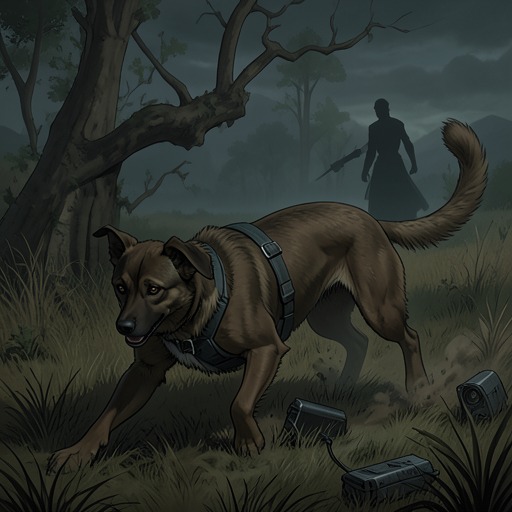
[Dingo](entity:character-recall-character-dingo-fa74976893f5) spent much of his time ranging through the forest, sometimes absent for nearly a week before returning scented with earth and wild plants. The narrator once saw him on a rock, howling as if calling to unknown, distant dingoes.
during the first months at Veneux-Nadon
The Narrator Meets Flamant
The narrator became interested in [Victor Flamant](entity:character-recall-character-victor-flamant-f86e1540c0ec), a silent, impoverished poacher living with his children in a rough hut. [Dingo](entity:character-recall-character-dingo-fa74976893f5) respected Flamant’s quiet ways, accompanied him at work, and once licked a small cut on his finger.
during the narrator’s residence at Veneux-Nadon
Flamant Plays the Accordion
One evening, the narrator heard music coming from Flamant’s hut and found the poacher playing the accordion. Flamant said only that he was amusing himself and offered no account of how he had learned or where the music came from.
after the move to Veneux-Nadon
Pierre Barque Arrives
The narrator encountered [Pierre Barque](entity:character-recall-character-pierre-barque-e2a27ac59cb9), an old acquaintance who had reinvented himself as a painter after a successful Salon showing. Barque’s relentless cheerfulness and talent for turning casual acquaintances into hosts soon brought him into the narrator’s household.
soon after the meeting
Barque Takes Up Residence
Barque arrived with his belongings and settled into the narrator’s home, filling it with boisterous jokes, animal imitations, and irreverent familiarity. His exuberance exhausted the household, which privately longed for an interruption to his nonstop cheer.
during Barque’s stay
Dingo Destroys Barque’s Portrait
Barque tried to paint [Dingo](entity:character-recall-character-dingo-fa74976893f5), first giving the dog the yellow tones he usually used for hares. Dingo sniffed the canvas, seized it, and ran off with it into the forest; he returned two days later, by which time Barque had left.
after Barque’s departure
Dingo and Flamant Share the Hunt
Flamant recognized traces of hare in [Dingo](entity:character-recall-character-dingo-fa74976893f5)’s fur and grasped that the two shared a practical hunting instinct. Their quiet affinity rested on a common independence from the Sunday hunters who pursued game for sport.
later in the autumn
The Deer Hunt Draws a Crowd
A fashionable hunt brought riders, spectators, and local families into the forest, where many hoped to watch a deer die and be dismembered. The narrator saw the crowd’s excitement as a mixture of cruelty, class deference, and appetite for spectacle.
during the autumn hunt
Dingo Joins the Seine Chase
When the exhausted deer plunged into the [Seine](entity:location-recall-location-1c99276eafb3), [Dingo](entity:character-recall-character-dingo-fa74976893f5) swam after it and led the pack toward the riverbank. The narrator called him in shame as hunters and spectators celebrated the chase, until a peasant woman shouted her hatred of the mounted party.
after the Seine hunt
The Carriage Accident
The narrator’s wife was driving a gentle mare when a servant abruptly pulled the reins beneath its tail. The horse bolted into a bridge parapet, throwing both passengers; the servant escaped injury, but the narrator’s wife suffered broken ribs, wounds, and severe bruising.
the weeks after the accident
Dingo Keeps Vigil
[Dingo](entity:character-recall-character-dingo-fa74976893f5) stationed himself beside his injured mistress and scarcely moved, ate, or slept for three weeks. He showed unusual gentleness toward the household but violently attacked the servant whose carelessness had caused the accident.
during the wife’s prolonged illness
The Narrator Is Left Alone
As the doctors restricted the narrator’s visits to his wife, friends gradually stopped calling or writing. Feeling abandoned, he reached out to [Georges Dalant](entity:character-recall-character-georges-dalant-97d97da7e21d), a celebrated novelist whose public reputation rested on exceptional sensitivity.
the week after the narrator wrote to him
Dalant’s Visit
Dalant arrived and offered a performance of sympathy, repeatedly imagining new calamities in order to console the narrator. The narrator sensed that Dalant’s pity was less fellowship than an inspection of another person’s suffering, and Dalant never returned despite promising to do so.
after weeks of vigil
Dingo Falls Ill
[Dingo](entity:character-recall-character-dingo-fa74976893f5)’s eyes and mouth turned yellow and brown, and he began vomiting blood. A veterinarian diagnosed a usually fatal jaundice and predicted that the dog would die after eleven days.
the seventeenth day of his illness
Dingo’s Final Effort
The narrator’s care kept [Dingo](entity:character-recall-character-dingo-fa74976893f5) alive beyond the veterinarian’s prediction, though the dog grew painfully thin and weak. During the night, Dingo struggled to his feet, raised his paws toward the narrator, and then collapsed with his head on the narrator’s knees.
the morning after his death
Dingo Is Buried
The narrator carried [Dingo](entity:character-recall-character-dingo-fa74976893f5)’s body to [Victor Flamant](entity:character-recall-character-victor-flamant-f86e1540c0ec) and asked him to help with the burial. Flamant tenderly placed the dog on a wheelbarrow and buried him beneath an oak, refusing payment because Dingo had been beautiful and kind to him.