
The Partisans’ Coercive Captivity
Doctor ZhivagoThis flow traces how the partisan camp’s promise of liberation turns into a system that constrains Zhivago and civilians.
increasing Bearing strength in each event
 decreasing
Bearing strength in each eventdecreasingA Prisoner without Bars
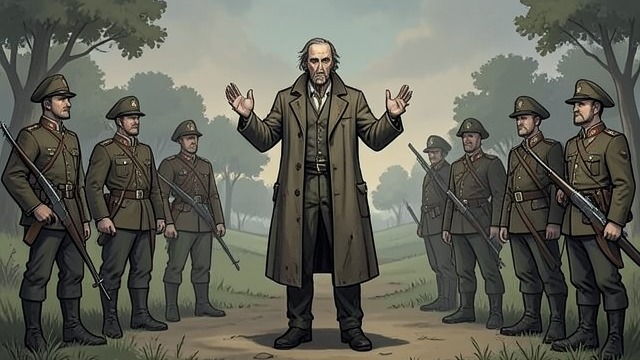
A Prisoner without Bars
Invisible force
Zhivago is not chained, but his movements are controlled by the partisan army.
He attempts escape several times and is caught each time.
Captivity works through dependence, danger, and the absence of safe alternatives.
Medical Service under Command
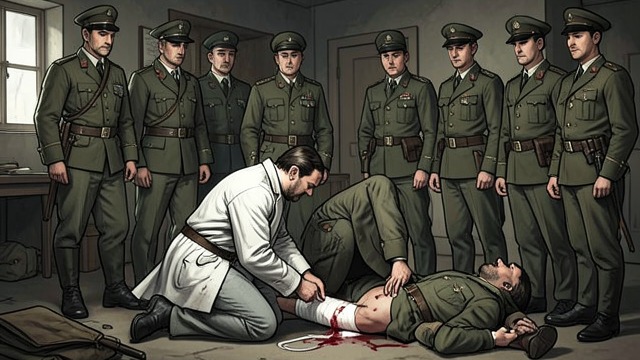
Medical Service under Command
Skill requisitioned
The partisans rely on Zhivago’s medical knowledge but do not release him.
Medicine becomes another resource administered by military authority.
His care for individuals conflicts with the camp’s collective priorities.
Families as a Discipline Problem
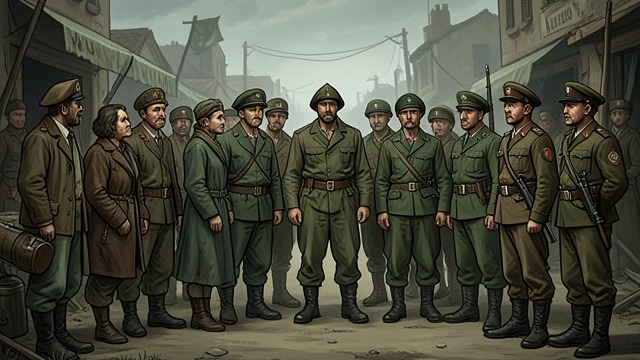
Families as a Discipline Problem
Civilians pushed aside
The partisan command considers moving families away from the camp to preserve military discipline.
For fighters such as Pamphil, this policy intensifies fear for their dependents.
The army treats family life as a burden while depending on its human loyalty.
Punishment at the Rowan Tree
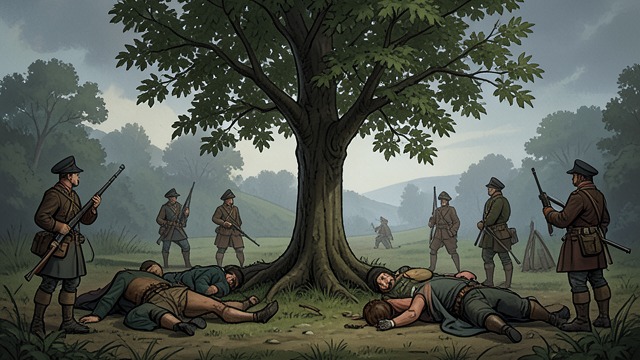
Punishment at the Rowan Tree
Violence claimed as order
The camp executes captured conspirators after a failed revolt.
The scene erases distinctions between justice, retaliation, and intimidation.
The rowan tree becomes a witness to a political community destroying itself.
A Narrow Escape

A Narrow Escape
Freedom seized alone
Zhivago leaves the camp when a sentry permits him to pass under the password.
His departure is not a negotiated release but a private breach in control.
The escape restores movement without restoring knowledge of his family’s fate.
after the capture near Varykino
during the first partisan winter
as winter approaches
during the partisan encampment
after reports of Kolchak’s defeat
