Horses
Doctor ZhivagoHorses in the novel are neither a single symbolic animal nor a mere backdrop to travel. They pull vehicles, carry riders, and serve the practical needs of households and armies; in moments of crisis, their movements also shape what people can do. Across journeys, military scenes, and a remembered account of rural life, their work marks the material conditions of movement—and the narrow, consequential distance between human plans and events beyond human control.
Work, Transport, and Everyday Life
The horses first appear in a contrast between labor and appearance. Asked whose fields are being harvested, Nikolai Nikolaievich hears that one set belongs to the landlord and another to the peasants. The scene then turns to the carriage team: one horse pulls with unassuming steadiness, while its companion arches its neck and seems, to an inexperienced observer, more interested in prancing than pulling. The distinction is humorous, but it also locates the animals within the practical world of harness, work, and a driver’s close attention to their bodies and effort.
Horses carry people and goods through settings that range from routine travel to public upheaval. A ferry crossing the river is loaded with carts, horses, peasants, and their women, bringing human and animal traffic together as part of the ordinary movement between shores. In the city, a horse-drawn carriage brings a railway official’s wife to the tracks to collect him; the coachman speaks to the horses in a high, coaxing voice because they are frightened of trains. These brief episodes make their work visible without separating it from the people who depend on it or the unfamiliar surroundings through which they must move.
The novel also places horses amid the costs of war. In a field hospital, ammunition carts without springs carry wounded men toward treatment, jolting along the road behind horses at a trot. The horses are part of the transport chain linking the battlefield to first aid, while the carts’ rough construction makes clear how little comfort the wounded can expect on the way. Elsewhere, a horse stands tethered among damaged woodland and broken military equipment near a first-aid station. The animal’s presence in these scenes belongs to the logistics of war: alongside human fatigue and scarce facilities, transport remains necessary even when the surrounding order has been disrupted.
Roads, Journeys, and Interrupted Movement
In wartime Moscow, an elegant-looking sleigh waits outside the Montenegro Hotel. Its horse is covered with a cloth and has bandaged fetlocks, while the driver sits hunched in the passenger seat to keep warm. The details establish both the work and vulnerability involved in winter travel: the horse is prepared for the cold, but its bandaged legs also make the strain of that work legible. The scene’s stillness at the hotel entrance stands in contrast to the journeys through which horses elsewhere carry people onward.
Later, Yurii Andreievich’s familiar ride back toward Varykino takes a sudden turn at a forest crossroads. He has traveled the road so often that he scarcely notices it, and his horse is moving beneath him as he approaches the junction and its agricultural-machinery billboard. In anticipation of reaching Larisa Feodorovna, Yurii drops the reins, leans forward, and puts his arms around the horse’s neck, burying his face in its mane. The horse responds by breaking into a gallop. His affectionate gesture is mistaken for a request for strength, and the animal supplies that strength literally, carrying him into motion before he can direct it.
That forward rush is interrupted by a nearby gunshot. Yurii sits upright and pulls the reins; checked at speed, the horse sidesteps, backs, and lowers its hindquarters as if preparing to rear. Three armed horsemen block the crossroads. The older cavalryman tells Yurii that the surgeon attached to their unit has been killed and that they are conscripting him as a medical worker; he orders him to dismount and hand over the reins, warning him not to try to escape. The horse’s movement thus carries the scene from private anticipation into forced service. The same animal that has responded to Yurii’s unguarded embrace becomes part of the encounter in which his freedom of movement is taken away.
Animals in War and Civil Disorder
The horses of the novel’s military scenes move within a wider breakdown of reliable transport and command. A report of the attack led by Lieutenant Antipov describes men crossing open ground under fire, with the lieutenant running first ahead of them and then alongside them. The passage is centered on the soldiers rather than on animals, but it sets the scale against which the more practical appearances of horses and horse-drawn carts matter: military movement exposes people to danger, while transport continues to be needed for ammunition, wounded men, and retreat.
The contrast becomes particularly clear in the hospital scenes. Wounded men arrive by truck in one episode, while elsewhere horse-drawn ammunition carts bring casualties from the front during a lull in the artillery fire. At another point, news that the Germans have broken through prompts the immediate evacuation of a village hospital, before an evacuation order arrives. Together these scenes show movement as a necessity repeatedly reorganized by war: vehicles and animals help move people, but the pace and direction of travel are controlled by sudden military change.
Horses also appear in the novel’s account of civilian displacement and labor. A train carrying the Zhivago family has twenty-three cars, with sailors at the front, civilian passengers in the middle, and labor conscripts in eight cars at the rear. That particular passage emphasizes the crowded and unequal composition of the train rather than horses; set beside the animals’ other appearances, it underscores how many different forms of transport and compulsory movement coexist in the novel. Horse power belongs to the same world of travel shaped by need, hierarchy, and limited choice.
Domestic Labor and Recollection
Tania’s recollection of her childhood at Nagornaia gives horses a place in the routines of a signal station. The government house stands beside the tracks, and the farm attached to the job includes a cow, a horse, and poultry, as well as land for vegetables. As a child, Tania learns to wave the signal flag when trains approach, bring in the cow, unhitch the horse, and help with household work. The animal is part of the household economy and of the everyday labor expected of her; caring for it is among the duties through which she describes the years of her upbringing.
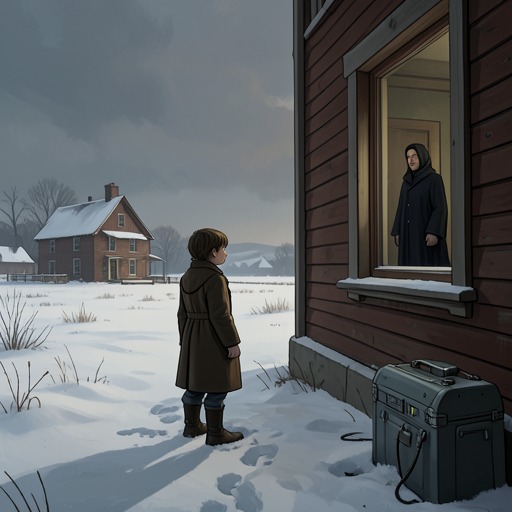
A later emergency turns that familiar work into a means of seeking help. An old woman arrives asking to be taken to hospital, and Tania’s foster father hitches Udaloy to a cart and drives her to the county hospital, eleven miles away. After his return, the danger in the household leaves Tania considering how she might escape and find help. She hears Udaloy outside, still in the yard and unharnessed, and imagines the horse urging her to leave quickly. Before she acts, a passing train offers another possible route: she takes a lantern, runs to the track, and waves it to stop the train. Udaloy’s presence belongs to the decisive moment as both a familiar companion and an available means of flight, even though it is the train, not the horse, that ultimately draws her toward rescue.
Image, Affection, and Narrative Function
The range of these appearances keeps horses grounded in particular tasks. They pull, carry, wait, and respond to riders; their role varies with the scene, from agricultural labor and domestic work to the movement of passengers and wounded men. The horse that answers Yurii’s embrace with a gallop offers a brief intimacy, but the scene does not detach that intimacy from consequence: a shot stops the ride, and armed men take control of the crossroads. In Tania’s account, by contrast, the horse’s familiarity belongs to a long history of work and care, and its presence becomes entwined with her effort to find a way out of danger.
The novel’s later poems extend the animal imagery beyond the practical world of carts and roads. One poem places a horseman on a spring-mired trail in a thick pine forest, headed for a remote farmstead in the Urals; another begins with a knight urging his steed over a steppe of burdocks. These poetic horses are not simply the working animals of the prose, but they retain their connection to movement through difficult terrain. Across both forms, the horse makes a journey concrete: it bears a rider through ground that resists passage, while the destination remains ahead.