Monk and Lorraine's relationship
ErasureThe relationship between Thelonious Ellison (Monk) and Lorraine is shaped by a lifetime of domestic work, restrained affection, and questions about who will care for whom. Lorraine has served the Ellison household since before Monk’s birth; she knows its daily needs intimately, yet her own life remains largely outside the family’s view. When Monk comes home to help his mother, he begins to notice that this dependable arrangement has left Lorraine with few apparent alternatives. Their exchanges move from an old literary estrangement toward a frank, if incomplete, recognition of mutual responsibility.
A lifelong place in the household
Lorraine’s place in Monk’s life is both enduring and carefully defined. She liked him as a child and as a young adult, but her regard changed after she opened one of his books and found the word fuck. From then on, she remained polite but curt, without openly objecting to his presence. The episode makes their distance specific: it is not a break in the practical relationship, but a private judgment about the language of his art that alters the warmth between them.
Monk’s childhood understanding of Lorraine was bound to her work. The family went to her for food and clean clothes, while they went to his mother for rides or when they had a problem. Lorraine was not his nanny, and the distinction matters: she was indispensable to the household without occupying the same role as a parent. He remembers her as someone who had days off but whose life away from the family he never knew. Even summer trips to the beach included her, so that her presence seemed almost as constant as the household itself.
When Monk returns to Washington, D.C., to help care for his mother, that familiar arrangement becomes newly visible to him. At dinner, he acknowledges that Lorraine has to do everything in the house with his mother and that this is unfair. The admission marks a shift from accepting her labor as part of family life to recognizing its weight. Lorraine answers with characteristic understatement, describing the situation as simply how things worked out; Monk then asks whether he can help.
The book and the conversation that follows
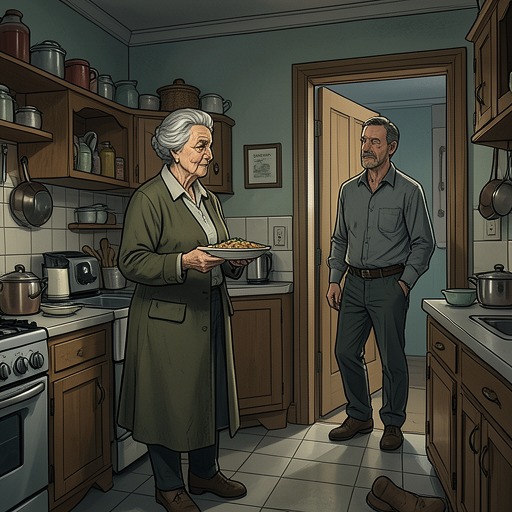
Monk addresses their estrangement directly in the kitchen while Lorraine prepares rice and chops vegetables. He apologizes if his books offend her and explains that a character’s use of a word does not define the author. Lorraine says she understands. When he asks whether she has ever used the same word, she stops cutting and acknowledges that she has, adding that it has its uses. The exchange does not erase her earlier disapproval, but it loosens the rigid boundary between her moral response to the book and her relationship with its author.
The ordinary details of the scene carry the conversation: Lorraine wears the yellow apron Monk has seen throughout his life, while he watches her prepare the meal. His childhood imagination had supplied her with a whole wardrobe of such aprons, for weddings and funerals alike. The memory reveals how completely he had converted her into a stable feature of domestic life. Now he asks whether she has family in Washington, D.C. Lorraine says that an aunt once lived, but died long ago; she never knew her family and does not miss them. She calls the Ellisons the only family she has ever known.
When Monk asks where she would go if she could no longer live in the household, Lorraine cannot name a place. He also asks whether she has friends and whether she has saved money. Because he now writes her paychecks, he knows her wages and that she receives room and food. Her answers make plain the practical vulnerability beneath her long service: she has saved a little, but has never been good at saving, and has no immediate alternative to the home she has served. Monk’s questions are therefore not abstract kindness; he is trying to understand what resources and future she might have beyond the family.
A promise of reciprocal care
The sharpest turn in their exchange comes when Monk asks what will happen after his mother dies. Lorraine answers that she will stay and take care of him. Her offer reverses the direction of the household’s customary care: the woman whose work has sustained the family imagines remaining to support Monk after the central figure of the household is gone. He looks at Lorraine, nearly as old as his mother, and cannot find an immediate answer. At the dining-room doorway, he turns back and accepts that this arrangement will be fine.
The promise is tender, but it also exposes the imbalance in their circumstances. Lorraine speaks as though her future remains attached to the Ellisons, while Monk has only just begun to ask what choices, savings, or relationships she might have beyond them. His response accepts her care without resolving the question of how she will build a life of her own. Their closeness is real, but it has grown within an arrangement that makes her indispensable and leaves her independence uncertain.
Lorraine also resists Monk’s tendency to define the family from the outside. When he apologizes for the Ellisons being a crazy family, she rejects that description: they are different, she says, but not crazy. Her answer is a small act of recognition in return. Monk sees Lorraine’s precarious position; she, in turn, refuses to reduce the people she has lived among to his self-deprecating account of them.
Marriage, motive, and the limits of care
Later, Lorraine’s relationship with Maynard Boatwright forces Monk to confront the motives behind his concern. At Maynard’s house, Lorraine is in the yard calling out to her future husband after he has called her old. Monk approaches and asks whether something is wrong. The incident shows Lorraine speaking for herself within her new relationship, rather than appearing only as the quiet worker at the stove. Her marriage is a possibility beyond the Ellison household, but it does not make Monk’s own responsibilities disappear from his mind.
In the same sequence, Monk recognizes that he has wanted to arrange Lorraine’s marriage partly so that he would not have to look after her in her remaining years. He also admits to himself that he wants to place his mother in a care home, partly for his own sake as well as hers. He distinguishes the two wishes: he does not truly want to institutionalize his mother, he tells himself, then recognizes that this is not entirely true. The finality he associates with admitting her to the retreat in Columbia troubles him. His plan for Lorraine and his decision about his mother are not identical, but both reveal the pressure of care and the temptation to treat other people’s futures as problems to be settled.
On the evening of Lorraine’s wedding, Monk remains awake beside his mother, exhausted and watching over her. He distrusts the stability she has shown and fears that he might wake to find her gone or injured. His urgent wish to arrange for her care is bound up with his desire to end his own desperation. In this moment, Lorraine’s marriage is part of a larger change in the household: the relationships that once seemed fixed are being remade, and Monk must recognize both his dependence on others and the limits of what he can sustain.
Significance of their bond
The relationship between Monk and Lorraine is neither simply employer and employee nor an uncomplicated surrogate family bond. Lorraine has been family in the practical sense of daily presence, while remaining a worker whose private life Monk has long failed to imagine. His questions about her money, friends, and possible home show that he is beginning to see the person behind the service. Her offer to care for him, and her insistence that the Ellisons are different rather than crazy, make the recognition reciprocal without pretending that their positions are equal.
Their story also makes caregiving a shared but uneven labor. Lorraine has spent decades tending the household; Monk’s return draws him into his mother’s care and forces him to consider Lorraine’s future as well. His hope that marriage will relieve him of responsibility sits uneasily beside the gratitude and concern he expresses. The bond matters because it holds these truths together: affection can coexist with avoidance, and accepting someone as family does not by itself answer what that person needs or who will bear the work of care.