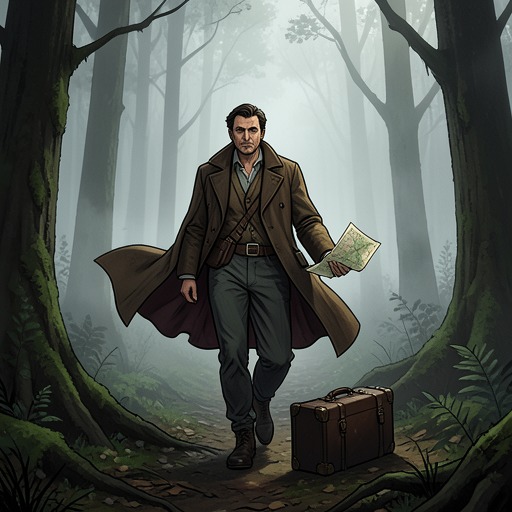
Onegin’s ennui and alienation
Eugene OneginOnegin’s ennui and alienation are presented as the aftermath of a fatal duel and as a condition that movement cannot cure. Having killed his friend, he reaches the age of twenty-six without an occupation, business, or wife; weary of leisure, he cannot decide how to spend his life. He leaves his country estate in search of change, but the memory that follows him and the weariness of his travels make escape impossible.
The State After the Duel
The narrator returns to Onegin after the scandal surrounding him, then identifies the decisive fact behind his condition: in a duel he has killed his friend. The account does not treat this as a closed episode. Onegin has reached twenty-six, yet the ordinary structures that might give life direction—profession, business, and marriage—are absent. His predicament is not simply a lack of occupation: the narrator says he is weary of leisure itself and does not know how to spend his life.
The sequence connects an irreversible loss to an unsettled present. The friend’s death has already happened, but it remains active in Onegin’s experience; his later departure from the estate does not leave it behind. Ennui thus appears both as exhaustion with an idle way of living and as an inability to find a new purpose after the duel.
Leaving the Country Estate
A disquietude seizes Onegin, accompanied by a wish to roam from place to place. The narrator calls this a troublesome disease and adds that some experience it as a willing martyrdom, presenting restless travel as a recognizable condition rather than a clear solution. Onegin abandons his country seat, where woods and fields had offered a calm retreat.
That retreat, however, has become inseparable from a recurring image: each day before his eyes rises the shade of the friend killed in the duel, still blood-bespattered in the narrator’s description. The repeated appearance ties the memory to the landscape he leaves. The estate is tranquil in its setting, but it cannot provide inward peace; departure changes Onegin’s surroundings without removing the source of his disquiet.
Travel Without Relief
Onegin begins aimless journeys, but roaming does not transform his state. Remembrance continues to cling to him, while his travels, like everything else, inspire only intense weariness. The contrast is central: he seeks relief through movement, yet neither distance nor novelty gives him an engaging purpose. His journeys become another form of the leisure that has already exhausted him.
The narration’s return to the friend’s death helps explain why travel fails. Onegin can leave the place where the memory recurs, but he cannot leave the memory itself. The account offers no new resolution or recovered vocation; instead, it shows the same alienation persisting across a change of place.
Return and Narrative Significance
When Onegin returns, he appears at a ball, a social scene that marks his re-entry into company without establishing that his inner condition has changed. The episode therefore closes not with recovery but with continuation: after the duel, the absence of meaningful occupation and the burden of remembrance remain, even as the setting shifts from country estate to public gathering.
The state is defined by a pointed contrast between outward motion and inward stasis. Onegin leaves the calm estate, travels, and returns, but each change fails to release him from weariness. The recurrent shade of his dead friend gives that restlessness its weight, while the narrator’s description of a man with no business, profession, or wife makes clear how little direction the life around that unresolved memory can offer.